
Paper Chemicals — Product Range
TL;DR The Paper Chemicals catalog lists PAE Wet Strength Agent and Water Decoloring Agent for different mill tasks. PAE is a paper wet-strength resin; a decolorant concerns a supported water/effluent-treatment step.
The Paper Chemicals catalog lists PAE Wet Strength Agent and Water Decoloring Agent for different mill tasks. PAE is a paper wet-strength resin; a decolorant concerns a supported water/effluent-treatment step. Related PAM, PAC and defoamer routes should be compared only after the receiving mill stage, furnish or water source, target and supplied-grade requirements are defined.
Compare the application
Send the product or model, required specification, quantity, packaging and destination. Include the application and current product, if known. Confirm the available TDS, SDS, batch documents, storage conditions and commercial delivery terms for the actual offer.
Frequently asked questions
What does the catalog specify?
The Paper Chemicals catalog lists PAE Wet Strength Agent and Water Decoloring Agent for different mill tasks. PAE is a paper wet-strength resin; a decolorant concerns a supported water/effluent-treatment step. Related PAM, PAC and defoamer routes should be compared only after the receiving mill stage, furnish or water source, target and supplied-grade requirements are defined.
What should the trial compare?
Compare wet and dry sheet strength, absorbency, furnish, charge conditions, addition sequence and drying history. PAE develops persistent wet strength; evaluate broke repulping under the actual mill conditions rather than assuming that wet-strength paper disintegrates conveniently. Confirm intended-use and impurity requirements for the proposed grade.
What should I send for a quotation?
Send the product or model, required specification, quantity, packaging and destination. Include the application and current product, if known. Confirm the available TDS, SDS, batch documents, storage conditions and commercial delivery terms for the actual offer.
Compare the product family
Selection inputs
- Paper grade, furnish and recycled-fiber share
- Wet-end or process-water location
- pH, conductivity, charge and existing additives
- Retention, drainage, strength, foam or deposit endpoint
Documents and supply
Identify the proposed grade, required quantity, packaging and destination. Ask which specification, TDS, SDS and batch-document options apply to that offer.
Technical documents · Company certificate scopes
Request a quote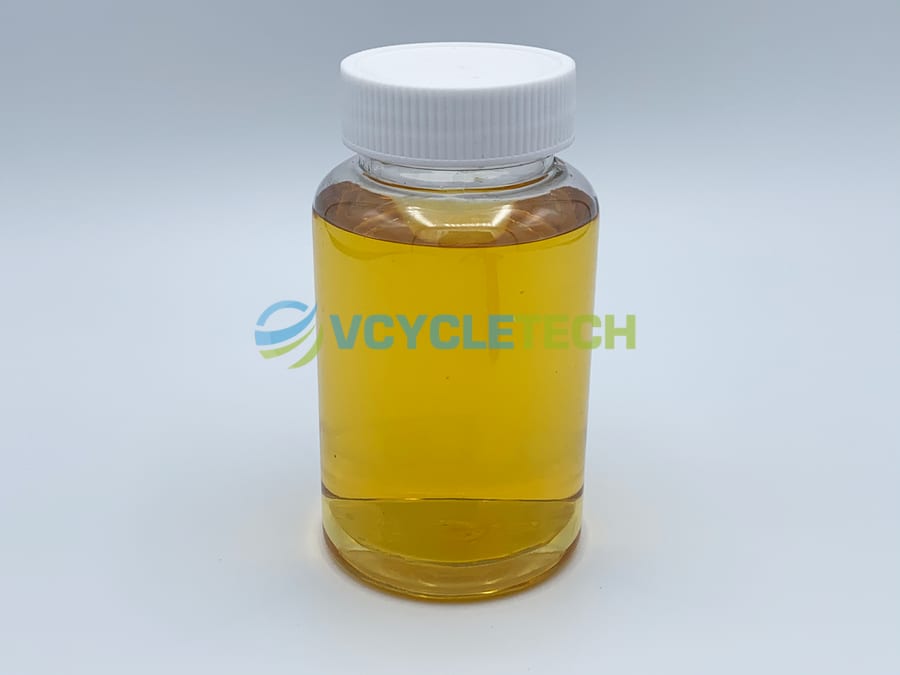
Discuss the paper-process task →
Paper-process decisions: from wet-end trial to water reuse
Paper chemistry works best when the route starts with the operating decision. Use a retention scorecard when the machine needs a wet-end change, or define the reuse point before acting on a process-water loop. Then connect the process condition to a relevant paper-chemistry product discussion.
Wet-end retention trial metrics · Process-water reuse control · Microparticle retention and drainage · Paper-process videos · Discuss your paper process
Choose the investigation before changing a paper chemical
A recycled-fiber change can alter salts, dissolved or colloidal material, fines, ash and the history of existing additives at the same time. A broke-return event adds another dimension: source, storage, changing dry-solids contribution and the path into the receiving wet end. Similar foam, drainage or deposit symptoms can therefore require different first actions. Keep the measured change and the operating event separate until the sampling and timing support a causal explanation.
| Decision | Establish first | Next guide or product route |
|---|---|---|
| Conductivity changes after a furnish or water-source shift | Comparable conductivity/temperature, method-specific charge demand, fines/ash and source samples | Separate salt, charge and solids before changing chemistry |
| An upset follows broke return | Source, storage history, flow and consistency, return point and downstream delay | Trace the broke event and choose the first process correction |
| A bounded wet-end chemistry trial is justified | Actual grade, preparation, contact sequence, shear and receiving furnish | PAM family or PAC family, only where the documented candidate fits |
| A residual air/foam task remains after source correction | Air versus surface foam, mechanical entry, sheet/deposit constraints | Defoamer candidates with a controlled feed-point trial |
Keep source correction, fixation and retention as separate choices
If the water matrix changed but comparable filtrate demand did not, investigate the incoming ions, dilution and preparation conditions before increasing a trash catcher. If an anionic contribution is repeatable, locate the contributing stream before choosing fixation. If fines or ash changed, examine the solids balance and particle-retention conditions. A high-molecular-weight polymer and a charge-control candidate need not have the same task, preparation or contact requirement. The existing DCS guide and retention-trial scorecard support those later decisions.
Separate ordinary broke stability from a repulping-chemistry project
For an event-linked upset, retain the identity of wet, dry and coated sources, inventory history and the actual return loading. Compare the plausible transit window with the first air, foam, white-water or sheet change. A supported source, storage, blending or mechanical-air correction may come before chemistry. A wet-strength repulping program is a different project and cannot be inferred from the symptoms described here. Existing mill-wastewater jar-test footage also does not establish wet-end or broke compatibility; use the guide's OEM and research references for process context.
For a focused paper-process inquiry, share the grade and furnish/broke mix, current formulations, water and sample methods, addition diagram, time-aligned operating trends and the sheet-quality condition the next trial must protect. Include the source or process changes already checked. These details help narrow a real product discussion without inventing an available grade, fixed dose, compatible operating window or performance result.
Customer applications and technical support
Explore customer applications and the chemical routes used · Meet our technical team · Discuss your requirements