

Paper Mill Chemical Procurement: Specs & COA Checklist
TL;DR Buying paper chemicals well comes down to two documents and one habit. Specify the parameters that actually control performance — active or solids content, pH, viscosity at a stated temperature, charge, and the test method for each — then verify them against a batch Certificate of Analysis, not a technical data sheet. A COA is batch-specific and must carry the lot number, measured numbers rather than the word "conforms", the test method, the analysis date and a sign-off. The habit: treat every purchase as a small validation — define acceptance criteria, ask for evidence, inspect on arrival, and record how the lot performed.
Three documents, three different jobs
Most disputes over a chemical delivery start with the buyer holding the wrong piece of paper. The TDS, SDS and COA are not interchangeable and only one of them says anything about the drums that actually arrived.
| TDS (Technical Data Sheet) | SDS / MSDS (Safety Data Sheet) | COA (Certificate of Analysis) | |
|---|---|---|---|
| What it is | The product's declared properties and specification ranges | Hazards, handling, PPE, storage, first aid, transport | Test results for one specific manufactured batch |
| Batch-specific? | No — describes the product in general | No | Yes — issued by QC after that batch is made |
| What it proves | What the product is supposed to be | How to store and handle it safely | That this lot meets the TDS specification |
| When you need it | Specifying and comparing suppliers | Before it enters site — EHS, storage, transport | With every shipment, before acceptance |
The practical rule: you specify against the TDS and you accept against the COA. A supplier who sends a "COA" that simply reproduces the TDS ranges has sent you a TDS with a different heading.
The parameters to put on every order
These apply whatever the product is. Leave any of them off and you have left the supplier a choice you did not intend to give them.
- Active or solids content, % — the single most important number, because it is what you are actually buying.
- pH, at a stated concentration and temperature.
- Viscosity, with the temperature and the measurement method. A viscosity without a temperature is not a number.
- Density / specific gravity — needed to convert between volume and mass dosing.
- Appearance and colour — the cheapest incoming check you have.
- Ionic character and charge density for any polymer — cationic, anionic, amphoteric or nonionic, with the charge value.
- Shelf life from the date of manufacture, plus the storage temperature range and the freezing point. This one causes real losses on winter sea freight.
- The test method for each parameter — an ASTM, ISO or TAPPI reference, or the supplier's method by number. Without it, your lab and their lab can both be right and disagree.
- Packaging and net weight — IBC, drum or bag, and whether net or gross.
What matters per product family
Beyond the universal list, each family has one or two parameters that decide whether it performs. These are the ones worth arguing about in a specification.
| Product | Specify beyond the basics | Typical range / note |
|---|---|---|
| PAE wet strength resin | Solids, pH, viscosity, ageing stability, organochlorine grade | Traditionally held at 10–25% solids to avoid gelling (high-solids grades reach 35%+); pH typically 4.5–5.5, generally 4.0–6.5. A low-molecular-weight PAE runs under 200 cps even at 40% solids. Ask for the ageing spec — a common one is that viscosity must less than triple after a week at 32 °C. Specify the low-DCP/CPD grade if the paper is food-contact. |
| AKD / ASA sizing emulsion | Active size %, cationic charge, emulsion stability, particle size | ASA must be emulsified on site and used at once — specify the neat anhydride quality, not an emulsion. See internal sizing selection. |
| Dry strength / retention polyacrylamide | Molecular weight range, charge density, dissolution time, residual monomer | Dissolution time is the one operators feel. Residual acrylamide monomer is the one auditors ask about. |
| Cationic starch | Degree of substitution (DS), moisture, viscosity after cooking | DS sets the charge you are paying for; moisture sets what you are paying for that is water. |
| CMC / surface size | Viscosity, pH, degree of substitution, purity | Paper-grade CMC typically runs 300–8000 mPa·s with pH 6.5–8.5 — a very wide viscosity band, so pin down the grade. |
| Defoamer | Active content, dispersibility, silicone or silicone-free | Some grades and end-uses forbid silicone; state which you require. |
| Coagulant / fixative | Active content, charge density, molecular weight | Charge density is what does the work — compare on charge, not on litres. |
What a valid COA must contain
A certificate of analysis is a quality record produced by the supplier's QC laboratory after a specific batch has been made, confirming that the batch meets every parameter defined in the TDS. To be worth anything as evidence it needs all five of these:
- A batch or lot number that matches the labels on the drums. If it does not match what is on the pallet, the document belongs to a different consignment.
- Measured values for that batch — actual numbers. "Conforms" or "Pass" against every line is not a result; it is an assertion.
- The test method used for each parameter, referenced (for example an ASTM, ISO or TAPPI method number, or the supplier's numbered internal method).
- The date of analysis, and evidence the instruments were in calibration at that date.
- Analyst and reviewer sign-off, plus a conformity statement naming the specification the batch was judged against.
Red flags: identical values on every batch you receive (real production varies); no lot number; a certificate that quotes the specification range in the results column; no method references; a document that has never been signed.
Treat every purchase as a small validation
The last step is the one that compounds. If nobody records which lot was running when the machine had a bad week, the specification never improves and every problem is re-litigated from scratch.
Incoming inspection: the minimum that is worth doing
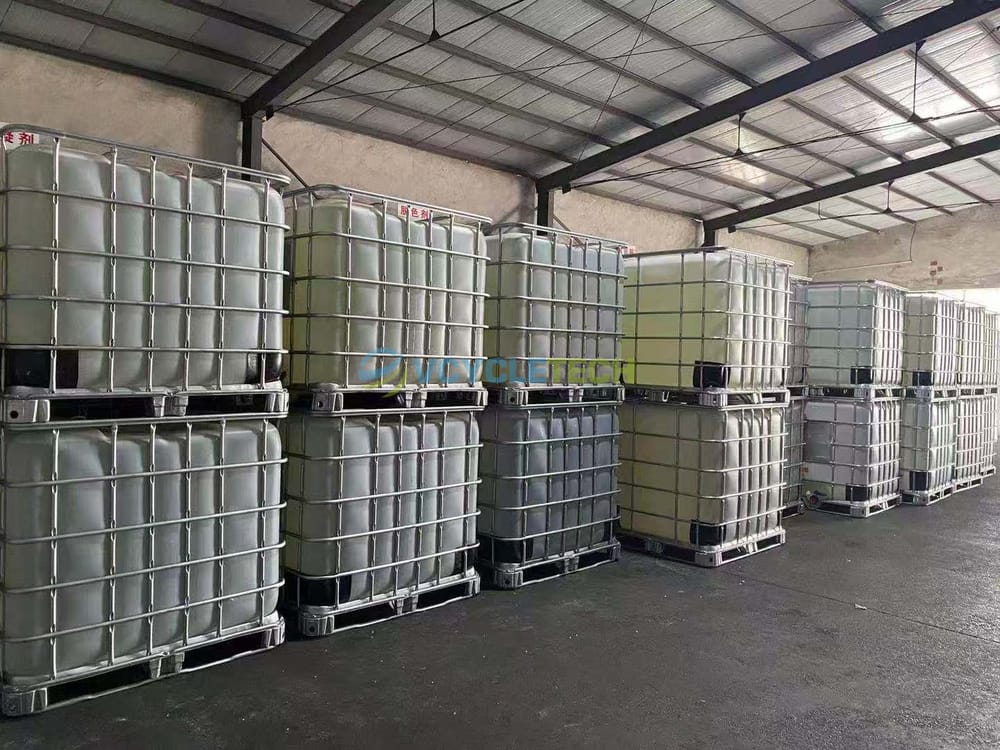
- Match the paperwork to the pallet. Lot number on the COA against the labels, before anything is unloaded into a day tank.
- Appearance and identity. Colour, clarity, smell, phase separation. Free, and it catches gross substitution and freeze damage.
- pH and solids on a drawn sample. Quick, cheap, and between them they catch most dilution and mix-up problems.
- Viscosity, if it is a specification parameter for that product.
- Keep a retained sample of every lot, sealed, labelled and dated, for at least the shelf life. Without it, a quality dispute is one party's word against the other's.
- Log lot number against machine performance. This is what turns a year of purchases into evidence.
Qualify the supplier, not just the shipment
- First article. Test the first production batch fully against the specification and keep that report as the baseline.
- Ask for three consecutive batch COAs, not one. One certificate shows a number; three show the spread, and the spread is the real quality signal.
- Check the management system — ISO 9001 and, for a paper mill's own audits, ISO 14001 and 45001. See our quality and certifications page for what we hold.
- Reduce testing with evidence, not with trust. Established suppliers with a record can justify lighter incoming testing, but identity testing on every lot should stay.
- Second-source anything that stops the machine. A qualified alternate costs a few sample trials; an unplanned outage costs a shift.
Common procurement mistakes
- Comparing price per tonne of product instead of price per unit of active. A cheaper drum at lower solids is usually more expensive per tonne of paper.
- Accepting a specification range so wide it cannot be failed. If any plausible batch passes, the specification is decoration.
- Omitting test methods, then arguing about results that were never measured the same way.
- Ignoring freezing point and shelf life on winter or long-transit shipments — emulsions and polymer solutions do not always recover from freezing.
- Not keeping retained samples, which turns every claim into an unprovable one.
- Specifying only what is easy to test. The parameters that matter (charge density, dissolution time, ageing stability) are usually not the ones the lab measures by habit.
Key takeaways
- Specify against the TDS, accept against the COA. Only the COA describes the drums that arrived.
- Always state the test method and the temperature. A number without a method is not comparable between two suppliers.
- Buy active, not volume. Solids or active content is the number that sets your real cost per tonne of paper.
- A COA without a lot number, measured values, methods, dates and a signature is not evidence.
- Retained samples and lot logging cost almost nothing and are the only things that make a quality claim provable.
Watch

Frequently asked questions
What is the difference between a COA and a TDS?
A Technical Data Sheet describes the product in general — its declared properties and the specification ranges it is sold against — and it is the same document for every batch. A Certificate of Analysis is batch-specific: it is issued by the supplier's QC laboratory after a particular batch has been manufactured and tested, and it confirms that this batch meets the parameters defined in the TDS. You specify a purchase against the TDS, but you accept a delivery against the COA, because only the COA says anything about the material that actually arrived.
What must a valid certificate of analysis include?
Five things. First, a batch or lot number that matches the labels on the drums. Second, measured values for that batch — actual numbers, not the word 'conforms' against every line. Third, the test method used for each parameter, referenced to an ASTM, ISO or TAPPI standard or a numbered internal method. Fourth, the date of analysis with evidence the instruments were in calibration. Fifth, analyst and reviewer sign-off with a conformity statement naming the specification. A certificate that repeats the TDS range in the results column is not a COA.
What specifications should I ask for when buying paper chemicals?
On every order: active or solids content, pH at a stated concentration, viscosity with its temperature and method, density, appearance, ionic character and charge density for polymers, shelf life from date of manufacture, storage range and freezing point, packaging and net weight, and the test method for each parameter. Then add what the family needs — solids, pH and ageing stability for PAE wet strength resin; molecular weight, charge density, dissolution time and residual monomer for polyacrylamide; degree of substitution for cationic starch and CMC; active size content and emulsion stability for AKD.
How should I check a chemical delivery when it arrives?
Match the lot number on the COA to the labels on the pallet before anything is unloaded. Check appearance, colour, clarity and phase separation, which is free and catches substitution and freeze damage. Draw a sample and run pH and solids — quick tests that catch most dilution and mix-up problems — plus viscosity if it is a specification parameter. Keep a sealed, labelled and dated retained sample of every lot for at least the shelf life, and log the lot number against machine performance so a future problem can be traced back.
Does VCYCLETECH provide a COA with paper chemical shipments?
Yes. Every lot ships with a batch Certificate of Analysis carrying measured values, method references, analysis date and sign-off — not a copy of the data sheet. VCYCLETECH is a China-based manufacturer of paper chemicals including wet strength resin, sizing agents, dry strength and retention chemistry, ISO 9001/14001/45001 certified, with sample availability for mill trials, first-article testing on request, three consecutive batch COAs for supplier qualification, and OEM/ODM service. Email sales@vcycletech.com.
About the manufacturer
VCYCLETECH is a China-based manufacturer of water treatment and process chemicals — paper chemicals, surfactants, biocides, coagulants and flocculants, phosphonates and dispersants — ISO 9001 / 14001 / 45001 certified, with current COA information on request and OEM/ODM service. See our quality & certifications.
References
- Certificate of analysis — Wikipedia
- First article inspection — Wikipedia
- TAPPI Standards & Methods
- ASTM International standards
Related: Wet strength agent · Pitch & stickies deposit control · Dry strength agents · Quality & certifications · Paper chemicals