Introduction
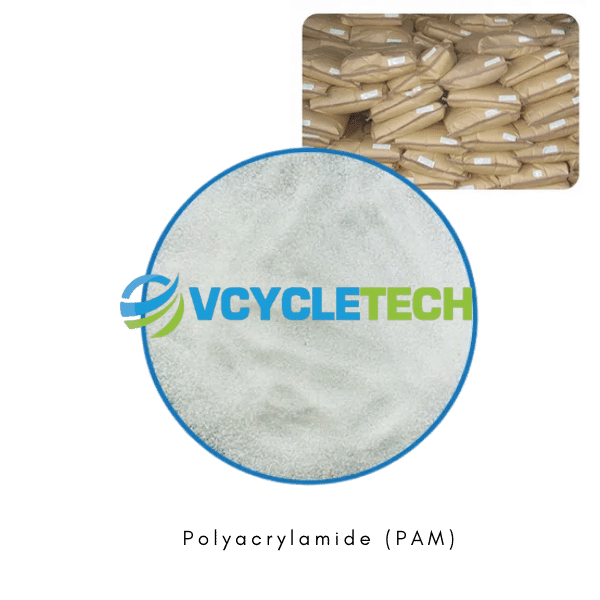
Polyacrylamide (PAM) is a synthetic cationic polymer that has existed since the 1950s. This compound comprises long chains of acrylamide molecules joined by amide bonds, allowing various uses across various industries. As mentioned above, it is most commonly used in water treatment because of its ability to quickly dissolve and rapidly improve the settling rate of bacteria flocs. In addition, PAM can be used as an effective tool to flocculate solid particles suspended within liquids, helping to remove them from the liquid environment. This versatile compound is highly effective in purifying water supplies or removing heavy metals from wastewater streams.
Features
The primary feature of PAM is its ability to act as both anionic and cationic polymers depending on the application needs. Its unique properties allow it to dissolve rapidly and produce excellent flocculation performance upon contact with suspended particles in liquid environments. It also features low dosage rates compared to other polymers products, which helps reduce costs while ensuring maximum efficacy and efficiency during water treatments. Additionally, its capacity for high-temperature operation allows it to be deployed in applications where higher temperatures are required, such as industrial boilers and hydrothermal systems.
Applications
Specification:
| Main technical indicators name | anionic polyacrylamide | Cationic polyacrylamide | nonionic polyacrylamide |
| Appearance | white granular powder | white granular powder | white granular powder |
| grain diameter (mm) | <2 | <2 | <2 |
| PH | 7~14 | 1~14 | 1~8 |
| molecular weight(ten thousand) | 500-1800 | 800-1200 | 200-600 |
| degree of hydrolysis(%) | 10-50 | 10-50 | 5-60 |
| soild content | ≥90 | ≥90 | ≥90 |
FAQs
Q: What are the benefits of using PAM?
A: The main advantages of using PAM include improved removal efficiencies for suspended particles compared to other polymers products; low cost due to its low dosage rate; fast dissolution time; and high-temperature operation capability when deployed in hot applications such as industrial boilers or hydrothermal systems.
Q: Is PAM toxic?
Q: How does PAM compare with Aluminium Sulfate (alum)?
A: Generally speaking, both products offer similar benefits, but there are some key differences between them which should be taken into consideration before selecting one over another for a specific application need – such as cost-effectiveness or overall efficacy performance when dealing with small particle sizes or difficult wastewater streams with high contamination levels. Furthermore, unlike alum which requires post-treatment clarification steps after deployment – due to possible residual levels left behind – no additional steps are needed when working with PAM allowing for quicker operational times overall.
Q: How do you apply Polyacrylamide (PAM)?
A: Depending on the application’s need, Polyacrylam ide (P AM ) may be applied via injection directly into the effluent stream or through manual addict ion starting. In either case, it’s important to ensure proper mixing occurs s.
Hence, the polymer is distributed evenly throughout the systemPolyacrylamide (PAM) is a powerful cationic polymer with a wide range of applications, especially in water treatment. Its ability to dissolve quickly and aid the settling of bacterial flocs makes it an invaluable resource for removing suspended particles from liquids. PAM is a highly efficient tool to flocculate solids from liquids, making it an important asset in many commercial processes.
Q: What type of particle sizes does PAM work best at?
A: Generally speaking, P AM best at particle sizes ranging between 0 .1 microns – 1 micron; this enables it to effectively capture s smaller – suspended particulates that would otherwise remain undispersed within liquid environments.
Get the complete Coagulants and Flocculants solution.