Product Details

Facebook
LinkedIn

Polyamine

TL;DR Start with coagulation and solids-separation selection and wastewater or sludge source and variability. Compare the proposed grade specification and supply requirements before requesting a quotation.

Polyamine — Discuss Polyamine for coagulation and solids-separation selection. Start with wastewater or sludge source and variability and ph, alkalinity, salts, solids and oil. Check the offered grade specification and include the intended application when requesting a quotation.

For a Polyamine enquiry, include wastewater or sludge source and variability and ph, alkalinity, salts, solids and oil, together with the current treatment or formulation. Use the offered grade documents and a representative comparison to decide the next step.

Discuss the grade and application

For Polyamine, start with coagulation and solids-separation selection.

Selection inputs

  • Wastewater or sludge source and variability
  • pH, alkalinity, salts, solids and oil
  • Mixing sequence and separation equipment
  • Liquid quality, captured solids and operating stability

Documents and supply

Identify the proposed grade, required quantity, packaging and destination. Ask which specification, TDS, SDS and batch-document options apply to that offer.

Technical documents · Company certificate scopes

Request a quote

Product Description

Introduction

Polyamines are cationic polymers used in various industries, most commonly in water treatment plants and paper mills. This advanced coagulant works with charge neutralization and efficient solids separation to achieve various desired end products. Polyamine has various molecular weights, making it suitable for unique applications.

Features

Polyamine is a highly-effective solution due to its powerful liquid formula that quickly and effectively removes suspended solids from liquids. It is also highly efficient as it reduces the amount of sludge produced during water purification processes, allowing for an environmentally friendly treatment method. Additionally, polyamines have excellent flocculation properties, allowing them to form bonds between particles in the liquid, making them easier to remove from the mixture.

Applications

Polyamine is primarily used in water treatment plants as it helps to remove unwanted solids from the water supply. It is also beneficial in paper mills as it helps separate lignin and cellulose fibers for more efficient paper production. Polyamine can also be used for pH control removal of heavy metal oval from industrial wastewater streams when combined with other substances such as aluminum sulfate or ferric chloride.

Specifications

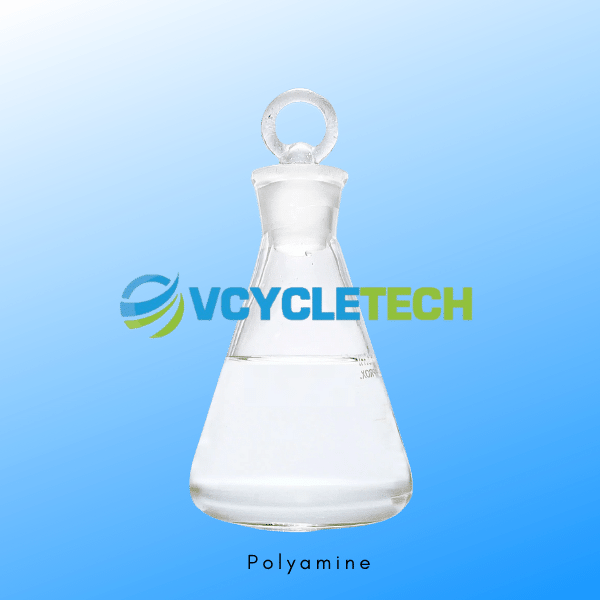
AppearanceColorless to Slight Yellow Transparent Liquid
Ionic NatureCationic
pH Value(Direct Detection)4.0-7.0
Solid Content %≥50
Note: Our product can be made upon your special request.

Related products

Consult Us Now for Water Treatment Chemical Solutions

We’re Always Here To support

We’re Always Here To support

Request a quote

Related guide: Coagulants and Flocculants in Water & Wastewater Treatment

Related guide: Coagulants and Flocculants in Water & Wastewater Treatment

Polyamine — Frequently Asked Questions (FAQ)

What is Polyamine (Epichlorohydrin–Dimethylamine) used for?

Polyamine is a cationic organic coagulant for turbidity and colour removal and sludge conditioning that cuts inorganic-coagulant dose and sludge, with broad pH tolerance.

What is the recommended dosage of Polyamine?

Polyamine (Epichlorohydrin–Dimethylamine) is typically dosed at 1–50 ppm depending on water quality. The exact dose depends on water quality, temperature and the overall treatment program — VCYCLETECH provides a tailored dosing recommendation.

What should I include in a Polyamine enquiry?

For coagulation and solids-separation selection, include wastewater or sludge source and variability; ph, alkalinity, salts, solids and oil; mixing sequence and separation equipment; liquid quality, captured solids and operating stability. State the proposed grade or specification, quantity, packaging and destination so the product and commercial requirements can be compared.

Scroll to Top
Request a quote