
PAPER CHEMICALS · PROCESS WATER
Paper Mill Process-Water Reuse: Choose the Chemistry Control Point
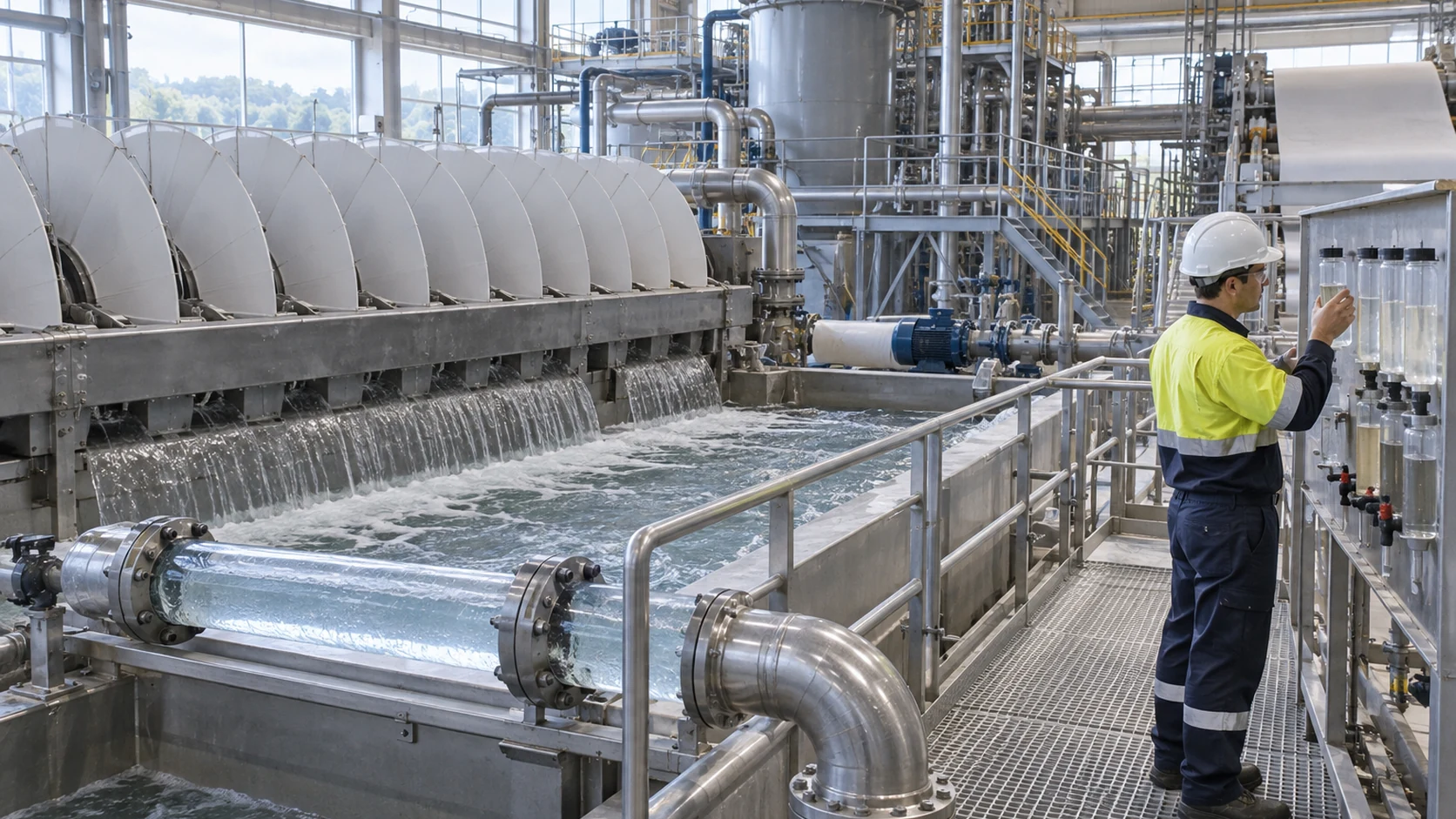
Paper-mill water reuse works best when the reuse point sets the chemistry decision. Start by defining where the recovered water will return and what that point can tolerate: suspended solids, dissolved and colloidal material, foam, stickies or pitch, microbial pressure, salts, temperature and carryover from the current wet-end programme. If the water fails a solids or clarity gate, improve separation first. If it reaches the wet end but destabilizes charge, foam, deposits or retention, target that mechanism rather than adding a general-purpose chemical. Confirm any route with representative recycled water and normal grade variation.
The practical question in paper-mill process-water reuse is not “which chemical cleans all recycled water?” It is “what does this particular return point need from the water?” Reuse at showers, dilution, stock preparation or another wet-end location places different demands on solids, dissolved and colloidal substances, foam, salts, microbes and temperature. Map the loop from white water through its recovery step to the intended use, then identify the first condition that would disrupt sheet quality, runnability or the current wet-end programme. That sequence separates a separation problem from a foam, deposit, charge, microbiological or compatibility problem and lets the mill screen a focused chemistry route with representative water.
Start at the reuse point, not at a product list
Water can be clear enough for one use and unsuitable for another. A return to a low-demand wash or utility use may tolerate conditions that would disturb a dilution point, a sensitive wet-end addition or a high-quality application. The EU pulp-and-paper BAT reference describes white-water loops and notes that treatment choices can include flotation, filtration and, for particular high-quality water uses, ultrafiltration. It also emphasizes that reuse must consider pH, colour, dissolved and suspended solids, residual chemicals and unintended reactions.1
Use that observation as a decision framework, not as a prescribed installation. Draw the water loop and mark its source, recovery step, storage time, blend points and final use. For each return point, write the properties that matter there: particle load, clarity, conductivity or salt trend, temperature, pH, foaming behaviour, stickies/pitch risk, microbial trend and the wet-end chemicals the water may encounter. This quickly shows whether the first control point is physical separation, a loop-management adjustment or a narrow chemical screen.
The existing white-water clarification chemical-selection guide owns the clarification and coagulant/flocculant decision before reuse. This guide begins after that question: it helps decide what to control when recovered water is being routed back into a paper-process loop. That keeps the two buyer decisions distinct.
Choose the control point from the problem mechanism
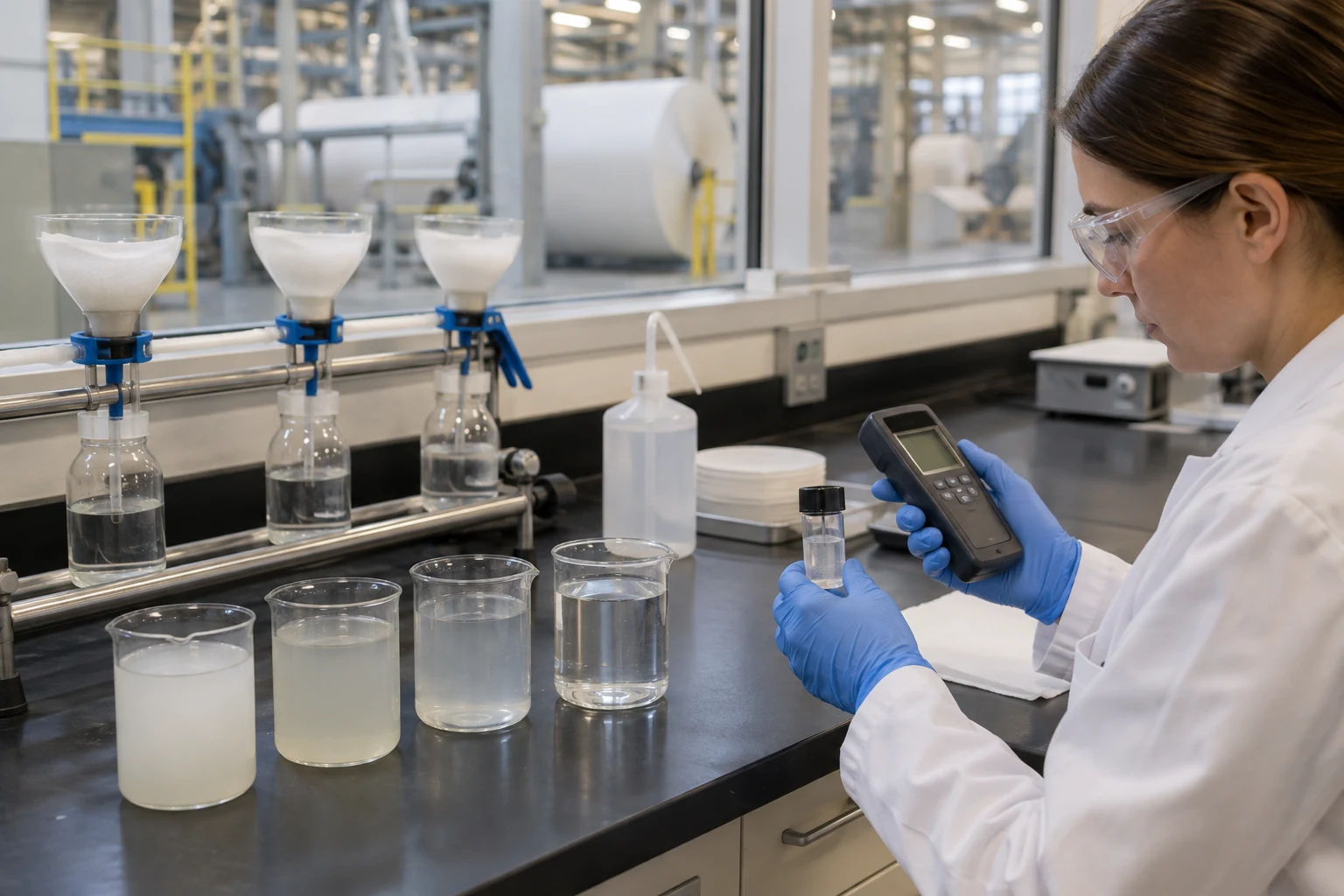
Closing water loops can concentrate dissolved and colloidal substances and can change microbial, pitch, deposit, foam and retention behaviour. Published paper-industry work describes how process-water closure can increase these pressures; it does not prove that any one chemical route is correct for every furnish or mill.2 The useful response is to locate the mechanism before selecting a product family.
| At the intended reuse point | Ask first | Possible route to evaluate |
|---|---|---|
| Visible solids, unstable clarity or a load that changes with recovery conditions | Is the separation step meeting this reuse point’s solids requirement? | Review clarification, flotation or filtration performance before adding a wet-end chemical. |
| Foam or entrained-air problem after return | Is the foam generated in the loop, carried in, or made worse by a feed location or surfactant interaction? | Map source and dose point; evaluate a compatible defoamer route with the actual water and process additives. |
| Stickies, pitch, deposits or unstable charge response | Which dissolved/colloidal fraction is reaching the wet end, and what changed in furnish or loop closure? | Check DCS/charge condition and deposit mechanism before screening fixation, control or operating changes. |
| Microbial or odour trend during storage | Where is residence time and nutrient load creating a risk, and what downstream constraint applies? | Review housekeeping, storage and an appropriate microbial-control route only after defining the actual system limits. |
| Retention, drainage or formation drifts after reuse increases | Has the return shifted charge, fines, salts, temperature or additive interactions? | Use a wet-end scorecard and review retention/charge route, not a blind increase in one additive. |
These are control questions, not promises that a named chemical will fix the problem. For instance, a defoamer route can be relevant to a repeatable foam mechanism, while a DCS control route may be relevant when charge demand shifts. Neither should be selected from a photograph of foam or a single conductivity value. Link the Paper Chemicals category to the actual process problem, then work with the DCS guide, additive compatibility guide and defoamer category as needed.
Screen a chemistry route with the water it will actually see
Use current recycled water or a representative blend for any initial screen. Record the source mix, recovery method, storage time, temperature, pH, conductivity, solids, current wet-end additives and the intended return point. Where deposits, stickies or DCS are suspected, include a relevant water and furnish condition rather than testing a clear laboratory-water substitute. Research on paper-mill white-water treatment shows why dissolved and colloidal material can be important to fouling and reuse decisions; its findings are tied to its own mill water and membrane conditions.3
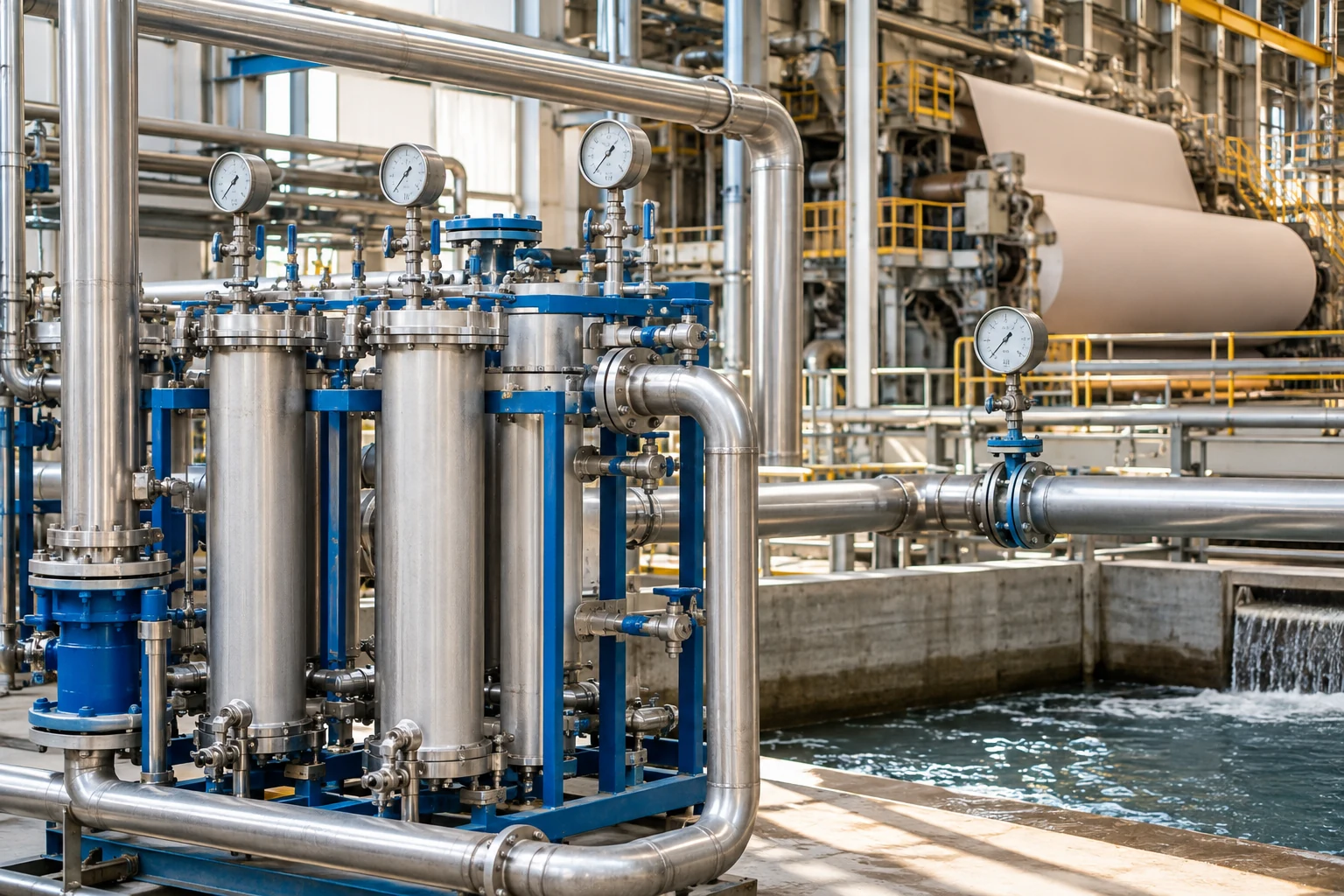
Sequence the work from the least speculative intervention to the most specific. First confirm that recovered water is appropriate for the proposed reuse point. If it is not, improve the recovery or choose another return point. If it is suitable on solids but causes a wet-end upset, isolate the mechanism with a targeted screen. Then confirm the promising route across the mill’s normal operating range. This prevents a treatment designed for one water loop from being treated as a universal reuse programme.
Keep the reuse route stable as the loop changes
Water reuse can be stable for months and then shift after a furnish change, higher recycled content, coating change, loss of fresh-water make-up, storage upset or a new grade. That is why a reuse programme needs a small set of early-warning observations tied to the route: white-water solids and clarity for the separation step; foam and air for a defoamer route; charge demand or deposit observations for a DCS route; microbiological trend and storage time for a microbial-control discussion; and machine response for any wet-end effect.
Define who sees the shift and what decision it triggers. An increase in foam after a return-water change calls for source and feed-point review before product escalation. A new stickies trend calls for the water/furnish balance and deposit location, not only a faster laboratory screen. A retention change after the reuse rate rises belongs in a wet-end trial scorecard. The wet-end retention-trial acceptance guide provides that evaluation structure.
When discussing a process-water reuse route, bring the loop map, intended reuse point, water analyses and trend data, recovery method, storage time, current chemical programme, wet-end operating constraint, production grade range and the change you want to make. Discuss your process-water reuse route → The video library and paper-process articles can help connect that discussion to a relevant application and product path.
Frequently asked questions
Can clarified white water be returned anywhere in a paper mill?
No. The intended use sets the water-quality requirement. Define the return point and its tolerance for solids, dissolved material, foam, salts, temperature and chemical carryover before selecting a route.
Should I start with a coagulant or flocculant for every reuse problem?
No. Those can be relevant when clarification is the limiting step. If recovered water already meets the solids requirement but destabilizes the wet end, first identify the foam, charge, deposit, microbiological or compatibility mechanism.
Why can reuse change retention or drainage?
Returning water can change fines, dissolved and colloidal material, salt, temperature and interactions with wet-end additives. Compare the return rate and water condition with a balanced retention and machine scorecard.
Do clear samples rule out a deposit or DCS problem?
No. A water sample can look clear while dissolved or colloidal material affects charge balance, stickies or deposit risk. Use the relevant process trend and representative water/furnish screen.
What should I provide for a useful reuse discussion?
Provide a loop map, source and intended reuse point, recovery method, water data and trend history, storage time, current programme, grade range and the operating or quality constraint to improve.
Sources
- European Commission JRC, Best Available Techniques for Production of Pulp, Paper and Board — white-water loops, reuse considerations and treatment context; EU scope.
- Japan TAPPI Journal, paper-machine closed-water-system study — closure-related wet-end and deposit context; mill-specific discussion.
- BioResources, ultrafiltration for paper-mill process-water reuse — dissolved/colloidal material and fouling context; study conditions are not universal.
- TAPPI Paper360, paper-machine water efficiency — practical loop and clarified-water reuse context.
Sources retrieved 29 September 2026 for the 28 September execution slot. They do not establish a universal chemical, dosage, removal result or product compatibility claim.