
Paper process water · chemical selection
Paper Mill White Water Clarification: Choose Chemistry by Reuse Point
The right paper mill white water clarification chemical depends on where the clarified water will go next, not simply which jar looks clearest. For a save-all or dissolved-air-flotation (DAF) loop, first decide whether the priority is recoverable fiber, low solids in a shower-water supply, stable wet-end chemistry, or a cleaner stream for downstream treatment. Then compare a no-chemical control with coagulant-only, polymer-only and staged coagulant-plus-polymer trials using the same white water and separation equipment. A treatment that produces a clear beaker may still make a fragile DAF float, add unwanted dissolved load, or interfere with sheet quality. Specify the acceptance point before requesting a grade or dose.
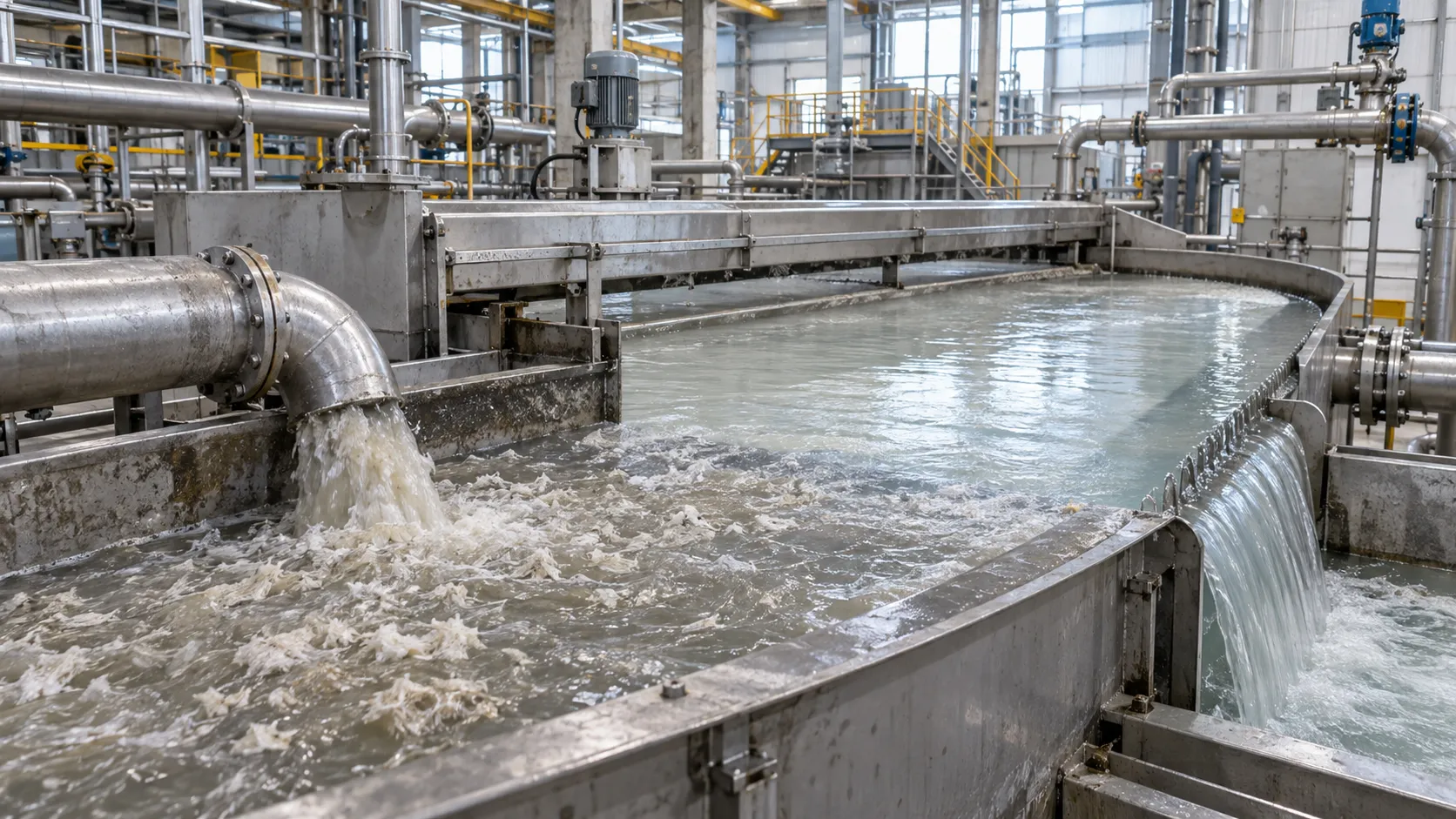
Start at the reuse point, not the chemical drum
White water leaves the forming section carrying some combination of fine fiber, filler, dissolved and colloidal substances, residual additives and entrained air. Much of it returns to stock preparation; another portion may enter a save-all, shower-water treatment or the effluent plant. Those streams may share a name but not the same treatment target. The US Environmental Protection Agency describes white-water capture and reuse after removal of entrained solids, while a peer-reviewed white-water study distinguishes the initial save-all step from later chemical clarification.1, 2
Before any sample is shipped, draw a simple flow map: machine or grade, white-water collection point, existing screen/save-all/DAF, filtrate destination, recovered-fiber destination and any purge to effluent. Mark which water actually reaches a sensitive shower, spray nozzle, wet-end additive make-down tank or final treatment unit. A mill that wants fiber back to the furnish should not optimize only for color or COD in a settled supernatant; recovered fiber quality and sheet effects also matter. Conversely, a downstream biological unit may care more about residual suspended load and process stability than whether a skim can return to the machine.
Set an achievable, site-owned endpoint rather than a generic supplier promise. Examples include a defined filtrate turbidity or suspended-solids band, stable shower operation, an acceptable DAF float, recovered-fiber quality, unchanged drainage and formation, or a downstream treatment loading limit. The mill determines the target and the sampling method; this article does not supply a universal discharge or reuse standard.
Choose the separation path before selecting the coagulant
A save-all and a final-effluent clarifier do different jobs. Screening and physical recovery may capture reusable fibers before chemicals are considered. DAF can lift fine material into a float, while sedimentation depends on flocs that settle within the unit's residence time. If the current separator fails because of air loading, short-circuiting, solids overload or broken polymer preparation, changing coagulant alone may not solve it. A state-funded paper-mill reuse investigation recorded tests where a single flocculant did not form useful flocs in one slurry; that is a useful reason to test alternatives, not an endorsement of any specific product.3
| Reuse or treatment route | Primary decision | Measure alongside clarity | What would invalidate a jar-only win? |
|---|---|---|---|
| Fiber recovery / save-all | Recover usable solids while sending acceptable filtrate onward | Recovered fiber quality, filtrate solids, yield and return-line behavior | High chemical carryover or recovered solids unsuitable for furnish |
| DAF / flotation | Form an air-floatable, removable floc | Float rate, strength, blanket stability, filtrate and sludge volume | Good settling in a beaker but poor flotation under actual air recycle |
| Gravity clarification | Make a floc that settles within real residence time | Settling curve, overflow solids, sludge handling and pH | Large flocs that shear apart or occupy excessive sludge volume |
| Sensitive internal reuse | Meet the receiving process's water-quality limit | Fines, dissolved load, conductivity, compatibility and machine quality | Clear filtrate that harms wet-end charge, sizing or deposits |
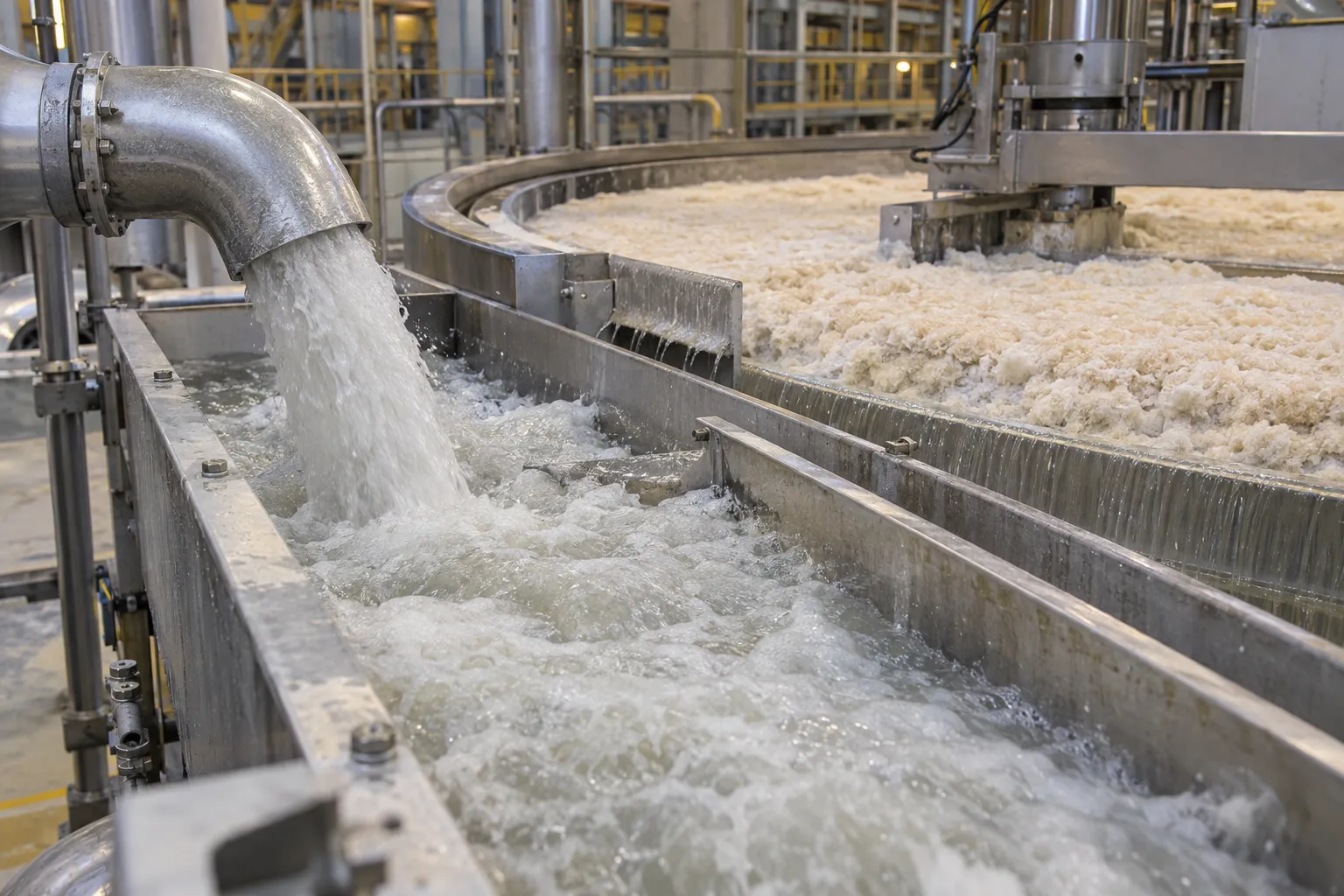
Compare chemistry without guessing at a universal dose
A coagulant such as polyaluminum chloride (PAC) can destabilize fine suspended and colloidal material; a polyacrylamide (PAM) flocculant can help bind particles into separable aggregates. Their roles can be complementary, but more chemical is not automatically better. Grade, charge, molecular-weight range, preparation, mixing and order all matter. VCYCLETECH lists PAC and PAM as product categories; this does not establish that a particular lot or grade is approved for a mill's white-water return loop. Current TDS, SDS and representative COA should be checked against the exact trial candidate.
Begin with an untreated control and the existing program. Test coagulant-only and polymer-only screens before combining them. A staged condition is worth retaining only if it improves the defined endpoint without unacceptable changes in pH, filtrate chemistry, sludge/float management or paper properties. Never copy a published dose into the mill trial. In a 2021 study of plant-fiber mulch-sheet white water, aluminum sulfate plus PAM had the most favorable effect and cost among that study's candidates. Its furnish, pH, economics and endpoint were specific to that experiment; it did not prove that alum always beats PAC, or that its reported dose applies to a different mill.2
For white water with unusually high dissolved and colloidal substances, first determine whether the issue is a solids-separation problem or a wet-end charge-demand problem. A charge-demand control guide addresses the second decision. A microparticle retention program acts inside the papermaking system; it is not simply another name for clarifying a return-water stream. Keep those two tests and their success criteria separate.
Run a representative trial that can survive scale-up
Collect samples from the actual point and shift where the problem occurs, including grade change or recycled-furnish variation when relevant. Record temperature, pH, conductivity, solids, turbidity, furnish/filler type, existing additives and sample age. If color or COD is part of the decision, define how it is measured and do not confuse an apparent reduction in particulate material with removal of all dissolved organics. Use the mill's approved procedure for handling chemicals and wastewater.
Hold the jar-test mixing and settling or flotation conditions consistent across candidates. Prepare polymers correctly and allow the supplier-specified maturation time; the purpose is to compare like with like, not to manufacture a favorable photo. After the bench screen, repeat promising conditions using representative separation equipment or a controlled side stream. Record feed-point accessibility, contact time, shear, filtrate destination and solids fate. A DAF trial must actually consider air recycle and skimming; a settling jar alone cannot predict that behavior.
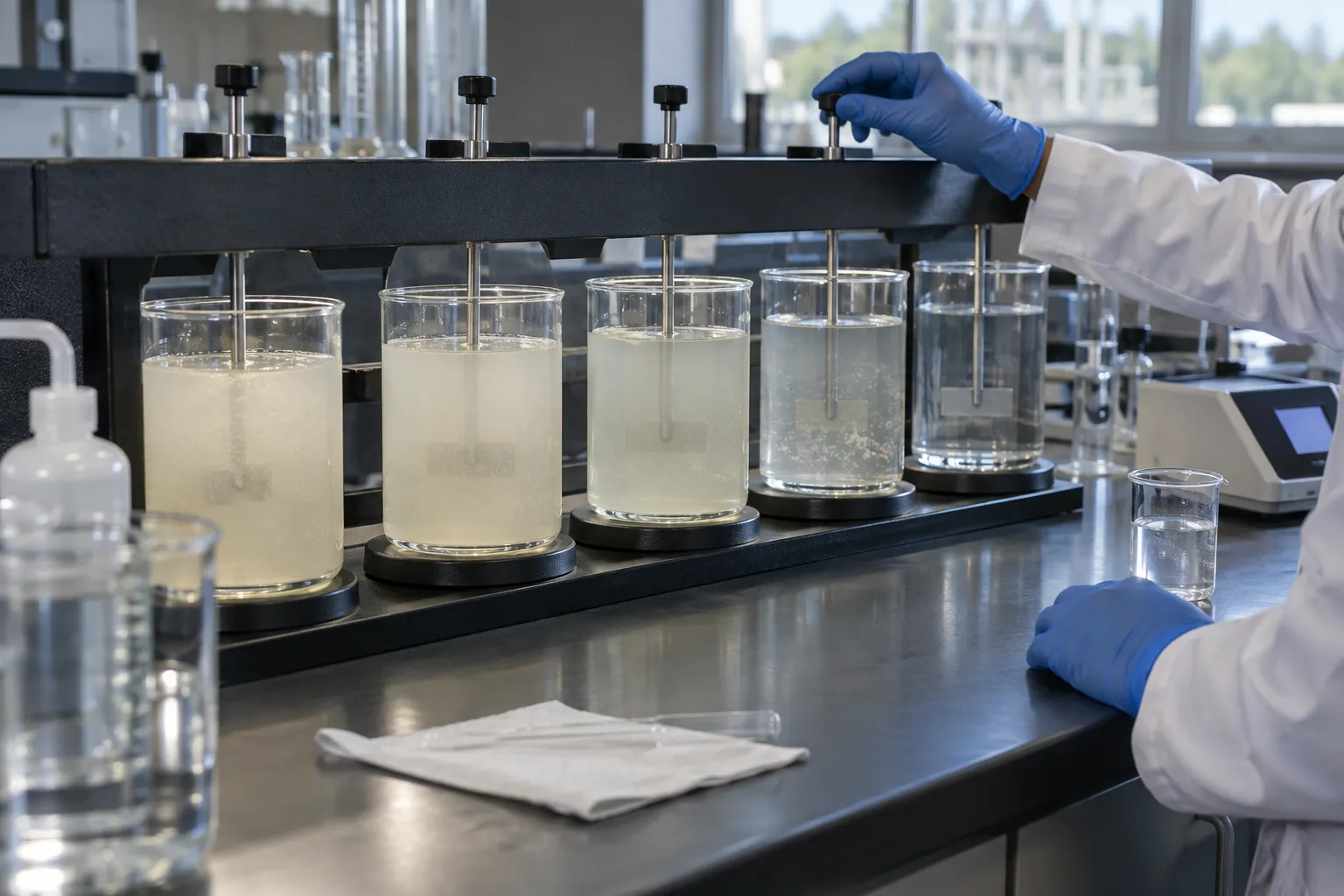
Do not choose a winner from filtrate clarity alone. Compare removal, chemical consumption, solids return, sludge volume, equipment behavior and the final paper or receiving-process quality. The chosen condition should work across normal variation, not only the cleanest single sample. If no candidate holds that boundary, identify the upstream source or the separation bottleneck before buying more chemical.
Send the information that changes the recommendation
For a useful conversation, send the flow map and intended reuse point, representative raw-water analyses, current separator type and capacity, existing chemicals and addition points, sample and test method, target filtrate and recovered-solids criteria, and any paper-quality limits. Add the desired product form, quantity and destination if procurement is already involved. VCYCLETECH can then discuss the relevant coagulant and flocculant range and request the current documents for the exact candidate; it cannot certify performance from a generic video or this article. The paper-mill jar-test video is a visual example of chemical roles, not a dose recommendation for internal white-water reuse.
Frequently asked questions
Is white water the same as final paper-mill wastewater?
No. White water is collected from the papermaking/forming system and may be returned internally after appropriate separation. Final wastewater can be a mixture of other mill streams with different treatment and discharge objectives. Specify the sample point before selecting chemicals.
Should a mill always add PAC before PAM?
No universal sequence or product pairing is justified. Compare untreated, single-product and staged conditions at the mill's water chemistry and on the intended separator. Select the sequence that meets water and recovered-solids criteria without harming the receiving process.
Can a clear jar result justify full-scale purchase?
No. A clear bench supernatant says little about DAF flotation, hydraulic shear, solids return, long-term process compatibility or paper quality. A representative separator and controlled mill trial are needed before campaign quantity is approved.
Does removing suspended solids also remove dissolved COD?
Not necessarily. Clarification can reduce particulate and some colloidal load, but dissolved organics may remain. Report the COD method and sample preparation alongside the solids result; do not promise complete COD removal.
What makes the correct PAM grade different for each mill?
Furnish, charge demand, filler load, water chemistry, mixing energy and the target separator all change polymer performance. Ask for the exact grade's current TDS/SDS/COA and run the mill's comparative trial; this guide does not specify a universal molecular weight or dose.