

PAPER CHEMICALS · WET END
Paper Machine Wet-End Retention Trial: Set Acceptance Metrics That Hold Up
A wet-end retention trial is ready to move forward only when it improves the sheet and the loop together. Track first-pass retention and ash retention alongside white-water solids, drainage, formation, breaks, deposits and the cost of the full programme. Hold furnish, filler target, machine speed, charge condition and sampling points as steady as practical, then change one defined treatment variable at a time. A higher retention number can be a poor trade if formation suffers, white-water load moves elsewhere or the result disappears after a normal grade change. Use repeatable operating windows and a short mill confirmation before selecting a retention route.
A useful wet-end retention trial answers more than “did retention go up?” It asks whether the change improves the paper machine’s whole operating balance: fibre and filler stay where the sheet needs them, white-water load is manageable, drainage and formation remain acceptable, and the programme does not create a new break, deposit or cost problem. Start with the grade, furnish, filler target and limiting machine condition. Then agree the measurements and sampling locations before comparing a retention aid, microparticle route, charge-control adjustment or feed-point change. This turns a short trial into a decision that an application engineer can reproduce when the machine returns to normal production variation.
Define the decision before choosing the chemistry
Retention is a system response, not a single product property. A paper machine may lose fines and filler because of furnish variation, colloidal demand, poor polymer make-down, an unsuitable feed point, high shear, a change in dilution water or an interaction with another wet-end additive. The first question is therefore not “which grade has the highest first-pass retention?” It is “which operating limitation are we trying to relieve without moving the cost elsewhere?”
Set one primary purpose for the trial. It may be to stabilize first-pass ash retention on a filled grade, reduce white-water solids, improve drainage at a known bottleneck, protect formation while holding filler, or reduce costly fibre loss. The purpose determines what counts as success. A furnish with demanding formation requirements deserves a different acceptance window from a grade constrained by a white-water loop or a press-section drainage limit.
Use the current Paper Chemicals product range as the commercial starting point, then narrow the mechanism with the microparticle retention and drainage guide or the DCS and charge-control guide. Those pages help compare routes; this page owns the acceptance design that decides whether a proposed route deserves a mill-scale confirmation.

Use a scorecard that sees the sheet, the loop and the machine
First-pass retention is normally calculated from headbox and white-water consistency; first-pass ash retention adds the mineral-filler view. TAPPI’s retention terminology distinguishes these measures, while modern retention measurement systems can separately track total, ash and fines consistency. Those distinctions matter: an apparently stable total retention result can hide a change in filler or fines behaviour that affects ash, drainage or formation.12
Pair the retention result with a practical scorecard. It should have a small number of agreed measurements, a direction for each, and a clear note of which outcomes are limits rather than targets. For example, a team may seek lower white-water solids and stable ash retention while treating a formation deterioration, a break-rate increase or an unacceptable chemical-cost rise as a stop condition. ABB notes that stable first-pass retention can be more valuable than a single absolute maximum because variation affects the wet-end loop and machine response.3
| Metric | Why it belongs in the trial | How to interpret it with the rest |
|---|---|---|
| First-pass fibre retention | Shows how much fibre remains with the sheet rather than returning in white water. | Read with white-water solids and furnish consistency; a rise alone does not prove the sheet is better. |
| First-pass ash retention | Shows filler behaviour and supports ash-control decisions on filled grades. | Compare with finished-sheet ash and formation, not only a single white-water sample. |
| White-water solids and fines trend | Shows load returning to the loop and potential pressure on save-all, deposits or drainage. | Use the same sample point and machine state; a shifted sample point can create a false improvement. |
| Drainage and press/dryer response | Connects wet-end change to a machine limitation. | Keep speed, basis weight and vacuum context visible before attributing a change to chemistry. |
| Formation, break and deposit observations | Protects sheet quality and runnability. | These are decision gates. A retention gain that creates a chronic runnability cost is not a pass. |
| Full programme cost | Prevents a low unit price from masking added loss, downtime or additive demand. | Calculate per tonne of saleable paper over a representative operating window. |
Do not force every grade into the same target. The meaningful comparison is against the mill’s own normal operating band and the decision it needs to make. A team can pre-agree a pass condition such as “stable ash retention and lower white-water solids with no adverse formation or break trend across representative grade changes,” without claiming a universal percentage improvement.
Run a comparable trial, not a sequence of unrelated shifts
Build the trial around a baseline that looks like normal production. Record grade, furnish recipe, recycled-fibre proportion, filler target, machine speed, basis weight, headbox consistency, dilution-water condition, pH and charge-control information where available. Capture the active wet-end programme and the physical details that often change the outcome: make-down concentration and age, dilution, feed sequence, feed point and known high-shear zones.
Then change one defined route at a time. A comparison between two retention aids is not interpretable if polymer preparation, a coagulant feed point, filler target and machine speed all change in the same window. If an interaction is the object of the work, plan it explicitly as a controlled sequence rather than calling it noise. The wet-end additive order and compatibility guide is a useful companion when feed order or shear is suspected.
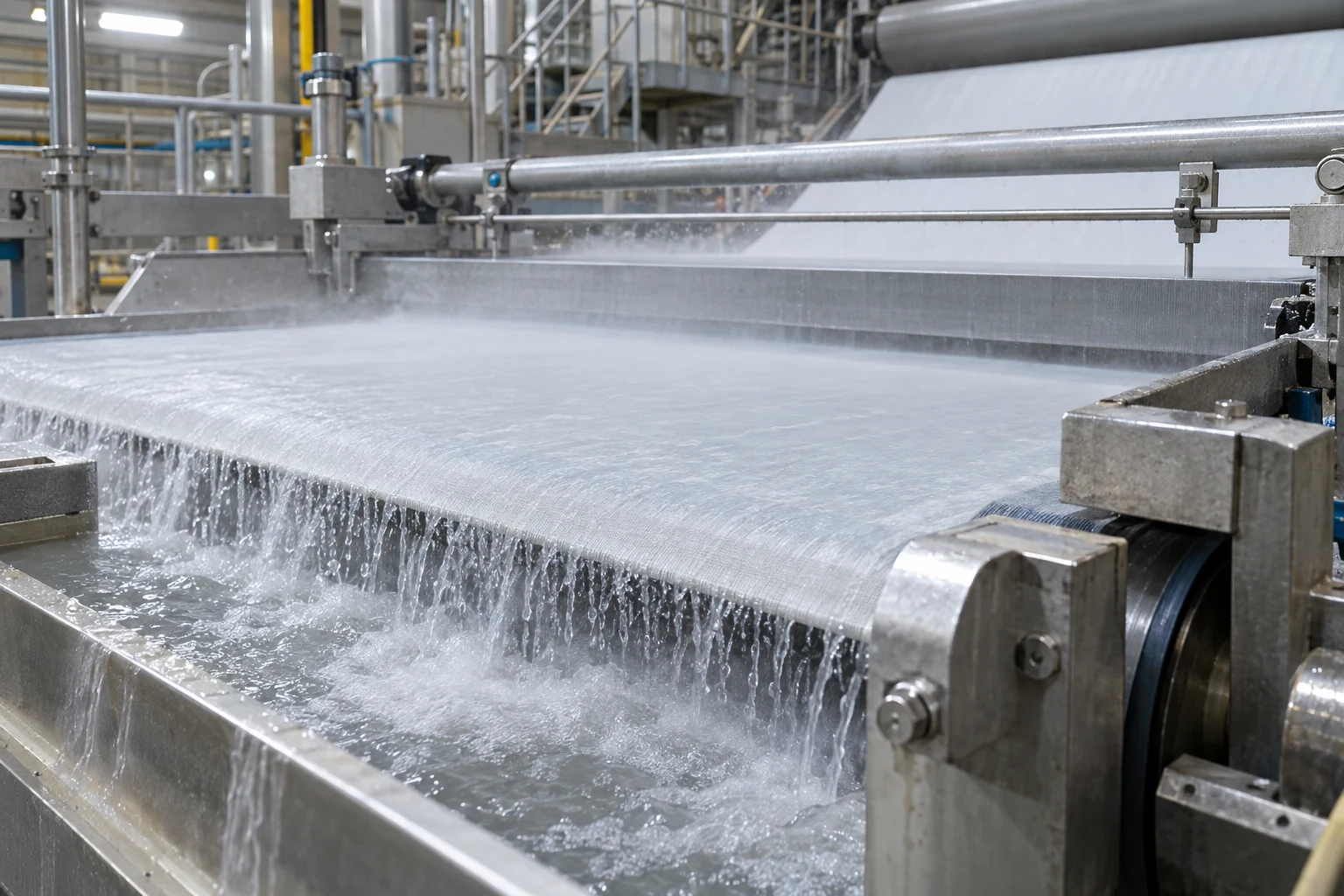
Make the sample plan visible to operators. Define headbox and white-water points, sample times, test methods and who records sheet or runnability observations. A short sequence of repeat samples is often more informative than one attractive result. If the machine has a known upset pattern after a grade change, include that event in the confirmation window rather than declaring success on the calmest hour of the day.
Decide what holds at scale
A bench or pilot result is a reason to proceed, not an automatic operating setpoint. At scale, the water loop, recirculation time, local mixing energy and grade-change rhythm can expose limitations that a small test did not represent. The Oji work on retention and ash-control interactions is a useful reminder that controls and wet-end responses can influence each other; the paper does not provide a transferable product recipe.4
Use a confirmation step that deliberately includes the normal sources of variation. Repeat the scorecard during the grades, filler level and operating conditions that matter commercially. If white-water solids improve but formation drifts, investigate where floc structure is being created and broken rather than merely increasing feed. If ash retention changes with a DCS shift, isolate the charge-control or furnish condition before assigning the result to the retention chemistry. If the benefit survives that window, the team has a defensible operating route rather than a one-shift success story.
For a focused technical discussion, share the grade and furnish range, baseline and trial scorecards, the sample-map and timing, filler/ash target, current wet-end programme, make-down and feed arrangement, relevant charge data and the constraint the machine is trying to solve. Discuss a wet-end retention trial → The VCYCLETECH video library and paper-process guides can help route the discussion to the relevant product, application and operating context.
Frequently asked questions
Is first-pass retention enough to accept a new programme?
No. Use it with ash retention where relevant, white-water solids, drainage, formation, runnability and full programme cost. The right mix depends on the grade and the machine limitation.
Why can a laboratory retention result fail to repeat on the machine?
Machine-scale mixing, shear, recirculation, furnish variation, feed point and additive order can differ from a controlled test. Use the laboratory result to select a route for confirmation, not as a final operating promise.
Should a trial maximize filler retention?
Not automatically. The pass condition should protect required sheet properties and formation while managing the white-water loop. Higher ash retention can be a poor result if it creates quality or runnability problems.
How long should the confirmation run be?
Long enough to include the grades and operating variation that change the decision. Choose the window from the machine’s normal grade-change rhythm and recirculation behaviour rather than a fixed number of hours.
What information helps select a retention route?
Share furnish and filler range, baseline measurements, grade targets, charge and water-loop observations, current additives, make-down and feed details, and the machine constraint you want to improve.
Sources
- TAPPI, Retention terms and guidelines — terminology for retention measures and sampling context.
- Valmet, retention measurement — total, ash and fines measurement context; equipment information is vendor-specific.
- ABB, wet-end stability and retention measurement — first-pass retention stability and wet-end operating context.
- Oji Paper, retention and ash-control interaction study — control interaction context; not a product or dosage recommendation.
Sources retrieved 29 September 2026 for the 28 September execution slot. They support measurement and operating context, not a universal product, dosage or mill result.