
Paper / Process · broke source and return control
Broke-Return Upsets: Trace the Source Before Changing Chemistry
When foam, deposits or wet-end instability follows broke return, establish which return event reached the machine before changing a chemical. Separate wet, dry and coated sources, record storage history, and align return flow and consistency with downstream observations using the actual process path. A flow surge, aged inventory, air entry or a different additive history can produce different first actions even when the visible symptom is similar. Check source segregation, storage, blending and the return point against air, charge, solids, deposits and sheet trends. Correct a supported process cause first. Revalidate a chemical only for the remaining identified mechanism, with the receiving furnish and operating conditions represented. Foam after return does not, by itself, prove that the defoamer has failed.
TL;DR
Treat broke as a set of identifiable streams, not one constant raw material. Connect each source and its storage history to the actual return-flow event, then follow the plausible travel and mixing delay to the wet end. Distinguish hydraulic or air-entry changes from persistent foam, altered solids or charge, and a confirmed deposit mechanism. Compare a safe source, storage, blending or return-point correction before adding another product. If chemistry is still needed, test the exact candidate in representative returned stock and receiving water. Track air, foam, white-water solids, drainage, deposits and sheet quality together. Neither a quiet surface nor one successful bottle demonstrates stable machine operation.
On this page
Separate sources that share the name “broke”
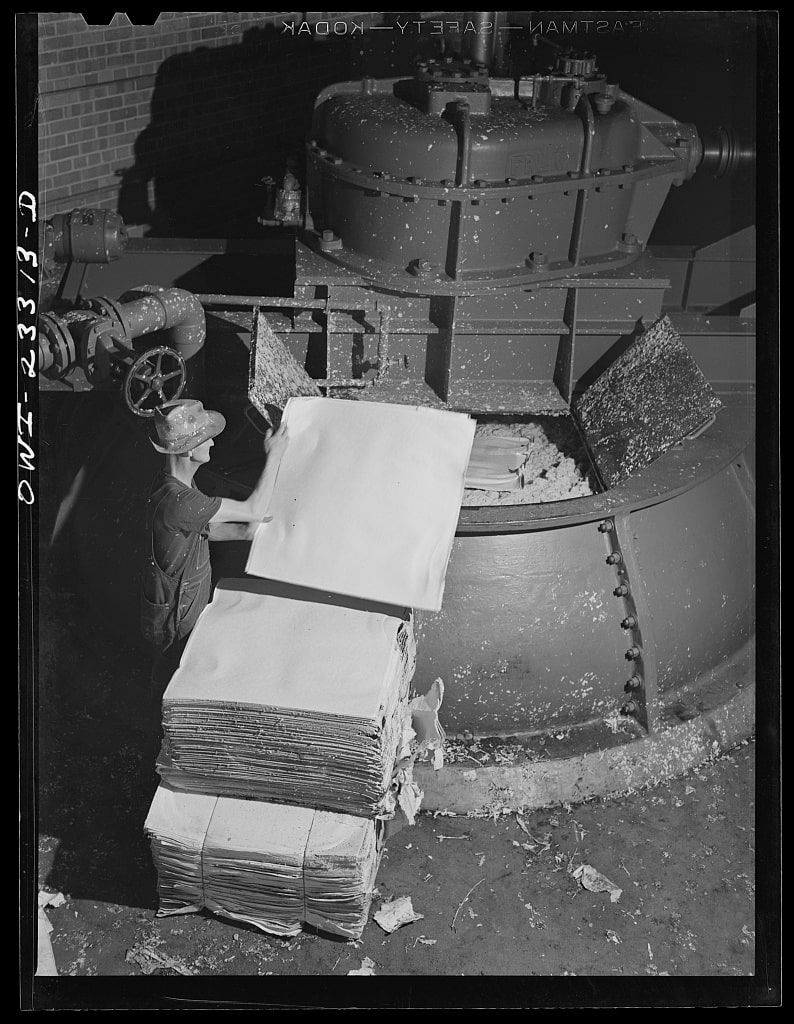
A mill may combine wet broke, dry trim, off-quality paper and coated material under one inventory tag. Those sources have different histories before they reach the return system. Record where the material originated, the grade being made, which surface or wet-end additions it has already encountered, and whether it was stored separately or mixed. An upset after a return change is easier to explain when that identity survives the chest, rather than disappearing into a single daily broke percentage.
Do not assume that all material generated during a break is equivalent to routine trim. An extended interruption can change the age distribution and the way storage is emptied or refilled. The amount arriving at the return point can also change independently of the measured wet flow if consistency varies. Record both flow and consistency, as well as dilution-water origin. A stable pump indication does not establish a stable dry-solids contribution or an unchanged chemical load.
Valmet's stock-preparation material distinguishes the handling of wet, dry and coated broke and the need to accommodate production variation. That distinction is a useful starting point, not a generic processing prescription. Check the installed slushing, screening and mixing arrangement with the equipment team. This guide addresses ordinary return-stream attribution and wet-end stability; it does not prescribe wet-strength resin destruction or a PAE repulping program.
Include changes outside the broke chest. A different coating or size-press formulation, cleaning return, dilution supply, or grade transition can coincide with the broke event. Retain the source identity until there is enough information to compare these explanations. Where off-quality material has an unknown origin or a product restriction, use the mill's established segregation and disposition procedure rather than introducing it to production merely to obtain a test result.
Reconstruct the event before choosing the treatment
Draw the route from each source through collection, storage, dilution, pumping, any separation step and the return connection. Continue through the receiving chest and approach flow to the relevant sampling and quality measurements. Mark recirculation and overflows. The first symptom on the sheet may occur after the return-flow trend appears steady because material is still mixing through inventories. Conversely, a sheet defect preceding the plausible arrival window weakens the claim that the recorded return event caused it.
Use recorded levels, operating volumes and measured flow to estimate a plausible delay range, not an exact universal residence time. Mixing, changing inventory, bypasses and controller action can broaden the response. Align process historian clocks and laboratory timestamps; distinguish the sampling time from the time the result was entered. Include manual moves and chemical adjustments that may not appear on the same trend plot. A sequence reconstructed from synchronized evidence is more useful than a memory that “foam appeared sometime after the break.”
Build the event ledger around source identity, storage duration or estimated age distribution, tank level, return flow, consistency, dilution and return location. Add grade/furnish, pH, conductivity, temperature and relevant charge observations before and after mixing. Place air or foam observations, white-water solids, drainage, deposits, breaks and sheet-quality changes on the same timeline. NCSU's troubleshooting material supports examining process histories and separating physical air effects from chemical symptoms; temporal association alone still needs a plausible path.
Distinguish air, persistent foam, deposits and solids swings
| Pattern after return | Evidence to seek | First comparison | Do not conclude yet |
|---|---|---|---|
| Air or pressure instability follows a flow/level change | Receiving level, vortices, splash, suction condition, actual air measurement where available | Correct avoidable air entry or unstable hydraulic delivery | That stronger foam knockdown repairs the air source |
| Persistent surface foam follows one source | Source/dilution identity, repeatable foam behavior, air and receiving-water conditions | Separate the source contribution from the remaining foam-control task | Which defoamer family or dose is appropriate |
| White-water solids or drainage changes with return loading | Dry-solids contribution, fines/ash, stock sampling and retention conditions | Stabilize blending or investigate the solids/retention balance | That a clearer laboratory supernatant predicts machine formation |
| Deposits appear with a plausible source/age history | Deposit location and composition, source materials, storage and time-aligned samples | Address the confirmed source; investigate biology or chemistry as indicated | That every deposit is stickies, slime or a defoamer residue |
| Charge response changes after mixing | Comparable sample method, pH, conductivity, additive history and first contact | Trace the contribution before screening a fixation/retention adjustment | That conductivity alone measures anionic demand |
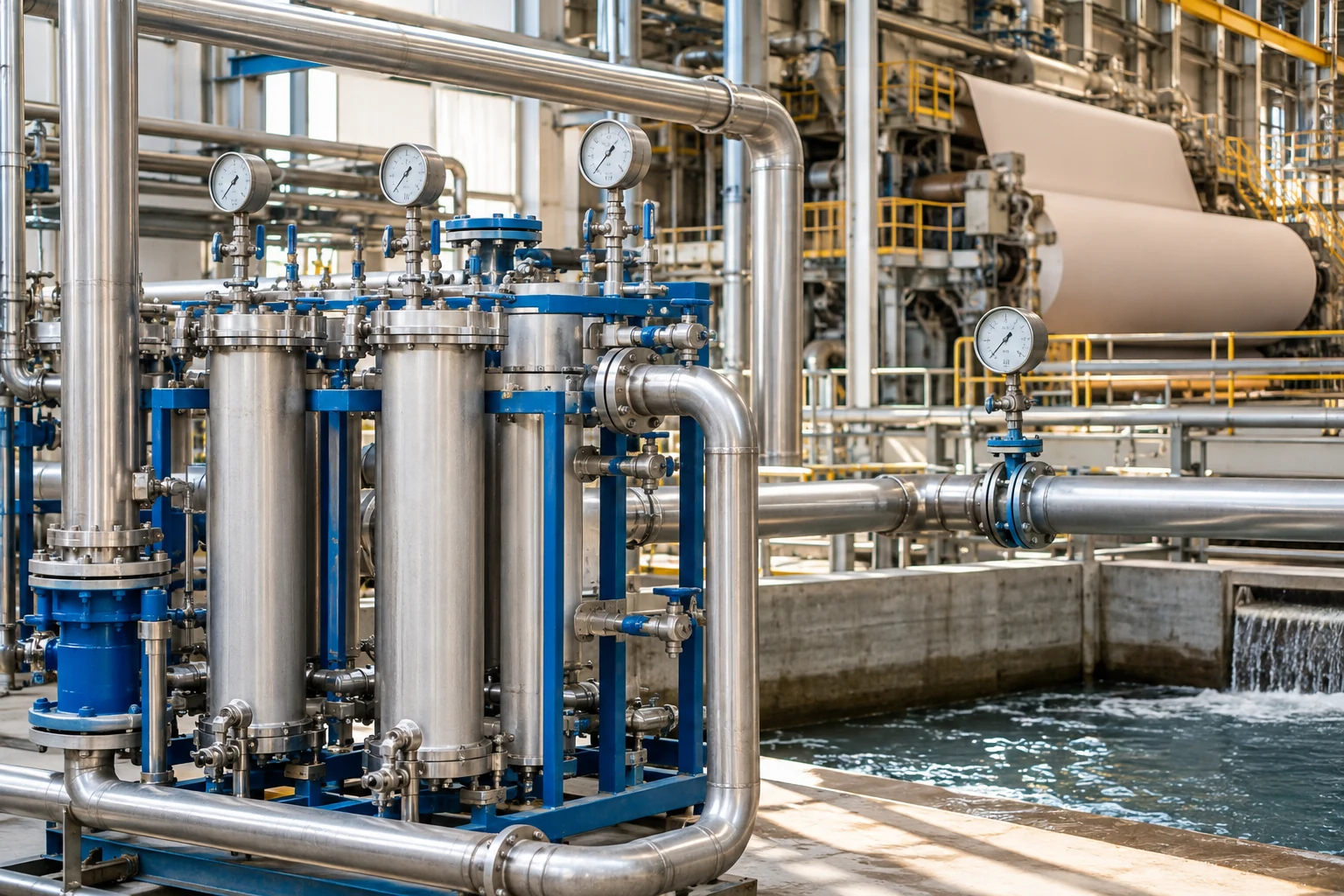
Surface foam and entrained air need separate observations. A sample can lose air during collection, while a vigorous laboratory shake can generate foam that does not reproduce the process exposure. Document collection and handling, and use suitable installed or validated testing where available. A less foamy pit can coexist with air-related drainage or sheet defects. Kadant describes deaeration as a physical approach-flow operation; it is a different intervention from selecting a chemical to break persistent surface bubbles.
Deposits also require more than timing. Preserve a representative sample and location history for an appropriate examination. The source-linked pitch and stickies guide addresses that subsequent identity and control question. Odor, age or a visual slime-like appearance may justify microbiological investigation, but does not identify an organism or prove the existing preservation program failed. Compare the relevant storage and receiving points using suitable methods rather than attributing every aged-stock event to microbes.
Kemira's hygienic-board discussion explains why storage interruptions can complicate microbiological control in that application. It is not a universal safe storage time, a general biocide dose or a reason to bypass the site's cleaning and safety procedures. Bring storage history to the hygiene team when it is relevant. For food-contact or other restricted grades, follow the actual product and regional requirements when considering any chemical or return-stream change.
Choose a process-node correction before adding complexity
If one segregated source repeatedly precedes the problem, examine its preparation, permitted use and blend behavior first. The correction might involve source handling rather than a new chemical family. If changing inventory and return loading are the main disturbance, compare a mill-approved blending or feed-control adjustment while preserving production constraints. There is no universal return percentage that makes every grade stable. Record what changed in the dry-solids contribution and the receiving mixture, not just the pump setting.
If the evidence points to avoidable air entry, inspect the relevant mechanical condition with operations and maintenance. Vortices, splashing and suction-side problems are not repaired by changing a drum. Review physical deaeration only against the installed equipment and actual air burden. A proposed return-point move must be assessed for mixing, available contact, screening, control response and effects on existing additions. Moving material closer to the headbox may shorten one delay while removing useful equalization or introducing a new exposure.
For a storage-related issue, examine turnover, abnormal holds, residual inventory and cleaning history under the site's established procedures. Do not mix fresh material into suspect stock as an assumed cure. Equally, do not prescribe emptying, confined-space entry or an unapproved cleaning chemical from a web guide. The useful decision is which storage or hygiene condition needs controlled correction and which team can safely validate it.
Change one supported node at a time where practical. Keep the prior operating conditions and an unaffected source or interval for comparison. Do not deliberately recreate a damaging event; use naturally recurring transitions or a bounded approved trial. If the problem persists without the suspected event, widen the investigation rather than retaining the original blame. A time history can reject a convenient explanation as well as support it.
Revalidate only the chemical task that remains
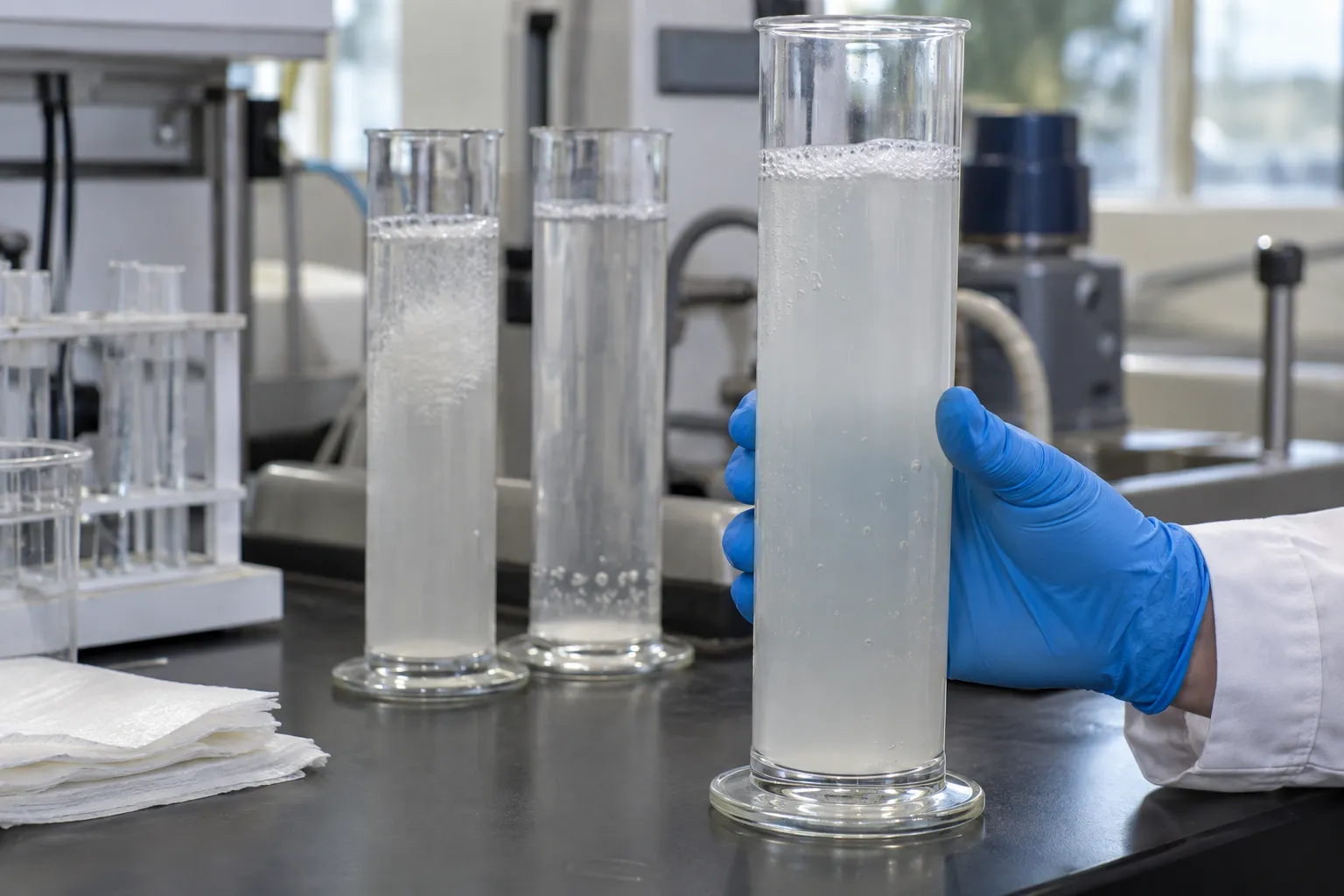
When process correction leaves a defined foam problem, the wet-end foam and feed-point trial guide owns the next candidate comparison. Keep the returned stock, dilution water, temperature, additive history and contact conditions representative. Compare air, drainage, deposits and sheet quality as well as foam persistence. The Defoamers category identifies possible commercial families; it does not certify a grade for the receiving paper machine.
When the remaining task concerns charge or particles, use the conductivity, charge and fines diagnosis before authorizing a fixation or retention change. PAM and PAC are real family-level inquiry routes, not interchangeable solutions to broke variability. A preparation demonstration or an effluent jar-test video does not establish wet-end compatibility. Use current candidate information and an appropriate mill trial instead of treating unrelated footage as proof.
Confirm the chosen correction across a relevant ordinary source or grade transition. Record concurrent changes and follow the response beyond the first quiet sample. Compare air/foam, white-water solids, drainage, retention where measured, deposit recurrence, breaks and required sheet properties. If a short trial cannot observe a slow deposit or storage mechanism, keep that limitation in the decision. A laboratory screen or one stable shift can justify further confirmation without becoming a long-term performance guarantee.
Prepare an inquiry around the source and decision
Use the Paper Chemicals range as the main commercial starting point. For a focused technical discussion, share the broke-source map, grade and additive history, storage/turnover information, return-flow and consistency trends, dilution water, return and sample points, and the first downstream symptoms. Include the process change already tested and the quality constraint that limits the next step. This helps distinguish a product question from a blending, air-entry or storage problem before a candidate is selected.
Frequently asked questions
Does foam after broke return prove the defoamer has failed?
No. A return event may change air entry, hydraulic loading, surface-active material or the receiving mixture. Confirm the source and timing, distinguish surface foam from entrained air, and correct avoidable process causes before comparing a different defoamer or feed point.
Why can a broke-return upset appear after the return flow has settled?
Storage, chests, recirculation and mixing can delay and spread the material's arrival downstream. Compare source and return events with a plausible transit window and synchronized sampling times. A steady current flow does not mean the downstream stock has finished responding to the earlier inventory change.
When should a mill change the broke return point?
Only when source and timing evidence supports a return-location problem and the proposed arrangement preserves safe mixing, screening, control and chemical-contact requirements. Assess the installed process with the equipment team. A shorter travel path is not automatically a more stable or compatible one.
Does aged broke always require more biocide?
No. Storage age is one investigation input, not a microbial identification or dosing instruction. Review turnover, source, temperature, hygiene and suitable microbiological evidence with the responsible team. Follow site safety and applicable product rules before changing preservation or cleaning practices.
Can a bottle test establish stable broke reuse on the paper machine?
No. A representative screen can narrow a mechanism or chemical candidate, but it cannot reproduce the whole inventory, return dynamics, shear and sheet response. Confirm a bounded intervention on the installed process and retain any limitation where slow deposit or storage behavior was not observed.
Related technical path
- Product range: Paper Chemicals: Products & Process Decisions
- Product: Polyacrylamide (PAM) — Manufacturer & Supplier
- Guide: Wet-End Conductivity vs Charge Demand
- Guide: Contact