
Paper / Process · buyer decision guide
Colored Broke Return: Separate Shade Carryover from White-Water Treatment
When a colored or coated broke stream returns and the next paper grade shifts shade, locate the color source before selecting a decolorant. Match the grade-change timeline to broke storage, blend rate, white-water circulation and sheet color measurements. Separate dye or soluble color in the process water from pigment-bearing fines, coating particles and a simple mismatch in the fiber furnish. The first correction may be segregating a broke chest, changing the return point or reducing a transient blend; a sidestream water-treatment test is relevant only if a treatable water fraction remains and its separation endpoint is known. Compare filtered and unfiltered color, solids, return-loop residence and actual sheet response. A clearer water sample does not prove a stable paper shade or safe direct wet-end chemistry. Qualify any proposed product against the specific water, grade and equipment.
TL;DR
Build a source-to-water-to-sheet map across a grade change. Identify which colored or coated broke stream entered, when it reached the mixing chest, and whether color is dissolved, colloidal, particle-bound or simply carried by differently colored fiber. Compare matched incoming broke, white water before and after the save-all, clarified water and finished sheets with consistent color methods. Segregate or smooth the return first when the disturbance follows a discrete source. If a persistent colored water fraction survives, screen a bounded sidestream treatment and its solids handling before changing an entire machine loop. VCYCLETECH's listed water decolorant is a discussion candidate for water treatment, not evidence of direct paper-machine compatibility, universal dye removal or a finished-sheet shade result.
Follow the shade change through the return loop
A sudden off-shade sheet is not automatically a decolorization problem. Colored broke may bring dyed fiber directly into a new furnish, while a coated grade may carry pigment, binder and fine solids. Residual dissolved dye can move with white water through chests, save-all equipment and short or long circulation loops. A sheet sensor may register the combined effect of a changed stock composition, optical brightener, filler, surface treatment or water color. Before buying chemistry, draw the return path from the source grade to the final sheet and mark the time at every storage or mixing point. Include the machine's own grade-change and shade-control records.
Keep separate samples from the incoming colored broke, pulper discharge, mixing chest, white-water return, any save-all inlet and outlet, and finished sheet. Record which valves and bypasses were open and the actual volumes or flow trends. An apparent delay can be normal loop residence rather than a new reaction. If a colored broke chest is returned in pulses, a single grab sample taken between pulses can understate the exposure. If all relevant loops are already flushed and the sheet remains off shade, look beyond the broke stream to fresh pulp, dyes, fillers, brighteners and measurement calibration. TAPPI Paper360's in-line color discussion shows where measurements can follow a paper process, but its equipment examples do not establish a shade tolerance for this mill.
Colored broke return is a grade-management question before it is a chemical question. If the next grade cannot accept the color carried by intact fibers, a water decolorant will not make those fibers white. Segregating the stock, changing blend timing or routing it to a compatible grade may avoid both a color problem and unnecessary treatment. The general broke-return guide covers broader event timing, foam and deposits; this guide focuses on source-specific color transport and the water-versus-fiber decision.
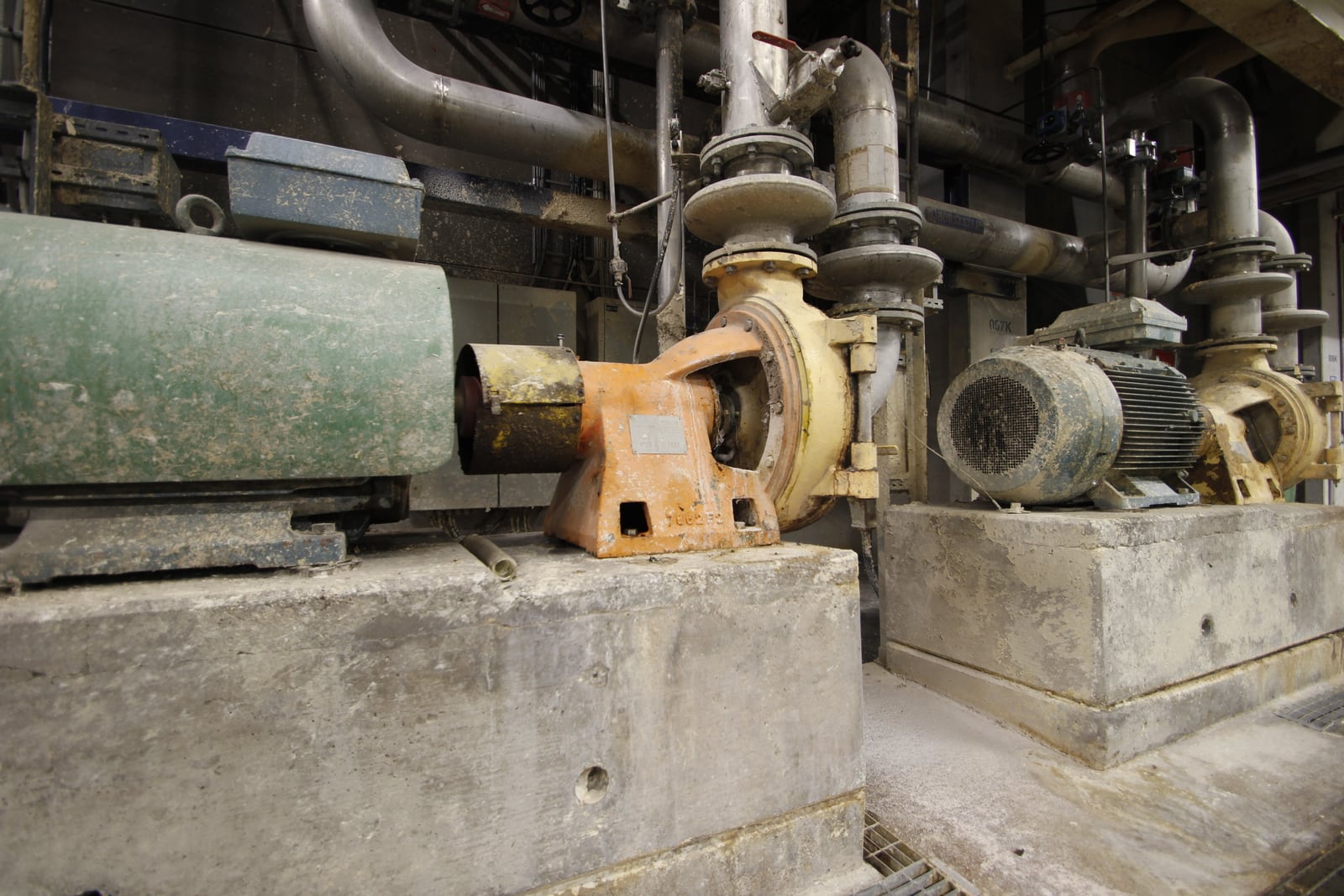

Find out which color fraction you would actually treat
Fiber and pigment are not dissolved dye
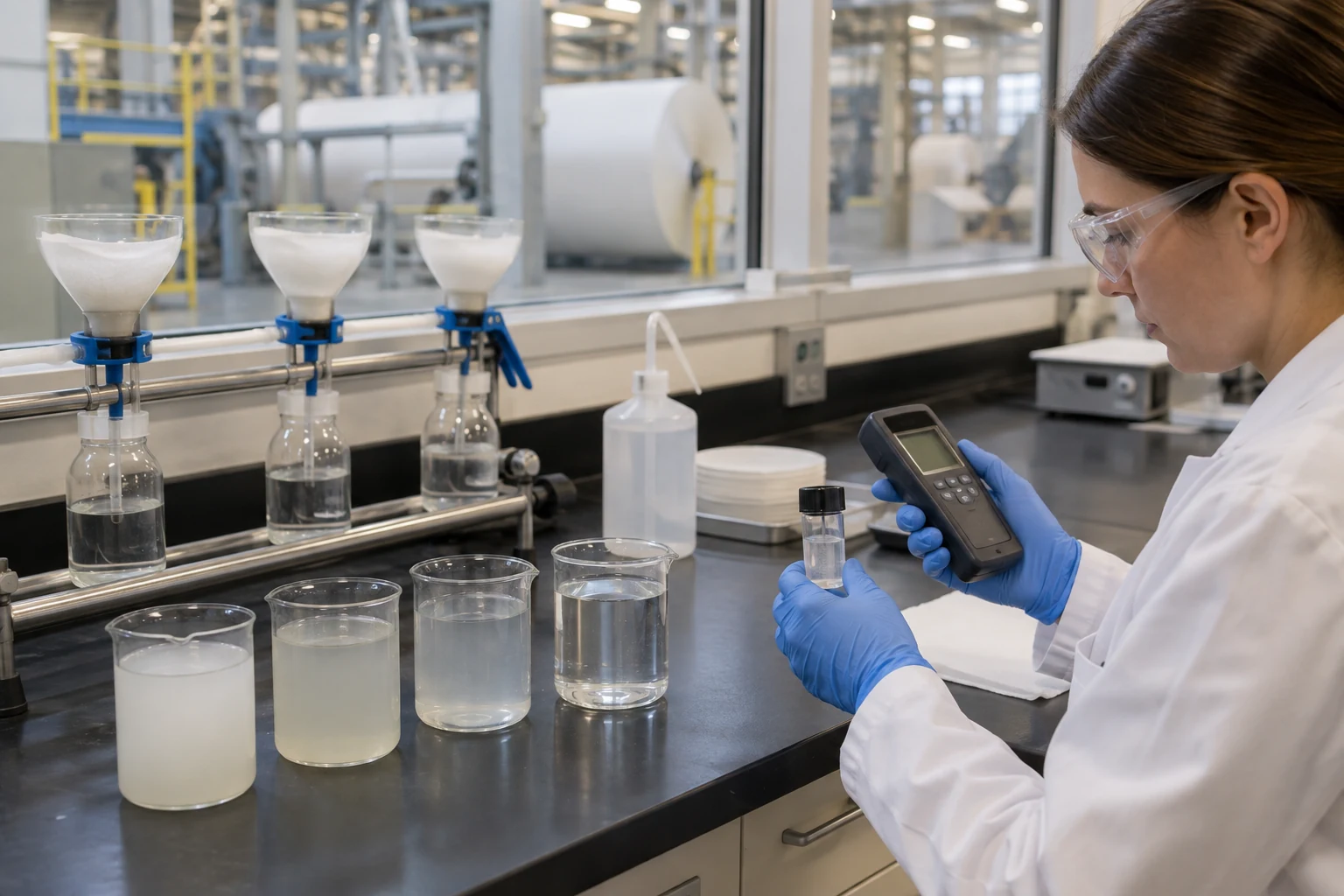
Compare the color of an unfiltered water sample with a filtered sample using a documented filter method. Measure turbidity or suspended solids alongside color when those readings affect the decision. If much of the apparent color falls with solids, a save-all or other separation issue may dominate. If filtered water remains colored, a dissolved or fine-colloidal fraction deserves a different test. Neither result alone identifies the dye molecule. Keep pH, temperature, conductivity, background iron and process additives with the sample because those conditions can affect color measurements and any subsequent coagulation response.
Use the finished sheet as a distinct endpoint. Brightness, whiteness, hue and the relevant customer's color tolerance are not the same as water absorbance. A water-treatment result that looks attractive in a beaker could remove fines needed by the process, introduce a new residual or create a different shade shift. Conversely, a small visible water tint may have no significant effect on a dark grade that already receives compatible colored fiber. Define the desired grade and its measurement before judging the water. A paper-industry process-water review notes that dyes can matter in colored-paper wastewater, but its broad examples are not a diagnosis of this loop.
Watch the save-all and recirculation boundary
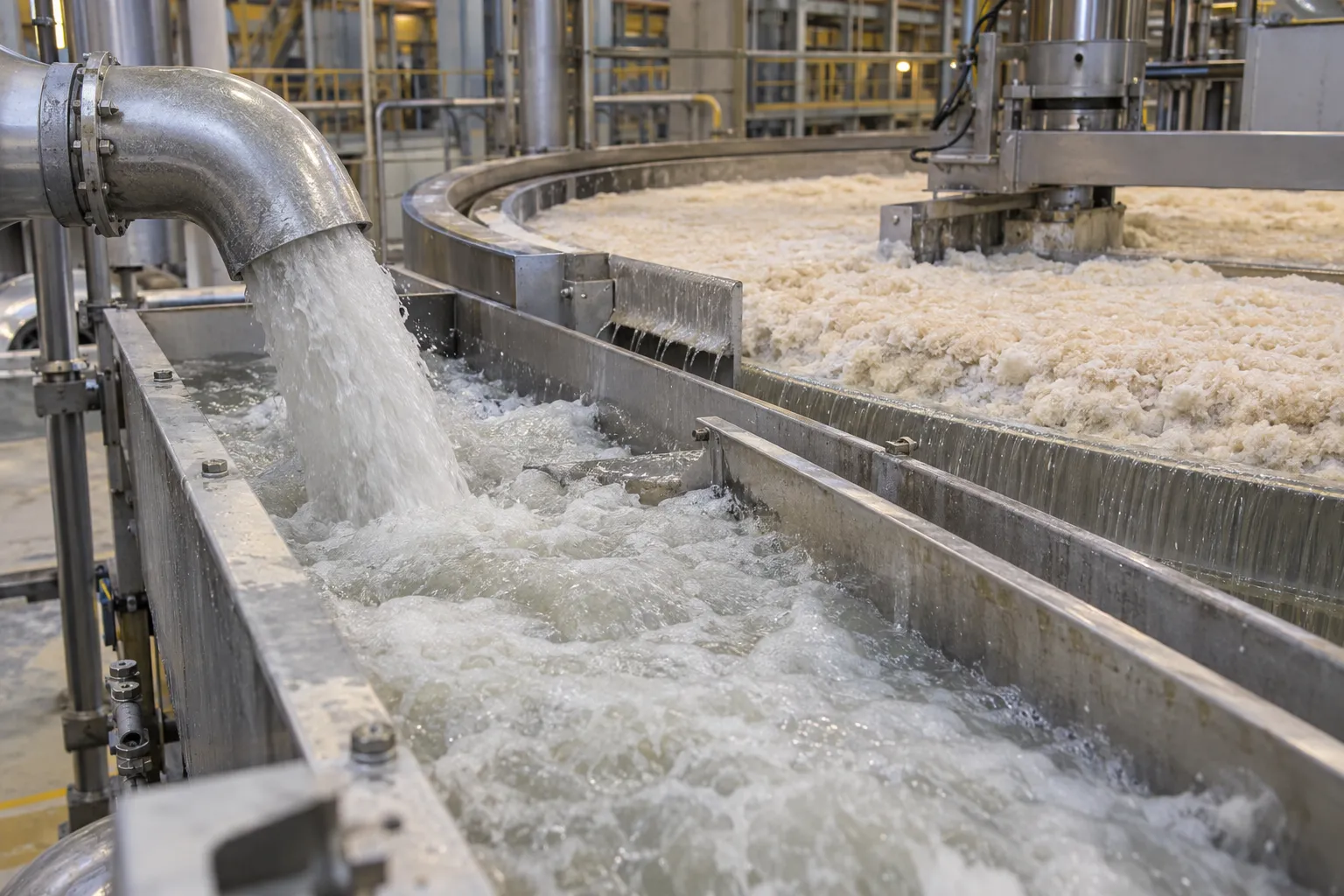
Check whether the incoming disturbance is actually being captured, concentrated or returned by the existing save-all. A change in flow, polymer program, screen condition or solids loading can alter the split between recovered fiber, reject and clarified water. Take paired samples on both sides of the separator at the same event phase. If the water clears after a separator adjustment but the sheet still carries colored fiber, that is a stock-blend issue. If the sheet recovers while color accumulates in a closed water circuit, decide whether the accumulated fraction requires a controlled bleed or sidestream treatment under the mill's water and discharge constraints.
A water loop can carry additives from earlier grades. Surface starch, coatings, sizing residues and other chemicals may return with dry-end broke. Their combined effect can change wet-end demand even when the color measurement is stable. Do not equate an off-shade sheet with one dye molecule or interpret a jar-test color decrease as proof that the sheet will return to target. The process-water reuse guide addresses broader chemistry accumulation; here the purchase decision is specifically whether a measured colored fraction warrants a source or sidestream intervention.
| Observed pattern | Evidence to confirm | First decision |
|---|---|---|
| Off-shade sheet follows one returned colored-fiber batch; water color is modest | Match grade, return timestamp and sheet sensor; inspect fiber color. | Segregate, redirect or smooth the incompatible broke stream. |
| Unfiltered water is colored; filtration removes much of the color | Compare defined filtered color, turbidity, solids and save-all capture. | Review particle/fines separation and its reject path before a dissolved-color agent. |
| Filtered water remains colored through the return loop | Track pH, color method, source, circulation and grade response. | Test a bounded sidestream water-treatment route with defined solids handling. |
| Water color falls in a jar but the sheet remains off shade | Check colored fiber, optical effects, grade target and trial representativeness. | Do not credit the water treatment as a sheet-color solution. |
| Shade and white-water color rise at different times | Align sample clocks, chest levels and loop residence. | Correct the source-to-measurement map before changing product. |
Design the sidestream test only after the source map holds
If the evidence points to a persistent colored water fraction, collect a representative sample during the event and another after the loop stabilizes. Record filtered and unfiltered color with the same method, suspended solids, pH, alkalinity where relevant, conductivity, dye or grade history, temperature and existing chemical program. If an incoming broke pulse lasts only a short time, a composite that dilutes the peak can mislead the trial; retain event-timed samples. Compare a no-treatment control, a physical-separation option where particle color exists, and any candidate decolorization route on the same water. Do not test a decolorant only against fresh tap water or a different mill's dye.
Match the test's endpoint to the equipment available. A chemical route may form solids that then need flotation, settling or filtration. Track the treated water, the recovered solids, the reject or sludge and any residual product. Check whether the proposed sidestream can be isolated from the paper machine while compatibility with fibers, wet-end chemicals and finished-paper requirements is evaluated. A favorable beaker result cannot establish safe direct addition to the machine, long-term loop response, intended-use suitability or permit compliance. A deinking process-water review compares several decolorization mechanisms, but its dye and process conditions cannot be assumed here.
After a lab screen, a controlled sidestream or pilot can test continuous variability and separation. Sample before and after the selected contact and separation points, and observe the loop and sheet at realistic residence times. Determine whether the treatment removes the fraction that matters or merely transfers it to sludge. If the water is clearer but shade, formation or runnability worsens, the trial failed the buyer decision. If source segregation solves the problem with less complexity, document that outcome instead of purchasing a product that was not needed.
Connect a real water-treatment product to a bounded question
VCYCLETECH lists a Water Decoloring Agent in the Paper Chemicals category. Its catalog identity is a dicyandiamide-formaldehyde resin for color treatment of water. That identity can justify discussing a candidate for a characterized process-water sidestream; it does not certify direct wet-end dosing, removal of a particular dye, preservation of sheet shade, mineralization of organics or compliance with a paper-use requirement. Request the current offered grade's technical and safety documents before any trial. Confirm the actual receiving water, proposed location, contact and separation equipment, residual management and the paper grade affected.
Use a narrow purchasing question. Does the proposed grade, under a site-approved and documented test, reduce the specific filtered-water color fraction while the separator handles the resulting solids and the sheet remains within its own color and quality limits? If the main problem is colored fiber, the answer should be source routing, not a decolorant. If the color is particle-bound, a separation improvement may precede chemical selection. If a persistent soluble fraction remains after those corrections, a product comparison becomes meaningful. Preserve the baseline and repeated control samples so a changed grade or loop flush is not miscredited to chemistry.
Send the color question with the process map
Send the technical inquiry team the incoming colored or coated broke sources, grade-change sequence, color target and method, stock and white-water sampling locations, filtered and unfiltered color, solids, pH, water chemistry, save-all and bleed arrangement, existing chemical program, proposed sidestream boundary, solids-handling route, location and purchasing timeline. Include photographs or samples only if they represent the event. State whether the aim is to protect sheet shade, reduce recirculating water color or prepare a discharge treatment trial. Those are separate decisions; the supplier can then identify whether a current decolorant grade and its documents are relevant.
If the returned stock is PAE-treated wet-strength broke with persistent flakes, use the PAE broke repulping and return decision to assess pulper, screen and sheet evidence separately from color.
Frequently asked questions
Can a water decolorant remove color carried by dyed fiber?
Not by assumption. First distinguish colored fiber from a treatable water fraction; incompatible colored stock may need segregation or a compatible grade route.
Why compare filtered and unfiltered white-water color?
The paired samples help separate particle-bound color from color that remains after a defined filtration method. They do not identify a specific dye by themselves.
Does a clearer jar-test sample prove the next paper grade will meet shade?
No. Check loop residence, separation, chemical residuals, finished-sheet color and runnability during a representative controlled trial.
When is a sidestream decolorization trial appropriate?
When source and blend corrections have been assessed and a persistent characterized water-color fraction remains, with a defined treatment and solids-separation boundary.
What information should be sent for product screening?
Send broke and grade history, paired water and sheet-color results, filtered/unfiltered method, solids and water chemistry, equipment path, current additives, intended use and trial endpoint.