

Isothiazolinone Restrictions & Allergen Limits
TL;DR Isothiazolinone limits are context-specific: a cosmetic limit, a CLP label trigger and a BPR authorisation condition are not interchangeable. In EU cosmetics, MIT and the CMIT/MIT 3:1 mixture are restricted to rinse-off use at 15 ppm and are not permitted in leave-on cosmetics. For industrial products, start with the current CLP classification and the authorised product label; do not use the cosmetic 15 ppm figure as an industrial-water dose or legal ceiling.
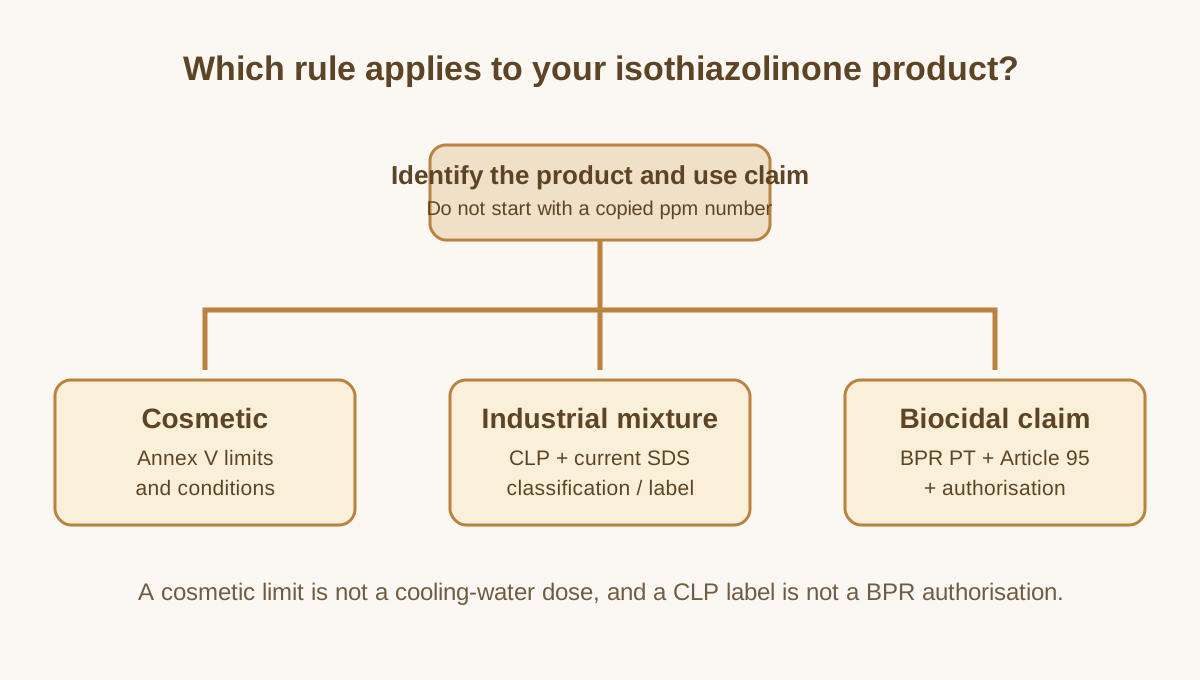
Why “the isothiazolinone limit” is the wrong question
MIT, CMIT/MIT, BIT, OIT and DCOIT can be subject to different rules depending on whether the product is a cosmetic, an industrial mixture, a treated article or a biocidal product. Cosmetics Regulation concentration limits govern cosmetic preservation. CLP governs classification, labels and sensitisation communication for substances and mixtures. The Biocidal Products Regulation governs making biocidal products available and using them for a defined product type. A purchaser needs the rule that matches the product and intended use.
This matters in industrial water treatment: a cosmetic restriction is not an operating dose, and a Skin Sens. classification is not an authorisation to make a biocidal claim. Use the current product label, SDS, BPR authorisation and local workplace requirements together.
Cosmetic restrictions: narrow but often misquoted
For EU cosmetics, MIT and the CMIT/MIT 3:1 mixture are allowed only in rinse-off products at a maximum of 0.0015% (15 ppm) and are not permitted in leave-on cosmetics. These entries are mutually exclusive in the cosmetics preservative list. Those facts are useful for explaining sensitisation history, but they do not create a 15 ppm cap for industrial cooling-water products, paints, detergents or an authorised PT11/PT12 biocide.
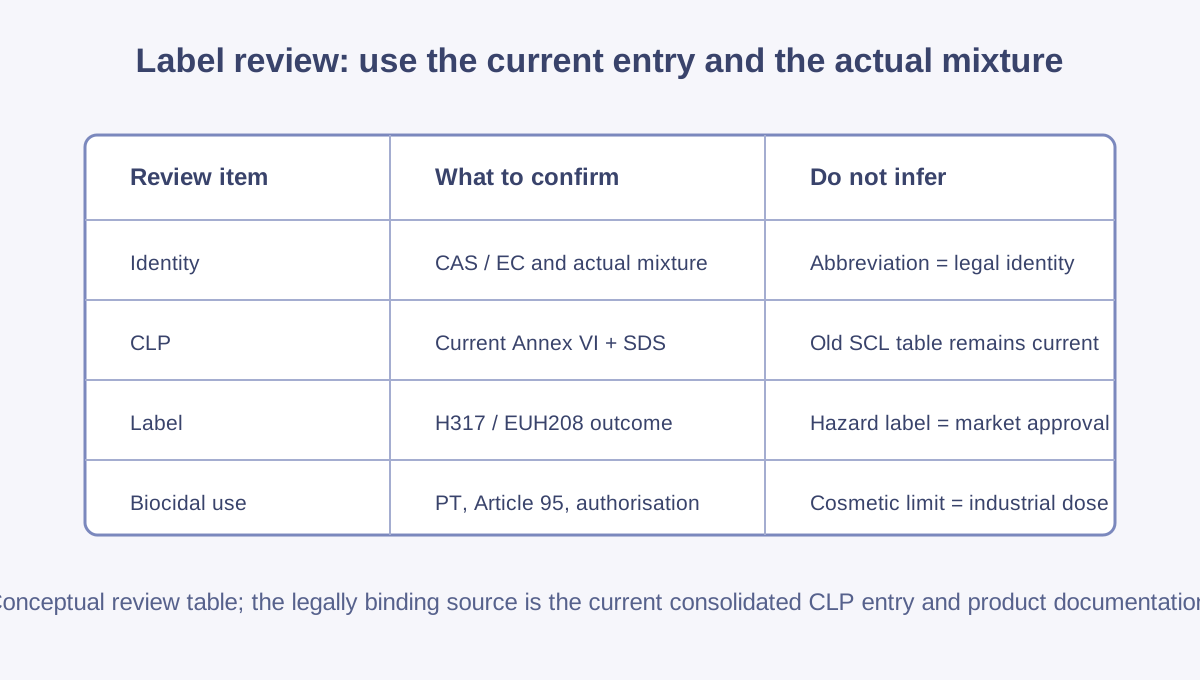
CLP skin-sensitiser and EUH208 checks
Under CLP, classification of a mixture and supplemental allergen communication are calculated from the applicable current classification and concentration limits. The consolidated CLP rules set generic Skin Sens. 1A classification at 0.1% and the associated elicitation threshold at 0.01%; where a substance has a lower specific concentration limit (SCL), the elicitation threshold is one tenth of that lower SCL. That is why a buyer must use the exact current Annex VI entry and supplier SDS rather than a copied internet table.
| Substance / mixture | Common CLP sensitisation reference | Procurement control |
|---|---|---|
| CMIT/MIT (3:1) | Skin Sens. 1A; published reference SCL 0.0015% | Check the current consolidated Annex VI entry and whether the mixture's concentration triggers classification or EUH208. |
| MIT | Skin Sens. 1A; published reference SCL 0.0015% | Keep cosmetics limits separate from the industrial SDS and BPR status. |
| BIT | Skin Sens. 1; published reference SCL 0.05% | Check current SDS and BPR PT/authorisation; ECHA consulted on BIT as a potential substitution candidate for PT11/PT12 in 2026. |
| OIT / DCOIT | Published reference SCL 0.0015% for Skin Sens. 1A | Verify the exact current Annex VI entry and intended product type before classifying or making a biocidal claim. |
What H317 and EUH208 mean in practice
H317 is the hazard statement “May cause an allergic skin reaction” when a mixture meets the relevant skin-sensitisation classification threshold. EUH208 is supplemental information for already sensitised people and is assessed against the applicable elicitation concentration. Neither phrase is a product-performance statement or a substitute for exposure control. The current SDS must show the formulation-specific classification, label elements and recommended controls.
Industrial water treatment: BPR still controls the claim
Isothiazolinones may be used at concentrations far above cosmetic limits in industrial preservation systems, but that does not remove their sensitisation hazards or BPR obligations. If a product claims to control organisms in cooling water, processing water or slime, confirm the intended product type, current active-substance status, Article 95 supplier listing where applicable and the finished product authorisation. Do not translate a cosmetic limit into a cooling-tower dose.
Buyer checklist for an isothiazolinone product
- Define whether the item is a cosmetic, industrial mixture, treated article or biocidal product and record the intended use.
- Request a current supplier SDS, technical sheet and batch COA; check CAS/EC numbers rather than abbreviations alone.
- Review the current CLP Annex VI entry and the mixture's classification, H317/EUH208 language and required PPE/training.
- For a biocidal claim, verify the BPR product type, Article 95 position and finished-product authorisation.
- Recheck after any formulation, supplier, concentration, market or use-claim change.
Review biocide and algicide options with the actual system, target organisms and destination rules. VCYCLETECH does not use this article to claim that a particular product is authorised for a named EU or GB market.
Frequently asked questions
What is the EU limit for MIT in cosmetics?
MIT is permitted in EU rinse-off cosmetics at 0.0015% (15 ppm) and is not permitted in leave-on cosmetics. That cosmetic rule does not set an industrial-water treatment dose or replace a product-specific SDS, CLP assessment or BPR authorisation.
What is the difference between MIT and CMIT/MIT?
MIT is 2-methyl-2H-isothiazol-3-one. CMIT/MIT is the 3:1 reaction mixture of methylchloroisothiazolinone and methylisothiazolinone. They have separate legal entries and cannot simply be treated as interchangeable on labels or in cosmetic formulations.
When does EUH208 apply to an isothiazolinone mixture?
EUH208 is supplemental allergen information assessed using the applicable CLP elicitation concentration. Where a skin sensitiser has an SCL below 0.1%, the CLP rule uses one tenth of that lower SCL. Check the current Annex VI entry and the supplier's current SDS for the actual mixture.
Does H317 mean a biocide cannot be sold?
No. H317 communicates a skin-sensitisation hazard. Market access for a biocidal product also depends on the applicable BPR active-substance status, Article 95 requirements, product authorisation, label conditions and national rules.
Are cosmetic limits the same as industrial cooling-water limits?
No. Cosmetic preservation limits, industrial mixture classification and a cooling-water biocide's BPR authorisation are different controls. Buyers should not copy a 15 ppm cosmetic limit into a cooling-water treatment programme.
About the manufacturer
VCYCLETECH is a China-based manufacturer of water-treatment chemicals. We provide technical documents, batch COA support and OEM/ODM service; buyers remain responsible for confirming market-specific legal status and product authorisation.
References
- ECHA: Cosmetics Regulation Annex V preservatives
- EUR-Lex: CLP sensitisation and elicitation rules
- EUR-Lex: MIT PT6 approval decision
- Contact Dermatitis review of non-cosmetic isothiazolinone exposure
Related: biocide & algicide products · biocide chemistry selection · water-treatment biocides guide · EU BPR cooling-biocide checklist