
EU BPR Compliance Checklist for Cooling Biocides
TL;DR For an EU cooling-water biocide, an SDS is not proof of market compliance. Verify the active substance for the intended product type, the current Article 95 supplier listing and the authorisation of the finished biocidal product in the destination market. PT11 covers preservatives for liquid-cooling and processing systems; PT12 covers slimicides. The supplier and product authorisation must match the actual active, product type, use claim and country of sale.
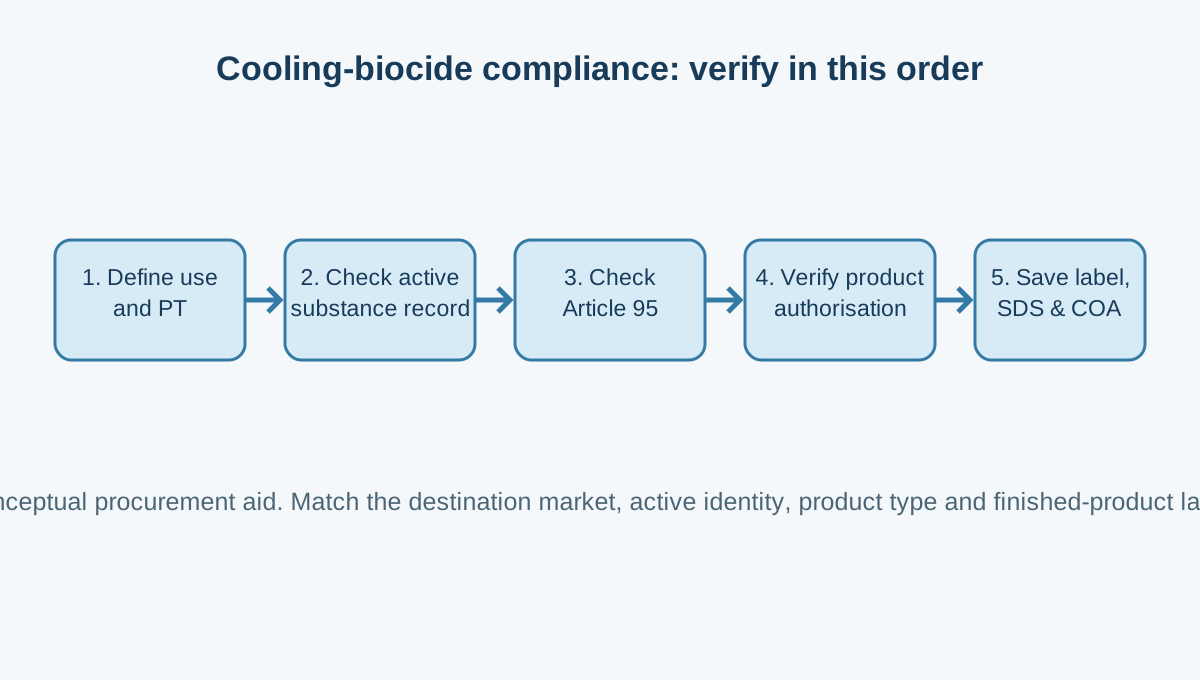
What must an EU cooling-water biocide meet?
EU BPR compliance has three linked checks: an active substance must be approved or otherwise lawfully supported for the relevant product type; the substance or product supplier must appear on the Article 95 list for that product type; and the finished product must hold the required Member-State or Union authorisation before it is made available or used. A safety data sheet supports hazard communication, but it cannot substitute for those market-access checks.
For cooling-water buyers, start by defining the intended claim and system. PT11 is for preservatives for liquid-cooling and processing systems. PT12 is for slimicides, including materials, equipment and processes used in industrial processes. The same chemistry can have different status, conditions or authorisation routes by product type, so never infer PT11 approval from a PT6, PT2 or PT12 record.
Active-substance approval vs product authorisation
Active-substance approval is an EU-level decision about an active for a defined product type and conditions. Product authorisation concerns the actual formulation, label claims, dose, users, exposure controls and national or Union market route. Procurement should therefore ask for the product authorisation number and issuing authority, not merely a supplier statement that an active is “BPR approved”.
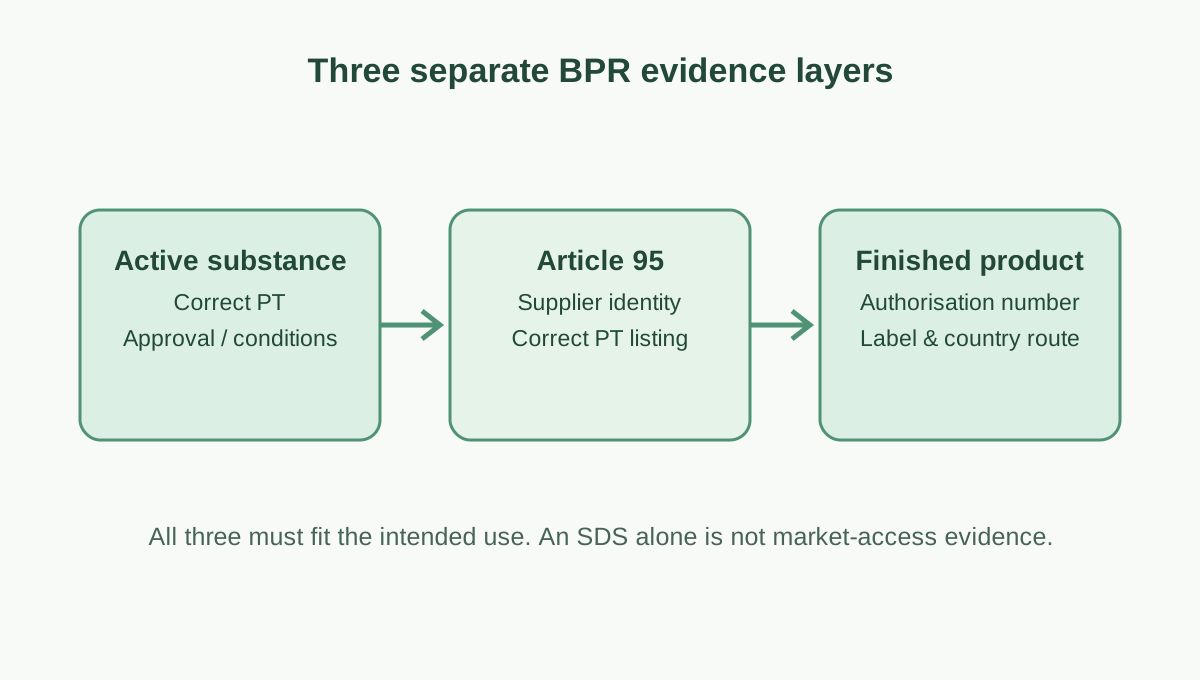
Article 95: what to check before purchase
Article 95 prevents a biocidal product containing a relevant substance from being made available on the EU market unless the substance supplier or product supplier is listed for the relevant product type. ECHA publishes the official Article 95 list; its PDF version is the authentic version. Save the dated PDF or supplier extract used for each order, because listings and product-type coverage can change.
- Match the active by CAS/EC number, not trade name alone.
- Match the intended PT, especially PT11 or PT12.
- Record whether the listed party is the substance supplier or product supplier.
- Check the exact list version and date, then retain it with the PO and COA.
- Confirm that the product authorisation and label cover the proposed cooling-system use.
Current examples that need careful reading
| Active / issue | What the current record supports | Buyer action |
|---|---|---|
| Glutaraldehyde | EU Decision 2026/1109 postpones expiry for PT2, 3, 4, 6, 11 and 12 to 31 March 2029 while renewal is evaluated. | Check the authorised finished product and its label; the extension is not a blanket approval for every formulation or country. |
| DBNPA | ECHA BPC material discusses PT11 use in cooling systems and the alternatives assessment. Status must be checked in the live factsheet and decision for the precise PT. | Do not transfer a PT6, PT11 or GB result to another PT. Obtain current official record plus product authorisation. |
| BIT / isothiazolinones | ECHA's 2026 candidate-for-substitution consultation included BIT for PT11/PT12. | Check current conditions, authorisation and any candidate-for-substitution implications before specifying an alternative. |
GB BPR is not the EU BPR
Great Britain runs a separate BPR regime. HSE's April 2026 non-approval decision includes DBNPA in PT2, with defined phase-out dates, while an EU record for a different product type does not decide the GB outcome. For any UK-bound shipment, verify the GB active/product-type status and GB product authorisation separately; do not reuse an EU Article 95 or EU authorisation document as proof.
Cooling-biocide procurement checklist
- Identify the destination country, use claim, system type and target PT before requesting a quote.
- Download the current ECHA active-substance and Article 95 evidence; record date, CAS/EC number and PT.
- Request the finished product's authorisation number, label and conditions of use for that market.
- Confirm the supplied batch matches the authorised formulation and retain an up-to-date SDS plus batch COA.
- Repeat the check at reorder, after a formulation change and before extending a claim to another country or PT.
For a commercial review of products and documentation, compare biocide and algicide options with the intended system and destination market. This checklist is a buying-control tool, not legal advice or a claim that any specific VCYCLETECH product is authorised in the EU or GB.
Frequently asked questions
What is PT11 under the EU BPR?
PT11 covers preservatives for liquid-cooling and processing systems. It is distinct from PT12 slimicides and from PT2 disinfectants, so a buyer must verify the live active-substance and product record for PT11 rather than relying on another product type.
What is the difference between PT11 and PT12?
PT11 concerns preservation of liquid-cooling and processing systems. PT12 concerns slimicides used to control slime in industrial processes, materials or equipment. The correct classification depends on the intended use and label claim, not just the active ingredient.
Is an SDS enough to show BPR compliance?
No. An SDS communicates hazards. EU market access also requires the relevant active or product supplier to be on the Article 95 list for the product type and the finished biocidal product to have the required authorisation.
Do I need an Article 95 listing for a cooling-water biocide?
For a relevant substance, the substance supplier or product supplier must be listed for the product type before the product can be made available on the EU market. Check the official current ECHA PDF list and save dated evidence.
Does an EU BPR document work in Great Britain?
No. Great Britain has a separate GB BPR regime. Verify the active-substance/product-type status and product authorisation with HSE for GB-bound supply, even where an EU record exists.
About the manufacturer
VCYCLETECH is a China-based manufacturer of water-treatment chemicals. We provide technical documents, batch COA support and OEM/ODM service; buyers remain responsible for confirming market-specific legal status and product authorisation.
References
- ECHA: Article 95 active substances and suppliers
- ECHA official Article 95 list download
- EUR-Lex: Decision (EU) 2026/1109 on glutaraldehyde
- HSE: GB BPR ministerial decisions
Related: biocide & algicide products · water-treatment biocides guide · BKC, glutaraldehyde & isothiazolinone selection · isothiazolinone restrictions