
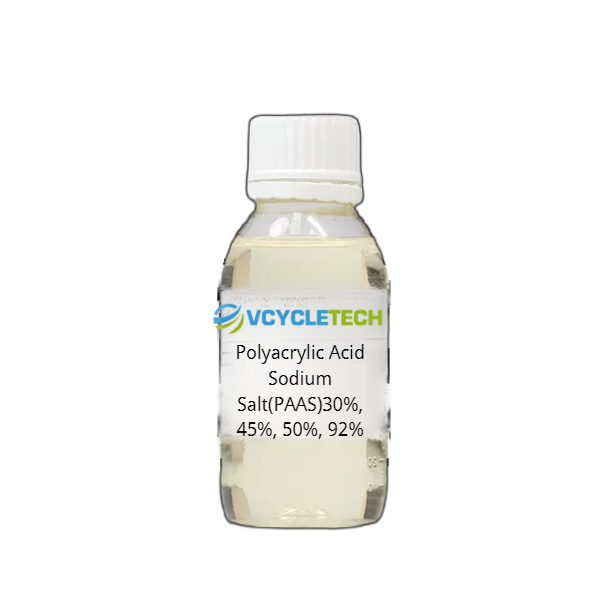
CAS No. 9003-04-7
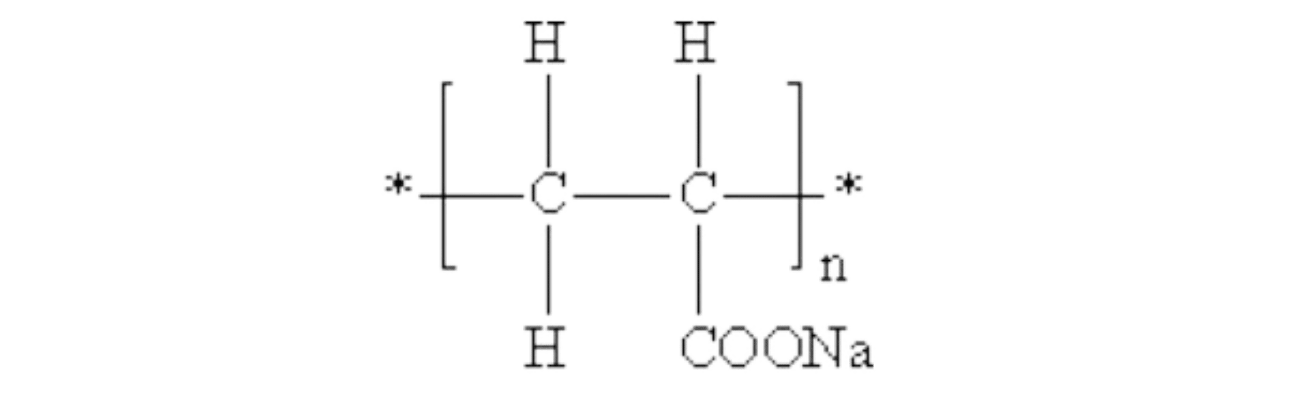
Structural Formula:
Properties:
Polyacrylic Acid Sodium Salt is a safe and water-soluble compound used in alkaline and high-concentration environments without the risk of forming scale sediment. It effectively disperses microcrystals or microsand from calcium carbonate, calcium phosphate, and calcium sulfate.
This compound is ideal for use as a scale inhibitor and dispersant in circulating cool water systems, papermaking, weaving, dyeing, ceramics, painting, and other applications.
Polyacrylic Acid Sodium Salt Specification:
| Items | Index | ||
|---|---|---|---|
| Appearance | Colorless to pale yellow transparent liquid | Colorless to pale yellow transparent liquid | Colorless to pale yellow transparent liquid |
| Solid content, % | 30 min | 45 min | 50 min |
| Free monomer(as AA), % | 0.5 max | 0.8 max | 1.0 max |
| Density (20℃), g/cm3 | 1.15 min | 1.20 min | 1.25 min |
| pH(as it) | 6.0~8.0 | 6.0~8.0 | 6.0~8.0 |
Polyacrylic Acid Sodium Salt Usage:
Polyacrylic Acid Sodium Salt can be an effective scale inhibitor and dispersant in circulating cool water systems. It is ideal for power plants, iron & steel factories, chemical fertilizer plants, refineries, and air conditioning systems. For best results, the dosage should be determined based on the quality of water and equipment materials being used.
Generally, a dosage of 2-15mg/L is preferred when used alone. Experimenting with different dosages may be necessary to find the most effective amount if used as a dispersant.
Frequently Asked Questions

What is Polyacrylic Acid Sodium Salt?
Polyacrylic Acid Sodium Salt, also known as PAAS, is a white powder soluble in water. It is an acrylic acid copolymer that has been neutralized with sodium hydroxide. PAAS is used as a flocculant in various industries, including water treatment, oilfield applications, and mining.
What are the properties of Polyacrylic Acid Sodium Salt?
The properties of PAAS depend on the degree of neutralization. The degree of neutralization is the ratio of sodium hydroxide to acrylic acid monomers in the copolymer. The lower the degree of neutralization, the higher the charge density and the lower the molecular weight. The higher the degree of neutralization, the lower the charge density and the higher the molecular weight.
How is Polyacrylic Acid Sodium Salt made?
PAAS is made by copolymerizing acrylic acid and sodium hydroxide. The ratio of monomers to comonomers determines the degree of neutralization. The copolymer is then dried and ground into a white powder.
What are the uses of Polyacrylic Acid Sodium Salt?
PAAS is used as a flocculant in various industries, including water treatment, oilfield applications, and mining. It is also used as an emulsifier, dispersant, and thickener in cosmetics and personal care products.
How does Polyacrylic Acid Sodium Salt work?
PAAS works by adsorbing onto particles in suspension and causing them to clump together (flocculate). The flocculated particles are then heavy enough to settle out of the suspension.
What are the benefits of using Polyacrylic Acid Sodium Salt?
What are the drawbacks of using Polyacrylic Acid Sodium Salt?
One drawback of PAAS is that it can increase sludge volume due to its high adsorption capacity. Additionally, PAAS can hydrolyze in alkaline conditions to form acrylamide, a carcinogen.
8 . How do I store Polyacrylic Acid Sodium Salt?
Polyacrylic Acid Sodium Salts should be stored in an airtight container in a cool, dry place.



Related products
-
Polycarboxylic Antiscalant and Dispersant
Acrylic Acid/Acrylate/Phosphonic Acid/Sulfosalt Tetra-copolymer (WT-241)
Read more -
Polycarboxylic Antiscalant and Dispersant
Sodium Salt of 2-Acrylamido-2-Methylpropane Sulfonic Acid (ATBS.Na)
Read more


