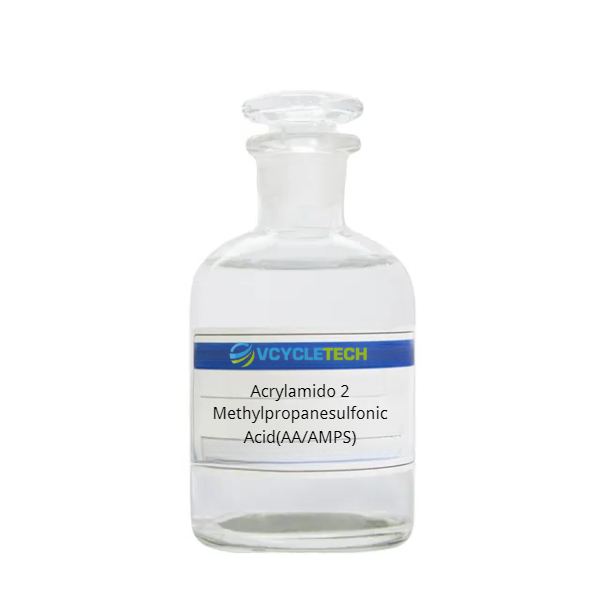
CAS No. 40623-75-4
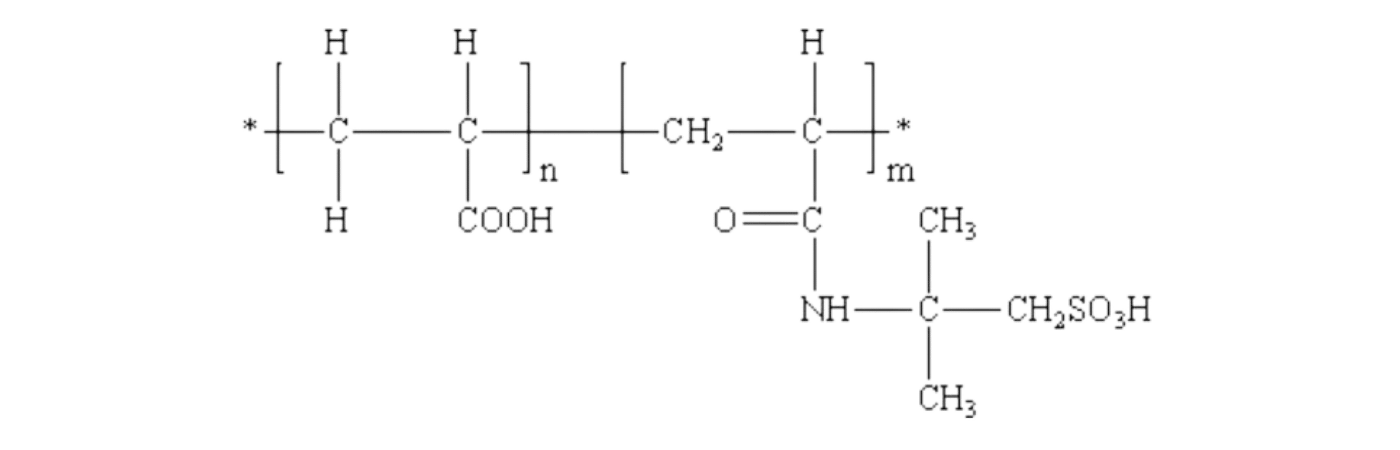
AA AMPS Structural Formula:
AA AMPS Properties:
Acrylic Acid-2-Acrylamido-2-Methylpropane Sulfonic Acid Copolymer is an ideal scale inhibitor and dispersant for high pH and alkaline water conditions. It is a copolymer of acrylic acid and 2-acrylamido-2-methylpropanesulfonic acid (AMPS) that features carboxylic groups, which provide great scale inhibition and dispersion capability as strong polarity from the sulfonic acid groups. This combination of properties gives it high calcium tolerance, and excellent scale inhibition properties against calcium phosphate, calcium carbonate, and zinc scales making it an attractive option for preventing mineral buildups at higher concentrations. When combined with organophosphines, the synergic effect is further enhanced.
AA AMPS Specification
| Items | Index | |
|---|---|---|
| Appearance | Colorless to light yellow viscous liquid | Colorless to light yellow viscous liquid |
| Solid content % | 30.0 min | 40.0 min |
| Free monomer (as AA)% | 0.50 max | 0.50 max |
| Density (20℃)g/cm3 | 1.10 min | 1.15 min |
| pH(1% water solution) | 3.0 max | 3.5-4.5 |
Frequently Asked Questions

What is AA-AMPS?
AA-AMPS is a water-soluble, nonionic surfactant. It is used as a dispersing agent, emulsifier, and wetting agent in many industries and applications.
What are the properties of AA-AMPS?
AA-AMPS has a molecular weight of 176 and a HLB value of 12.5. It is soluble in water at all temperatures and has good stability over a wide pH range. It is also compatible with most anionic, cationic, and nonionic surfactants.
What are the uses of AA-AMPS?
AA-AMPS is used as a dispersing agent for pigments and fillers in paints and coatings, as an emulsifier for oil-in-water emulsions, and as a wetting agent for textile dyeing and printing. It is also used in metalworking fluids, adhesives, sealants, and asphalt emulsions.
How does AA-AMPS work?
AA-AMPS works by reducing the surface tension of water, which allows it to wet surfaces better and disperse pigments more evenly. It also helps to stabilize emulsions by preventing droplets from coalescing.
What are the benefits of using AA-AMPS?
The benefits of using AA-AMPS include improved dispersion of pigments and fillers, increased stability of emulsions, better wetting of surfaces, and reduced surface tension.
What are the hazards of AA-AMPS?
The hazards of AA-AMPS include eye irritation, skin irritation, and respiratory irritation. If ingested, it can cause gastrointestinal irritation and central nervous system depression. If inhaled, it can cause coughing, wheezing, and shortness of breath.
How should AA-AMPS be used?
AA-AMPS should be used according to the manufacturer’s instructions or as directed by a qualified professional. It should be stored in a cool, dry place away from heat sources or open flames.
What are the precautions for using AA-AMPS?
Wear appropriate personal protective equipment such as gloves, goggles, and a respirator if necessary when using AA-AMPS. Avoid contact with skin and eyes; if contact occurs, flush with water for 15 minutes and seek medical attention if necessary. If ingested, do not induce vomiting; call a physician or poison control center immediately.




Related products