
Product Details

Facebook
LinkedIn

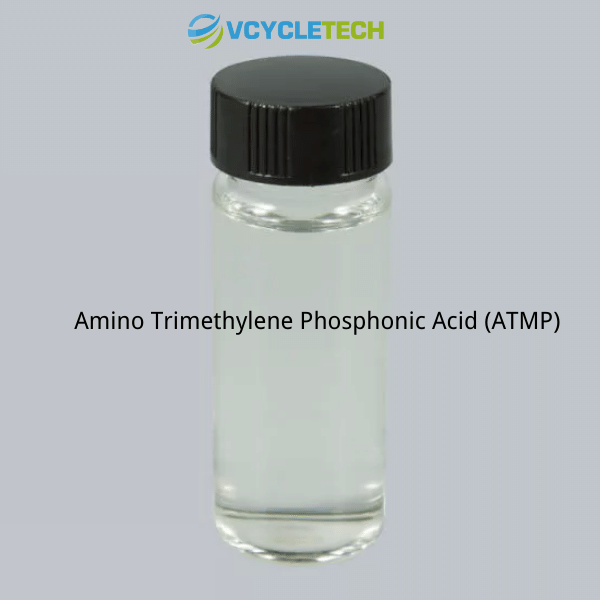
Amino Trimethylene Phosphonic Acid (ATMP)

TL;DR Start with scale-inhibitor and formulation selection and water analysis and scale/deposit identity. Compare the proposed grade specification and supply requirements before requesting a quotation.

Amino Trimethylene Phosphonic Acid (ATMP) — Discuss Amino Trimethylene Phosphonic Acid (ATMP) for scale-inhibitor and formulation selection. Start with water analysis and scale/deposit identity and acid or salt identity and required active basis. Check the offered grade specification and include the intended application when requesting a quotation.

For a Amino Trimethylene Phosphonic Acid (ATMP) enquiry, include water analysis and scale/deposit identity and acid or salt identity and required active basis, together with the current treatment or formulation. Use the offered grade documents and a representative comparison to decide the next step.

Discuss the grade and application

For Amino Trimethylene Phosphonic Acid (ATMP), start with scale-inhibitor and formulation selection.

Selection inputs

  • Water analysis and scale/deposit identity
  • Acid or salt identity and required active basis
  • Existing oxidant and inhibitor program
  • Proposed formulation and representative trial

Documents and supply

Identify the proposed grade, required quantity, packaging and destination. Ask which specification, TDS, SDS and batch-document options apply to that offer.

Technical documents · Company certificate scopes

Request a quote

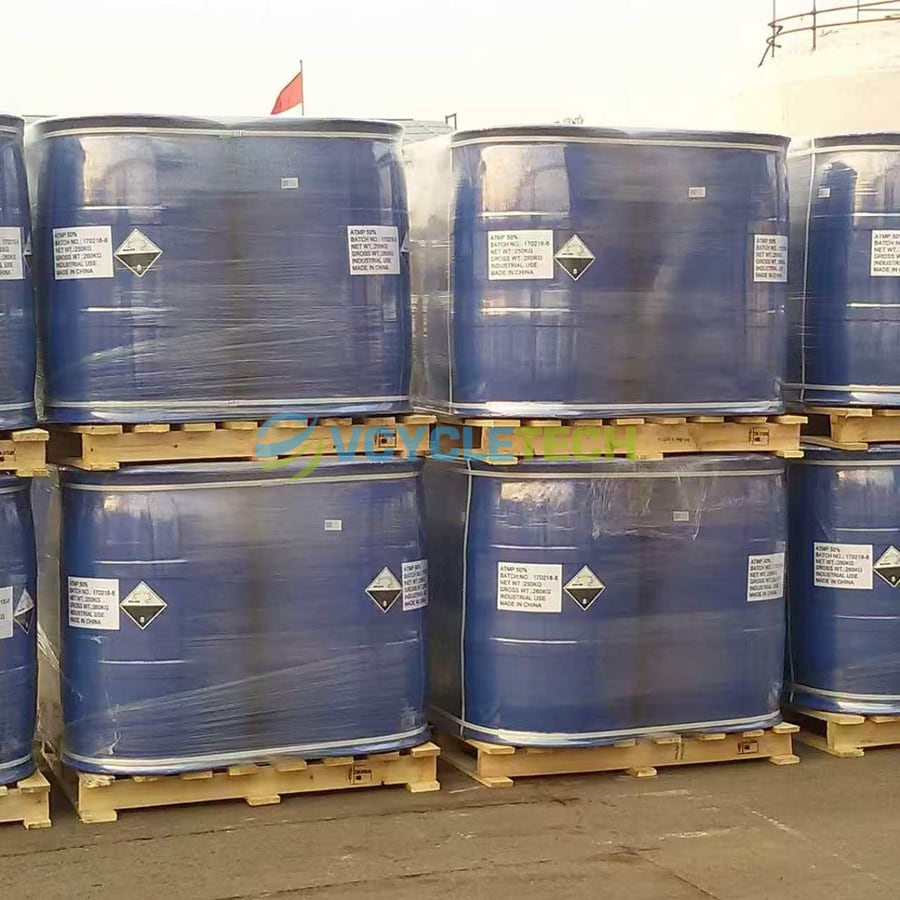
Customer application: Petrochemical plant in UAE. Discuss your application.

Product Description

CAS No. 6419-19-8

Molecular Formula: N(CH2PO3H2)3 Molecular weight: 299.05

Structural Formula:

Amino Trimethylene Phosphonic Acid (ATMP) -3

Properties:

ATMP is an effective chelating agent with low threshold inhibition and lattice distortion capabilities. It can prevent the build-up of scale, especially calcium carbonate, in water systems. In addition, ATMP has excellent chemical stability and is extremely difficult to hydrolyze in water. At high concentrations, it acts as a suitable inhibitor for corrosion.

ATMP is widely used in industrial circulating excellent water systems and oilfield pipelines of thermal power plants and oil refineries. Its properties allow it to prevent scale formation on metal equipment and reduce corrosion, making it highly beneficial for these industries.

The solid form of ATMP is crystal powder, soluble in water, highly deliquescent, and suitable for use in cold temperatures and freezing districts. Its high purity rating makes it perfect for use as a chelating agent in woven & dyeing industries and as a metal surface treatment agent.

Specification:

ItemsIndex
StandardSolid
AppearanceClear, Colorless to pale yellow aqueous solutionWhite crystal powder
Active acid %50.0 min95.0 min
Chloride (as Cl-)%1.0 max1.0 max
pH (1% water solution)2.0 max2.0 max
Fe, mg/L20.0 max20.0 max
Density (20℃)g/cm31.30 min-

Amino Trimethylene Phosphonic Acid Uses:

Amino Trimethylene Phosphonic Acid (ATMP) is an environmentally-friendly chelating agent in various industrial sectors. It can bind and transport metal ions more effectively than other chemical agents. ATMP is highly effective in controlling scale and corrosion in water systems, as it prevents the clogging of pipelines and heat exchangers. Furthermore, it is widely used as a detergent booster for its cleansing effect, helping to clean hard surfaces without extra scrubbing or polishing. In addition, ATMP is also used in textile and dye industries for desizing and finishing processes, providing efficient results with minimal environmental impact.

Atmp Acid package and Storage:

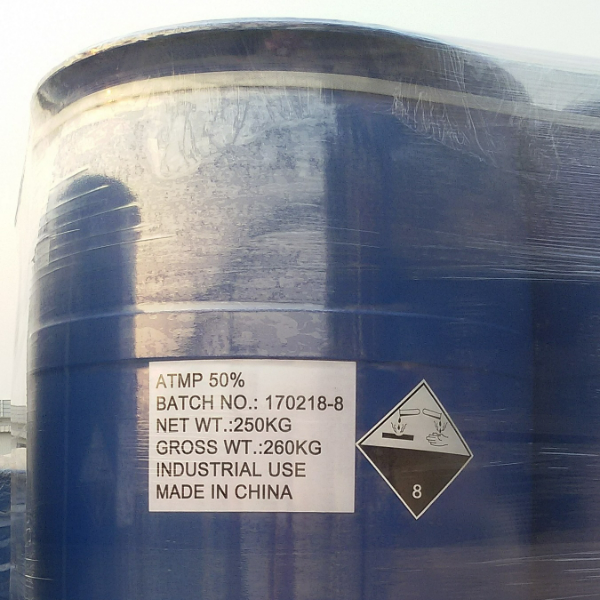
ATMP liquid:200L plastic drum, IBC(1000L), customers’ requirement.
ATMP solid: 25kg/bag, customers’ requirement.
Storage for ten months in a dark room and dry place.

Amino Trimethylene Phosphonic Acid Safety Protection:

Acidity, Avoid contact with eye and skin. Once contacted, flush with water.

Synonyms:

ATMP;ATMPA;AMP
Amino Trimethylene Phosphonic Acid;
Amino Tri(Methylene Phosphonic Acid);
Tris(Methylene Phosphonic Acid) Amine;
Nitrilotrimethylphosphonic Acid(NTP);
Nitrilotrimethylenetris(Phosphonic Acid);
Нитрилотриметилфосфоновая кислота(НТФ -кислота)

Related products

Consult Us Now for Water Treatment Chemical Solutions

We’re Always Here To support

We’re Always Here To support

Request a quote

ATMP Applications

ATMP is a versatile organic phosphonic-acid scale and corrosion inhibitor. By chelating calcium, magnesium and other metal ions it prevents carbonate and phosphate scale across a wide range of industrial water systems.

  • Circulating cooling water — threshold scale and corrosion inhibition
  • Low-pressure boilers — scale control
  • Oilfield water and reinjection systems
  • Detergent builder; textile and dyeing auxiliaries

Dosage & Feed Guidance

ApplicationTypical dosage
Circulating cooling water (scale)1–15 ppm (mg/L)
Corrosion-inhibition programblended with zinc salts, polyphosphates or copolymers

Dose ATMP continuously; optimum levels depend on water hardness, cycles of concentration and the overall program. For corrosion control it is normally combined with zinc, polyphosphate or AA/AMPS-type copolymers. VCYCLETECH provides a tailored dosing program on request — email sales@vcycletech.com.

Find the right product for your application

Compare Amino Trimethylene Phosphonic Acid (ATMP) with the treatment objective and operating conditions of your water or process system. Include the industry, water characteristics, current treatment, target, required quantity, packaging and destination in your enquiry so the relevant available grades can be identified and quoted.

Discuss your application and request a quote →

ATMP — Frequently Asked Questions (FAQ)

What is Amino Trimethylene Phosphonic Acid (ATMP) used for?

ATMP is widely used as a scale and corrosion inhibitor in circulating cooling water, low-pressure boilers and oilfield water. It chelates calcium, magnesium and other metal ions to prevent calcium carbonate and calcium phosphate scale, and is also used as a detergent builder and in textile and dye processing.

What is the recommended dosage of ATMP?

In circulating cooling water ATMP is typically dosed at 1–15 ppm (mg/L) depending on water hardness and the overall program. For corrosion inhibition it is usually combined with zinc salts, polyphosphates or copolymers.

What is the difference between ATMP and HEDP?

ATMP and HEDP are both organic phosphonic-acid scale inhibitors. ATMP gives excellent threshold scale inhibition and is cost-effective, while HEDP performs better at high temperature and resists chlorine oxidation. They are often blended for a broader treatment range.

What should I include in a Amino Trimethylene Phosphonic Acid (ATMP) enquiry?

For scale-inhibitor and formulation selection, include water analysis and scale/deposit identity; acid or salt identity and required active basis; existing oxidant and inhibitor program; proposed formulation and representative trial. State the proposed grade or specification, quantity, packaging and destination so the product and commercial requirements can be compared.

Related guide: Cooling Tower Water Treatment: Chemicals & Dosage Guide

Related guide: Cooling Tower Water Treatment: Chemicals & Dosage Guide

Scroll to Top
Request a quote