
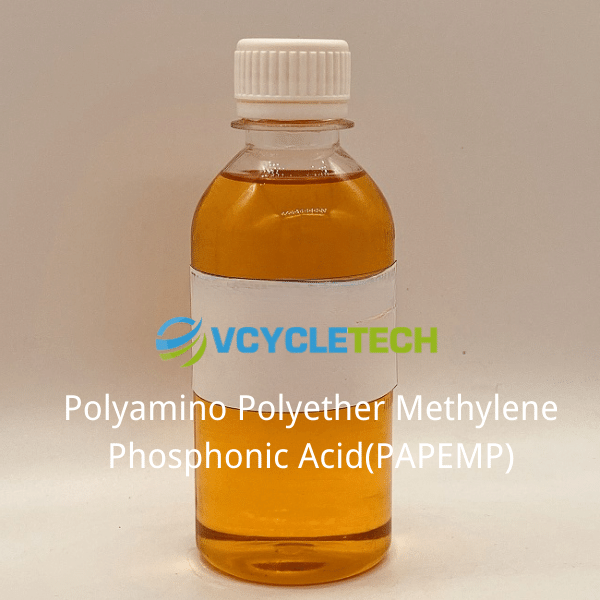
CAS No. 130668-24-5
Molecular weight: about 600
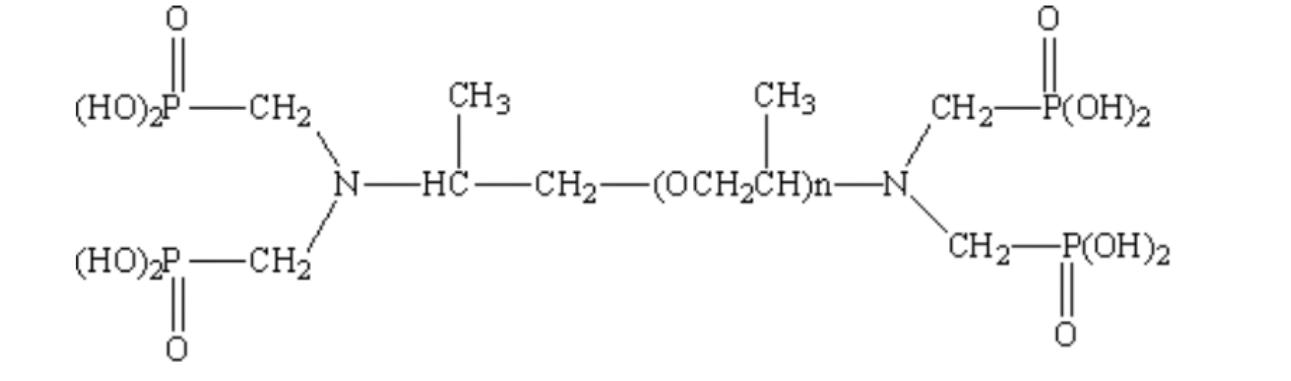
PAPEMP Structural Formula:
Properties:
PAPEMP is the ideal water treatment agent for high-level industrial operations. It has excellent chelation and dispersion effects, an impressive level of calcium tolerance, and highly effective scale inhibition powers. PAPEMP can be used as a scale and corrosion inhibitor in circulating cool water systems and oilfield refill water systems with elevated hardness, alkalinity, and pH levels.
More specifically, PAPEMP is particularly effective in preventing the formation of calcium carbonate, calcium sulfate, and calcium phosphate scales. Furthermore, it is an excellent choice with reverse osmosis systems and multistep flash vaporization systems that involve high salt concentrations, turbidity levels, and temperatures (such as those found in coal vaporization). It can also be used as an alternative to EDTA, DTPA, or NTA in woven & dyeing processes, such as yellow turnback inhibition agents.
Specification:
| Items | Index |
|---|---|
| Appearance | Light yellow to yellow transparent liquid |
| Active content % | 40.0 min |
| Phosphorous acid (as PO43-)% | 1.0 max |
| Density (20℃) g/cm3 | 1.15 min |
| pH (1% water solution) | 2.0 max |
Usage:
PAPEMP is a new water treatment agent with high chelation and dispersion effects, a high value of calcium tolerance, and good scale inhibition effects. It effectively prevents calcium carbonate precipitation at high supersaturation, making it an ideal choice for industrial water treatment. PAPEMP performs excellently in high hardness and pH, making it an excellent antiscalant. Additionally, polyether polyamine methylene phosphonates possess high calcium tolerance and have been found to give superior inhibition of the formation, deposition, and growth of scale. Overall, PAPEMP is an effective and efficient water treatment agent that can be used to prevent scaling in industrial applications.

How to Package and Store Polyamino Polyether Methylene Phosphonic Acid (PAPEMP)
Polyamino Polyether Methylene Phosphonic Acid (PAPEMP) is a highly corrosive liquid that can cause severe damage to unprotected equipment and personnel. Proper packaging and storage of this chemical are essential to ensure safety and prevent accidents. Here are some steps you should follow when packaging and storing PAPEMP:
- Choose the suitable packaging material for PAPEMP – rigid high-density polyethylene (HDPE) containers are recommended as they offer excellent chemical resistance. Do not use glass or paper because the acid can easily damage them.
- Ensure the containers you use are well sealed with tamper-evident seals or lids so that no outside contamination can occur while the container is in storage.
- Always store your chemicals away from heat sources, direct sunlight, humidity, and other corrosive materials. Keep your containers in a cool, dry place with adequate ventilation.
- Label all chemical containers with their proper name and hazard classifications to avoid any accidental misuse or severe injury should an accident occur while transporting or storing these materials.
- If possible, install fire prevention systems near the area where PAPEMP is stored to reduce the risk of accidental fires caused by a spark or heat source coming into contact with the acid solution.
Following these guidelines will ensure that your PAPEMP is safely packaged and stored for future use and prevent hazardous incidents from occurring due to improper handling of this highly corrosive material!


Related products
-
Phosphonates Antiscalant & Corrosion Inhibitor
WT-607 Scale Inhibitor for Oilfield Refill Water
Read more -
Phosphonates Antiscalant & Corrosion Inhibitor
Methylglycine N,N-diacetic acid, Trisodium Salt(MGDA.Na3)
Read more -
Phosphonates Antiscalant & Corrosion Inhibitor
L-glutamic Acid,N,N-diacetic Acid, Tetrasodium Salt(GLDA.Na4)
Read more


