
Phosphonate Acid vs Sodium Salt: Which to Buy?
TL;DR The molecule does the same job — the difference is handling, not chemistry. Buy the acid form when you want the most active per kilogram of freight and your system can take a low-pH liquid. Buy the sodium salt when you need a near-neutral product, a solid that will not freeze in transit or storage, or dosing into an alkaline system without a neutralisation step. HEDP·Na4 dissolves at about 774 g/L at 20 °C, does not absorb moisture as a powder, and stays effective to around 250 °C — which is why cold-climate and solid-handling buyers pay the sodium premium.
Same molecule, different package
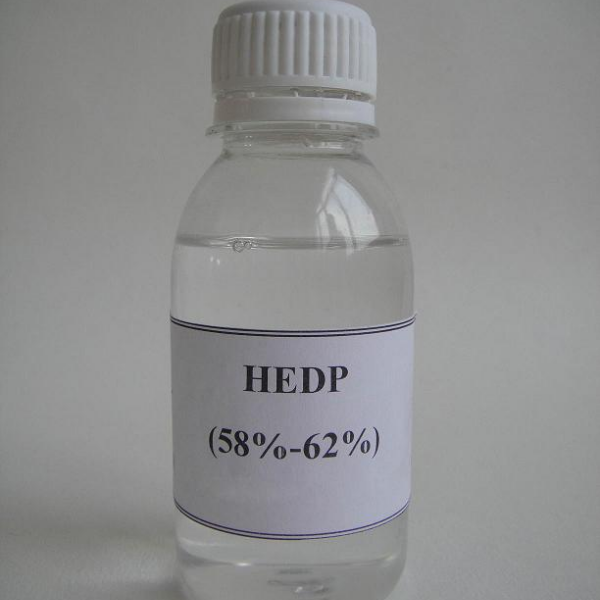
A phosphonate salt is the acid with some of its acidic hydrogens replaced by sodium — HEDP·Na2 has two replaced, HEDP·Na4 has four (C₂H₂O₇P₂Na₄). The scale-inhibiting group is unchanged. What changes is pH, physical form, freight, freezing behaviour and how you dose it — which is exactly the set of things that decides a purchase.
pH and handling
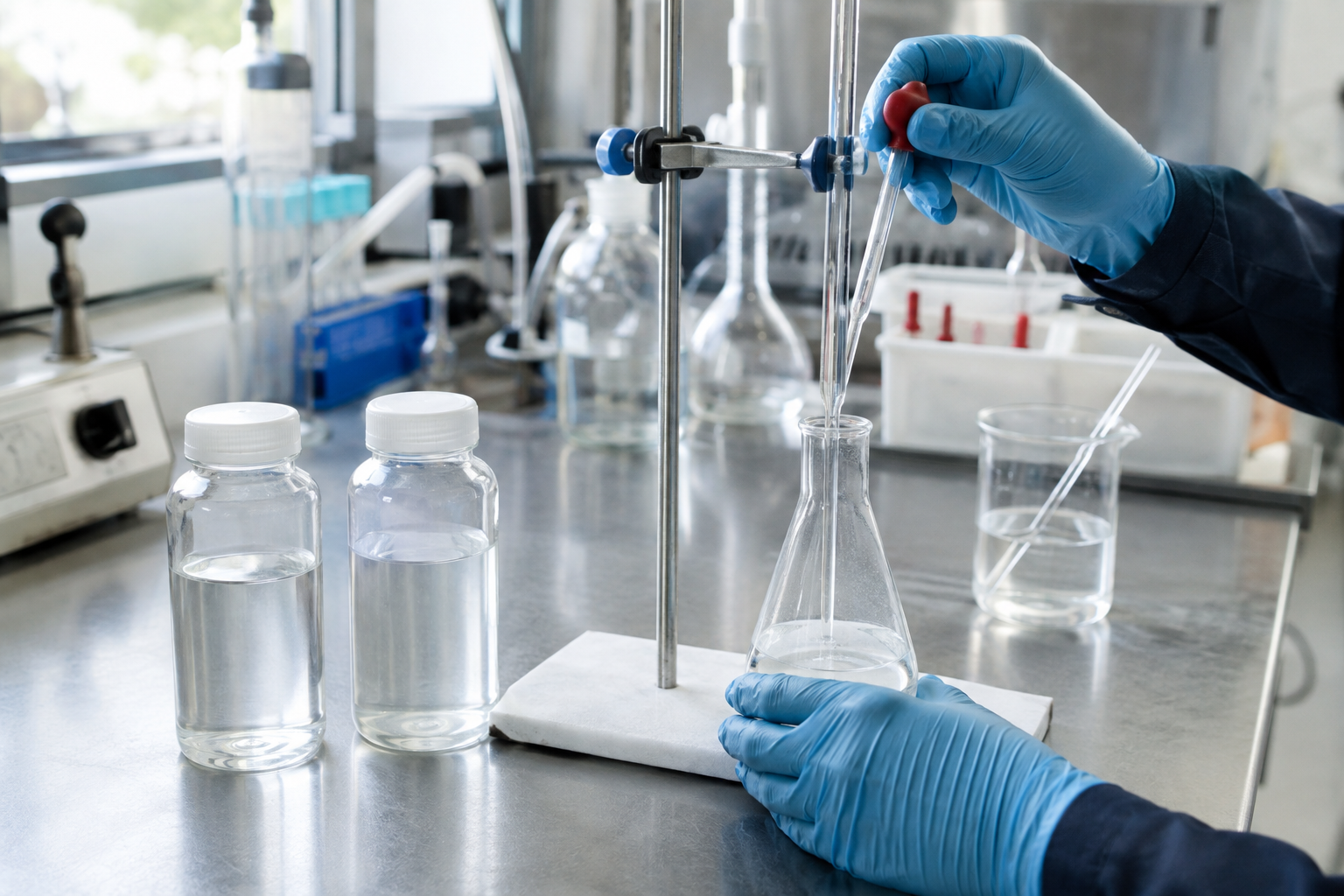
The acid form is a strongly acidic liquid. It is corrosive to skin, eyes and some metals, needs acid-rated storage and dosing lines, and often needs neutralising before it enters an alkaline system. The sodium salt arrives near neutral, so it is easier and safer to handle and can be dosed directly into alkaline cooling or boiler water without a neutralisation step. If the plant has no acid-handling infrastructure, the salt is usually cheaper overall even at a higher unit price.
Freight: you pay to ship sodium and water
This is the argument for the acid form. Every kilogram of a sodium salt includes sodium that does no scale inhibition, and liquid grades include water on top of that. On a price per kg of active basis, the acid form usually lands cheapest per unit of performance — the gap widens the further the material has to travel. Always convert quotes to price per kg active, never per tonne of product.
Freezing, powder and cold climates
The counter-argument is winter. Liquid grades freeze or crystallise in cold storage, and a drum that froze in transit has to be thawed and re-homogenised before it can be dosed accurately. HEDP·Na4 is available as a white solid powder that does not absorb moisture, transports easily and is usable in severe cold, dissolving readily at about 774 g/L at 20 °C. For winter shipping, remote sites, or anywhere drums sit outside, the solid salt removes a whole class of problem.
Temperature and stability
Both forms are robust. HEDP·Na4 still inhibits scale and corrosion at around 250 °C, and phosphonate salts have good chemical stability at high pH and resist hydrolysis. HEDP·Na2 forms hexacyclic chelate complexes with calcium, giving strong scale inhibition and a marked deposit-dissolving effect. The choice of form is not a performance compromise.
Dosing: convert on active, not on volume
The most common switching error is keeping the old millilitres per hour. Acid and salt grades ship at different active concentrations, so a like-for-like volume swap silently under- or over-doses. Take the active percentage from the COA of the grade you actually received, convert your target ppm of active into product, then reset the pump. Re-check after a week against a scale index such as LSI/RSI.
How to choose
- Long freight, acid handling available, cost-driven → acid form (HEDP, ATMP).
- Alkaline dosing point, no neutralisation step → sodium salt.
- Cold climate, outdoor storage, winter shipping → solid salt (HEDP·Na4, ATMP·Na5).
- Powder blending into a dry formulation → solid salt.
- Safety-constrained site or minimal PPE → sodium salt.
Acid vs sodium salt at a glance
| Property | Acid form (HEDP, ATMP) | Sodium salt (HEDP·Na4, ATMP·Na5) |
|---|---|---|
| pH as supplied | Strongly acidic | Near neutral |
| Physical form | Liquid | Liquid or solid powder |
| Active per kg shipped | Highest | Lower (sodium adds mass) |
| Freezing risk | Yes (liquid) | None as powder |
| Handling | Corrosive; acid-rated lines | Easy; standard handling |
| Dosing into alkaline water | May need neutralising | Direct |
| Solubility | High | HEDP·Na4 ≈ 774 g/L at 20 °C |
| Best for | Cost per active, long freight | Cold climates, safety, dry blends |
Watch

Frequently asked questions
Should I buy HEDP or HEDP·Na4?
Buy HEDP acid when you want the most active per kilogram of freight and the plant can handle a strongly acidic liquid. Buy HEDP·Na4 when you need a near-neutral product, dose into alkaline water without neutralising, or ship and store in cold conditions — the tetrasodium salt is available as a non-hygroscopic powder.
What is the difference between HEDP·Na2 and HEDP·Na4?
HEDP·Na2 has two acidic hydrogens replaced by sodium and HEDP·Na4 has four, giving formula C₂H₂O₇P₂Na₄. Na4 is more neutral and is offered as a free-flowing powder that dissolves at about 774 g/L at 20 °C. Na2 forms hexacyclic chelate complexes with calcium and shows a strong deposit-dissolving effect.
Does the sodium salt work as well as the acid?
Yes — the scale-inhibiting group is identical, so the choice is about handling rather than performance. HEDP·Na4 remains effective for scale and corrosion inhibition at around 250 °C and is chemically stable at high pH. Match the dose on active content and the two forms perform the same.
Do I need to change the dose when switching between acid and salt?
Yes. Acid and sodium-salt grades are supplied at different active concentrations, so keeping the same volume per hour will under- or over-dose the system. Take the active percentage from the COA of the grade received, convert your target ppm of active into product volume, reset the pump and re-check against LSI or RSI.
Does VCYCLETECH supply both acid and sodium salt phosphonates?
VCYCLETECH lists phosphonate acids and sodium salts. Share your application, target grade, quantity, packaging and destination to request current TDS/SDS, a representative COA and sample options. Agree lot-documentation terms before ordering.
About the manufacturer
VCYCLETECH is a China-based manufacturer of water treatment chemicals — phosphonates and their salts, green antiscalants, biodegradable chelants, dispersants, biocides, coagulants and defoamers — ISO 9001 / 14001 / 45001 certified, with current COA information on request and OEM/ODM service. See our quality & certifications.
References
Related: HEDP · HEDP·Na4 · ATMP · Salts of phosphonates · Supplier guide · What is HEDP