

How to Choose a Phosphonate Scale Inhibitor Supplier
TL;DR Choose a phosphonate supplier on four things: a batch-specific COA whose lot number matches the drum in front of you, an active content figure you can verify independently, a spec sheet that states the things buyers get caught by (free phosphate/phosphorous acid, chloride, iron, colour), and a plant that can actually hold the grade across lots. Price per tonne is the wrong unit — price per kg of active is the right one. ATMP, HEDP and PBTC are not interchangeable: pick the molecule for the temperature, chlorine and pH your system runs at, then qualify the vendor.
First pick the molecule, then the vendor
Most sourcing mistakes start before the supplier search: buying the wrong phosphonate. The three workhorses behave differently under heat and chlorine, and no amount of supplier quality fixes a wrong selection.
ATMP vs HEDP vs PBTC in one pass
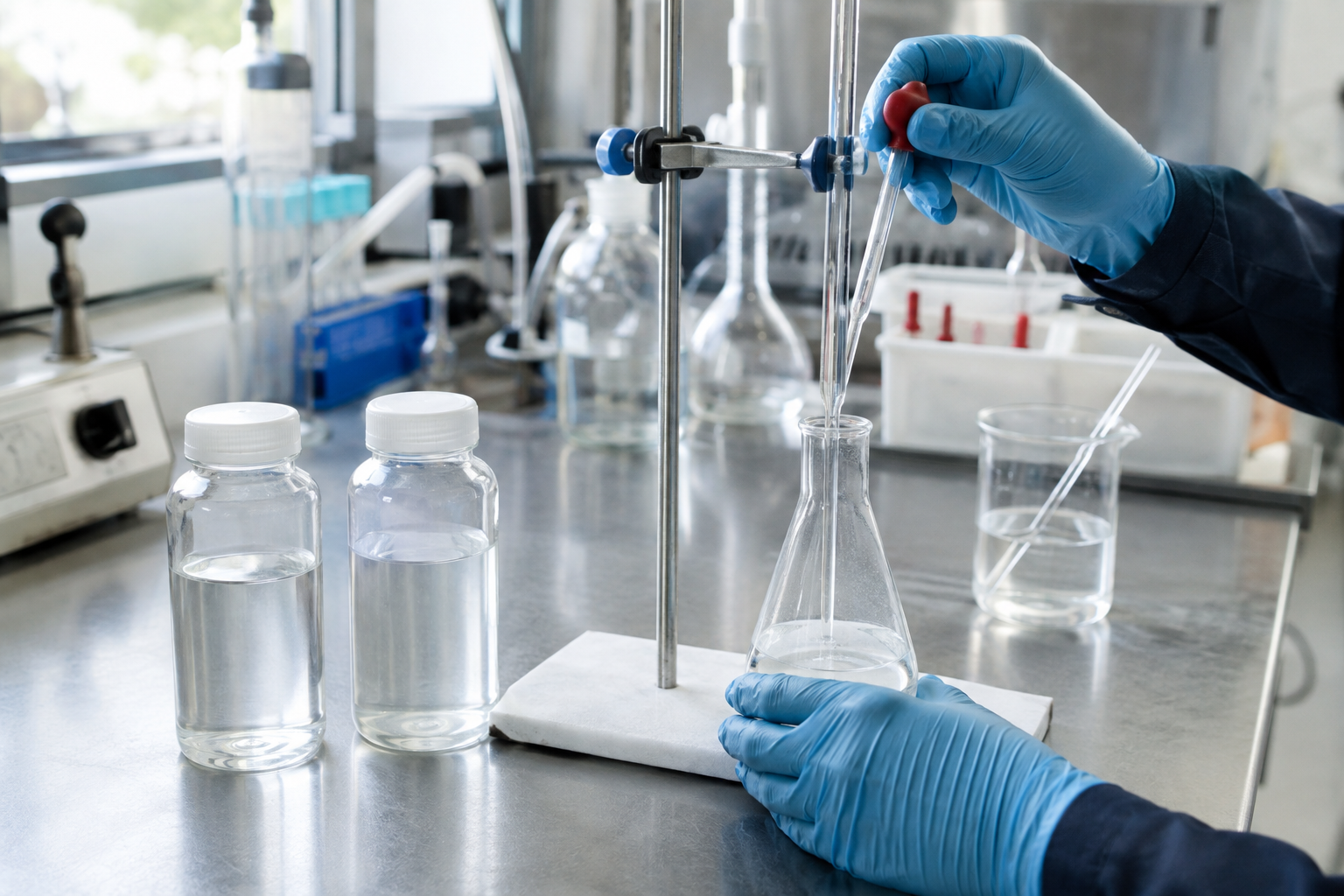
ATMP is the low-cost general threshold inhibitor for calcium carbonate, but it is the least tolerant of oxidising biocides and loses ground at high temperature. HEDP is the versatile default — it holds up to roughly 250 °C and chelates well across a wide pH. PBTC carries both phosphonic and carboxylic groups, has the lowest phosphorus content of the three, tolerates chlorine best and stabilises zinc — which is why it costs more. For the full head-to-head see our ATMP vs HEDP comparison.
Compare the batch COA with the specification
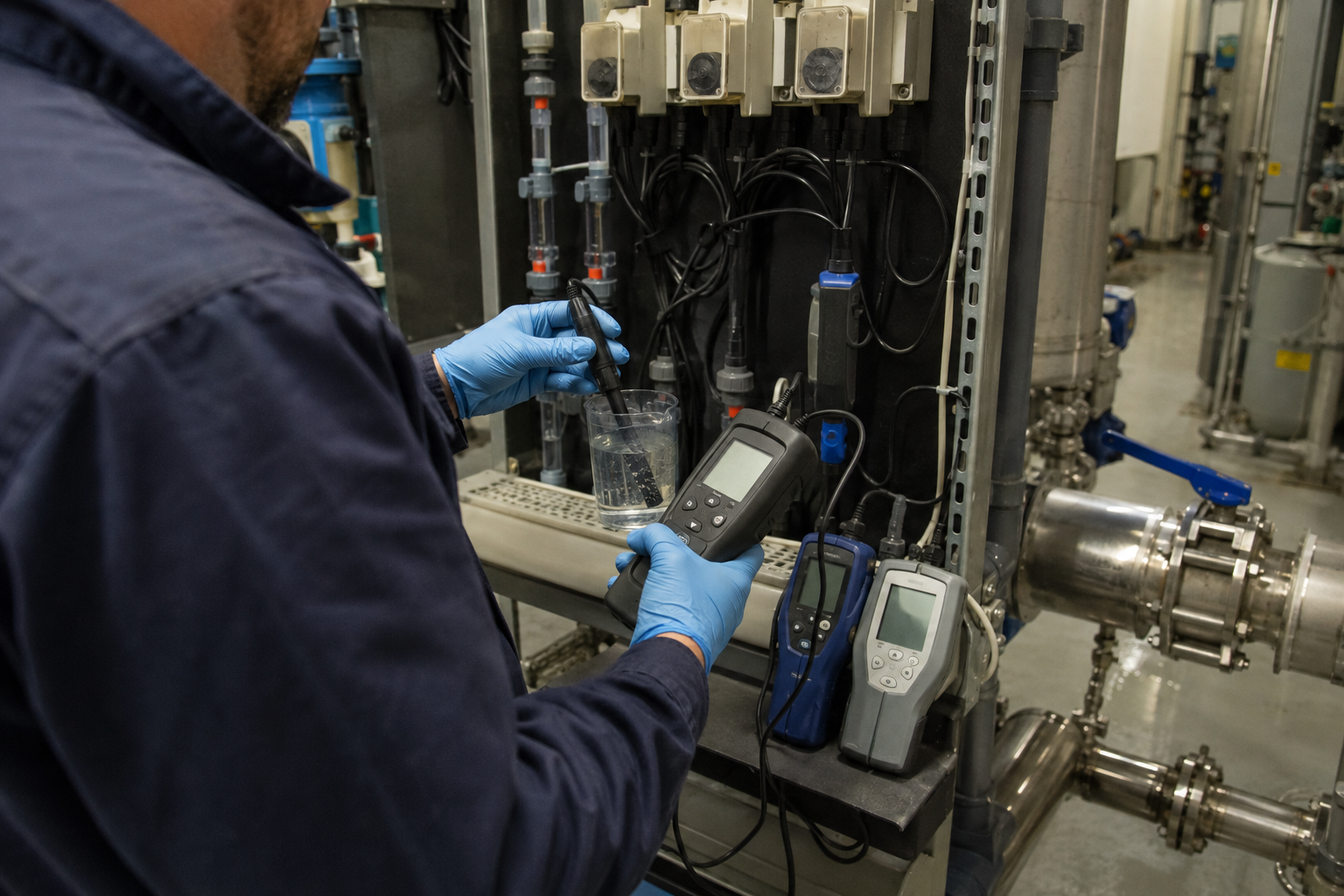
A COA is only evidence if it is tied to your material. Three checks, in order:
- Lot number on the COA must match the lot stamped on the container. If it doesn't, the COA is invalid for that container — quarantine the material rather than accept it.
- COA values must sit inside the TDS ranges. A COA that reports a number outside the supplier's own published spec is a process-control red flag, not a bonus.
- Ask for 3–5 consecutive recent lots. One perfect COA proves nothing; the spread across lots is what tells you whether the plant holds the grade.
Active content is the only honest price unit
Phosphonates are sold at different actives — ATMP at 50%, HEDP at 60%, PBTC at 50% are typical — so a "cheaper tonne" is often just more water. Convert every quote to price per kg of active before comparing. Independent verification exists: active phosphonate can be confirmed by oxidising it to orthophosphate (UV/persulfate digestion) and running a conventional phosphate analysis, then applying the conversion factor for the molecule. Ask whether your lab or a third party can run it on the first lots.
The spec lines buyers get caught by
Active content and appearance are the easy part. The lines that cause trouble downstream are the ones that are quietly out of spec:
- Free phosphate / phosphorous acid — high values mean an incomplete or degraded synthesis; they consume your discharge phosphorus budget and can precipitate as calcium phosphate.
- Chloride — matters on stainless steel; a high-chloride lot can pit equipment the inhibitor was bought to protect.
- Iron and colour — a darkening lot usually signals contamination or degradation.
- Density and pH — the cheap sanity check that the drum contains what the label says.
Commercial terms that actually matter
Ask about the things that bite after the PO: MOQ, lead time for in-stock versus a full container, packaging (25 kg / 200 kg drums, 1000 kg IBC), and on-time delivery history. For drinking-water contact, ask whether the grade is certified to NSF/ANSI 60. ISO 9001 tells you a quality system exists — it does not tell you this lot is good, which is why the COA and the trial lot still matter.
Red flags
- No batch-specific COA, or a COA that never varies lot to lot.
- "Active content" quoted as a range instead of a measured value.
- Price far below the market for the stated active — check the water content.
- No SDS, or an SDS that doesn't match the product name.
- A trading company that cannot name the plant or show it.
ATMP vs HEDP vs PBTC — sourcing view
| Property | ATMP | HEDP | PBTC |
|---|---|---|---|
| Typical active | 50% | 60% | 50% |
| Temperature limit | Moderate | High (~250 °C) | High |
| Chlorine tolerance | Lowest | Moderate | Best |
| Phosphorus content | High | High | Lowest |
| Zinc stabilisation | Weak | Moderate | Strong |
| Relative cost | Lowest | Middle | Highest |
Watch

Frequently asked questions
How do I verify the active content of a phosphonate?
Convert the active phosphonate to orthophosphate by UV/persulfate oxidation, run a conventional phosphate analysis, then apply the conversion factor for that molecule to back-calculate the active content. Run it on the first three to five lots and compare against the supplier COA attribute by attribute before you rely on the paperwork alone.
What should a phosphonate COA include?
A phosphonate COA should state the lot number, active content, appearance and colour, density, pH of a stated solution, free phosphate or phosphorous acid, chloride and iron. The lot number must match the container label, and every value must fall inside the ranges published on the supplier's technical data sheet.
Is ATMP, HEDP or PBTC the best scale inhibitor to buy?
None is best in general. ATMP is the low-cost choice for calcium carbonate but is the least chlorine-tolerant. HEDP is the versatile default, stable to roughly 250 °C. PBTC tolerates chlorine best, has the lowest phosphorus content and stabilises zinc, at a higher price. Select on temperature, chlorine and phosphorus limits.
Why is price per tonne misleading for phosphonates?
Because phosphonates are sold at different active concentrations — commonly 50% for ATMP and PBTC and 60% for HEDP — a cheaper tonne is often simply more water. Convert every quotation to price per kilogram of active before comparing suppliers, and confirm the active independently on the first lots.
Does VCYCLETECH supply ATMP, HEDP and PBTC with a COA?
VCYCLETECH lists ATMP, HEDP and PBTC. Share your application, target grade, quantity, packaging and destination to request current TDS/SDS, a representative COA and sample options. Agree lot-documentation terms before ordering.
About the manufacturer
VCYCLETECH is a China-based manufacturer of water treatment chemicals — phosphonates and their salts, green antiscalants, biodegradable chelants, dispersants, biocides, coagulants and defoamers — ISO 9001 / 14001 / 45001 certified, with current COA information on request and OEM/ODM service. See our quality & certifications.
References
- Phosphonates — Wikipedia
- Etidronic acid (HEDP) — Wikipedia
- TZW — Purity testing of phosphonates as antiscalants
- NSF/ANSI 60 — Drinking water treatment chemicals
Related: ATMP · HEDP · PBTC · Phosphonates · ATMP vs HEDP · Acid vs sodium salt