
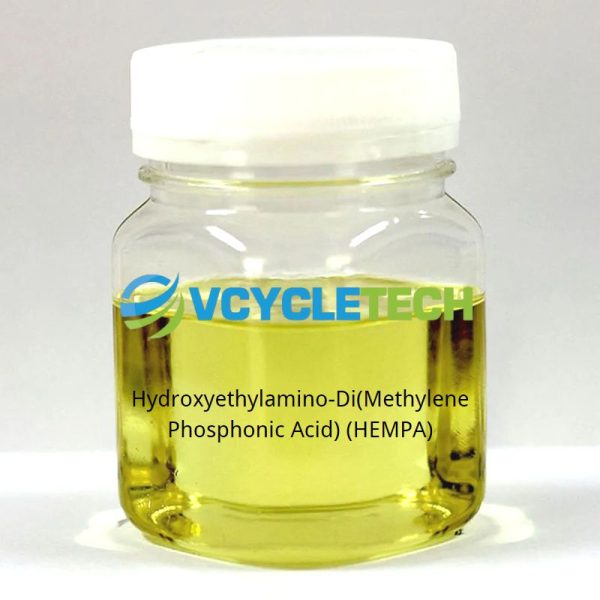
CAS No. 5995-42-6
Molecular weight: 249.1
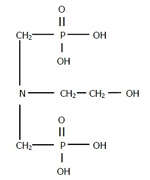
Structural Formula:
Features:
1. Chelation:Â HEMPA exhibits powerful chelating properties, which allow it to bind tightly with metal ions, thereby preventing the formation of unwanted precipitates and scaling. This feature makes it an ideal choice for water treatment plants and boilers.
2. Scale Inhibition:Â One of the primary issues faced in water systems is scaling, which is caused due to the accumulation of mineral deposits. HEMPA effectively prevents scaling by stabilizing the calcium and iron ions, making it an essential component for water treatment applications.
3. Corrosion Inhibition:Â HEMPA acts as an efficient corrosion inhibitor by forming a protective barrier on the surface of metals, thereby preventing them from reacting with oxygen and other corrosive species. This helps in prolonging the life of metals and reducing overall maintenance costs.
4. Compatibility:Â HEMPA is highly compatible with methanol/water solutions, allowing it to be easily incorporated into various formulations. This feature makes the compound highly adaptable for a wide range of applications.
5. Synergistic Effects:Â When formulated together with other water treatment chemicals, HEMPA demonstrates remarkable synergistic effects, resulting in enhanced performance and efficiency.
Specification:
| Items | Index |
|---|---|
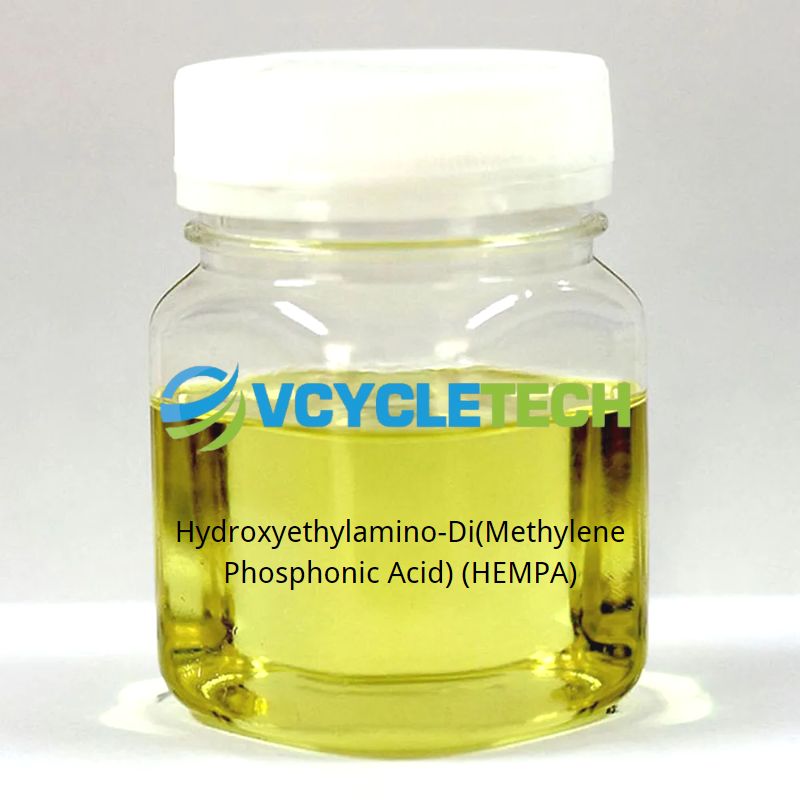
| Appearance | Colorless to light yellow transparent liquid |
| Active content % | 60.0 min |
| pH (1% water solution) | 2.0 max |
| Chloride (as Cl-)% | 5.0 max |
| Fe, mg/L | 20 max |
| Density (20℃) g/cm3 | 1.30 min |
Frequently Asked Questions:
1. What is the primary use of HEMPA in the oilfield industry?
In the oilfield industry, HEMPA is widely used as an effective scale and corrosion inhibitor in water injection systems. Its ability to perform efficiently in high salinity and calcium-rich environments makes it a popular choice for oilfield-related applications.
2. Can HEMPA be used in cooling water systems?
Yes, HEMPA is highly effective in cooling water systems, especially those with high dissolved iron and calcium concentrations. It helps prevent scaling and corrosion, thus ensuring the smooth functioning of the system and reducing maintenance costs.
3. How does HEMPA contribute to the detergent and soap industry?
Owing to its chelating properties, HEMPA serves as a useful component in the manufacturing of detergents and soaps, as it aids in the removal of metal ions and prevents them from interfering with the cleaning process. This results in improved cleaning efficiency and performance.
4. Is HEMPA suitable for use in the textile industry?
Yes, HEMPA is a valuable additive in the textile industry, especially in the bleaching and dyeing processes. Its chelating ability allows it to bind with metal ions present in water, thus preventing issues like scaling, corrosion, and colour alteration in the final product.
5. How is HEMPA applied in the metal treatment and processing?
HEMPA’s chelating and corrosion inhibition properties make it a preferred choice in metal treatment and processing. It helps in preventing the precipitation of metal salts, thus minimizing corrosion and ensuring a longer service life for metal-based products.
Where can I buy BHMTPMPA?
Welcome to contact us to buy.
Get the Complete Phosphonates Antiscalant & Corrosion Inhibitor solution.



Related products
-
Phosphonates Antiscalant & Corrosion Inhibitor
Sodium Salt of Triethylene-tetramine Hexmethanephonic Acid (TETHMP)
Read more -
Phosphonates Antiscalant & Corrosion Inhibitor
Aminoethyl ethanolamine tri(methylene phosphonic acid)(AEEA Phosphonate)
Read more -
Phosphonates Antiscalant & Corrosion Inhibitor
PBTC Chemical(2-Phosphonobutane -1,2,4-Tricarboxylic Acid)
Read more


