
PAC Coagulant Selection: Basicity, Dosage & Water Match
TL;DR Poly aluminium chloride (PAC) is a pre-hydrolyzed inorganic coagulant, general formula [Al₂(OH)ₙCl₆₋ₙ]ₘ — you select a grade by its basicity (typically 5–65 %), its Al₂O₃ content, and how well it matches your raw-water turbidity, pH and temperature. Higher-basicity PAC carries more cationic charge and clarifies turbid or industrial water faster with less sludge; lower-basicity grades suit clear, cold municipal water. Confirm the final dose with a jar test.
What is PAC (poly aluminium chloride)?
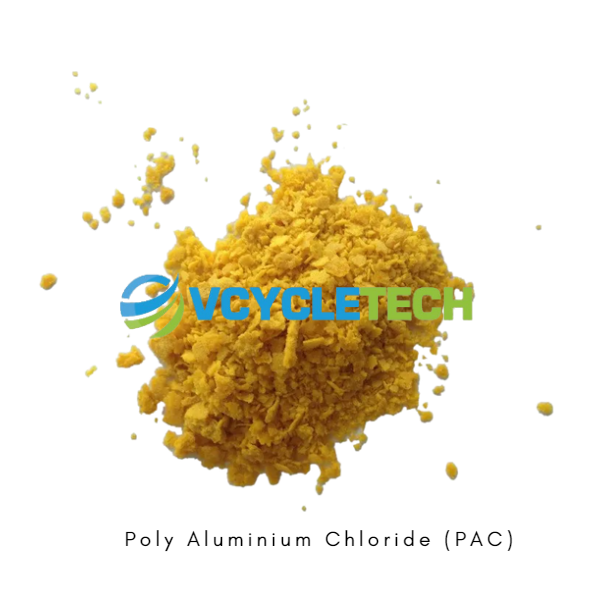
PAC is a polynuclear complex of pre-hydrolyzed aluminium ions — partially neutralized aluminium chloride whose molecules already carry a high positive charge before they reach the water. Compared with traditional aluminium sulphate (alum), that pre-hydrolysis means PAC needs a lower dose, works over a wider pH range, flocculates faster, produces less sludge and leaves lower residual aluminium. It is sold as a yellow liquid or spray-dried yellow powder and is the workhorse coagulant for drinking water, municipal and industrial wastewater.

Basicity — the key selection parameter
Basicity (or basicity degree) is the molar ratio of hydroxyl to aluminium in the PAC molecule, expressed as a percentage — the single most important number when choosing a grade. As a rule of thumb, the higher the basicity, the higher the polymer content and cationic charge density, and the more efficient the coagulant at destabilizing colloids and building dense, fast-settling flocs. Higher-basicity PAC also depresses pH less, so it needs less alkalinity correction. Commodity grades run about 40–90 % basicity; high-basicity aluminium chlorohydrate (ACH) sits at the top of the range.

Al₂O₃ content and grades
The other headline spec is Al₂O₃ content — the effective aluminium (the active ingredient). Typical liquid PAC is ~10 % Al₂O₃; spray-dried powder PAC is ~28–30 % Al₂O₃ and is preferred for export because it is cheaper to ship and easy to redissolve. Note that higher basicity usually comes with lower Al₂O₃ per litre, so compare grades on active aluminium, not just on volume, and always dose on an active-Al basis.
How to match PAC to your raw water
- High-turbidity / industrial wastewater — use high-basicity PAC (or ACH): strong charge neutralization, robust floc, low sludge.
- Municipal drinking water — medium/low-basicity PAC gives fine control and low residual aluminium; verify against local Al limits.
- Cold or low-alkalinity water — PAC outperforms alum because it is far less pH-sensitive and works well below 10 °C.
- Color / organics (high UV₂₅₄, humic water) — raise the dose and lower the pH slightly (enhanced coagulation); PAC removes natural organic matter effectively.
- Downstream polymer — pair PAC with a trace of anionic polyacrylamide (PAM) as a flocculant aid to grow larger, faster-settling flocs.
PAC dosage and jar testing
Typical PAC dose is roughly 5–50 mg/L as product for surface water and higher for heavily loaded wastewater, but the right number is water-specific — always confirm it with a jar test. Dose too little and colloids stay dispersed (persistent turbidity); dose too much and you re-stabilize the particles (charge reversal) and waste chemical. Add PAC at the rapid-mix point (high shear, ~30–120 s), then flocculate gently before sedimentation and filtration.
PAC vs alum, PFS and ACH
| Property | PAC | Alum | PFS (ferric) | ACH |
|---|---|---|---|---|
| Type | Pre-hydrolyzed Al | Aluminium sulphate | Poly ferric sulphate | High-basicity Al |
| Basicity | Medium–high | None | Medium | Very high (~83 %) |
| Relative dose | Low | High | Low–medium | Lowest |
| pH sensitivity | Low | High | Low | Very low |
| Sludge volume | Low | High | Medium | Lowest |
| Cold-water performance | Good | Poor | Good | Excellent |
| Best for | Most drinking / wastewater | Low-cost, warm water | Color, H₂S, high organics | Very-low-residual drinking water |
Watch

Frequently asked questions
What is basicity in poly aluminium chloride?
Basicity is the molar ratio of hydroxyl (OH) to aluminium in the PAC molecule, shown as a percentage. Higher basicity means more pre-formed aluminium polymer and higher cationic charge density, so the coagulant destabilizes colloids more efficiently, builds denser flocs and lowers pH less. High-basicity grades suit turbid or industrial water; lower-basicity grades suit clear municipal water.
How do I choose the right PAC grade?
Match the grade to your raw water. Use high-basicity PAC or ACH for high-turbidity or industrial wastewater and cold/low-alkalinity water; use medium- or low-basicity PAC for municipal drinking water where low residual aluminium matters. Compare grades on active Al₂O₃ content, not just volume, and confirm the dose with a jar test.
What is the difference between PAC and alum?
PAC is pre-hydrolyzed, so it already carries a high positive charge. Versus aluminium sulphate (alum) it needs a lower dose, works over a wider pH range, is far less temperature-sensitive, flocculates faster, makes less sludge and leaves lower residual aluminium. Alum is cheaper per tonne and still works well in warm, well-buffered water.
What is the typical PAC dosage in water treatment?
PAC is usually dosed around 5–50 mg/L as product for surface water, and higher for heavily loaded industrial wastewater. The optimum is water-specific: too little leaves turbidity, too much causes charge reversal and re-stabilizes particles. Always determine the exact dose with a jar test on your own water.
Is VCYCLETECH a PAC manufacturer?
Yes. VCYCLETECH supplies liquid and spray-dried poly aluminium chloride and aluminium chlorohydrate (ACH) factory-direct from China, ISO 9001/14001/45001 certified, with current COA information on request, sample availability and OEM/ODM service. Email sales@vcycletech.com for a quotation.
About the manufacturer
VCYCLETECH is a China-based manufacturer of water treatment chemicals — coagulants, flocculants, antiscalants, scale & corrosion inhibitors, biocides, dispersants and paper chemicals — ISO 9001 / 14001 / 45001 certified, with current COA information on request and OEM/ODM service. See our quality & certifications.
References
- Polyaluminium chloride — Wikipedia
- Coagulation (water treatment) — Wikipedia
- Aluminium chlorohydrate — Wikipedia
Related: PAC product · ACH · PFS · All coagulants & flocculants · Coagulants & flocculants guide · Alum vs PAC vs PFS