
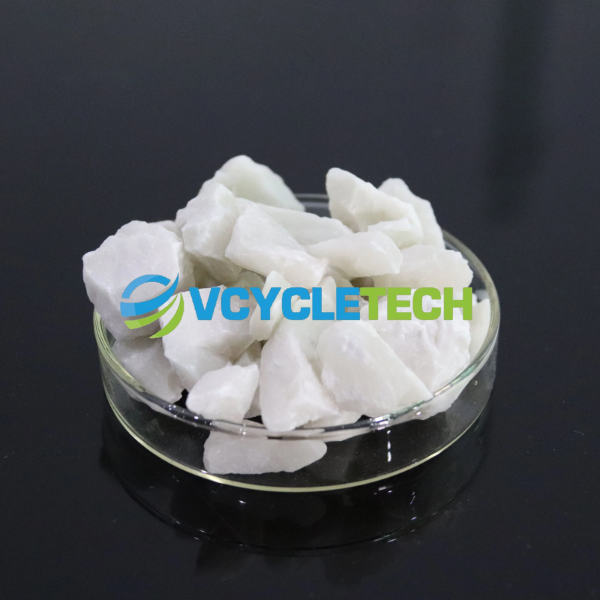
Inorganic Coagulants: Alum vs PAC vs PFS Compared
TL;DR Aluminium sulphate (alum, Al₂(SO₄)₃) is the low-cost classic but needs the most dose and a narrow pH window (about 5.8–8.5). Polyaluminium chloride (PAC) is pre-hydrolysed: roughly one-third the dose of alum, a wider pH range, lower residual aluminium and less sludge. Polyferric sulphate (PFS) is the iron-based option, with highly charged species that excel at removing algae and natural organic matter. Choose by water chemistry, residual-metal limit and sludge cost — not by price per tonne.
Three inorganic coagulants, three trade-offs
Coagulation neutralises the charge on suspended colloids so they can flocculate and settle. The three mainstream inorganic coagulants — alum, PAC and PFS — do the same job with different efficiency, pH behaviour and by-products.

Aluminium sulphate (alum) — the low-cost classic
Alum, Al₂(SO₄)₃, is the cheapest and most widely used coagulant, but it is not pre-polymerised, so it needs the highest dose, works only in a narrow pH band (~5.8–8.5), and leaves higher residual aluminium and a larger sludge volume. It remains a sound choice where water chemistry sits in its pH window and residual-aluminium limits are not tight.

Polyaluminium chloride (PAC) — pre-hydrolysed efficiency
PAC is pre-hydrolysed: the aluminium is already partly polymerised, so it neutralises charge and forms compact, fast-settling flocs at about one-third the dose of alum. It works across a wider pH and temperature range, leaves lower residual aluminium (important for drinking water) and produces less sludge. That efficiency is why PAC has displaced alum in many plants — see our PAC selection guide.
Polyferric sulphate (PFS) — the iron option
PFS is the pre-polymerised iron-based coagulant. Its more highly charged cationic species give superior performance on algae and algae-derived organic matter and on colour, and it avoids adding aluminium to the treated water entirely. The trade-offs are potential iron residual/colour and careful pH control. PFS is the pick where aluminium residual is a concern or where algae and NOM dominate.
How to choose
- Lowest chemical cost, pH in range, residual not critical → alum.
- Lower dose, wider pH, low residual Al, less sludge → PAC.
- Algae / organic matter / colour, or no-aluminium requirement → PFS.
- Always jar-test the actual water and pair with a flocculant (PAM) for settling.
Alum vs PAC vs PFS
| Property | Alum (Al₂(SO₄)₃) | PAC | PFS |
|---|---|---|---|
| Base metal | Aluminium | Aluminium (pre-hydrolysed) | Iron (pre-hydrolysed) |
| Relative dose | Highest (baseline) | ~1/3 of alum | Low |
| pH window | Narrow ~5.8–8.5 | Wide | Wide |
| Residual metal | Higher Al | Lower Al | No Al (Fe instead) |
| Sludge | More | Less | Moderate |
| Best at | Cost, in-range water | Efficiency, drinking water | Algae, NOM, colour |
Watch

Frequently asked questions
What is the chemical formula of aluminium sulphate?
Aluminium sulphate — commonly called alum in water treatment — has the formula Al₂(SO₄)₃ (often supplied hydrated as Al₂(SO₄)₃·14–18 H₂O). It is the low-cost classic coagulant, but it needs a higher dose than PAC and works only in a narrow pH window of roughly 5.8 to 8.5.
Is PAC better than alum?
For most plants, yes on efficiency: polyaluminium chloride is pre-hydrolysed, so it needs about one-third the dose of alum, works over a wider pH and temperature range, leaves lower residual aluminium and makes less sludge. Alum still wins on raw chemical cost where the water sits in its pH window and residual aluminium is not tightly limited.
When should I use polyferric sulphate (PFS) instead of an aluminium coagulant?
Use PFS when you must avoid adding aluminium to the treated water, or when algae, natural organic matter or colour dominate. Its highly charged iron species remove algae and algae-derived organics better than aluminium coagulants. Watch for iron residual and colour, and control pH carefully.
How much coagulant do I need?
Set the dose by jar test on the actual water, not a fixed number — it depends on turbidity, alkalinity, temperature and target. As a rule of thumb PAC runs at roughly one-third the dose of alum for the same clarification, and all three should be paired with a flocculant such as PAM to grow settleable flocs.
Does VCYCLETECH supply alum, PAC and PFS?
VCYCLETECH lists PAC, alum and polyferric sulphate. Share your application, target grade, quantity, packaging and destination to request current TDS/SDS, a representative COA and sample options. Agree lot-documentation terms before ordering.
About the manufacturer
VCYCLETECH is a China-based manufacturer of water treatment and process chemicals — surfactants, biocides, coagulants and flocculants, phosphonates, dispersants and paper chemicals — ISO 9001 / 14001 / 45001 certified, with current COA information on request and OEM/ODM service. See our quality & certifications.
References
- Aluminium sulfate — Wikipedia
- Polyaluminium chloride — Wikipedia
- Coagulation (water treatment) — Wikipedia
- Comparison of Polyferric Sulphate with Other Coagulants — Water Science & Technology (IWA)
Related: Aluminium sulphate · PAC · PFS · Coagulants & flocculants · PAC selection guide · Coagulation vs flocculation