
Application / lab test
Oily Wastewater PAC and PAM Flocculation Test
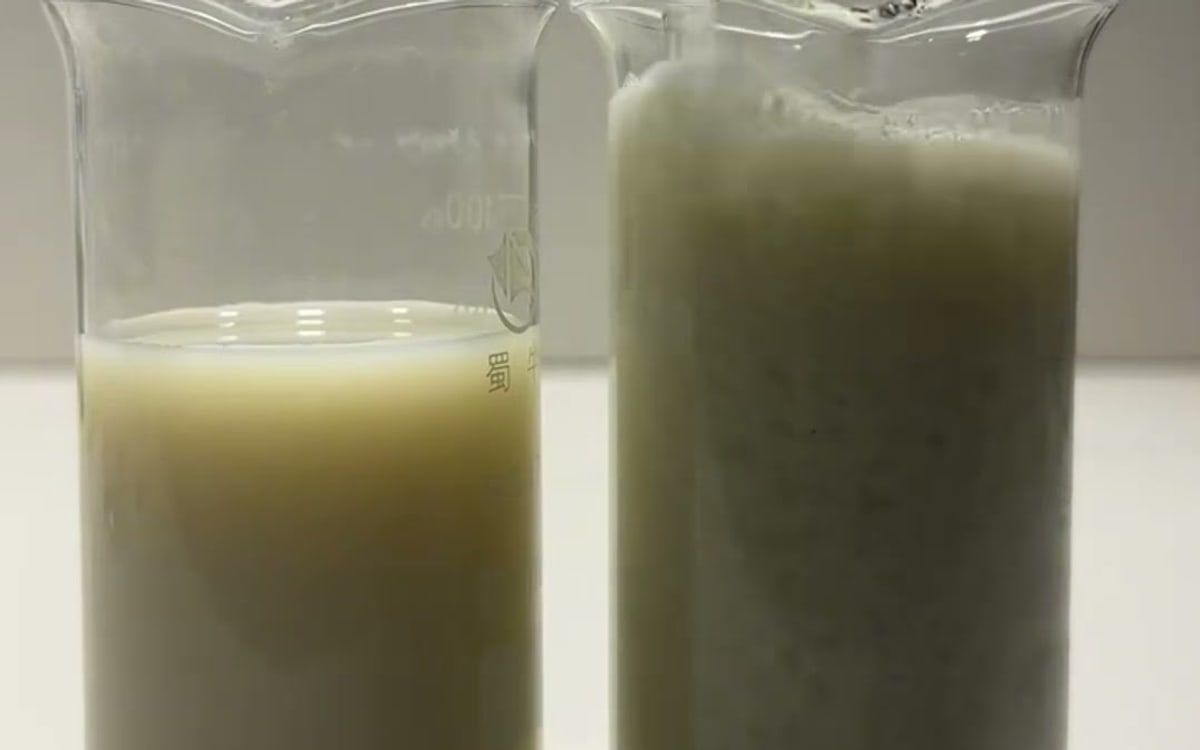
This jar-test video shows PAC used for coagulation and PAM used for bridging in an oily wastewater sample, followed by visible floc formation and liquid-solid separation. The route is relevant when oil droplets and suspended solids can be destabilized by coagulation. Stable emulsions created by surfactants or process chemistry may need a different primary treatment before PAM is screened. Buyers should identify the oil source, free or emulsified condition, pH, conductivity, surfactants, solids and downstream separator, then compare measured oil, turbidity, floc strength, carryover and sludge behavior on representative samples.
Watch on YouTube Published
What this video shows
PAC and PAM can be screened for oily wastewater when the sample contains destabilizable droplets and suspended solids. In this video, PAC is used as the coagulation step and PAM as the bridging step, producing visible flocs and a separated liquid phase. The test should match the actual oil type, surfactants, pH and downstream separator because stable emulsions may need a different primary treatment.
Start by identifying the oil system
Free oil, mechanically dispersed oil and surfactant-stabilized emulsions do not respond the same way. Record the process source, oil or lubricant, cleaners, temperature, pH and whether an oil-water separator already removes free oil. That context determines whether a PAC/PAM screen is relevant.
The clip demonstrates a visible response in one sample. For a plant decision, run untreated and coagulant-only controls, then compare PAM grades after the best PAC condition. Observe whether the flocs settle, float or break under the shear expected in the real separator.
Chemical roles and linked grades
PAC is the exact coagulant family linked to the first step; the product page lists powder with Al2O3 of at least 29%, basicity 40–90 and pH 3.5–5. PAM is the linked polymer family for bridging. Use current grade documents and samples because the appropriate PAM charge varies with the conditioned droplets and solids.
Measure the separation that the plant needs
Beyond visual clarity, record oil and grease by the site's method, suspended solids or turbidity, floc strength, separated-sludge handling and compatibility with flotation, settling or filtration. Keep the dose sequence and mixing profile in the trial sheet so the selected condition can be transferred to a controlled plant trial.
Recognize when the route should change
If free oil is already present, improve skimming or gravity separation before consuming coagulant. If the sample remains a stable, milky emulsion across reasonable PAC conditions, investigate the emulsifier, temperature and primary emulsion-breaking step instead of simply increasing PAM. Use polymer after the primary conditioning step to enlarge treatable particles.
Run a small series that varies one factor at a time: starting pH, primary coagulant condition, then PAM grade. This makes the failure interpretable. Carry the best condition to the site's real flotation or settling equipment because shear, recycle and residence time can change the floc seen in a quiet laboratory beaker.
Retain the baseline oil-and-grease result, chemical lot identifiers and separated-sludge observations. These fields let the site compare the laboratory route with the later equipment trial. Include the sample temperature and hold time, since transport can change the laboratory sample.
Product and process details
These fields summarize the product, process or shipment context shown in the video and linked catalog.
| Field | Value | Source |
|---|---|---|
| Appearance | Yellow powder | Product page |
| Alumina (Al₂O₃) | ≥29%; typical value shown: 30.15% | Product page |
| Basicity | 40–90%; typical value shown: 83.9% | Product page |
| Water insolubles | ≤1.5%; typical value shown: 0.3% | Product page |
| pH | 3.5–5.0 for a 1% solution | Product page |
| Available catalog forms | Anionic, cationic and nonionic powder grades | Product page |
| Solids | ≥90% | Product page |
Coagulation-flocculation vs emulsion-breaking route
The oil condition determines which primary treatment deserves testing.
| Sample condition | First screen | Key evidence |
|---|---|---|
| Free oil | Physical separation | Skimming or separator loading |
| Destabilizable droplets and solids | PAC then PAM | Floc and clarified phase |
| Stable emulsion | Emulsion-breaking route | Measured oil and phase split |
| Mixed wastewater | Parallel controls | Repeatable performance across samples |
Oily-water selection flow
What oily-water data is needed before grade selection?
Oil identity and emulsion stability are the most important boundaries for choosing a screening route.
- Oil source and free, dispersed or emulsified condition
- Surfactants, cleaners and process additives
- pH, conductivity, solids and measured oil
- Existing separator and sludge handling
- Required discharge or reuse measurements
Common questions
What does PAC do in the shown oily-water test?
PAC is screened as the coagulation step to destabilize responsive droplets and suspended material.
What does PAM do after PAC?
PAM bridges conditioned particles into larger flocs that can be separated.
Will PAC and PAM treat every oil emulsion?
Stable emulsions may need a different primary treatment; identify the oil and surfactant system first.
Which results should be measured?
Measure the plant’s oil or turbidity parameter and record floc, carryover, sludge and separator behavior.
How can a buyer request candidate grades?
Send representative sample data, current chemicals, separator details and measured treatment targets.