
Application / lab test
Brush Manufacturing Wastewater: Decolorant, PAC and PAM Jar Test
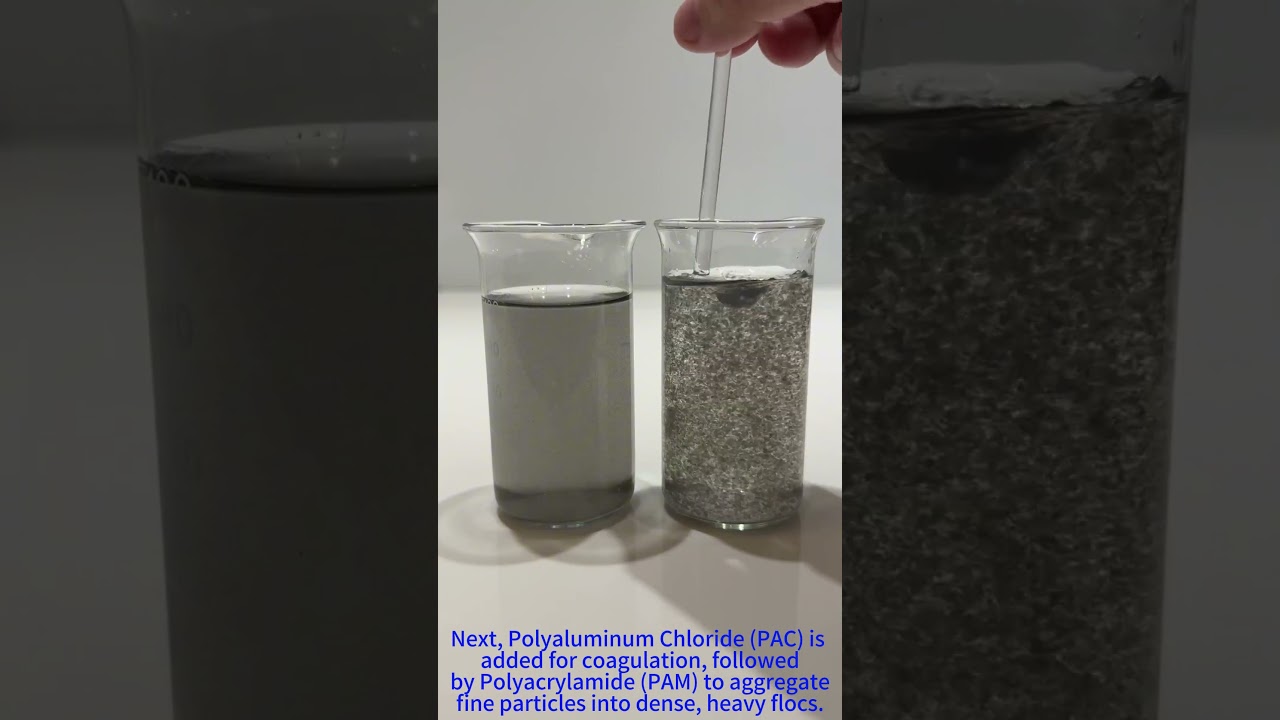
This Short shows a brush-manufacturing effluent jar test using a water decoloring agent, PAC and PAM. The sequence screens color response first, PAC coagulation second and polymer-assisted floc formation third. Buyers can use the workflow to plan representative-sample comparisons around the actual brush process, binder or coating chemistry, cleaning agents, pH, conductivity, color, suspended solids, COD or TOC and downstream separator. Record floc size, settling or flotation behavior and sludge characteristics, then compare the available product grades against the measured treatment objective and plant equipment.
Watch on YouTube Published
What this video shows
The Short demonstrates a practical bench sequence for brush-manufacturing effluent: screen a water decoloring agent for color response, add PAC for coagulation, then use PAM to build larger, separable flocs. Compare the sequence on representative wastewater by recording color, turbidity or suspended solids, floc settling and sludge behavior, then match the preferred result to the plant’s separation equipment.
What the brush-effluent video demonstrates
The title identifies brush-manufacturing effluent and the visible frame shows beakers containing dark wastewater while a glass rod mixes one sample. The on-screen explanation uses PAC for coagulation and PAM afterward to aggregate fine particles into denser, heavier flocs. This gives operators a clear sequence for comparing color response, floc formation and separation behavior.
Brush factories can combine resin, pigment, adhesive, surfactant, abrasive, metal or cleaning residues in different proportions. Keep the source process and sample date with every jar-test result so the preferred sequence reflects the actual production line.
Separate the three chemical roles
The linked Water Decoloring Agent is the candidate for color response, PAC is the catalog coagulant used to destabilize responsive colloids, and PAM is the polymeric flocculation aid used after conditioning. The U.S. EPA industrial wastewater technology database describes coagulation as charge neutralization followed by flocculation that promotes larger clumps for separation; the exact response still depends on the wastewater.
Run an untreated control, single-product controls and the demonstrated sequence. Record whether the floc is dense, fragile, sticky, floating or settling, and use the plant's own color, turbidity, suspended-solids and COD methods where those measurements are relevant.
Use a brush-specific sample matrix
Before requesting a grade, identify the brush type, binder or coating system, pigment or filler use, cleaning chemicals, water source and whether the sample is raw, equalized or already clarified. Note pH, conductivity, color method, turbidity or suspended solids, COD or TOC when available, oil or surfactant carryover, and any metals that could affect sludge handling.
Use more than one operating condition if resin, color, adhesive or cleaning chemistry changes. Keep product names and batch identifiers in the worksheet, but do not treat a visual beaker comparison as a fixed-dose or permit-ready result.
Move from beaker to separation equipment
Match the jar-test observation to the intended unit operation: settling, dissolved-air flotation, filtration or another solids-separation step. A floc that looks good in a beaker can break under transfer shear, float unexpectedly, blind a filter or create a sludge that the site cannot dewater. Repeat the preferred sequence with the actual mixing, separation and sampling boundaries before any controlled plant trial.
The ACS coagulation–flocculation review describes the process as widely used while emphasizing chemistry, operating parameters and scale-up limits. A separate color-removal review likewise covers multiple treatment routes rather than one transferable recipe. Treat the video as an application lead and the measured trial as the decision record.
Prepare a useful product enquiry
For a useful product and trial discussion, send the representative sample brief, water analysis, target endpoints, current treatment, separator and expected flow. Include the preferred package, quantity and destination when requesting decolorant, PAC and PAM options. The current catalog pages explain each product family; representative-water results provide the basis for comparing the available grades.
Product and process details
These fields summarize the product, process or shipment context shown in the video and linked catalog.
| Field | Value | Source |
|---|---|---|
| Decoloring-agent solids | ≥50% | Water Decoloring Agent product page |
| Decoloring-agent pH | 2.0–5.0 for a 30% water solution | Water Decoloring Agent product page |
| PAC alumina (Al₂O₃) | ≥29% | PAC product page |
| PAC pH | 3.5–5.0 for a 1% solution | PAC product page |
| PAM catalog forms | Anionic, cationic and nonionic powders | PAM product page |
| PAM solids | ≥90% | PAM product page |
Brush-effluent screening matrix
Use controls to separate the role of each product and compare the treatment sequence on representative wastewater.
| Condition | Decision question | Record |
|---|---|---|
| Untreated sample | What is the baseline? | Color, pH, solids and COD or TOC |
| Decolorant only | Does color respond? | Measured color and sludge |
| PAC only | Do colloids destabilize? | Turbidity, floc and settling |
| PAC → PAM | Does the sequence form separable flocs? | Floc strength, carryover and separation |
| Plant trial | Does it fit the equipment? | Feed, shear, sludge and agreed endpoints |
Brush-wastewater sample-to-trial flow
What should a brush manufacturer send before grade selection?
The chemical train should be matched to the brush line, water variability and downstream separation method.
- Brush type, binder, pigment, filler and cleaning chemistry
- Raw or equalized sample, pH, conductivity and color method
- Turbidity, suspended solids, COD or TOC and relevant metals
- Settling, DAF, filtration or other separation equipment
- Target measurements, package, TDS/SDS/COA and sample requirements
Common questions
What does the brush-manufacturing wastewater video show?
It shows a beaker test identified by the video title as brush-manufacturing effluent, with a decolorant, PAC and PAM sequence and visible floc formation.
What is the order of PAC and PAM in the clip?
The on-screen explanation states that PAC is added for coagulation and PAM follows to aggregate fine particles into denser flocs.
How should the sequence be compared?
Run it on representative wastewater and record measured color, solids, floc formation, separation behavior and sludge characteristics.
Which data matters before selecting a grade?
Send the brush process, binder or cleaning chemistry, sample point, pH, conductivity, color, solids, COD or TOC, separator and target endpoints.
How can a buyer request a brush-effluent trial?
Share a representative sample brief, water data, current treatment, target, separator, expected flow, package, quantity and destination.