
Application / lab test
Pharmaceutical Wastewater Decolorization Jar Test
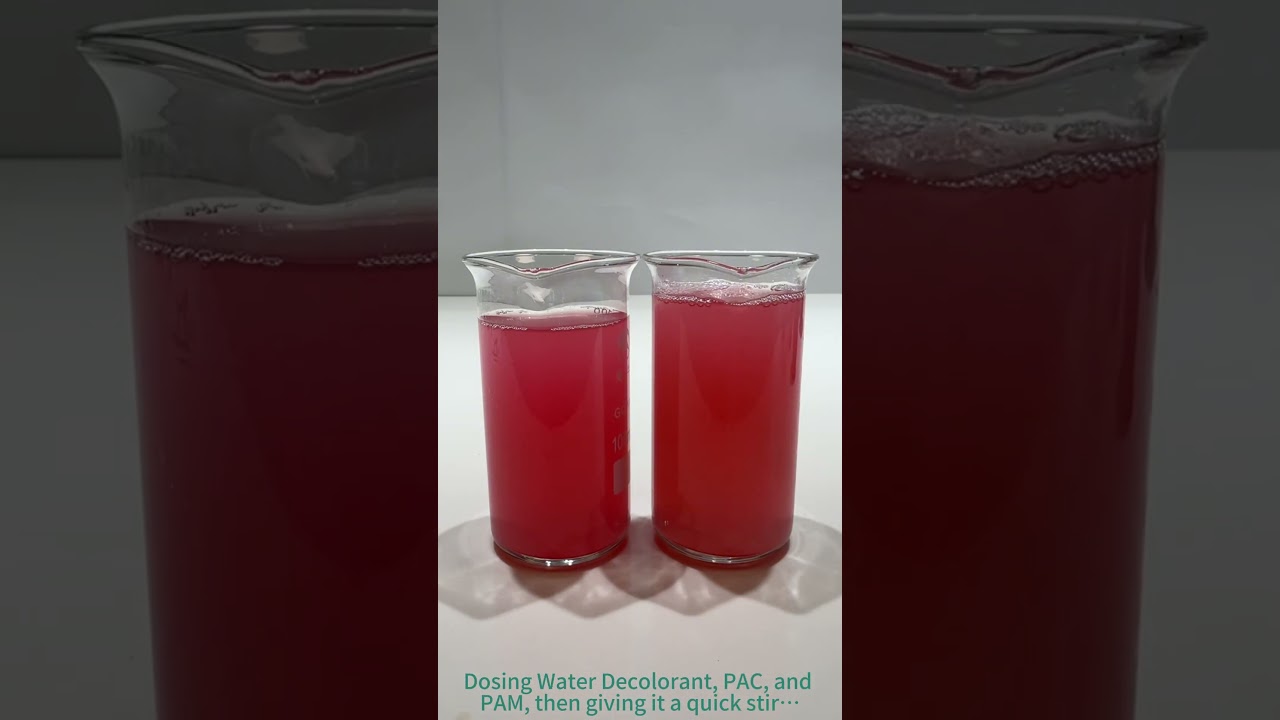
This video shows a bench-scale chemical screen for one colored pharmaceutical wastewater sample using a water decoloring agent, PAC and PAM. The sequence helps buyers compare color response, floc formation and liquid-solid separation before selecting grades for further testing. Pharmaceutical effluent can change with campaign, cleaning cycle, solvent use and equalization, so the purchasing decision should use representative samples and measured endpoints. Send the process source, pH, color method, suspended solids, COD, current treatment and downstream constraints to build a relevant test matrix and request exact product documents.
Watch on YouTube Published
What this video shows
A pharmaceutical wastewater decolorization jar test is a formulation-screening step, not a complete treatment design. In this video, a water decoloring agent, PAC and PAM are evaluated in sequence on one colored sample. The visible color and solids response helps narrow candidate products; a buyer still needs the wastewater source, pH, current process and laboratory targets to select a useful trial program.
Read the visual result correctly
The untreated sample is visibly colored. After the staged additions and mixing, suspended material gathers into flocs and a lighter liquid phase appears. That observation supports a conversation about chemical selection, but the page intentionally makes no claim about a named pharmaceutical compound, COD result, toxicity, biodegradability or permit compliance.
Pharmaceutical streams vary by production campaign, cleaning cycle, solvent use and upstream equalization. A sample from one operating period may not represent another, so composite sampling is often more useful than a single grab sample.
Information to send with the sample
- Process source and whether the sample is raw, equalized or biologically treated.
- pH, color method, suspended solids, COD and any known solvent or active-ingredient changes.
- Current coagulants, neutralization chemicals and biological-treatment constraints.
- The next separation step and the plant's measured acceptance targets.
Use several beakers to compare the decoloring agent alone, PAC alone, combined sequences and candidate PAM grades. Keep mixing and settling conditions consistent so the comparison answers a purchasing question rather than merely producing an attractive beaker.
Product records for the trial
The linked Water Decoloring Agent, PAC and PAM pages identify the product families used in the test. Request the current TDS, SDS and sample COA for the exact offered grades, then record those grade identifiers in the jar-test sheet.
Account for production campaigns
Build the screening set from more than one production condition when the plant changes active ingredients, cleaning chemistry or batch recipes. A practical matrix may include a normal combined sample, a high-color campaign and a sample collected after cleaning. Apply the same candidate sequence to each so a grade is not selected from an unusually easy stream.
Agree on acceptance fields with the wastewater team before testing. Color, solids separation and sludge handling may be useful for the chemical step, while downstream biology or advanced treatment will have separate operating indicators. Record both the successful and unsuccessful beakers; failed conditions help define the safe trial window and prevent purchasing from treating one photograph as the full result. Include the untreated sample photographs, instrument methods and operator notes in the same file.
Product and process details
These fields summarize the product, process or shipment context shown in the video and linked catalog.
| Field | Value | Source |
|---|---|---|
| Decoloring-agent solids | ≥50% | Water Decoloring Agent product page |
| Decoloring-agent pH | 2.0–5.0 for a 30% water solution | Water Decoloring Agent product page |
| PAC alumina (Al₂O₃) | ≥29% | PAC product page |
| PAC pH | 3.5–5.0 for a 1% solution | PAC product page |
| PAM catalog forms | Anionic, cationic and nonionic powders | PAM product page |
| PAM solids | ≥90% | PAM product page |
What each jar-test condition answers
A control matrix separates product roles and reduces the chance of selecting a full chemical train when one stage is sufficient.
| Condition | Question answered | Record |
|---|---|---|
| Untreated sample | What is the baseline? | Color, pH, solids and COD |
| Decolorant only | How does color respond? | Measured color and sludge |
| PAC only | How do colloids respond? | Turbidity and settling |
| Combined sequence | Do stages complement each other? | Dose order and separation |
| PAM variants | Which flocculation grade fits? | Floc strength and carryover |
Campaign-aware screening flow
What information should accompany a pharmaceutical wastewater sample?
A sample is useful only when its production context and downstream treatment constraints travel with it.
- Process source and campaign
- Raw, equalized or biologically treated sample point
- pH, measured color, solids and COD
- Current chemicals and biological constraints
- Target separator and acceptance criteria
Common questions
What chemicals are shown in this pharmaceutical wastewater test?
The page links the demonstrated sequence to Water Decoloring Agent, PAC and PAM product families.
Is one grab sample enough for product selection?
Use additional samples when campaigns, cleaning cycles or solvents materially change the effluent.
Which measurements should be recorded?
Record the sample source, pH, color method, suspended solids, COD, dose order, mixing and separation results.
Can visible color change establish discharge compliance?
Use the plant’s accredited methods and complete permit parameters; visual response is only a screening observation.
How can a buyer request a test matrix?
Send the process and sample data, current treatment and measured acceptance targets with the enquiry.