Product Details
- Phosphonates Antiscalant & Corrosion Inhibitor
- Salts of Phosphonates
- Polycarboxylic Antiscalant and Dispersant
- Biocide and Algicide
- Corrosion Inhibitors & Oxygen Scavengers
- Reverse Osmosis Chemicals
- Built Scale & Corrosion Inhibitors and Pretreatment Filming Agents
- Cationic Surfactant
- Swimming Pool Chemicals
- Coagulants and Flocculants
Trichloroisocyanuric Acid (TCCA)
TL;DR Start with system-specific formulated-treatment selection and cooling, boiler, heating or injection-water system. Compare the proposed grade specification and supply requirements before requesting a quotation.
Trichloroisocyanuric Acid (TCCA) — Discuss Trichloroisocyanuric Acid (TCCA) for system-specific formulated-treatment selection. Start with cooling, boiler, heating or injection-water system and water analysis and operating conditions. Check the offered grade specification and include the intended application when requesting a quotation.
For a Trichloroisocyanuric Acid (TCCA) enquiry, include cooling, boiler, heating or injection-water system and water analysis and operating conditions, together with the current treatment or formulation. Use the offered grade documents and a representative comparison to decide the next step.

Discuss the grade and application
For Trichloroisocyanuric Acid (TCCA), start with system-specific formulated-treatment selection.
Selection inputs
- Cooling, boiler, heating or injection-water system
- Water analysis and operating conditions
- Deposit and corrosion evidence
- Current program and proposed validation
Documents and supply
Identify the proposed grade, required quantity, packaging and destination. Ask which specification, TDS, SDS and batch-document options apply to that offer.
Technical documents · Company certificate scopes
Request a quoteFormulated Scale & Corrosion Inhibitors · Application selection · Related technical decision
Product Description
Molecular formula: C3N3O3CL3
Molecular weight:Â 232.44
Dangerous Class: 5.1
UN No:Â 2468
CASÂ No.:87-90-1
HS No:29336922
Specification:
| Items | Index |
|---|---|
| Effective cl | ≥90% |
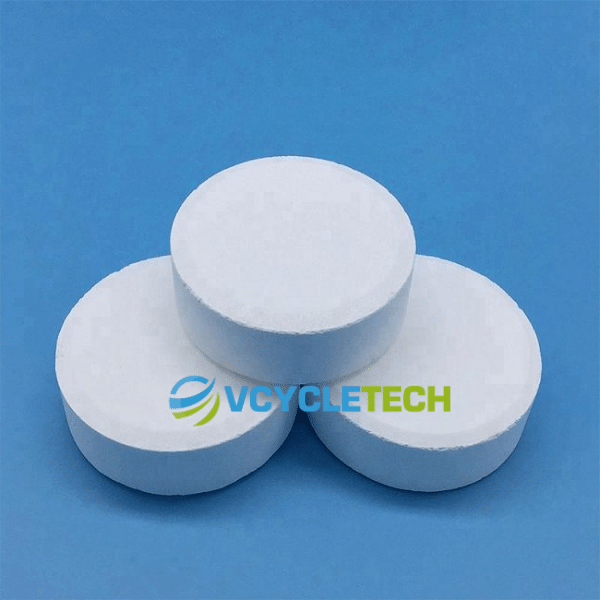
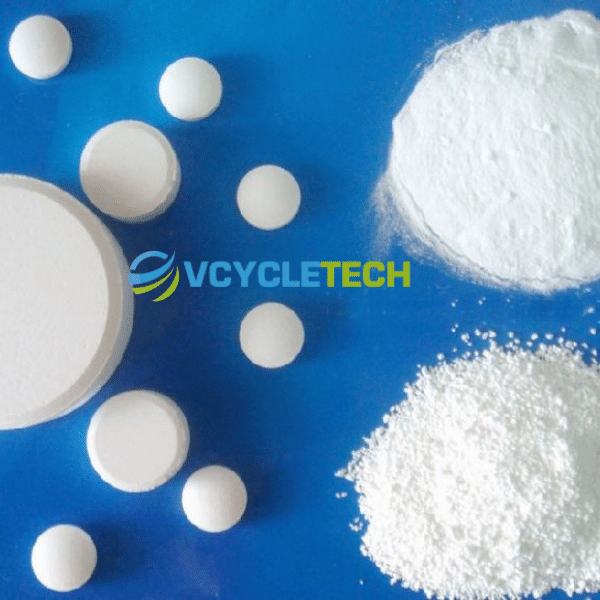
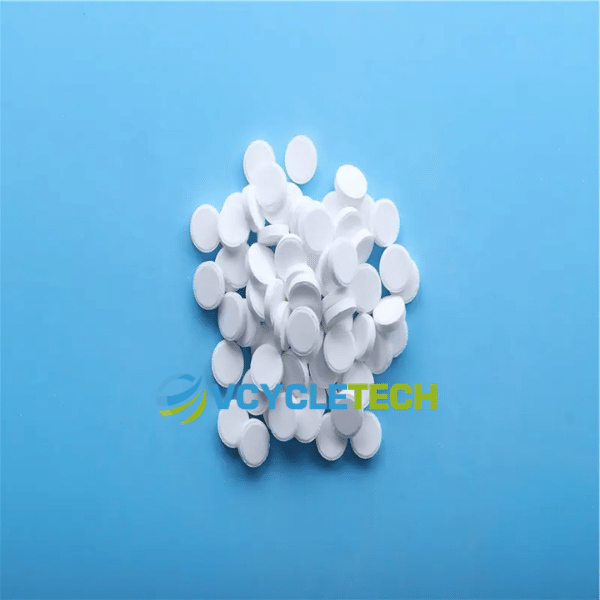
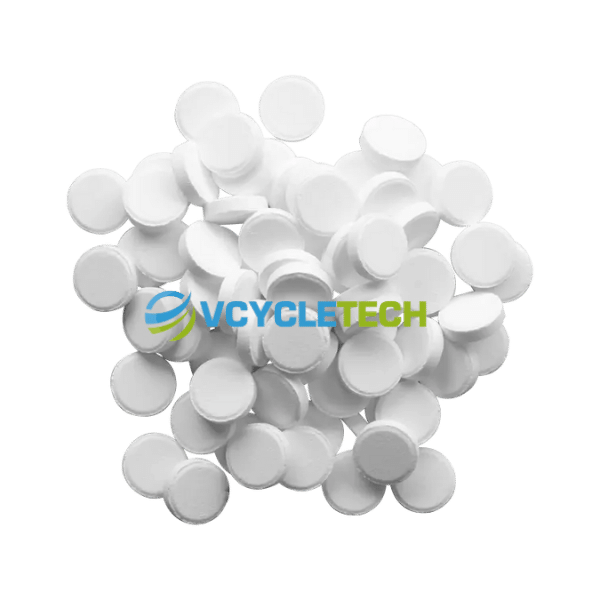
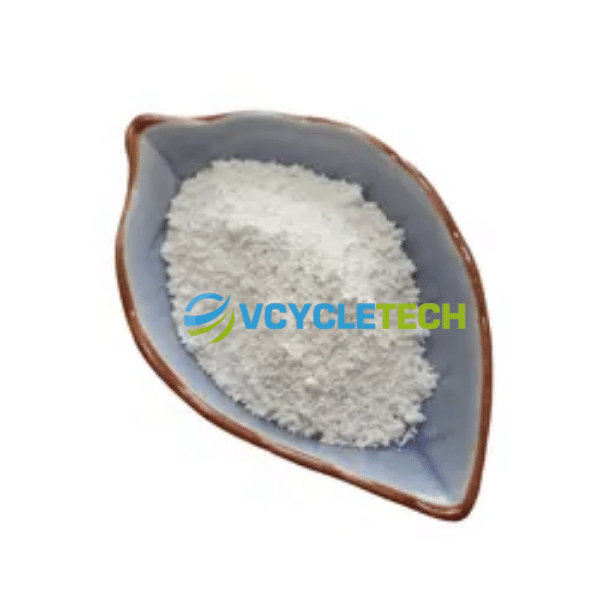
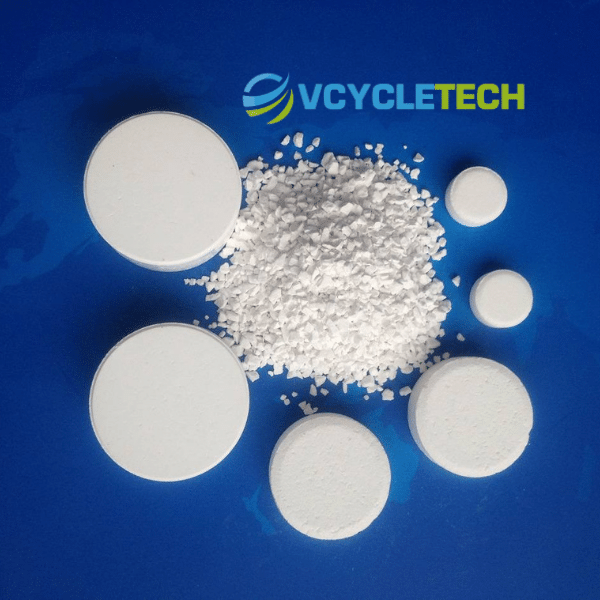
| Dosage form | White powder,granular,or flake |
| PH(1%solution) | 2.7-3.3 |
| Moisture | ≤0.5% |
| Granular | 8-30mesh,20-60mesh(or decided by customer) |
| Flake | 1g/flake、5g/flake、20g/flake、50g/flake、200g/flake(or decided by customer) |
| Package | Plastic Drum:1/2/5/10/25/50kg, Cardboard Drum:25kg/50kg, (or decided by customer) |
Properties:
It has strong oxidizing and bleaching properties that make it a good choice for sanitization applications, such as disinfecting swimming pools, minimizing odors and controlling the spread of bacteria. Additionally, TCCA can be used in organic synthesis processes, helping to create useful compounds from raw materials. Its stability makes it an ideal agent for closed circulating systems and its effective use reduces maintenance costs and downtime.
Usage:
With powerful bleaching and disinfecting properties with a stable chemical composition. It is widely used for sanitization in residential, industrial, and agricultural settings, as well as to bleach clothes, synthetic fabrics, and shrink-proof wool.
Package and Storage:
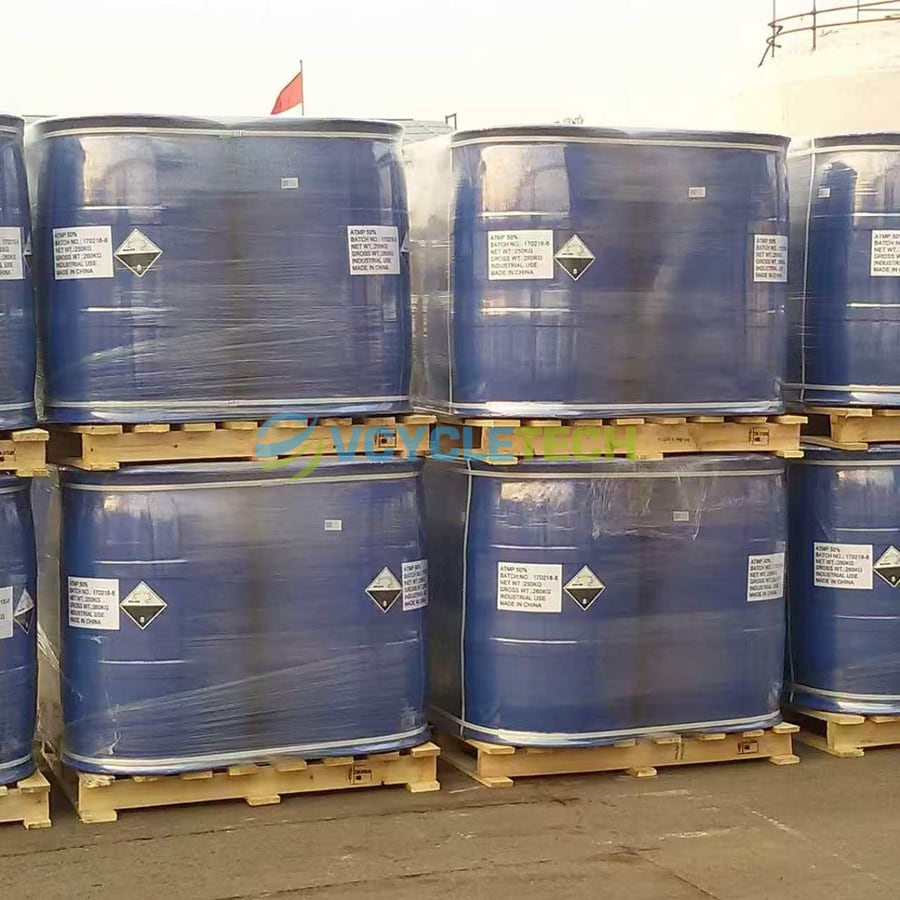
Trichloroisocyanuric Acid (TCCA) should be packaged in specialized containers and stored away from direct sunlight, high temperatures, and sources of ignition. It must be kept in a cool, dry place away from incompatible substances such as organic components and flammable materials. Containers should be made of inert material and securely sealed to prevent the product from coming into contact with moisture or other volatile substances. Careful attention should be taken when handling TCCA to avoid any accidents resulting from contact with skin or inhalation of fumes.
Related products
Related products