
Boiler Water Treatment Program Design by Pressure
TL;DR Boiler water treatment is designed around operating pressure: as pressure rises, feedwater must be far purer. Low-pressure boilers run on softened water with phosphate/polymer scale control and sulfite or DEHA; high-pressure boilers need demineralized water, near-zero hardness, all-volatile treatment and carbohydrazide. ABMA/ASME set the boiler-water TDS, alkalinity and silica limits for each pressure band, which in turn fix the blowdown rate.
Why pressure drives the whole program
Higher pressure means higher tube-metal temperature and steam purity demands, so tolerable impurity levels fall sharply. The ABMA and ASME guidelines table boiler-water limits (TDS, alkalinity, silica) against operating pressure — feedwater purity requirements tighten as pressure climbs, and zero hardness is an absolute target at every pressure. Design therefore starts with pressure, then sets feedwater prep, internal treatment and blowdown to hit those limits.
Feedwater preparation: softening vs demineralization
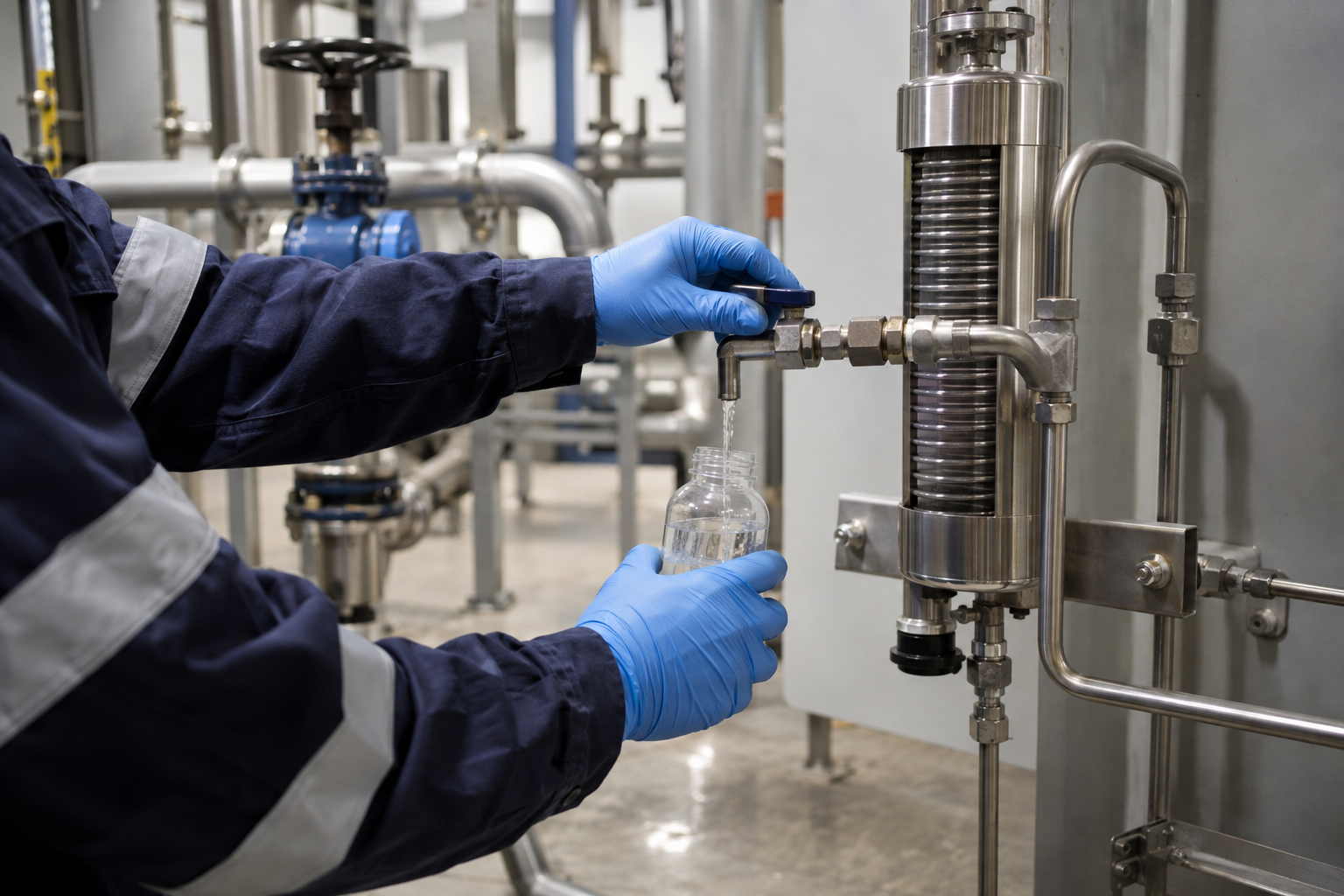
Low pressure (roughly <300 psi): sodium-zeolite softening removes calcium/magnesium hardness — the predominant, economical method. Medium pressure: softening plus dealkalization or partial demin to cut alkalinity/CO₂ and silica. High pressure (>~900 psi): full demineralization or RO+mixed-bed to reach near-zero hardness, low silica and low TDS, which also keeps blowdown manageable.
Internal scale & corrosion control
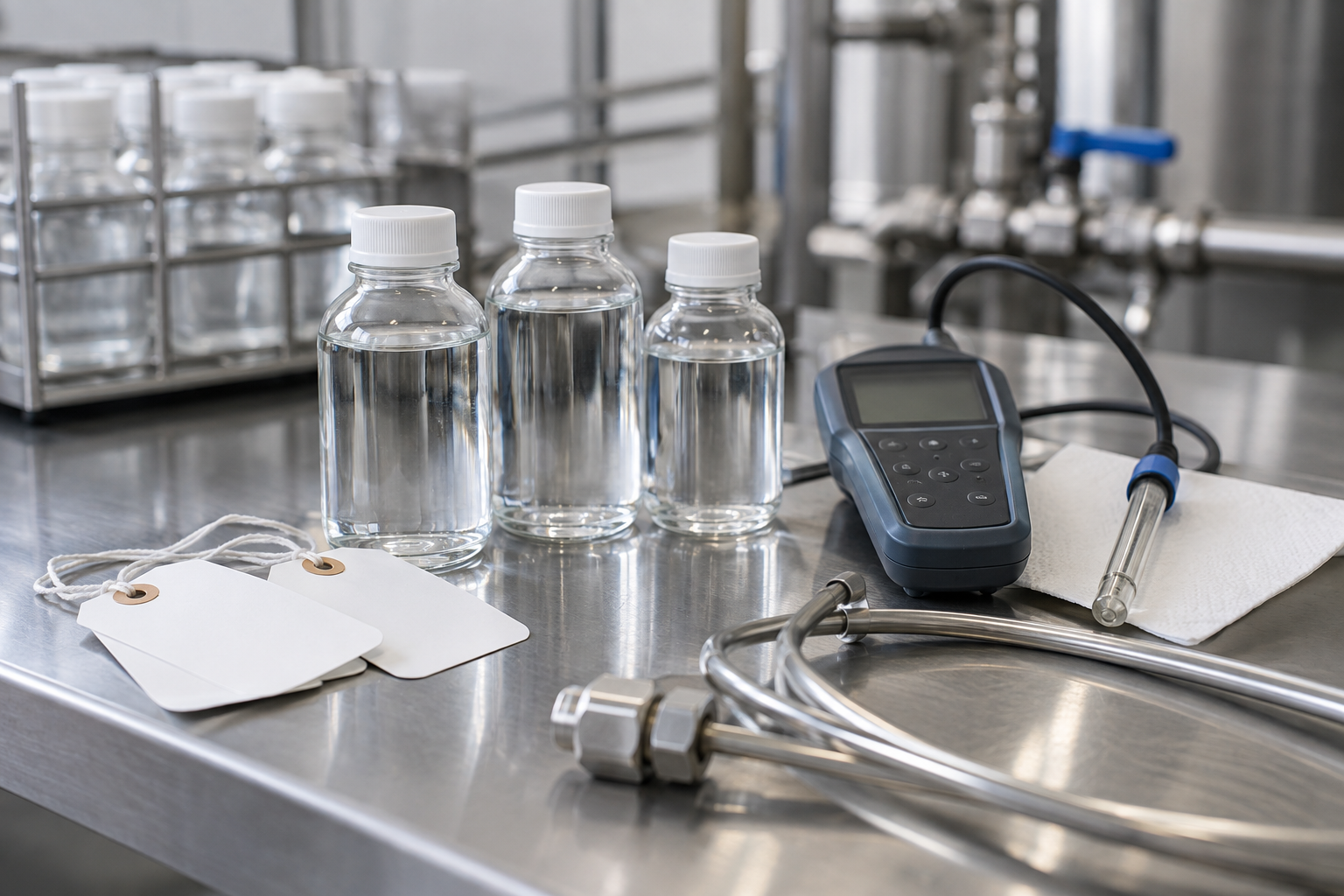
Even with soft feedwater, an internal program prevents residual scale and corrosion. Low/medium-pressure boilers use phosphate–polymer or formulated inhibitors such as WT-503 / WT-503B (and WT-504 for hot-water/heating systems); high-pressure units move to all-volatile treatment (AVT) with no solid additives. Chelants/polymers keep any hardness dispersed and out of the tubes.
Oxygen scavenging and condensate amines
Every program adds an oxygen scavenger — catalyzed sulfite (low pressure) or volatile DEHA / carbohydrazide (medium/high pressure) — plus neutralizing amines such as morpholine or cyclohexylamine to protect the condensate from carbonic-acid corrosion.
Blowdown and limits
Blowdown holds boiler-water TDS, alkalinity and silica within the pressure-band limits; the tighter the limit, the more feedwater purity is needed to avoid excessive blowdown. Control it from cycles of concentration — see our boiler blowdown & COC guide.
Program design by pressure tier
| Aspect | Low pressure (<300 psi) | Medium (300–900 psi) | High (>900 psi) |
|---|---|---|---|
| Feedwater prep | Softening (Na-zeolite) | Soften + dealkalize / partial demin | Full demin / RO + mixed bed |
| Feedwater hardness | Very low | Near zero | ≈0 (<~0.05 ppm) |
| Internal scale control | Phosphate–polymer / WT-503 | Polymer / chelant | AVT (all-volatile) |
| Oxygen scavenger | Catalyzed sulfite | DEHA / carbohydrazide | Carbohydrazide (volatile) |
| Condensate | Neutralizing amine | Neutralizing amine blend | Amine ± filming |
Watch

Frequently asked questions
How does boiler pressure affect the water treatment program?
As operating pressure rises, tube temperatures and steam-purity demands increase, so allowable impurity levels fall. ABMA/ASME limits for boiler-water TDS, alkalinity and silica tighten with pressure. That drives purer feedwater (softening at low pressure up to full demineralization at high pressure), lower internal-treatment solids, volatile oxygen scavengers, and tighter blowdown.
Do I need softened or demineralized water for my boiler?
Low-pressure boilers (below ~300 psi) typically run on sodium-zeolite softened water. Medium-pressure boilers add dealkalization or partial demineralization to cut alkalinity, CO₂ and silica. High-pressure boilers (above ~900 psi) need full demineralization or RO plus mixed-bed polishing to reach near-zero hardness and low silica.
What chemicals go into a boiler water treatment program?
A typical program combines feedwater softening/demin, an internal scale-and-corrosion inhibitor (phosphate–polymer or a formulated product such as WT-503/WT-503B), an oxygen scavenger (sulfite, DEHA or carbohydrazide), and a condensate neutralizing amine (morpholine, cyclohexylamine, MOPA). High-pressure boilers use all-volatile treatment.
What are ABMA and ASME boiler water limits?
ABMA (American Boiler Manufacturers Association) and ASME publish recommended maximum boiler-water limits — total dissolved solids, alkalinity and silica — for each operating-pressure band. Programs are designed so blowdown holds boiler water within those limits; the limits become much more stringent as pressure increases.
Can VCYCLETECH design a boiler water treatment program?
Yes. VCYCLETECH supplies the full range — boiler scale/corrosion inhibitors (WT-503/503B/504), oxygen scavengers (DEHA, carbohydrazide) and condensate amines — and provides a dosing program matched to your boiler pressure and feedwater analysis. Email sales@vcycletech.com with your water report.
About the manufacturer
VCYCLETECH is a China-based manufacturer of water treatment chemicals — boiler and cooling-water inhibitors, oxygen scavengers, amines, antiscalants, biocides, coagulants and flocculants — ISO 9001 / 14001 / 45001 certified, with current COA information on request and OEM/ODM service. See our quality & certifications.
References
Related: WT-503 · WT-503B · DEHA · Boiler water treatment · Blowdown & COC