
Application / lab test
Denim Wastewater Decolorization Jar Test
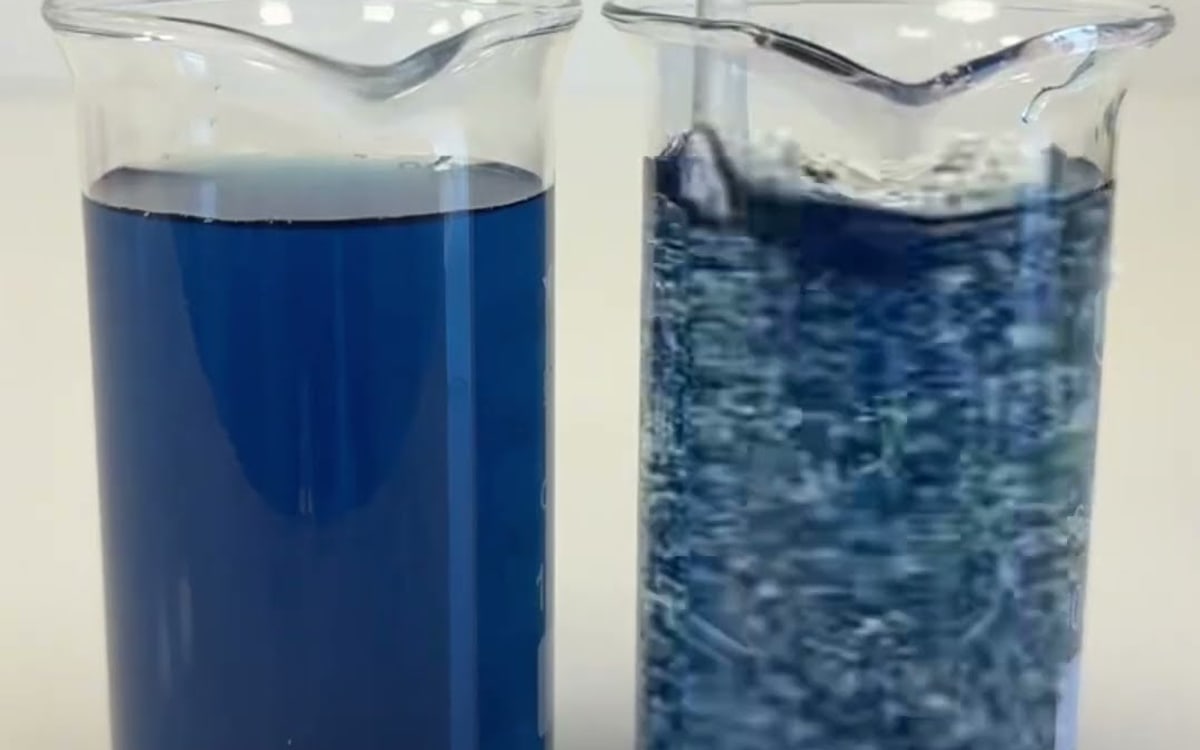
This video shows a staged decolorization and flocculation test on strongly blue denim wastewater using Water Decoloring Agent, PAC and PAM. The visible response helps buyers plan a representative-sample screen, but the selected program should be based on the actual indigo or mixed dyeing stream, pH, salinity, surfactants, suspended solids and the plant’s measured color method. Compare untreated, single-product and combined conditions, repeat the preferred sequence on a fresh sample, and carry the exact grade identifiers, TDS, SDS and sample COAs into the controlled plant trial and purchase recommendation.
Watch on YouTube Published
What this video shows
For strongly blue denim wastewater, use a jar test to screen the decoloring-agent, PAC and PAM sequence against the actual dye bath or equalized effluent. The video shows the sample changing as destabilized material forms flocs and separates. A useful trial records the dye process, pH, salinity, sample point and measured color method so the chosen chemical train can be repeated.
Why denim samples need their own screen
Indigo and auxiliary chemistry can change between dyeing, rinsing and combined equalization streams. Salt, reducing agents, surfactants and suspended fibers also affect coagulation. A program selected on generic blue water may therefore behave differently on the plant sample.
Take the sample from the point where the chemicals will actually be dosed. Record whether it is a single process stream or a blended equalization sample, then preserve the same pH adjustment and mixing sequence across candidate beakers.
Assign a job to each product
The Water Decoloring Agent is screened for dissolved color response. PAC supports colloid destabilization, and PAM can bridge conditioned particles into separable flocs. Run controls because not every sample needs all three products or the same order.
Judge the result with the site's color method plus separation behavior, sludge volume and the next treatment step. A clear-looking beaker is not a substitute for the plant's measured acceptance data.
Prepare a transferable trial record
Write down sample date and location, starting pH, each grade and batch, dose sequence, mixing conditions, settling time and measured results. Attach the candidate TDS, SDS and COA. This gives purchasing and operations the same reference when a bulk grade is quoted.
Cover dyeing variability
Collect candidate samples across the production pattern: a typical indigo run, the darkest expected stream and a combined equalization sample after a changeover. If rinse water or finishing chemicals enter the same tank, note their timing. Test the same chemical set on each sample and retain the untreated controls for comparison.
When one condition is selected for a plant trial, define the feed location, monitoring interval and adjustment authority. Measure color with the same method used in the laboratory and note fiber or solids capture at the actual separator. A grade that works only on one grab sample should remain a candidate until the broader sample set is understood.
Before ordering, ask the laboratory to repeat the preferred condition on a fresh sample. A repeat run helps separate a robust chemical response from sampling or mixing variation and gives operations a clearer starting instruction.
Product and process details
These fields summarize the product, process or shipment context shown in the video and linked catalog.
| Field | Value | Source |
|---|---|---|
| Decoloring-agent solids | ≥50% | Water Decoloring Agent product page |
| Decoloring-agent pH | 2.0–5.0 for a 30% water solution | Water Decoloring Agent product page |
| PAC alumina (Al₂O₃) | ≥29% | PAC product page |
| PAC pH | 3.5–5.0 for a 1% solution | PAC product page |
| PAM catalog forms | Anionic, cationic and nonionic powders | PAM product page |
| PAM solids | ≥90% | PAM product page |
Chemical roles in a denim wastewater screen
The matrix separates the primary job of each product before a combined sequence is selected.
| Condition | Primary role | Selection evidence |
|---|---|---|
| Untreated control | Baseline | Color, pH, solids and separation |
| Water Decoloring Agent | Screen color response | Measured color method |
| PAC | Destabilize colloids | Turbidity and floc onset |
| PAM | Bridge conditioned particles | Floc strength and carryover |
| Combined sequence | Integrate stages | Repeatable measured result |
Denim wastewater screening flow
Which denim wastewater details should a buyer provide?
Denim production context is essential because dye and finishing changes can alter the chemical response.
- Indigo or other dye system and fiber process
- Segregated or equalized sample point
- pH, salinity, surfactants and solids
- Measured color method and target
- Downstream separator, biology or reuse step
Common questions
What chemicals are shown in the denim wastewater video?
The page links the test to Water Decoloring Agent, PAC and PAM.
Why should the dye process be recorded?
Indigo, wash-off chemistry, salt and finishing additives can change coagulation and decolorization response.
Should one blue sample determine the purchase?
Test representative normal and difficult production conditions, then repeat the preferred result on a fresh sample.
What should be measured during the test?
Use the plant’s color method and record pH, solids, floc formation, settling or flotation and sludge behavior.
How can a buyer request a screening set?
Send the dyeing-process and sample data, target measurements and downstream treatment constraints.