
Shipment
Water Decolorant Dispatch: IBC and Drum Order Checklist
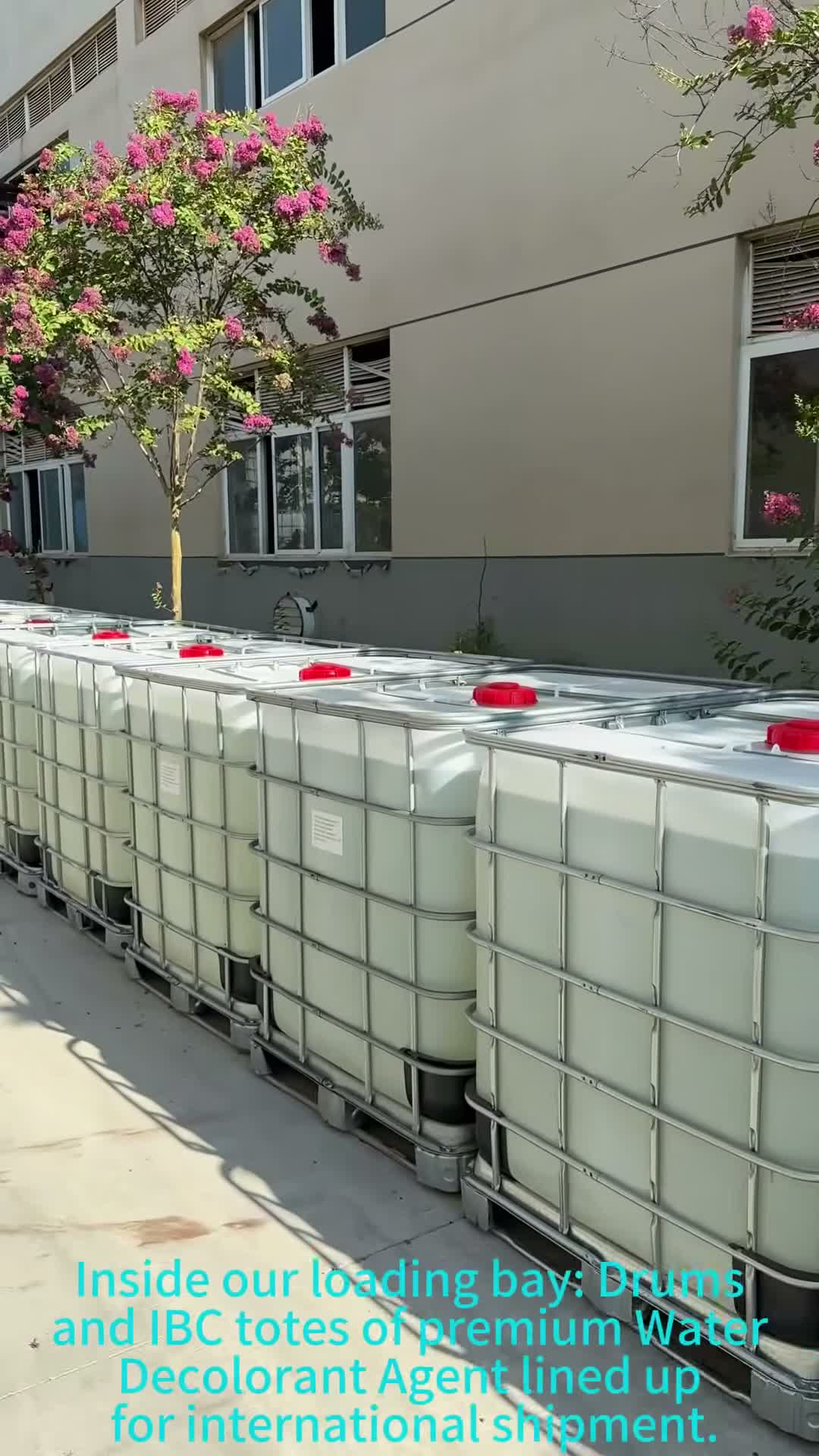
This dispatch Short shows rows of Water Decoloring Agent IBC totes staged beside a loading area. It connects the bulk package format to a liquid product used when screening color removal in textile, paper and other industrial effluents. The linked page identifies a dicyandiamide-formaldehyde resin product family and lists solids at 50% minimum. Grade selection starts with a representative wastewater test that records color, pH, solids, COD or TOC where relevant and the downstream separation method. Include the preferred IBC quantity, destination and test context when requesting a quotation.
Watch on YouTube Published
What this video shows
The Short shows Water Decoloring Agent IBC totes staged for bulk dispatch. The linked product family is used when screening color removal in textile, paper and other industrial effluents. Select the grade through representative-water testing, then share the wastewater source, measured target, separator, IBC quantity and destination for a focused product discussion and quotation.
What the bulk decolorant video shows
The Short shows rows of liquid-product IBC totes staged beside a loading area. It gives buyers a direct view of the bulk package format available for a water-decoloring-agent enquiry.
Match the product to colored wastewater
Start with the wastewater source and measured treatment target. Textile, paper and other colored effluents can respond differently because dye, resin, surfactant, salt, suspended solids and upstream chemicals vary. Compare candidate grades on representative samples and record both color response and sludge behavior.
Plan an IBC enquiry
Use the Water Decoloring Agent page for current product-family fields. Send the sample context, current treatment, separator, expected flow, IBC quantity, destination and timing to request relevant available grades and a quotation.
Product and process details
These fields summarize the product, process or shipment context shown in the video and linked catalog.
| Field | Value | Source |
|---|---|---|
| Main component | Dicyandiamide-formaldehyde resin | Product page |
| Appearance | Colorless or light-color viscous liquid | Product page |
| Dynamic viscosity | 10–500 mPa·s at 20°C | Product page |
| pH | 2.0–5.0 for a 30% water solution | Product page |
| Solids | ≥50% | Product page |
Water-decolorant selection and supply matrix
Connect representative-water performance to the package and delivery needs of the actual application.
| Decision | Application input | Supply input |
|---|---|---|
| Product fit | Representative wastewater test | Preferred available grade |
| Treatment target | Measured color and sludge behavior | Expected flow and quantity |
| Separation | Settling, DAF or filtration | Package and handling preference |
| Site fit | Current treatment and variability | IBC receiving capacity |
| Delivery | Plant schedule | Destination and timing |
Decolorant sample-to-quote flow
What should a bulk decolorant enquiry include?
The quotation should link application evidence to one grade, package and destination.
- Wastewater source and measured color method
- Approved sample grade and trial record
- Required package, quantity and destination
- Label and transport-document requirements
- TDS, SDS and batch COA requirements
Common questions
What is visible in the water-decolorant dispatch video?
Rows of liquid-product IBC totes are shown staged beside a loading area.
Which product page is linked to the shipment?
The page links to VCYCLETECH Water Decoloring Agent.
What specifications are listed for the decoloring agent?
The product page lists the main component, appearance, viscosity, pH and solids ≥50%.
How should a buyer compare candidate grades?
Use representative wastewater and record measured color response, separation and sludge behavior under consistent conditions.
What should a bulk enquiry include?
Send the wastewater context, preferred grade when known, IBC quantity, destination, timing and any required documents.