
PESA vs PASP: Which Green Antiscalant?
TL;DR Pick by the scale you actually have. PESA outperforms PASP on calcium carbonate and strontium sulfate, and needs a lower dose for the same CaCO₃ efficiency. PASP outperforms PESA on calcium sulfate dihydrate and barium sulfate. Both are phosphorus-free, nitrogen-light and biodegradable, and both lose efficiency as calcium concentration or temperature rises. Where the water throws mixed scale, blending them beats either alone — a PESA/PASP mix has shown around 19 hours of nucleation retardation and close to 90% inhibition of calcium carbonate crystal growth.
Why green antiscalants at all
Phosphonates work, but they add phosphorus to the discharge, and phosphorus limits are what force the change. PESA and PASP are non-phosphorus, biodegradable threshold inhibitors that let a cooling system run high cycles without a phosphorus budget. The broader case is in our phosphorus-free green antiscalants guide; this page is the head-to-head.
Calcium carbonate and strontium sulfate — PESA wins
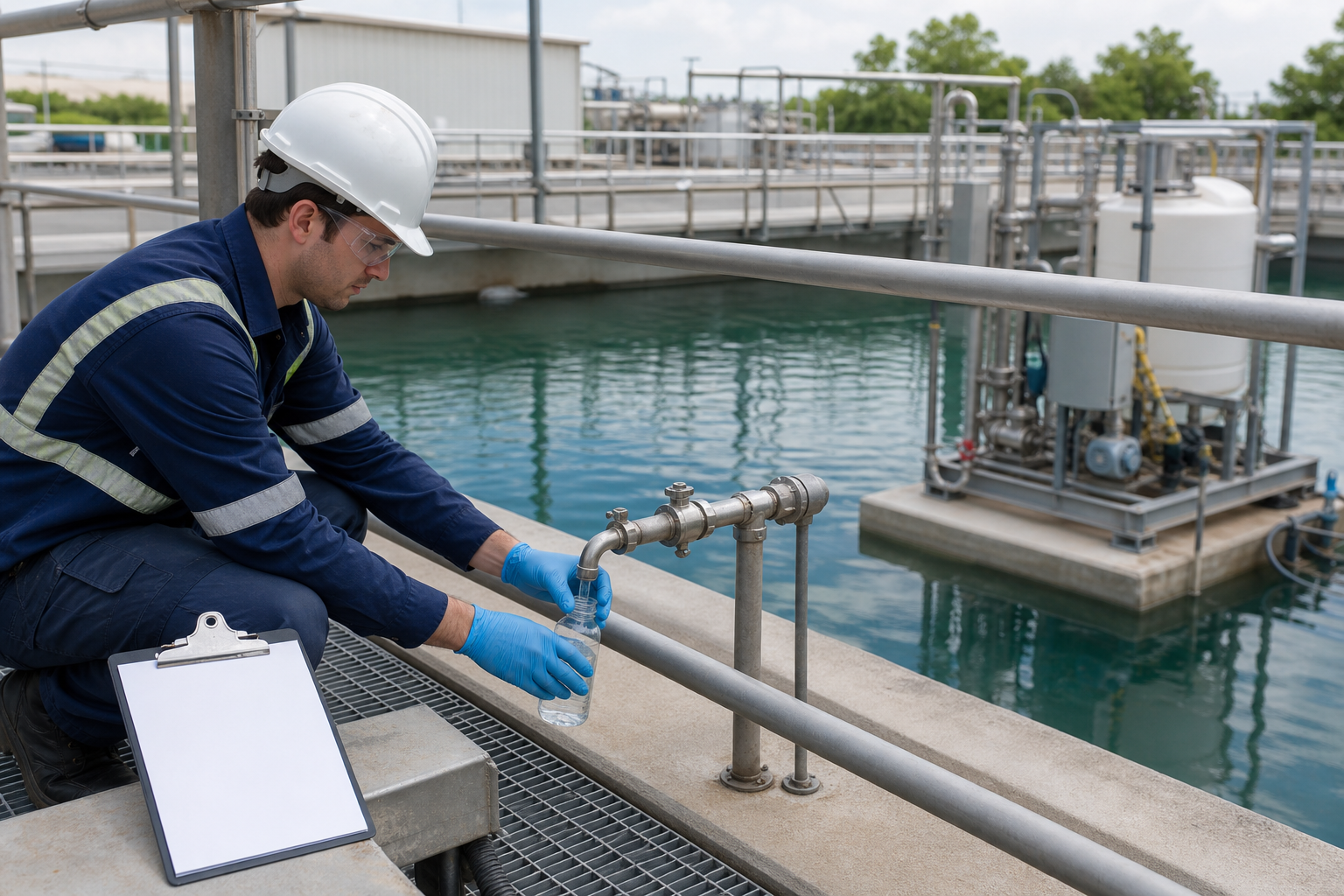
In controlled precipitation testing, PESA's anti-scaling performance exceeds PASP's for calcium carbonate, and the PESA concentration needed to reach the same efficiency is lower — it is the cheaper molecule per unit of result where CaCO₃ is the problem, which in open recirculating cooling is most of the time. The same ordering holds for strontium sulfate.
Calcium sulfate and barium sulfate — PASP wins
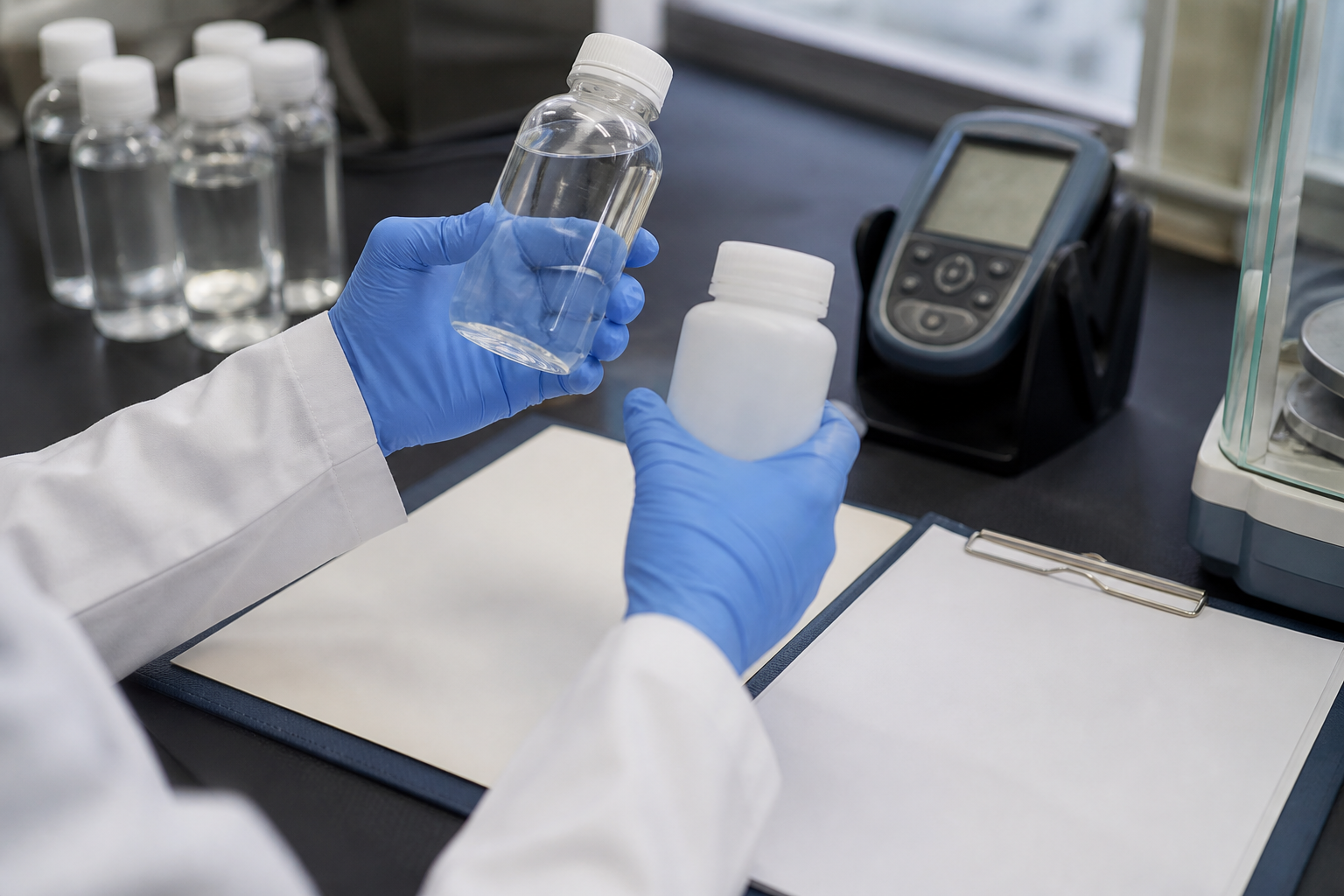
The ranking inverts on sulfate scale: PASP outperforms PESA on calcium sulfate dihydrate (gypsum) and on barium sulfate. That matters in oilfield water injection, high-sulfate make-up and RO concentrate, where gypsum and barite — not carbonate — are what actually deposit. PASP also brings useful dispersancy and some corrosion inhibition.
Both fade with calcium and temperature
Neither is immune to the water: raising Ca²⁺ concentration or temperature reduces the inhibition efficiency of PESA and PASP alike. Dose to the actual cycled water, not to make-up, and re-check the dose when cycles or heat load change. This is also why a "green" swap that keeps the old ppm often disappoints — the dose has to be set for the new molecule.
Blend them for mixed scale
The two are complementary rather than competing. A PESA + PASP blend has been shown to deliver about 19 hours of nucleation retardation and roughly 90% inhibition of calcium carbonate crystal growth — better than either component alone. Where a water throws both carbonate and sulfate, a blend is usually the right answer, and it is the normal starting point for a formulated phosphorus-free product.
How to choose
- Cooling water, carbonate-dominated → PESA.
- Oilfield, high sulfate, gypsum or barite → PASP.
- Mixed carbonate + sulfate → blend the two.
- Dispersancy or mild corrosion inhibition also wanted → PASP.
- Zero-phosphorus mandate → either; pair with a non-phosphorus corrosion approach and monitor steel.
PESA vs PASP by scale type
| Scale / property | PESA | PASP |
|---|---|---|
| Calcium carbonate (CaCO₃) | Better — lower dose for same effect | Good |
| Strontium sulfate (SrSO₄) | Better | Good |
| Calcium sulfate (CaSO₄·2H₂O) | Good | Better |
| Barium sulfate (BaSO₄) | Good | Better |
| Phosphorus | None | None |
| Biodegradable | Yes | Yes |
| Effect of higher Ca²⁺ / temperature | Efficiency drops | Efficiency drops |
| Extra function | Chelation, mild corrosion inhibition | Dispersancy, mild corrosion inhibition |
Watch

Frequently asked questions
Is PESA or PASP the better scale inhibitor?
It depends on the scale. PESA performs better on calcium carbonate and strontium sulfate and reaches the same calcium carbonate efficiency at a lower concentration. PASP performs better on calcium sulfate dihydrate and barium sulfate. For mixed carbonate and sulfate scale, a blend of the two outperforms either alone.
Can PESA and PASP be used together?
Yes, and for mixed scale they should be. A PESA and PASP blend has been shown to give roughly 19 hours of nucleation retardation and close to 90% inhibition of calcium carbonate crystal growth — better than either component on its own. Blends are the normal basis of formulated phosphorus-free antiscalant products.
Are PESA and PASP really phosphorus-free and biodegradable?
Yes. Polyepoxysuccinic acid and polyaspartic acid are both non-phosphorus and readily biodegradable green scale inhibitors, which is why they are chosen where phosphorus discharge is limited. They let cooling systems run high cycles of concentration without consuming a phosphorus budget.
Why does my green antiscalant underperform at high hardness?
Because increasing calcium concentration or temperature reduces the inhibition efficiency of both PESA and PASP. Dose against the actual cycled water rather than the make-up, and re-set the dose whenever cycles of concentration or heat load change. Carrying over the ppm used for a phosphonate is a common cause of disappointment.
Does VCYCLETECH supply PESA and PASP?
VCYCLETECH lists PESA and PASP dispersants. Share your application, target grade, quantity, packaging and destination to request current TDS/SDS, a representative COA and sample options. Agree lot-documentation terms before ordering.
About the manufacturer
VCYCLETECH is a China-based manufacturer of water treatment chemicals — phosphonates and their salts, green antiscalants, biodegradable chelants, dispersants, biocides, coagulants and defoamers — ISO 9001 / 14001 / 45001 certified, with current COA information on request and OEM/ODM service. See our quality & certifications.
References
- Polyaspartic acid — Wikipedia
- Scale inhibitor — Wikipedia
- Comparative performance of polyepoxysuccinic acid and polyaspartic acid on scaling inhibition — Desalination
Related: PESA · PASP · Phosphorus-free green antiscalants · What is PASP · Cooling water treatment · MGDA vs GLDA