
Reverse osmosis · pretreatment decision
High-SDI RO Feedwater: Decide the Pretreatment Train
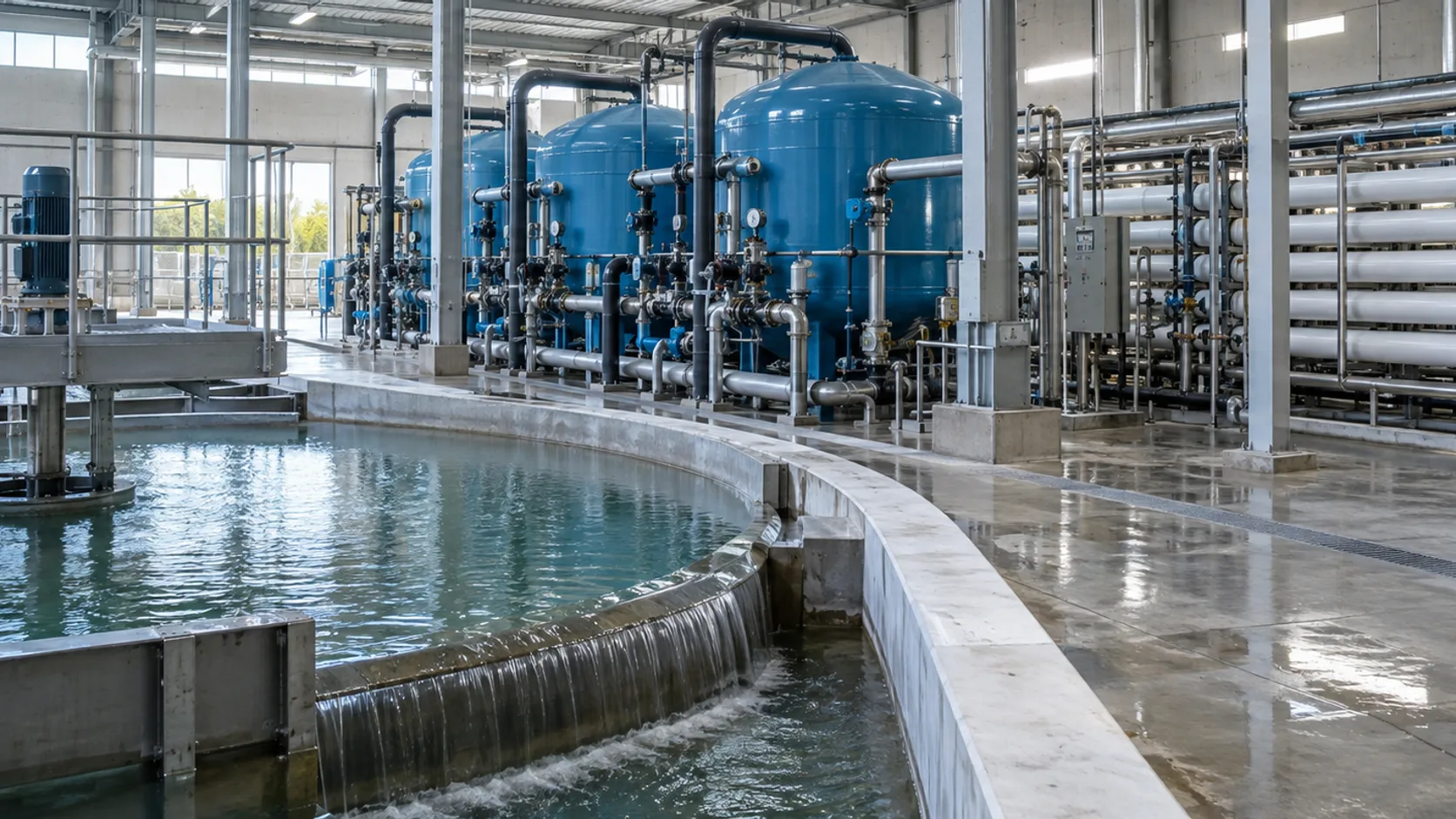
If RO feedwater SDI stays high, find the first point in the pretreatment train where particle removal fails before adding a coagulant. Measure comparable samples at the raw-water inlet, after clarification or media/UF filtration, and immediately before the RO pressure vessels. Repair breakthrough, backwash or cartridge-filter problems first. Where stable colloids still pass an otherwise sound separator, compare a controlled coagulation/flocculation trial with a no-chemical control and verify that the formed solids are actually removed. The acceptance point is the membrane inlet, not a clear jar. Agree the SDI method, the installed membrane supplier's feed specification, residual-metal and polymer checks, and an antiscalant-compatibility review before any chemical reaches the RO train. No PAC, PFS or PAM grade has a transferable SDI-reduction guarantee.
What a high SDI result does — and does not — tell you
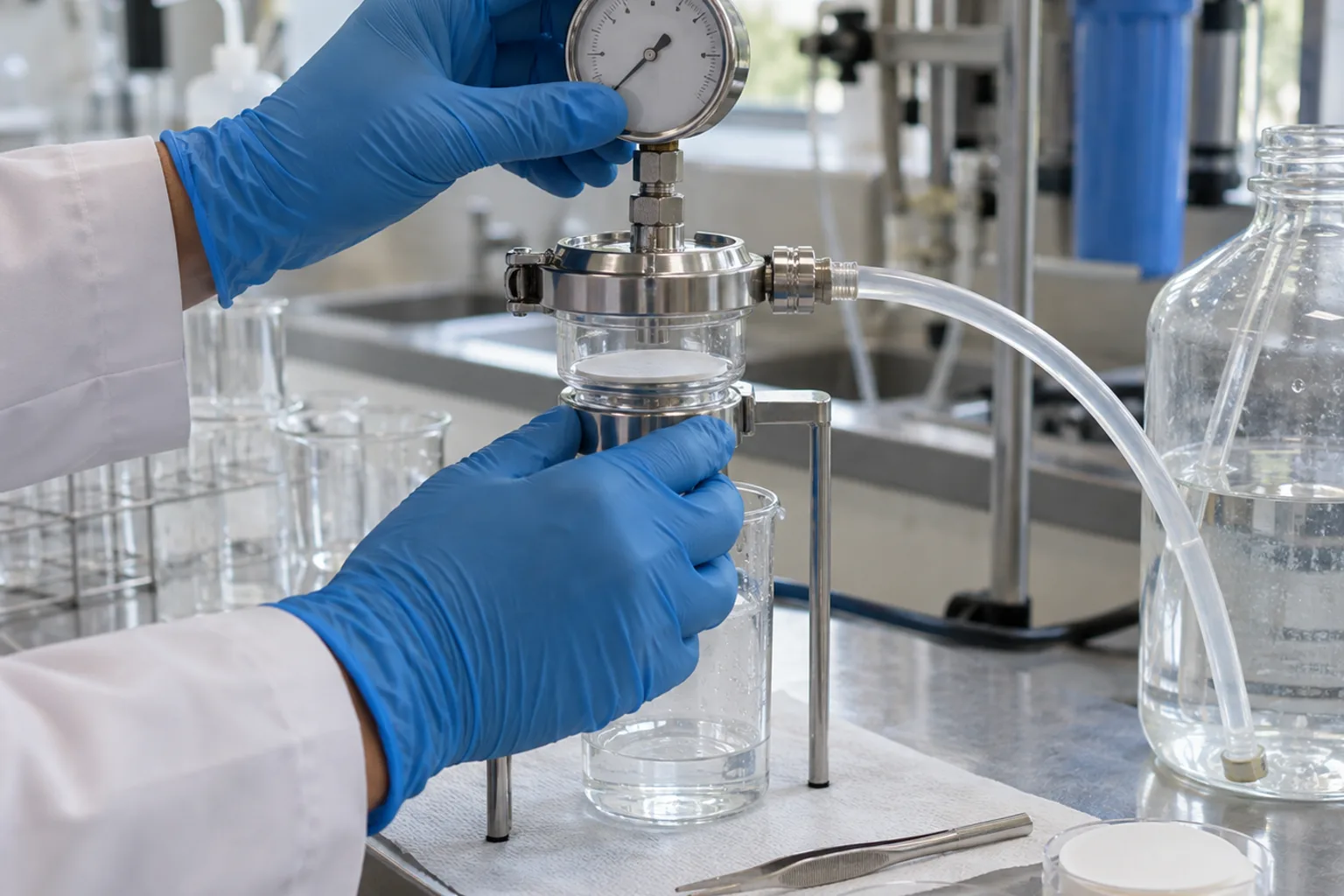
The silt density index estimates how quickly a standard filter plugs under a defined test. ASTM D4189-23 describes it as an indication of particulate matter and a way to compare filtration or clarification, not an absolute particle concentration. The standard also warns that temperature and filter manufacturer can change comparability. Its published scope is relatively low-turbidity waters, including filtered water and clarified effluent; a visibly muddy raw sample is not a substitute for a properly performed RO-feed SDI test.1
Ask for the complete measurement record: sample point, time, temperature, filter make, test duration, initial and final collection times, turbidity and any deviation from the method. A single number without those details cannot locate a bad filter or establish that a chemical helped. DuPont's August 2026 FilmTec manual gives a general SDI15 guideline of 5 and recommends less than 3 to minimize fouling for its membranes. That is an OEM-specific technical guideline, not a universal VCYCLETECH product promise or a replacement for the installed membrane's documentation.2
SDI also cannot close every RO-fouling question. It is most useful for particulate/colloidal loading; a low SDI can coexist with biological growth potential or dissolved scale precursors. If normalized pressure drop rises repeatedly despite acceptable SDI, follow the post-cleaning biofouling recurrence path or the site's fouling-type guide instead of forcing an SDI diagnosis.
Find the first barrier that loses control
Draw the real water path, including tanks, recycle returns, clarifier, media or membrane filters, cartridge guard, dechlorination and injection points. Sample on the same operating shift at locations bracketing each barrier. Add filter differential pressure, backwash timing, flow, turbidity, particle counts where available, and the most recent raw-water upset. The useful question is not “Which bottle reduces SDI?” but “Where did solids first escape, and under what operating condition?”
Start with preventable hardware and operation faults. Media-channeling, exhausted or damaged filter media, poor backwash, hydraulic peaks, dirty holding tanks, bypass valves and a cartridge filter loaded beyond its role can all put particles near the membrane. A guard cartridge protects against episodic carryover; it is not a replacement for a missing primary separation step. Hydranautics' difficult-feedwater paper treats seasonal and industrial changes as design inputs and contrasts conventional pretreatment with MF/UF for more stable particulate control. Its tabulated limits apply to the described design context, not to all membrane brands or waters.3
If the highest SDI appears only after a tank, line or chemical injection point, a different cause may be more plausible than insufficient coagulation. Inspect that exact segment before redesigning the whole train. If the rise begins before filtration and the filter still meets its hydraulic operating window, then a stronger primary barrier or a carefully designed chemical assist may deserve a controlled comparison.
Compare physical separation before adding chemistry
Separation is the mechanism that keeps unwanted material out of the RO. Coagulants and flocculants change particle behavior; they do not make the floc disappear. Use the table as a routing discussion, then ask the membrane and equipment OEMs to set the actual design criteria.
| Route | Where it may help | Evidence to collect | Do not overlook |
|---|---|---|---|
| Repair/optimize existing media filtration | Breakthrough tied to loading, backwash, channeling or peak flow | Paired inlet/outlet SDI, turbidity, pressure and cycle data | Adding chemical can mask a mechanical failure and increase carryover. |
| Clarification then media filtration | High suspended load needing contact, floc growth and sludge removal | Clarifier overflow, sludge handling, filter run and RO-inlet quality | A clear clarifier overflow still needs filtration and residual checks. |
| Inline coagulation ahead of a filter | Persistent fine colloids when a suitable downstream filter exists | Coagulant mixing, filtered-water SDI, residuals and filter response | Short-circuiting or overdosing can send floc or polymer to the RO. |
| MF/UF barrier | Variable fine-solids load or a need for a more consistent barrier | Permeate SDI/turbidity, integrity, backwash and operating cost | It does not remove every dissolved nutrient or scale precursor. |
DuPont describes conventional coagulation–flocculation for raw water with high suspended matter and high SDI, followed by settling and media filtration. Its manual also describes MF/UF as physical alternatives in appropriate designs. Neither statement means every high-SDI site needs chemicals; the choice depends on the load, separator, available space, residual risk and the RO membrane's tolerance.2
Use a chemical trial only if the separator can finish the job
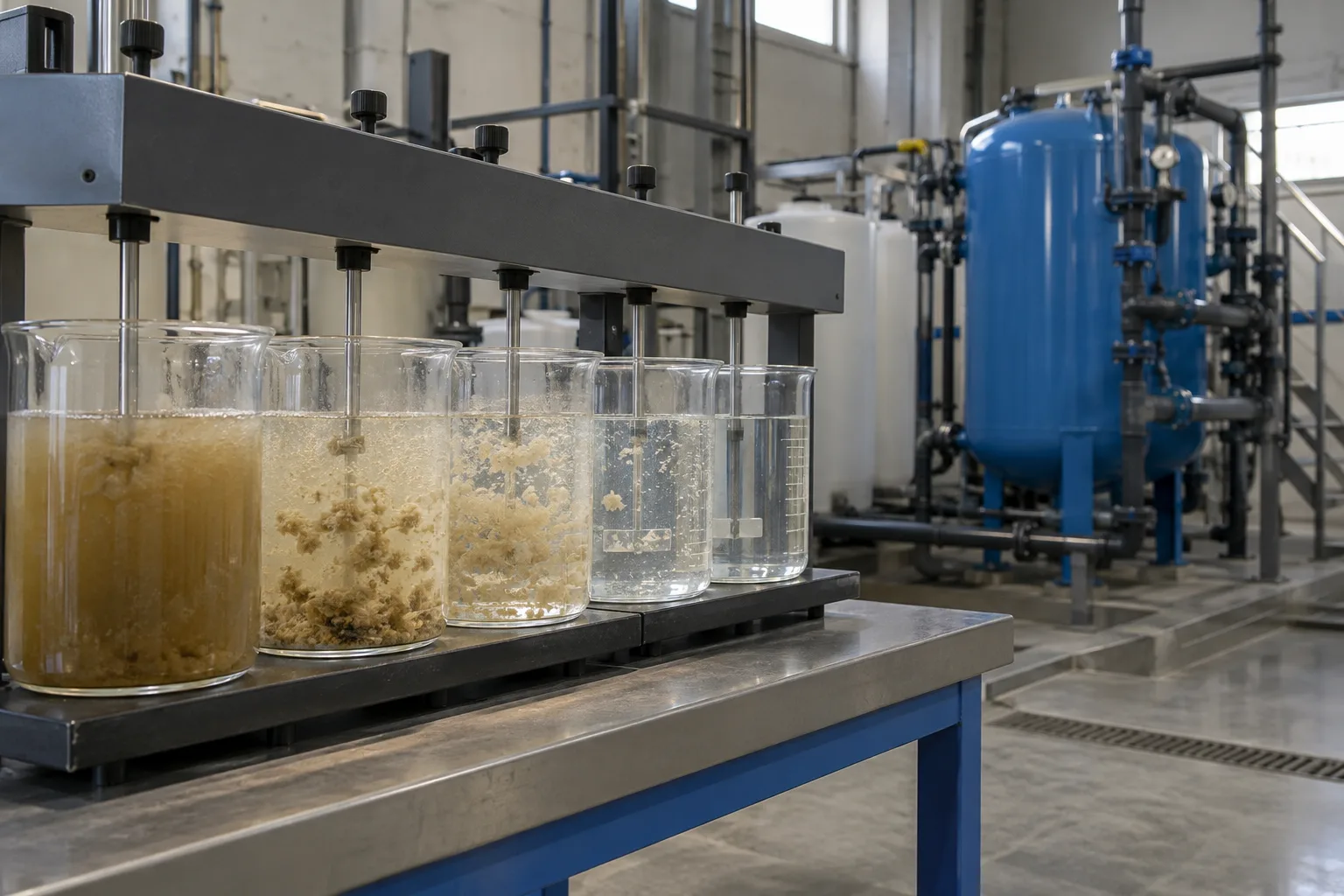
A useful trial has a no-chemical baseline and the current operating program. If colloids survive that route, compare candidate coagulant or polymer conditions upstream of the chosen separator, with equal water, mixing energy, contact time and filtration. Measure the filtered effluent, not only the size of the floc in a beaker. A beautiful jar with unstable filter runs or polymer carryover is a failed RO pretreatment result.
This is where product-family shorthand becomes dangerous. VCYCLETECH lists polyferric sulphate, PAC and PAM, but the current product-fact library does not establish that a specific grade, charge or residual is acceptable for a given RO membrane. DuPont warns that residual aluminum may foul membranes and that cationic polyelectrolytes can form gels with negatively charged antiscalants. It also warns that flocs can bypass filters and deposit on the membrane. Ask the installed membrane OEM and supplier to review the exact candidate, injection point and downstream chemicals before pilot use.2
If an aluminum-based candidate is being considered, the membrane-specific residual and cleaning implications deserve particular scrutiny; do not treat PAC as the default just because it is familiar in wastewater treatment. Ferric products also need residual-metal and precipitation checks. Likewise, a PAM label alone does not identify charge, molecular behavior or carryover. No dosage in another manufacturer's manual or case study should be copied into this plant.
Accept the train at the membrane inlet, across real variation
Set an acceptance window jointly with the membrane OEM and plant team. It should include the SDI test method and location, turbidity or particle trend, residual aluminum/iron and polymer where relevant, cartridge-filter loading, filter run length, membrane normalized performance and the water conditions that trigger a retest. Track normal and upset periods, not only one clean-day sample. Record any changes in upstream treatment, including the antiscalant injection point, because a chemistry interaction may appear only after two streams meet.
To judge the trial fairly, keep the same source water and operating window as far as practicable. Compare the no-chemical control, the existing program and each candidate at the same separator and RO-inlet sampling point. If filter effluent improves but the RO inlet does not, inspect storage, piping and subsequent additions. If RO-inlet quality improves while filter cleaning or sludge disposal becomes untenable, the route is not yet a practical purchase decision. A published full-scale seawater study found that particulate indicators and biological growth potential can behave differently through pretreatment; that result is specific to its plants and reinforces why SDI alone is not a comprehensive fouling guarantee.4
Bring the right water and equipment facts to the supplier
For a productive selection discussion, send a simple process sketch, feed source and variation, paired SDI/turbidity results, current filter and backwash details, current coagulant/polymer/antiscalant additions, membrane model, target inlet specification and the intended pilot separator. Add required quantity, package form and destination when requesting a quote. The coagulant and flocculant range is a starting point for candidate screening, while the RO application page shows where chemical decisions sit in the wider membrane program. Ask for current TDS/SDS and a representative COA for the exact candidate before a controlled plant trial.
Frequently asked questions
Can PAC be added directly before an RO membrane to lower SDI?
Do not treat PAC as a direct membrane-feed fix. Coagulation needs a downstream separation step that retains the formed solids, and aluminum carryover can cause fouling for some membranes. Verify the installed membrane OEM's limits, residuals and antiscalant compatibility before considering any aluminum-based trial.
Is a cartridge filter enough when the incoming SDI is persistently high?
Usually the first question is why the primary barrier is failing. A cartridge guard can catch episodic carryover but may plug quickly under a sustained colloidal load. Compare the actual pretreatment outlet with the RO inlet, then fix media filtration or evaluate a more suitable clarification/MF/UF barrier.
What does an acceptable SDI target look like?
Use the installed membrane manufacturer's current feed specification and your plant's monitoring plan. DuPont's August 2026 FilmTec manual gives a general SDI15 guideline of 5 and recommends less than 3 to minimize fouling for its elements; those numbers are not a sitewide VCYCLETECH guarantee or necessarily another OEM's limit.
Why did a jar trial improve clarity but not the RO inlet?
The floc may have broken under plant shear, bypassed the filter, or been followed by contamination in storage or piping. Check matched sampling points, filter run data and carryover of metal or polymer. A jar screen is useful for narrowing candidates, not for accepting the full train.
Can low SDI rule out biofouling?
No. SDI reflects particulate/colloidal plugging under its test conditions. Biological growth potential and nutrients can remain even when the sample filters well. If normalized pressure drop returns quickly after cleaning, investigate upstream growth and the recurrence pattern separately.