
Reverse osmosis · repeat-fouling decision
RO Biofouling Returns After Cleaning? Find the Source
When RO performance improves after cleaning but the same pressure-drop trend quickly returns, stop treating each clean as a fresh, isolated event. First confirm the foulant: compare normalized stage pressure drop, permeate flow and salt passage before cleaning, immediately after restart and through the next run; preserve deposit evidence or request membrane autopsy when the cause is uncertain. If biofilm is credible, trace its supply from source water through storage, pretreatment, dechlorination and membrane feed. A clean can remove part of an established film without removing upstream organisms or nutrients. Choose the next control at the point where growth potential enters or rebounds, and verify it over another operating cycle. Any cleaner or biocide discussion must be tied to the installed membrane, exact product documents and site water; more chemical is not an automatic cure.
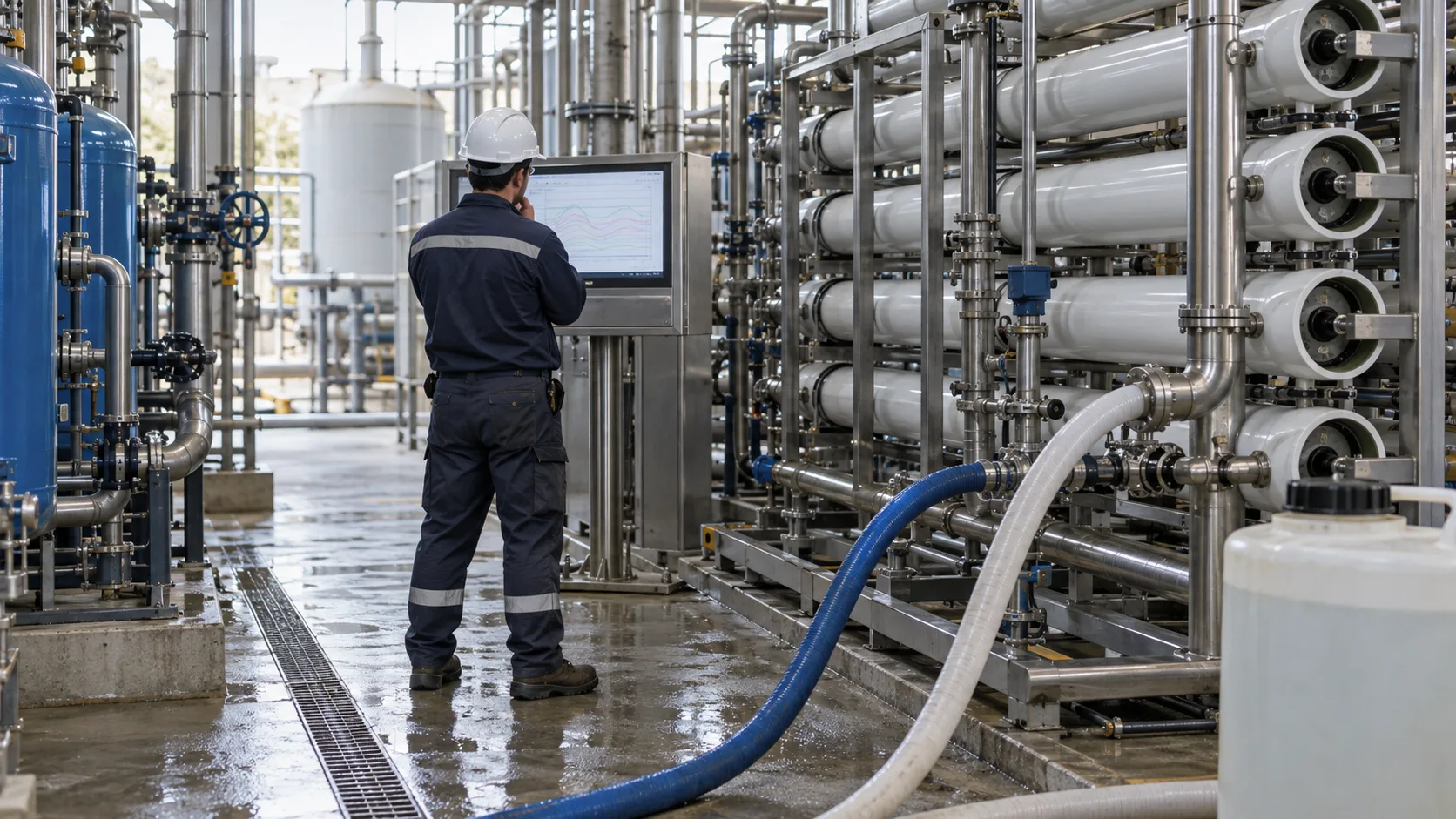
Read the pattern across cleanings, not just the restart number
Put at least two cleaning cycles on one timeline. For each, mark the last stable run, the cleaning start, the immediate post-rinse baseline and the next rise in stage differential pressure. Normalize flow and pressure for changing feed temperature, salinity, recovery and operating rate before comparing one month with another. A “recovery” claim based only on a lower raw pressure at a lower flow is not evidence that fouling was removed.
There are three common shapes worth separating. A large immediate recovery followed by a similar fast rise suggests renewed supply or growth after restart. Little immediate recovery suggests incomplete cleaning, mixed deposits or a mechanical restriction. A progressively shorter clean-to-clean interval raises questions about residual film, repeated upstream contamination and whether the measurement baseline or operating envelope has changed. DuPont's current FilmTec manual notes that a surviving biofilm can regrow rapidly, but also treats feedwater nutrients, pretreatment and operating conditions as part of prevention rather than prescribing a universal chemical fix.1
The existing RO fouling-type guide is the better place to begin if you do not yet know whether the deposit is scale, particulate material, organics or biology. This page starts after a cleaning has already happened and asks why the same problem returns. For selecting acid versus alkaline cleaning chemistry, use the separate cleaner-selection guide; repeating that decision here would hide the upstream cause.
Confirm biofilm before buying another treatment
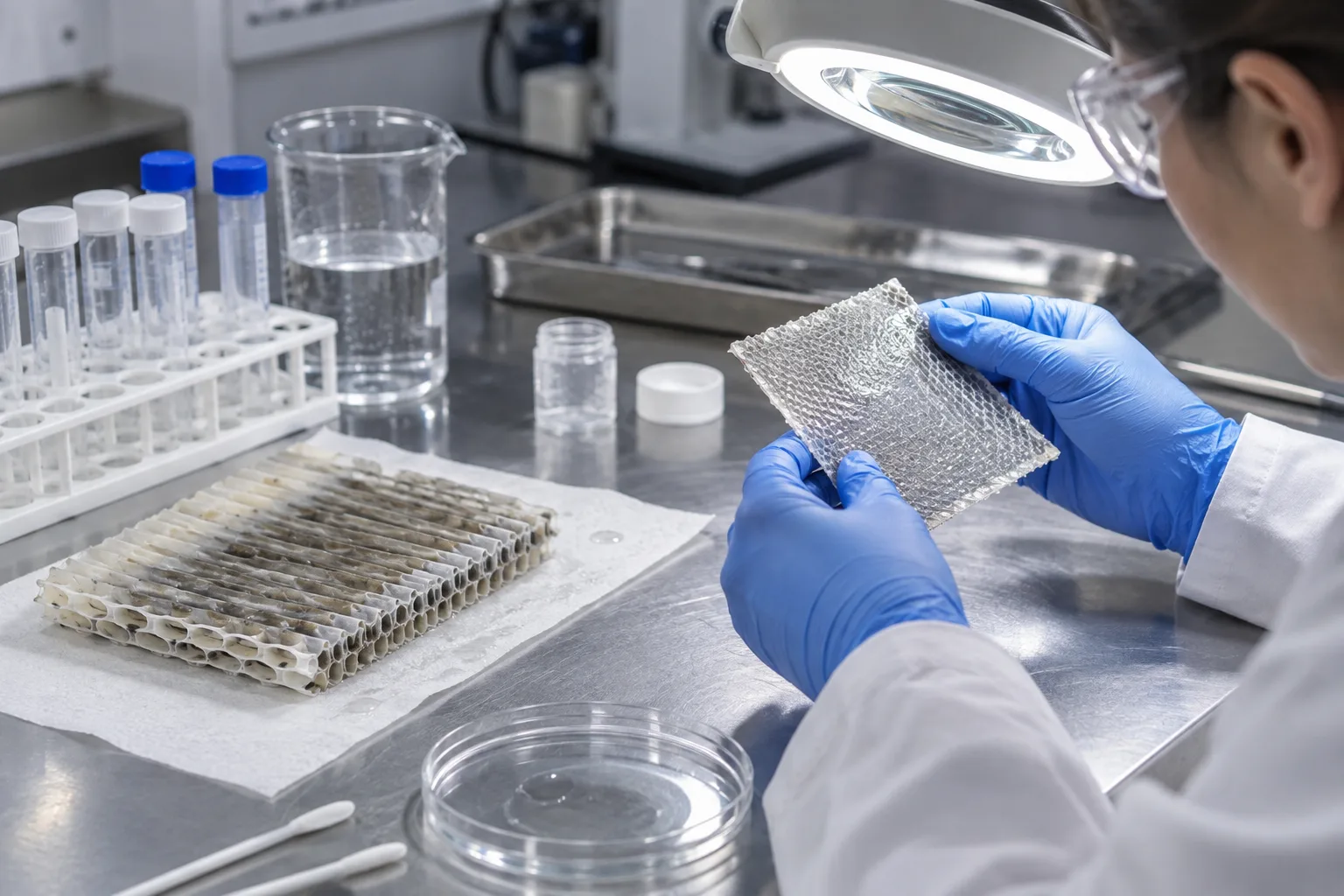
A lead-stage pressure-drop increase, slime-like material and rapid return after cleaning can support a biofilm hypothesis, but none is decisive alone. A mixed organic/colloidal deposit or feed-spacer blockage may produce a similar trend. Preserve a representative sample when practical and ask the membrane OEM or an experienced laboratory to identify the dominant foulant. Record the membrane model, stage, pretreatment history and cleaning conditions with the sample, so a lab result can be connected back to the process.
Use at least two kinds of evidence: normalized operating behavior and a direct or indirect biological indicator. Depending on site capability, this might include microbial ATP, bacterial growth potential, assimilable organic carbon, a biofilm monitor, or a qualified autopsy. A colony count alone may miss organisms protected in a film or may not reflect their available nutrients. Toray explicitly describes RO biofouling even when SDI is low and positions its membrane biofilm formation rate (mBFR) as an indicator of growth potential; its proprietary method and claims belong to Toray, not VCYCLETECH.2
One full-scale seawater pretreatment study measured SDI, modified fouling index, bacterial growth potential and ATP through treatment. Particulate indicators improved much more than some biological/organic indicators under its operating conditions. That plant-specific contrast explains why a satisfactory SDI report cannot by itself close a recurring-biofouling investigation.3
Trace where growth potential enters or rebounds
Walk the water path from source to pressure vessel: intake and holding tank, clarifier, media or UF/MF filter, carbon bed if present, chemical tanks, dechlorination, cartridge guard, feed header and any idle leg. At each practical point, ask whether the next stage removes microorganisms, supplies nutrients, or simply creates a place where water sits. Sample before and after the suspected stage during a normal run and after a shutdown or backwash that resembles the recurrence event. Treat the path as a process, not a checklist of documents.
A filter can reduce particles while leaving biodegradable dissolved material. UF/MF can retard biological loading, but DuPont says these barriers are not a complete safeguard against low-molecular-weight nutrients. Dechlorination protects many polyamide RO membranes from oxidant damage, yet it can also create a downstream segment without disinfectant residual; that segment needs attention to residence time and recontamination. Do not intentionally send an oxidant to the membrane to “solve” a biological problem without the OEM's explicit material and procedure guidance.1
Look especially for changed raw-water quality, sludge or biological carryover after a backwash, a stagnant covered tank, fouled media, an unflushed line or a chemical addition that changes nutrient availability. These are hypotheses to test, not accusations about a plant. If upstream samples are stable and the same lead element fouls fast, inspect the cleaning endpoint and spacer condition more closely. If the feed indicators jump after a particular unit operation, repairing that operation is often more useful than swapping cleaner brands.
Choose a control that matches the failure point
Do not compare “biocide versus cleaning” as if they solve the same job. Cleaning removes an existing deposit to a membrane-specific procedure; upstream controls reduce what arrives after restart; a compatible non-oxidizing biocide may be one part of a site-approved prevention strategy. The choice depends on the verified failure point, membrane chemistry, discharge rules and supplier documentation.
| What the evidence shows | First decision | What would prove it helped | Important boundary |
|---|---|---|---|
| Rebound begins after a tank or idle line | Correct turnover, cleaning and hydraulic dead zones | Paired sample and normalized run trends before/after the change | A membrane cleaner cannot disinfect an upstream dead leg by itself. |
| Filter effluent has renewed growth potential | Review filter operation, biological activity and nutrient handling | Relevant feed indicators and membrane trend across another cycle | Low SDI alone does not prove low biofouling potential. |
| Post-clean performance never recovers | Reassess foulant, cleaning endpoint and possible damage | Deposit identification and a defensible new post-clean baseline | Repeated cleaning may not repair a wrong diagnosis or damaged element. |
| Biofilm is credible and source controls are stable | Review an OEM-compatible membrane chemical program | Comparable treated/untreated or before/after recurrence trend | Exact formulation, dose, exposure and discharge remain product- and site-specific. |
VCYCLETECH's RO chemicals range includes cleaner routes that may be discussed after the foulant and installed membrane are known. Its DBNPA product page records a product identity, but the governed fact library does not contain a current membrane-specific TDS/COA/SDS package confirming this exact grade for your system. Do not interpret that link as membrane approval, a dosing instruction or a claim that a biocide will end recurrence. Ask for the exact product documents and the OEM's compatibility decision first.
Prove that the next operating cycle is different
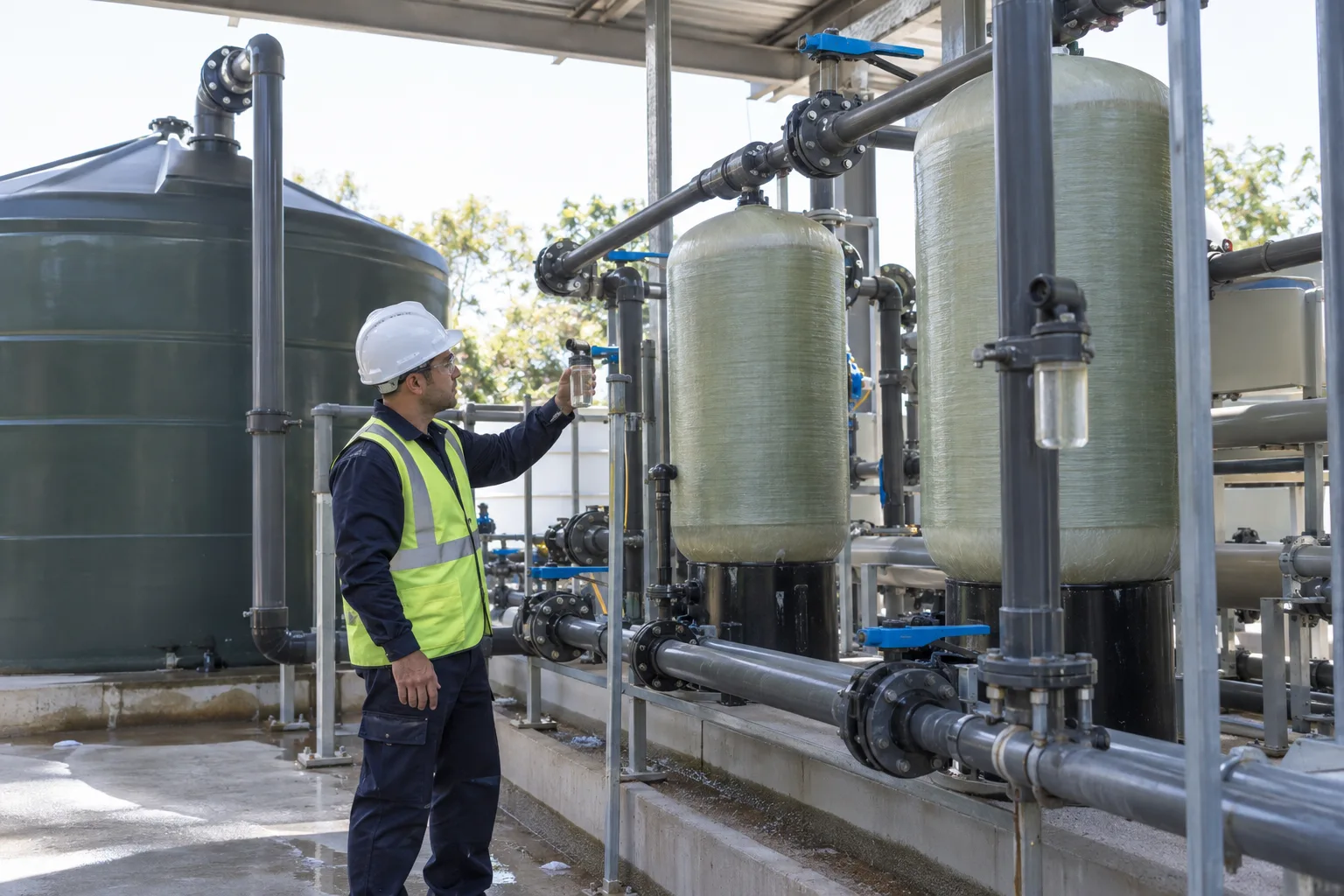
Write the acceptance rule before changing the program. Compare normalized stage pressure drop, permeate flow, salt passage and time from restart to the next cleaning trigger under similar feed, recovery and production conditions. Add the upstream indicator that led to the intervention: for example the difference before and after a tank, filter or dechlorination point. Track the exact operational change and any chemical addition separately so the result can be interpreted. A single clean post-rinse sample is a baseline, not a prevention result.
If the measured trend improves, keep the boundary visible: one plant cycle supports a local operating decision, not a guaranteed membrane-life extension. If recurrence continues, revisit the foulant identification, cleaning completeness and other upstream points before making the intervention more aggressive. Laboratory research has shown that repeated chemical cleaning can alter biofilm communities and extracellular polymer adherence in a controlled flat-sheet model; it does not prove the same mechanism in every full-scale RO plant, but it is another reason not to assume “clean again” is a complete strategy.4
For a site with high SDI as well as suspected biology, keep the questions separate. The high-SDI pretreatment guide addresses particle barriers and chemical-assist carryover. This guide addresses repeated biological growth after cleaning. Both can matter, but neither measurement substitutes for the other.
Send the recurrence story, not just a request for a stronger cleaner
Share the installed membrane model, feed source, pretreatment diagram, cleaning dates and chemicals, normalized stage trends before/after each clean, any deposit identification, SDI and biological-growth indicators, oxidant/dechlorination controls and known discharge constraints. Add the intended quantity, package and destination if a product quotation is needed. VCYCLETECH can then discuss the relevant RO category and request current documents for a specific candidate; this page does not prescribe a grade or certify compatibility. The RO application route connects the broader membrane program and inquiry path.
Frequently asked questions
Does fast fouling after CIP prove the deposit is biological?
No. A fast return is a pattern that warrants investigation, not a species identification. Normalize the operating data, inspect which stage changes first and preserve a representative deposit. Organic/colloidal deposits, mixed fouling or mechanical restrictions can resemble biofilm in routine plant data.
Why can biofouling return when SDI is low?
SDI gauges particulate plugging under a defined test. Dissolved nutrients and biological growth potential can remain after a particle barrier. Toray highlights cases of biofouling despite low SDI; use a suitable biological indicator and the RO operating trend rather than treating SDI as a biological pass/fail test.
Should the plant clean more often or change cleaner chemistry?
Only after confirming the foulant, membrane limits and the reason for the short cycle. Repeating a poorly matched clean may leave deposit behind; changing chemistry will not repair an upstream tank, filter or line that repeatedly supplies growth potential. Compare the new post-clean baseline and subsequent run before deciding.
Can DBNPA be dosed into any RO system?
No. A product family name is not approval for a particular membrane or water. Confirm the exact grade's current TDS/SDS, the installed membrane OEM's compatibility and exposure limits, application point, permeate/discharge requirements and site safety rules before any trial. This article gives no dose.
What evidence shows that the recurrence problem has improved?
Use comparable normalized stage pressure-drop and flow trends, the interval to the next agreed cleaning trigger, and the upstream indicator tied to the intervention. Hold feed, recovery and production changes visible. One better-looking restart is not enough; follow a representative operating period and document the boundary.
Related technical path
- Application: Reverse Osmosis Chemicals by RO Problem
- Product range: Reverse Osmosis Chemicals
- Guide: RO Membrane Fouling: Types, Diagnosis & Prevention
- Guide: RO Membrane Cleaning Chemical Selection Guide