
Cooling-Tower Biocide Selection: Legionella Control & 2026 Compliance Check
TL;DR Choose a cooling-tower biocide programme from the registered product label, the system’s water-management plan and the requirements of the jurisdiction where it is used. Oxidizing and non-oxidizing biocides have different roles, but no single universal dose or nationwide 2026 quaternary-ammonium limit can be applied to every tower. In the United States, follow the EPA-registered label and applicable state or local rules; in the EU, verify the product authorization and relevant biocidal-product type before purchase or use.
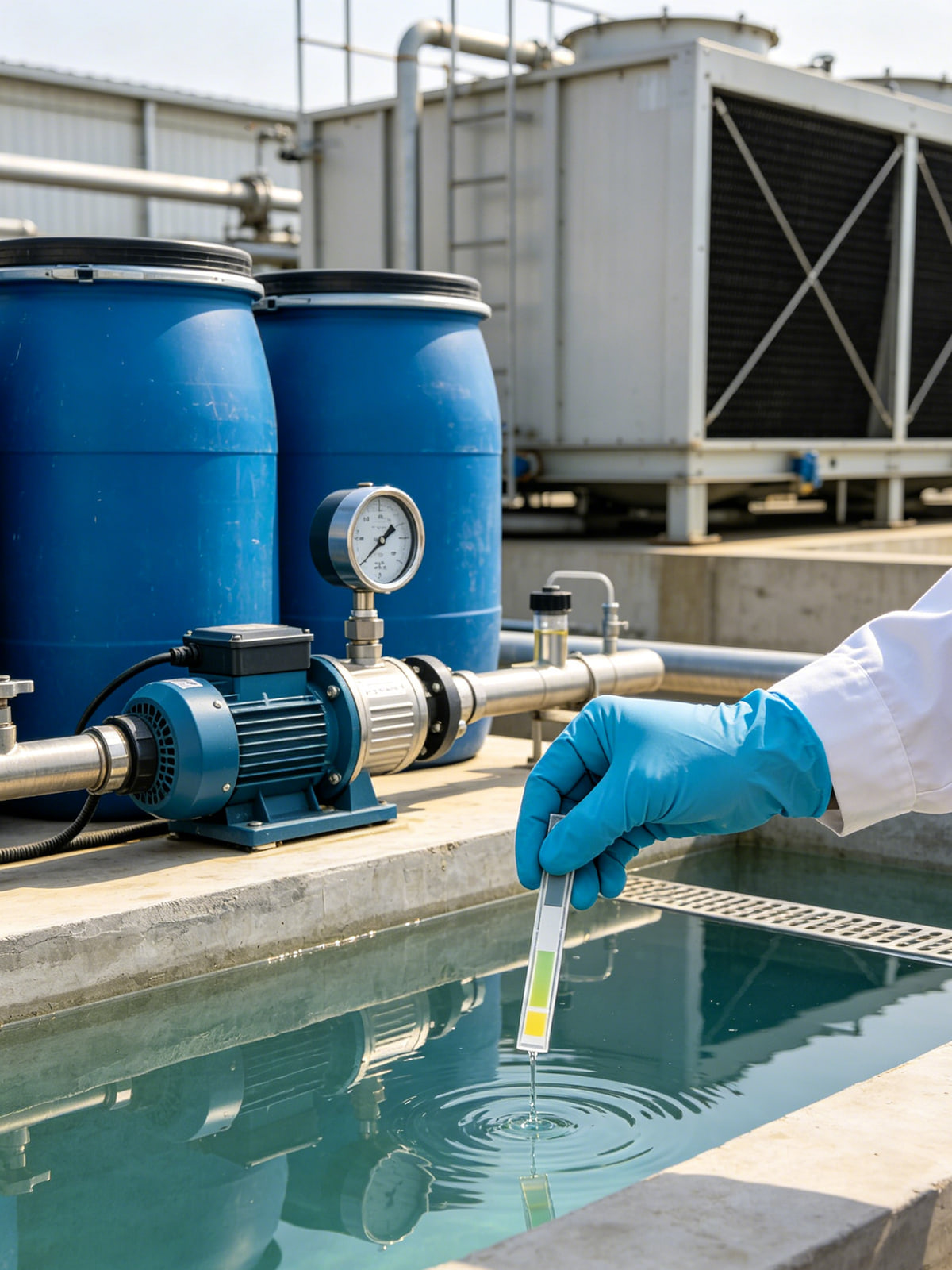
Cover image: AI-assisted conceptual illustration of cooling-water dosing and sampling; it is not a depiction of a VCYCLETECH customer site, field test or regulatory certification.
Start with the compliance question, not the drum
Legionella control is a documented water-management task, not a claim that one chemical “solves” every tower. EPA’s final guidance for antimicrobial products with Legionella pneumophila claims says an EPA-registered product may be used as part of a cooling-tower water-management plan. EPA also directs facilities to ASHRAE Standard 188 and applicable federal, state and local requirements. This is different from a nationwide rule that every large facility must meet the same 2026 risk-management-plan or quaternary-ammonium threshold.
For U.S. work, the legally controlling instructions are on the product’s EPA label, including use site, organisms claimed, application method, concentration, contact time and restrictions. EPA states that it does not set standard levels for quaternary-ammonium compounds in general; do not transplant a food-contact sanitizer number into a cooling-tower programme.
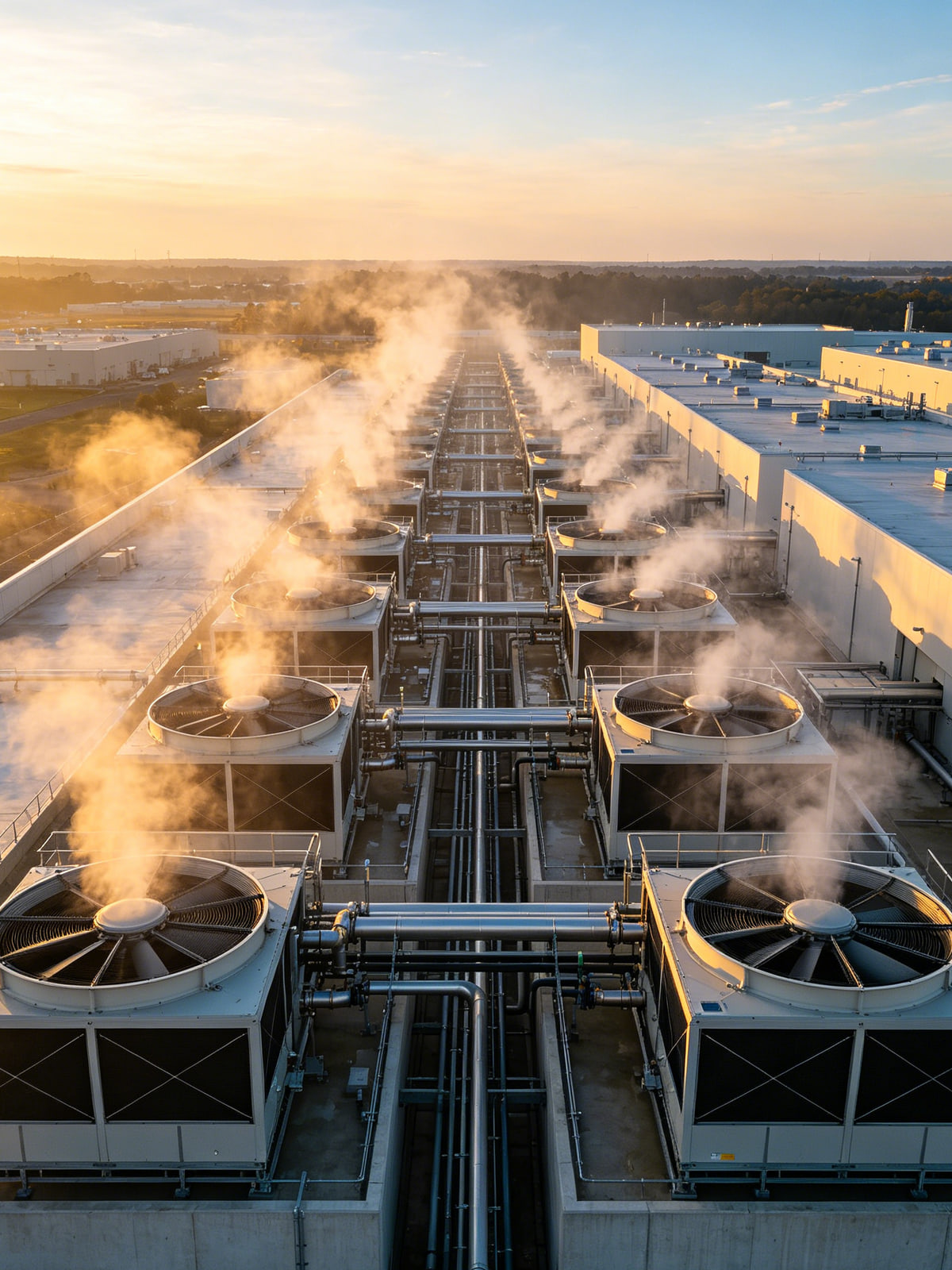
Oxidizing vs non-oxidizing biocides: choose by use conditions
| Class | Examples | Selection question | Documentation to verify |
|---|---|---|---|
| Oxidizing | Chlorine-, bromine- or chlorine-dioxide-based products | Can the system maintain the label-directed residual and is the chemistry compatible with the water and materials? | EPA label or local registration; residual test method; water-management record. |
| Non-oxidizing | DBNPA, glutaraldehyde, isothiazolinones or quaternary-ammonium products | Does the approved label cover the use site and target organism, and is the product compatible with the programme? | Label / authorization, safety data, application record and response-monitoring plan. |
“Oxidizing versus non-oxidizing” is therefore a programme-design comparison, not a permission to use any active at a copied dose. Product claims, water pH, temperature, organic load, corrosion-control chemistry and discharge route all need review by the responsible operator and chemical supplier.
2026 regulatory check: what to verify in the United States and EU
| Where | Verify before selection | Do not assume |
|---|---|---|
| United States | EPA registration, the current label’s cooling-water and organism claims, and applicable state/local requirements. | A nationwide generic quat limit or a single 2026 mandate for every cooling tower. |
| European Union | The active substance and product authorization for the intended country and product type (cooling-water uses are commonly assessed under PT11). | That an ECHA committee opinion equals product authorization in every member state. |
| Every site | Water-management plan, corrective-action records, monitoring method, discharge obligations and worker-safety controls. | That an active ingredient name alone proves legal use or performance in a particular tower. |
Under the EU Biocidal Products Regulation, active substances are approved before biocidal products can be authorized, and product authorization is still needed for the intended market and use. ECHA’s current materials show why buyers must check the live status rather than relying on a blog post: DBNPA has recent committee opinions for product types, while an opinion is not itself a country-by-country product authorization.
Cooling-tower biocide selection workflow
Map the tower, water chemistry, materials, aerosol exposure and existing biological-control measures. Identify the legal market. Verify the exact registered product and intended use. Then establish the approved application and monitoring instructions in the site water-management plan. If monitoring indicates loss of control, follow the plan and label-directed corrective process rather than improvising a concentration or rotation schedule.
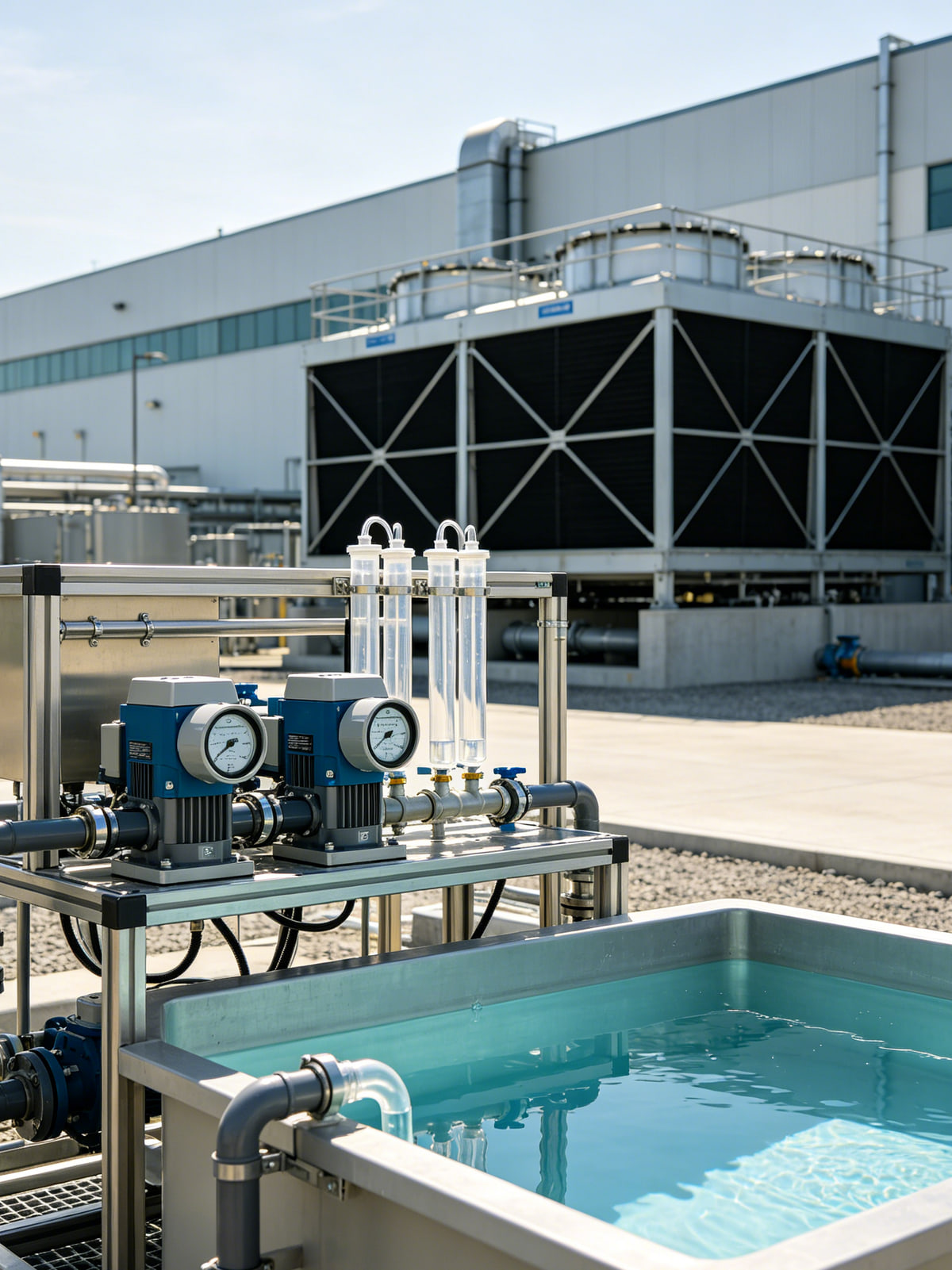
Procurement checklist for cooling-water biocides
- Request the current product label or market authorization for the country of use.
- Confirm cooling-water use and organism claims, including any Legionella claim where relevant.
- Match the label’s application instructions to the written water-management plan.
- Review compatibility with metallurgy, other treatment chemicals, discharge controls and worker protection.
- Keep batch COA, safety documentation, treatment records and monitoring results traceable.
Explore our biocide and algicide range, including DBNPA, glutaraldehyde and benzalkonium chloride. Related operating context: data-center cooling-tower treatment and data-center cooling-water cycles.
Frequently asked questions
What biocide kills Legionella in a cooling tower?
Use only a product whose current registered label or applicable authorization covers the intended cooling-water use and organism claim. EPA says EPA-registered antimicrobial products with Legionella pneumophila claims may be used as part of a water-management plan; the operator must still follow the label and applicable jurisdictional requirements.
What is the difference between oxidizing and non-oxidizing cooling-tower biocides?
Oxidizing products and non-oxidizing products are different chemistry classes with different compatibility, application and monitoring requirements. Select between them using the registered label, the tower’s water conditions and the written water-management plan—not a universal dose table.
Are there EPA limits on quaternary-ammonium biocides in cooling towers?
EPA does not set a general standard level for quaternary-ammonium compounds. For a cooling tower, use the concentration, contact time, use site and restrictions stated on the current EPA-registered product label, then check any applicable state or local requirements.
Do cooling towers need a Legionella water-management plan?
A written water-management plan is a recognized risk-control practice, and EPA directs facilities to ASHRAE Standard 188 and applicable federal, state and local requirements. Whether a particular site has a legal obligation depends on its jurisdiction and circumstances; verify that locally rather than assuming a universal 2026 federal mandate.
Is DBNPA or glutaraldehyde better for cooling water?
Neither is universally better. Check the current label or authorization, target organisms, use conditions, compatibility and site monitoring plan. Choose an approved product programme for the actual tower rather than selecting solely by the active ingredient name.
About this guide
VCYCLETECH publishes application and product-information guides for industrial water treatment. This page is not a site-specific coolant specification, water-management plan or regulatory determination. Confirm final selection, legal use and operating controls with the responsible equipment, formulation and compliance teams.
Request product information, a sample & COA →
References
- US EPA: final Legionella efficacy-test guidance
- US EPA: pesticide-labeling questions and answers
- ECHA: approval of biocidal active substances
- ECHA: Biocidal Products Committee opinions
Related: Biocides & algicides · DBNPA · Glutaraldehyde · Benzalkonium chloride · Data-center cooling-tower treatment · Data-center WUE and cycles