
Data Center Cooling Water: WUE, Cycles & Reuse
TL;DR Water Usage Effectiveness (WUE) is set at the cooling tower, and chemistry is the lever. Cycles of concentration (CoC) is the ratio of dissolved solids in the circulating water to the makeup, and blowdown = evaporation ÷ (CoC − 1) — so raising a tower from 3 to 6 cycles cuts makeup water about 20% and blowdown roughly 60%. A scale-and-corrosion program plus a dispersant is what lets you hold 8–12 cycles instead of 3–4 without scaling the fill. Industry-average data-center WUE sits near 1.8 L/kWh; best-in-class reaches about 0.3. Above ~8 cycles the water savings flatten, so push cycles with chemistry to the point of diminishing returns, then look to reclaimed makeup.
WUE: the number boards now report
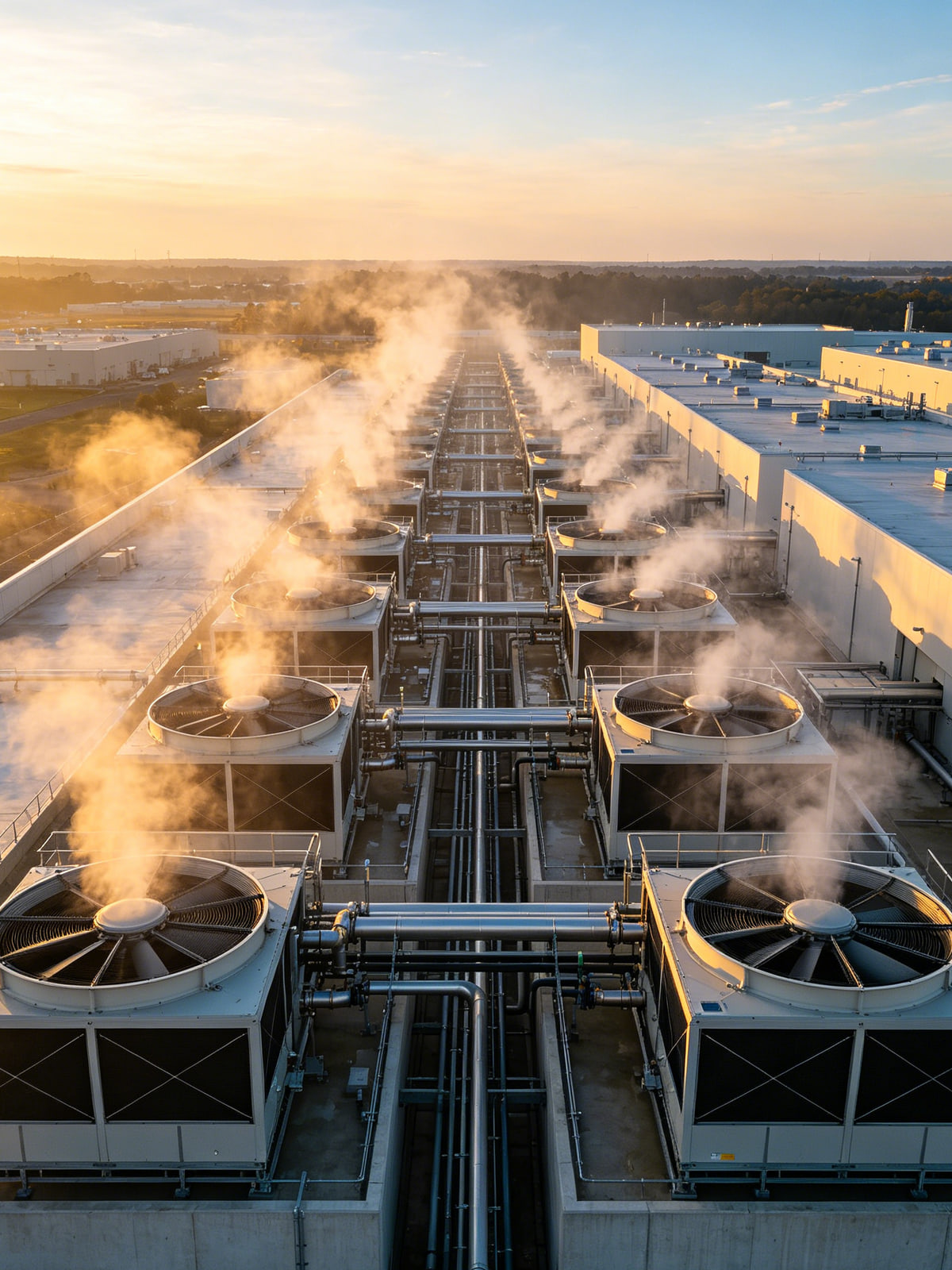
Water Usage Effectiveness (WUE) — litres of water per kilowatt-hour of IT energy — has become a board-level metric as operators commit to water-positive targets. The spread is huge: an industry-average data center runs near 1.8 L/kWh, while best-in-class hyperscale designs reach about 0.3 L/kWh. Most of that water leaves as evaporation and blowdown at the cooling tower, so WUE is won or lost there — and the cheapest lever is chemistry, because it lets the tower run at higher cycles of concentration on the same makeup.
Cycles of concentration, explained
Cycles of concentration (CoC) is simply how many times more concentrated the circulating water is than the makeup — measured in practice as the ratio of conductivity, or of a conserved ion like chloride. Because the tower only evaporates pure water, the dissolved solids left behind climb until controlled blowdown carries them away. The two flows are fixed by one relationship:
Blowdown = Evaporation ÷ (CoC − 1), and Makeup = Evaporation × CoC ÷ (CoC − 1) = Evaporation + Blowdown (ignoring drift).
A worked example: what higher cycles save
Because both flows scale with evaporation (E), the savings are exact and independent of tower size. Per unit of evaporation:
| Cycles (CoC) | Makeup (× E) | Blowdown (× E) | Blowdown vs 2 cycles |
|---|---|---|---|
| 2 | 2.00 | 1.00 | — |
| 3 | 1.50 | 0.50 | −50% |
| 4 | 1.33 | 0.33 | −67% |
| 6 | 1.20 | 0.20 | −80% |
| 8 | 1.14 | 0.14 | −86% |
Read practically: moving a tower from 3 to 6 cycles cuts makeup about 20% and blowdown about 60%. That blowdown is not just water — it carries your treatment chemical and loads the downstream discharge, so cutting it saves water, chemical and effluent cost at once.
Why the savings flatten above ~8 cycles
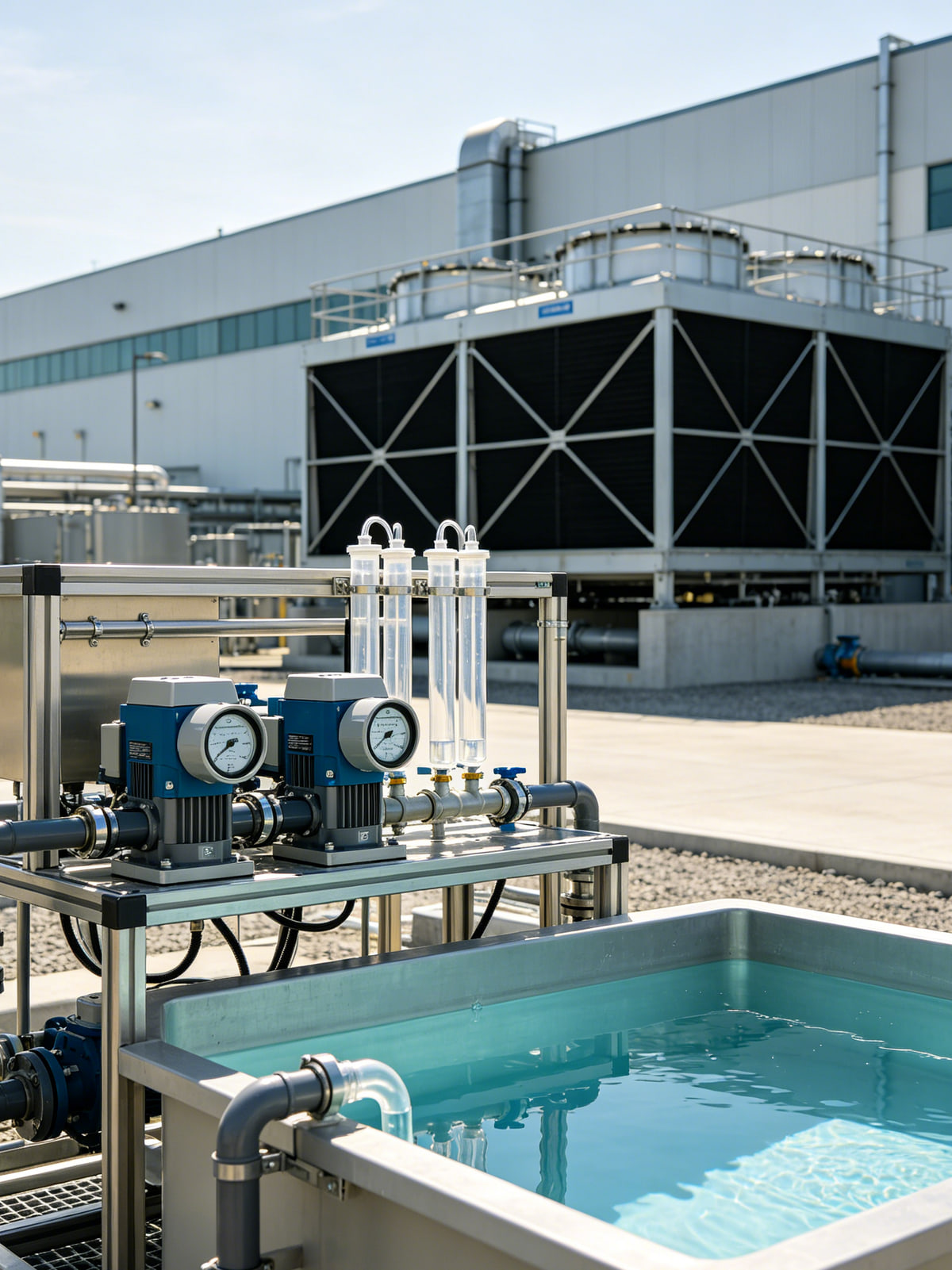
The table shows the catch: the curve is steep from 2 to 4 cycles and nearly flat past 8. Going 6→8 saves far less water than 3→4 did, while the risks rise — higher cycles mean higher dissolved solids, higher conductivity and a real scaling and corrosion threat as calcium, silica and alkalinity concentrate. Past a point set by your makeup chemistry (often silica or calcium), pushing cycles higher buys almost no water but a lot of scaling risk. The right target is "as high as the chemistry safely holds", usually 8–12 cycles for a well-treated tower, not the theoretical maximum.
The chemistry that lets you hold high cycles
Cycles are limited by whatever precipitates first. A threshold phosphonate holds calcium far past its natural solubility, a polycarboxylic dispersant keeps silica and iron from depositing, and a corrosion inhibitor keeps the higher-conductivity water from attacking steel and copper — the same program described in our companion guide on the cooling-tower scale, corrosion and Legionella program. Without that chemistry a tower stalls at 3–4 cycles; with it, 8–12 is routine. Where phosphorus discharge is capped, a non-phosphorus inhibitor such as WT-907 does the same job without adding phosphorus to blowdown.
Reclaimed water as makeup
Once cycles are optimised, the next WUE lever is the makeup source itself — recycled or reclaimed water instead of potable. It works, but it changes the water chemistry: reclaimed water typically carries more dissolved solids, more nutrients (nitrogen, phosphorus) and more microbial load, plus variable ammonia that raises oxidant demand.
| Makeup source | Dissolved solids | Microbial / nutrient load | Treatment implication |
|---|---|---|---|
| Potable / fresh | Low–moderate | Low | Standard inhibitor + biocide program |
| Reclaimed / reuse | Higher, variable | Higher (N, P, biofilm) | More robust biocide + dispersant; may cap achievable cycles |
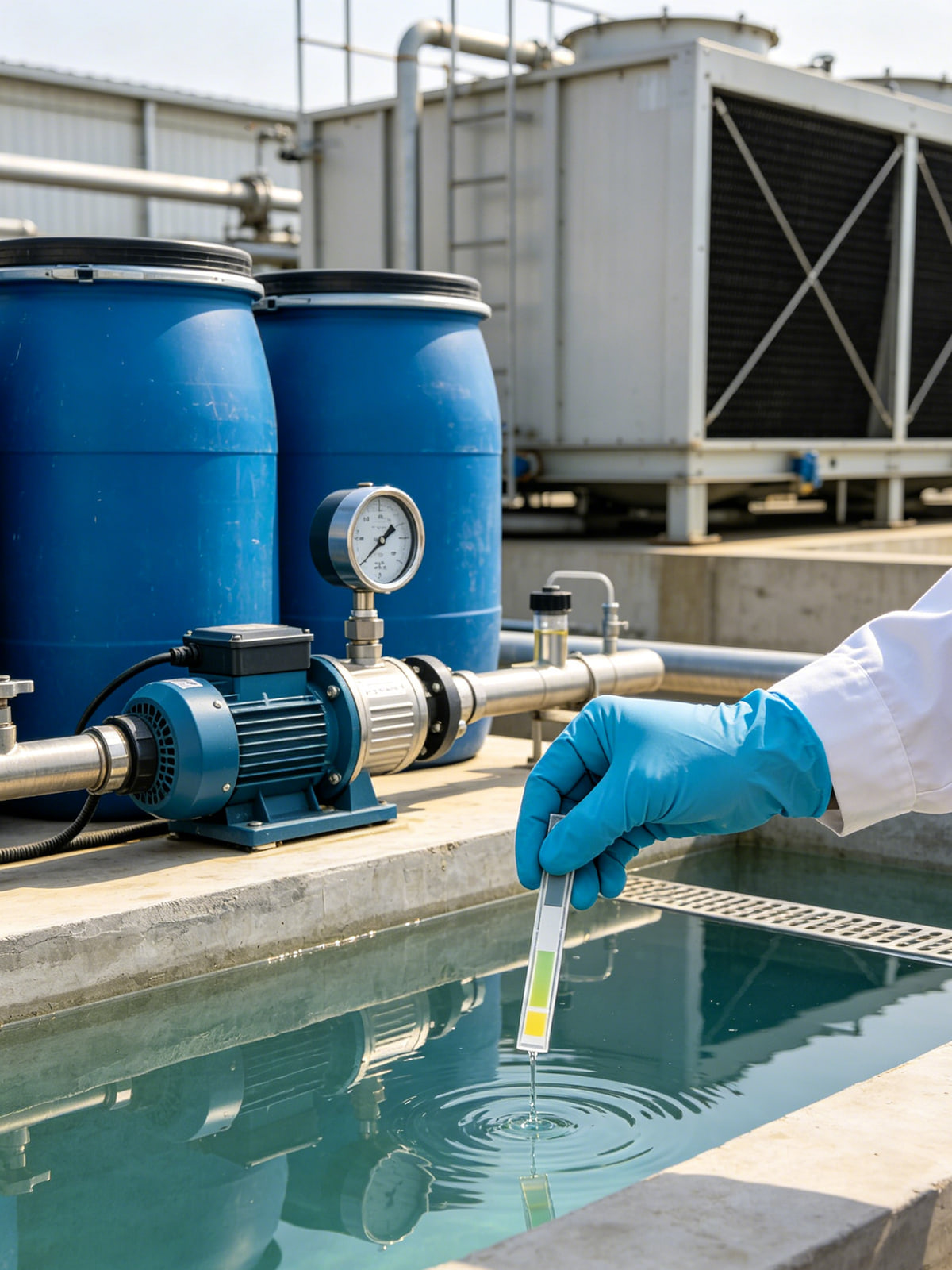
The practical answer is pretreatment plus a stronger microbial program: a robust oxidizing + non-oxidizing biocide pair, extra dispersant, and sometimes filtration — accepting that reclaimed water may cap the cycles you can safely run. The water saved usually justifies it, but it is a chemistry decision, not just a plumbing one.
A WUE-reduction sequence
Key takeaways
- WUE is set at the tower — industry average ~1.8 L/kWh, best-in-class ~0.3 — and chemistry is the cheapest lever.
- Blowdown = evaporation ÷ (CoC − 1); going 3→6 cycles cuts makeup ~20% and blowdown ~60%.
- Savings flatten above ~8 cycles while scaling/corrosion risk rises — target 8–12, not the maximum.
- Scale/corrosion chemistry is what unlocks high cycles; without it a tower stalls at 3–4.
- Reclaimed makeup saves more water but needs a stronger biocide/dispersant program and may cap achievable cycles.
Watch

Frequently asked questions
What is a good WUE for a data center?
Water Usage Effectiveness (WUE) is litres of water consumed per kilowatt-hour of IT energy. The industry spread is wide: a typical data center runs near 1.8 L/kWh, while best-in-class hyperscale facilities reach around 0.3 L/kWh, and some air-cooled or closed designs approach zero on-site water at the cost of higher energy. Because most cooling-tower water leaves as evaporation and blowdown, the fastest route to a lower WUE is running the tower at higher cycles of concentration with a proper scale, corrosion and dispersant program, then considering reclaimed makeup water. WUE should be read alongside PUE and energy, since the lowest-water option is not always the lowest-carbon one.
What are cycles of concentration in a cooling tower?
Cycles of concentration (CoC) is how many times more concentrated the circulating water is than the makeup water. Because an evaporative tower boils off pure water and leaves dissolved solids behind, those solids accumulate until controlled blowdown removes them. CoC is measured in practice as the ratio of conductivity, or of a conserved ion such as chloride, between the tower water and the makeup. Higher cycles mean less makeup and less blowdown for the same cooling — but also higher dissolved solids and a greater scaling and corrosion risk, so the achievable number is set by the water chemistry and the treatment program, typically 3–4 cycles untreated and 8–12 with good chemistry.
How do you calculate blowdown from cycles of concentration?
Blowdown = Evaporation ÷ (Cycles of concentration − 1). Makeup water = Evaporation × Cycles ÷ (Cycles − 1), which also equals evaporation plus blowdown once drift is ignored. Evaporation is roughly proportional to the heat rejected (a common rule of thumb is about 1% of the recirculation rate for every ~7 °C of cooling range). Because both makeup and blowdown scale with evaporation, the water saved by raising cycles is the same in percentage terms regardless of tower size: going from 2 to 4 cycles cuts blowdown by two-thirds, and from 3 to 6 cycles cuts makeup about 20% and blowdown about 60%.
How many cycles can a data-center cooling tower run?
Without a treatment program a tower usually stalls around 3–4 cycles, because calcium carbonate, silica or alkalinity starts to scale. With a threshold phosphonate scale inhibitor, a polycarboxylic dispersant and a corrosion inhibitor, 8–12 cycles is routine, and the limiting factor becomes whichever ion concentrates fastest in your makeup — often silica or calcium hardness. Pushing beyond that saves very little additional water (the savings curve is nearly flat above 8 cycles) while sharply raising scaling and corrosion risk, so the goal is the highest cycles the chemistry can safely hold, verified by conductivity and a scaling index, not the theoretical maximum.
Can data centers use reclaimed water for cooling makeup?
Yes, and many do to cut freshwater use, but reclaimed or recycled water changes the chemistry. It typically carries higher and more variable dissolved solids, more nutrients such as nitrogen and phosphorus, more microbial load, and sometimes ammonia that raises oxidant demand. That calls for a more robust program — a stronger oxidizing plus non-oxidizing biocide pair to control biofilm and Legionella, extra dispersant, often filtration — and it may cap the cycles of concentration you can safely run. The water saved usually justifies it, but reclaimed makeup is a treatment decision as much as a supply one, and the biocide and inhibitor program has to be sized for the harder water.
About the manufacturer
VCYCLETECH is a China-based manufacturer of water treatment and process chemicals — coagulants and flocculants, paper chemicals, surfactants, biocides, phosphonates and dispersants — ISO 9001 / 14001 / 45001 certified, with current COA information on request and OEM/ODM service. See our quality & certifications.
References
- Cooling tower water efficiency — US DOE FEMP
- Cooling tower (cycles of concentration) — Wikipedia
- Water efficiency — Wikipedia
- Hyperscale cooling efficiency & WUE — Data Center Knowledge
Related: Cooling water treatment · Cooling-tower scale, corrosion & Legionella · Phosphonate antiscalants · Dispersants · WT-907 non-P inhibitor · Cooling tower treatment guide