
RO Scale Control: Antiscalant vs Acid vs Softening
TL;DR There are three ways to stop scale in reverse osmosis pretreatment: dose an antiscalant (threshold inhibition — the default, cheap, no pH change), dose acid (lowers pH to keep carbonate soluble but adds CO₂ and handling risk), or soften the feed (removes hardness upstream — best for very hard water and ZLD, but higher capex). Most plants use an antiscalant alone; hard or high-recovery water may add acid, and ZLD needs softening.
Why RO water scales
RO concentrates the feed several-fold, so sparingly soluble salts — calcium carbonate, calcium/barium sulfate, silica — can exceed their solubility in the reject and precipitate on the tail membranes. The carbonate scaling tendency is summarized by the Langelier Saturation Index (LSI); the job of pretreatment is to keep the concentrate below saturation. Three levers do that.
Antiscalant dosing
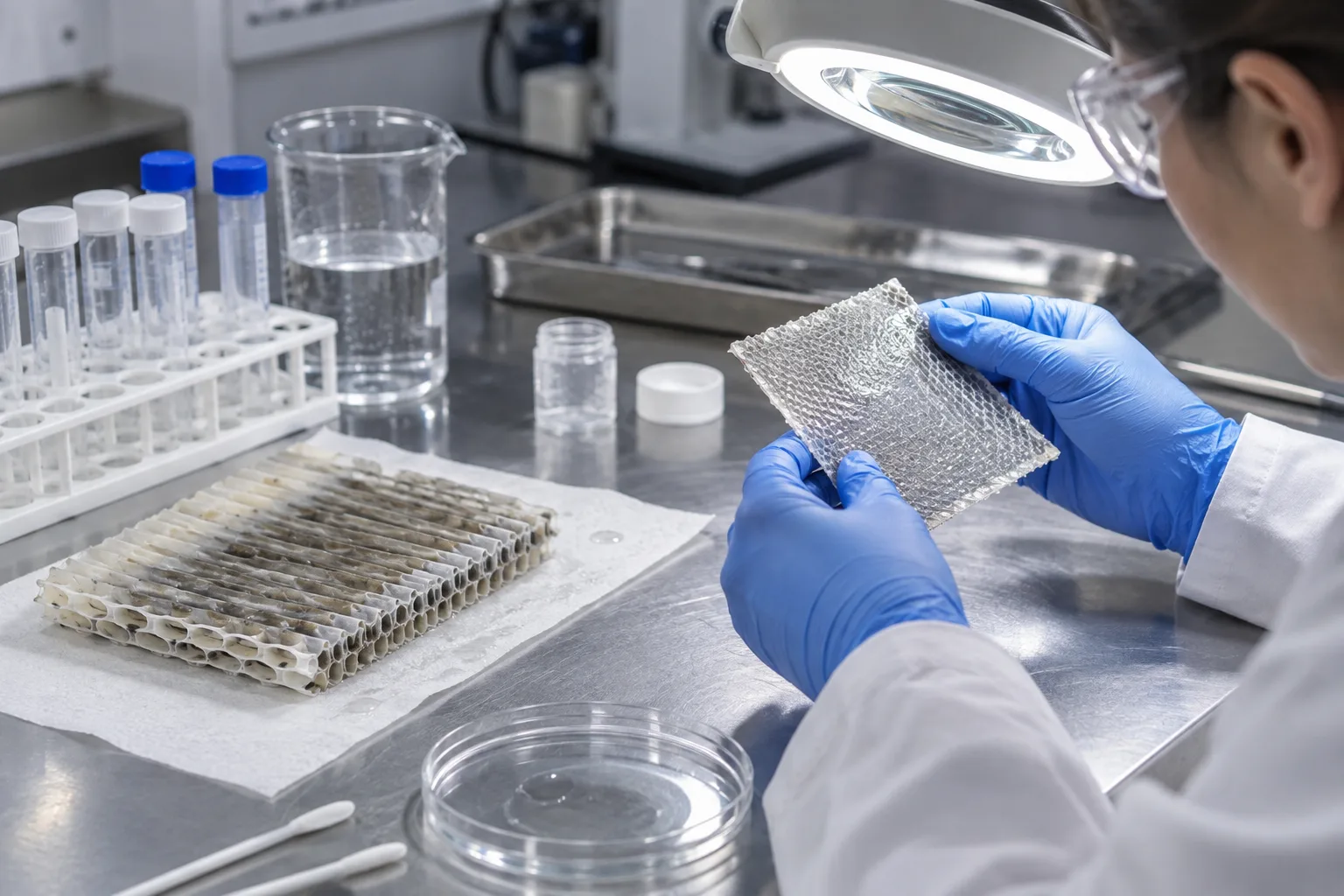
A threshold antiscalant (phosphonate or polymer) is dosed at a few ppm to the RO feed. It keeps scale-forming ions in solution above their normal saturation (threshold effect) and disperses micro-crystals, without changing pH. It is the default choice — low cost, simple, effective for carbonate, sulfate and (with a specialty grade) silica, and it lets systems run higher recovery.
Acid dosing
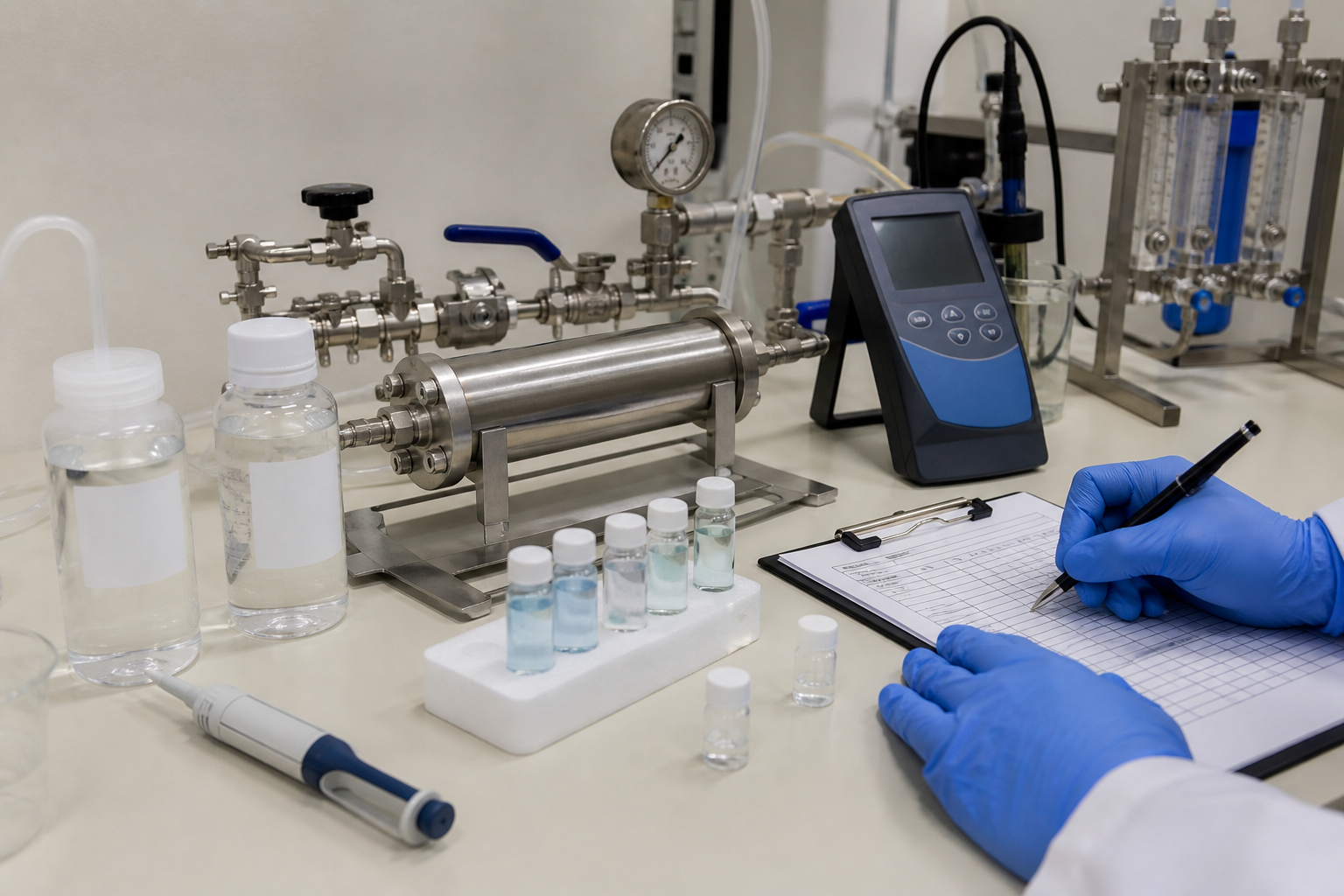
Adding acid (usually sulfuric or hydrochloric) lowers feed pH, converting bicarbonate to CO₂ so calcium carbonate stays soluble (it drops the LSI). It is effective for carbonate scale specifically, but it adds a hazardous chemical, increases CO₂ (which passes the membrane and lowers permeate pH), and raises sulfate (sulfuric acid — watch sulfate scale). Acid is used where carbonate scaling is severe or to complement an antiscalant, not usually alone.
Softening
Ion-exchange or lime softening removes hardness (and, with lime + magnesium, silica) before the RO. It gives the most robust scale control and enables the highest recovery — essential for zero liquid discharge — but adds capital and operating cost (regenerant or lime handling). Reserve it for very hard water, very high recovery, or silica-limited systems.
How to choose (and combine)
- Most brackish/municipal RO → antiscalant alone.
- High carbonate hardness / high recovery → antiscalant + a little acid.
- Very hard water, silica-limited, or ZLD → softening (± antiscalant).
- Never overdose acid to the point of corrosivity, and confirm the antiscalant is compatible with any acid or coagulant used.
Antiscalant vs acid vs softening
| Property | Antiscalant | Acid dosing | Softening |
|---|---|---|---|
| Mechanism | Threshold inhibition | Lowers pH / LSI | Removes hardness |
| Targets | Carbonate, sulfate, (silica) | Carbonate mainly | All hardness (+ silica w/ Mg) |
| Changes pH? | No | Yes (lowers) | No |
| Cost | Low (opex) | Low–medium; safety | High (capex) |
| Best for | Most RO | Severe carbonate | Very hard / high recovery / ZLD |
Watch

Frequently asked questions
Antiscalant or acid dosing for RO — which is better?
For most RO systems an antiscalant alone is better: it is cheap, simple, changes no pH and controls carbonate, sulfate and (with a specialty grade) silica while allowing higher recovery. Acid dosing lowers pH to control carbonate scale specifically but adds a hazardous chemical and CO₂. Severe carbonate scaling may use antiscalant plus a little acid.
How does an RO antiscalant work?
An antiscalant works by threshold inhibition: at only a few ppm it distorts the growth of scale crystals and keeps scale-forming ions in solution well above their normal saturation, and it disperses any micro-crystals. This lets the RO concentrate the feed to higher recovery without precipitating carbonate, sulfate or silica scale, without changing pH.
When do you need softening instead of an antiscalant?
Choose softening (ion exchange or lime softening) for very hard water, very high recovery, or silica-limited feeds, and always for zero liquid discharge. Softening removes hardness (and, with lime plus magnesium, silica) upstream, giving the most robust scale control — at higher capital and operating cost than an antiscalant.
Does acid dosing harm the RO permeate?
Acid dosing lowers feed pH by converting bicarbonate to carbon dioxide, and that CO₂ passes freely through the membrane and lowers the permeate pH (and can raise permeate conductivity as it reforms carbonic acid). Sulfuric acid also raises sulfate, so watch sulfate scaling. These trade-offs are why antiscalants are usually preferred.
Does VCYCLETECH supply RO antiscalants?
Yes. VCYCLETECH supplies RO antiscalants and dispersants for carbonate, sulfate and silica scale, plus acid and alkaline membrane cleaners, factory-direct from China with current COA information on request and sample availability. Email sales@vcycletech.com with your feed-water analysis for a recommendation.
About the manufacturer
VCYCLETECH is a China-based manufacturer of water treatment chemicals — RO antiscalants & membrane cleaners, scale & corrosion inhibitors, coagulants, flocculants, biocides and defoamers — ISO 9001 / 14001 / 45001 certified, with current COA information on request and OEM/ODM service. See our quality & certifications.
References
Related: RO antiscalant selection & dosing · RO antiscalant (WT-0100) · AA/AMPS · RO chemicals · RO silica scaling