
Oilfield Water · buyer decision guide
Produced-Water Oil Carryover: Troubleshoot Primary Separation Before a Chemical Trial
When oil in water rises after a primary separator or deoiling hydrocyclone, locate the change before ordering another chemical. Compare samples taken at the same time from separator discharge, hydrocyclone feed, treated outlet and reject, and record flow, pressure, temperature, oil loading and recent production changes. Determine whether the oil is free, dispersed as droplets, attached to solids or stabilized by a changed chemical history. A disturbed sample or a different laboratory method can create a false trend. Correct inlet surges, separation hydraulics, reject handling or an upstream emulsion problem where the evidence points. Only if a defined downstream oil-and-solids burden remains should a representative coagulation, flocculation or flotation trial be considered. Its endpoint is the actual next treatment or injection requirement, not the appearance of one bottle.
TL;DR
Start at the first point where oil carryover increases. Match separator and hydrocyclone samples by time, method and operating state, then compare feed, treated outlet and reject with oil-droplet and solids evidence. Check throughput, pressure, reject restriction, interface control and upstream chemistry before changing downstream treatment. Free oil, stable emulsion and oil-coated fines require different responses. A jar result may screen a candidate, but pressure, shear, temperature, contact time and the real flotation or filtration endpoint determine whether the route survives a pilot. Request PAC or PAM information only for a supported separation task; their catalog identity alone proves neither oilfield grade nor removal.
Find the first point where carryover appears
Draw the actual water path before collecting a sample: production separator, skimmer or buffer vessel, hydrocyclone, induced-gas flotation or DAF, polishing filter, storage and final destination. Mark chemical injection points, recycle and reject lines, bypass valves and common sample taps. A facility may have several trains, or recycle reject water into the feed. A composite sample downstream of those connections cannot tell which unit changed. Trace the complaint to a unit boundary and compare the same boundary under a repeatable state.
At each paired point record timestamp, flow, pressure, temperature, upstream well or blend changes, interface level where available, reject rate and recent maintenance. Collect feed, treated outlet and reject as the equipment supplier specifies. A sample that flashes gas, cools, loses pressure or sits for hours may change droplet distribution before analysis. Document bottle, preservation, extraction and laboratory method. Oil-and-grease, dispersed oil and visual sheen are different observations; none alone establishes a droplet-size distribution. Ask the laboratory what its method actually detects in the local salinity and chemical matrix.
Check whether the rise is a continuous step, a short slug or a daily pattern. A continuous step after a valve or reject change points somewhere different from a peak following a well switch. Compare the oil load as concentration multiplied by flow when flows change. A lower concentration at higher throughput may still impose more mass on a flotation unit or filter. Do not infer a removal percentage from points sampled on different days or at unequal flows.
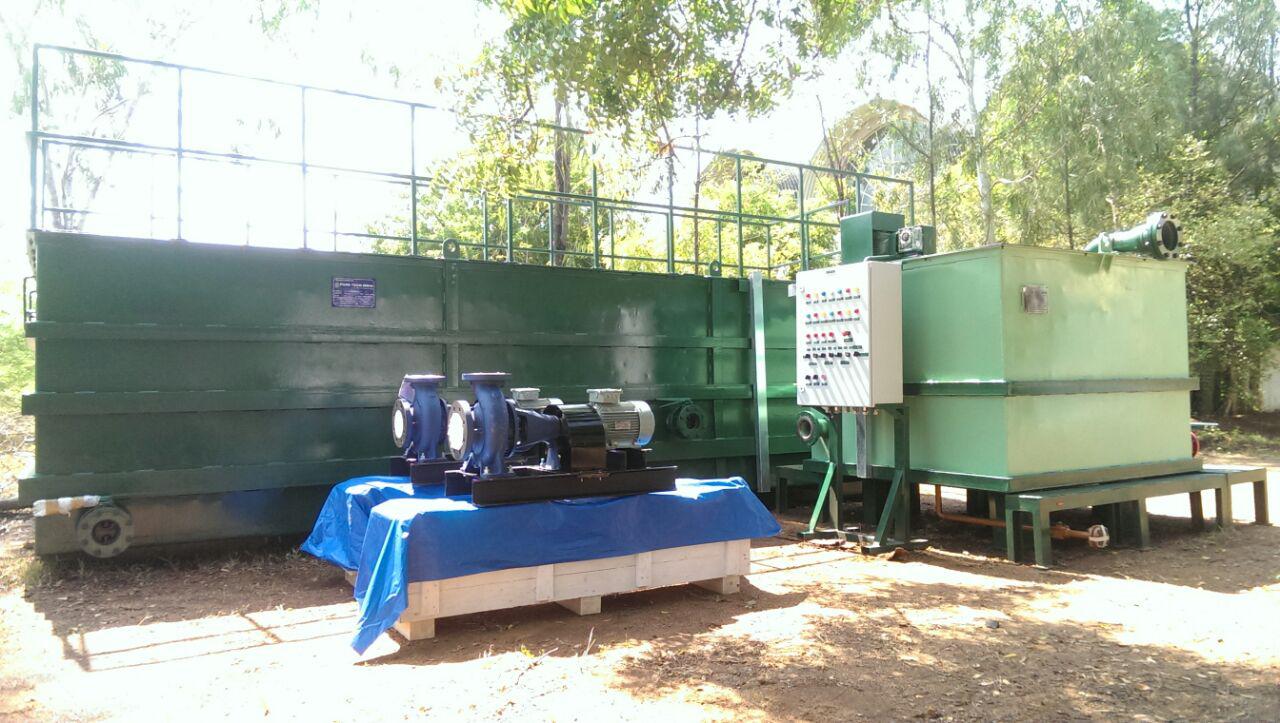
Separate free oil, dispersed droplets and oil-coated solids
Free oil that can rise in a quiescent vessel belongs first in the gravity or skimming question. Fine dispersed droplets can leave a hydrocyclone when the inlet distribution, pressure ratio, flow or separation geometry no longer matches the operating window. A stable emulsion may reflect produced-water chemistry, surfactants, shear, corrosion products or upstream demulsifier history. Oil-coated fines and iron-bearing particles can behave like a mixed oil-and-solids problem rather than a simple droplet problem. These fractions can coexist in the same sample.
Use at least two complementary observations. Compare total extractable oil or the site method with a defined droplet-size or microscopy method, and separately measure suspended solids and relevant iron fractions. Run a controlled settling observation only as a descriptive screen: a bottle can show a free-oil layer while hiding fine droplets that challenge the next unit. If the water is salty, hot or gas-bearing, state how the bench conditions departed from line conditions. Test the influence of a current treatment additive or a production change as a specific hypothesis, not as a presumed cause.
The purpose matters. A discharge route, reinjection line, reuse train and filter-polishing step have different acceptance evidence and permits. The produced-water solids clarification guide covers the broader choice of oil removal, coagulation and separator order. Here the decision is whether a new oil breakthrough is being created upstream by an operating or source change. Returning to generic chemical selection before that fault is located can conceal a correctable equipment condition.

Compare equipment symptoms with the paired chemistry
A hydrocyclone depends on its installed operating conditions. Confirm the actual feed rate, inlet and outlet pressures, pressure differential, reject route, valve position and any individual liner or train isolation history against the OEM guidance for that unit. A blocked or incorrectly routed reject, wear, parallel-train imbalance or excessive feed variability can change separation. Pressure alone is not a performance certificate; it must be read with fluid properties, feed droplets and correctly paired oil analyses. Follow site lockout and pressure-safety procedures for any inspection.
For a gravity separator, examine interface control, short-circuiting, retention during peak flow and skimmer or draw-off history. Oil carryover after a sudden production change may result from a high incoming load, not from failure of a downstream chemical. At flotation, record gas generation or recycle, contact and residence, froth or scum removal and the oil-and-solids load entering from upstream. A polishing filter can hide short oil peaks until pressure rises or backwash changes. Inspect its inlet and outlet separately; a clear outlet at one moment does not prove the upstream problem ended.
Do not treat an OEM brochure's illustrated train as a universal sequence. Veolia describes a hydrocyclone and flotation route, while SLB's WEMCO description addresses flotation; both are equipment perspectives, not proof that a particular train or VCYCLETECH chemical is fitted here. The SPE/JPT offshore operating account shows why matched feed/discharge points and realistic pressure/temperature conditions matter. Local geometry, crude and water properties, residence time and destination requirements control the diagnosis.
| Observed pattern | Check first | Candidate action and limit |
|---|---|---|
| Feed oil load rises with production or blend change; outlet follows | Well, separator interface, flow and free/dispersed oil balance | Stabilize upstream source or buffer; do not call this a hydrocyclone chemical failure. |
| Matched feed stable, treated outlet worsens, reject or pressure shifts | Hydrocyclone flow, pressure ratio, reject path, train condition and OEM window | Correct equipment state; retest at comparable load before chemistry. |
| Fine droplets persist after a stable primary train | Droplet distribution, surfactant/additive history, flotation residence and shear | Screen a downstream separation aid only against the actual unit endpoint. |
| Oil accompanies fine solids or iron | Solids size/composition, filtered versus unfiltered iron, sludge and filter response | Test combined separation; a clear bottle is not proof of filterability or reinjection. |
| Only a single sample or method changes | Sampling point, flash/cooling, hold time, extraction method and QA | Repeat paired measurement before purchasing a new program. |
Design a representative downstream trial only after fault isolation
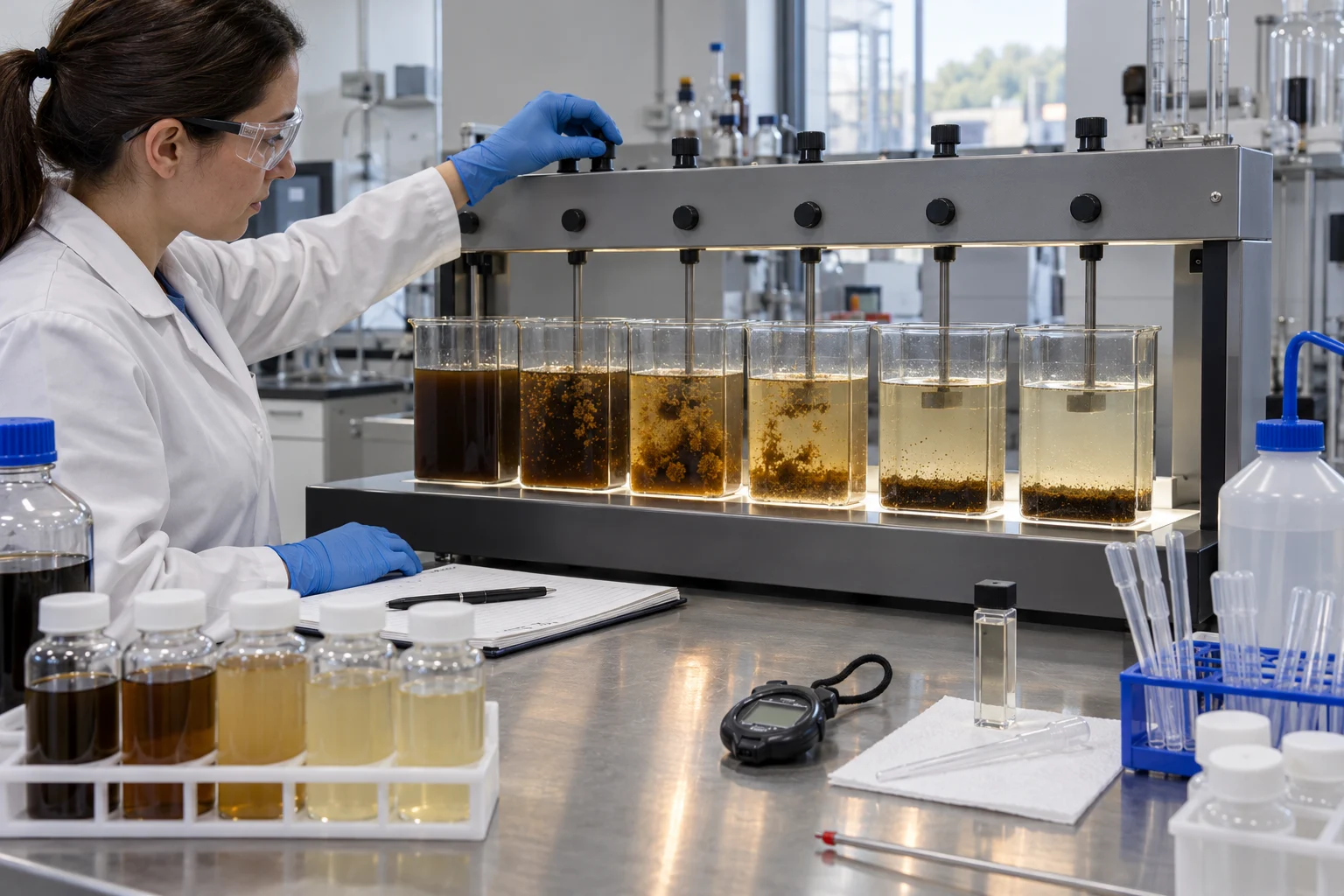
If primary equipment is stable and the remaining burden requires chemical assistance, define the receiving unit first. For a flotation train, reproduce the actual oil form, gas contact, mixing and froth removal as far as the test allows. For a settling or clarification route, assess oil, solids and sludge together. For a filter, include fouling, pressure and cleaning behavior, not only supernatant clarity. Label every chemical in the existing program, including upstream demulsifier, corrosion inhibitor, scale inhibitor, biocide and any polymer. A candidate that interferes with a current additive or produces unmanageable sludge is not a practical choice even if a bottle looks cleaner.
Screen on fresh, representative water collected before and after the suspected fault point. Record sample temperature, salinity, pH, oil and particle distribution, preservation and hold time. Compare an untreated control with a controlled candidate sequence. Fast mix, gentle flocculation, contact time and injection position should reflect the intended device; excessive laboratory shear can create a different droplet population, while a calm bench bottle can overstate real plant separation. Decide how the separated oil and sludge leave the system. A trial has not succeeded if it transfers the complaint to the next filter or waste-handling step.
Scale from a bottle to a continuous pilot and then a defined field trial. At each stage capture inlet/outlet loads, droplet or particle evidence, reject and sludge quality, filter pressure, cleaning interval and the destination acceptance criterion. Change one material variable at a time where possible. Revisit the equipment correction if the pilot shows that feed surges or reject problems dominate. Where the end use is reinjection, connect this work to the separate filterability diagnosis rather than assuming oil removal proves injectivity.
Keep a chemical inquiry inside the catalog's factual boundary
The site lists real poly aluminium chloride (PAC) and polyacrylamide (PAM) identities in the coagulants and flocculants category. Those listings support a request for documentation and a candidate separation review. They do not establish an oilfield-specific grade, emulsion-breaker SKU, dose, salinity tolerance, compatibility, removal percentage or supplied plant outcome. Primary deoiling equipment correction is outside the claim of these pages. If a chemical trial is justified, request current grade documents and test on this water with its actual process chemicals and separator endpoint.
Do not use a scale-inhibitor page as a generic response to oil carryover. Scale chemistry is relevant only if analyses establish a separate precipitation mechanism. Do not replace an OEM's equipment procedure with a bench recommendation. The buyer should know what evidence is missing, what component can plausibly be changed and which supplier owns it before issuing an RFQ.
Send the right evidence with a purchase request
The Oilfield Water Treatment application maps the available catalog families and the workup. Use the technical inquiry to send a flow diagram and the unit where carryover first appears, matched oil/solids results and methods, feed and reject flow, pressure and temperature, crude or well-mix changes, current chemical history, destination specification and expected purchasing volume and country. State whether the request is for an equipment investigation, a downstream chemistry screen or both. The SPE/JPT deepwater account is an independent operating perspective, but its field conditions cannot be copied into this inquiry as guaranteed targets.
Frequently asked questions
Does a high treated-water oil result prove the hydrocyclone failed?
No. Compare feed, treated outlet and reject at the same operating state, then check flow, pressure, oil form and sampling method. A higher feed load or altered sample can produce the same isolated result.
Can a jar test select the final oilfield chemical?
It can screen candidates and sequence under stated bench conditions. Pilot and field verification must reproduce pressure, temperature, mixing, residence, separation and waste handling before a grade or program is selected.
Should free oil be removed before a coagulation trial?
Usually first assess whether primary gravity, skimming or hydrocyclone operation can remove the free-oil burden. A downstream trial should target the residual fraction the intended separator must handle.
Do PAC and PAM listings prove compatibility with produced water?
No. They are catalog identities. Request the specific grade documents and test with the actual salinity, oil, solids and existing additives before making a site decision.
What data makes an oil-carryover inquiry actionable?
Provide a marked flow path, matched samples and methods, oil/solids forms, flow and pressure history, reject route, maintenance and chemical events, destination requirements, and expected purchase location and volume.