
Cooling Water · buyer decision guide
Cooling-Tower Side-Stream Filtration: Prove Solids Control After a Load Change
After a cooling tower takes on a new solids load, decide whether side-stream filtration is doing its job by measuring the material that reaches and leaves the filter under representative operation. Trace the entry source and system flow first. Pair size-resolved or method-defined particle results upstream and downstream of the filter with flow, differential pressure, backwash history and the actual downstream deposit. Check whether the remaining material is suspended grit, corrosion product, scale-forming dissolved chemistry or biological slime before altering a dispersant program. Repair a continuing leak or dirty makeup source at its origin. Compare a filter operating change, blowdown adjustment and a bounded chemical trial against different measured endpoints. One total-iron or turbidity result cannot identify the mechanism or establish that a candidate chemical will solve it.
TL;DR
A side-stream filter removes a portion of circulating suspended material, not dissolved salts or the underlying source. Map where the new load enters, then sample the filter feed and discharge at the same operating state, including pressure and cleaning events. Compare particle-size distribution, total suspended solids and actual deposits with consistent methods. A growing differential pressure can mean capture, loading or a maintenance problem; clear discharge leaves downstream heat-exchanger protection unanswered. Correct the source or filtration fault before testing a dispersant on the residual deposition question. Use repeat observations and corrosion, scale and microbial evidence to confirm that the selected change improves the whole cooling system.
Start with the changed load, not the filter catalog
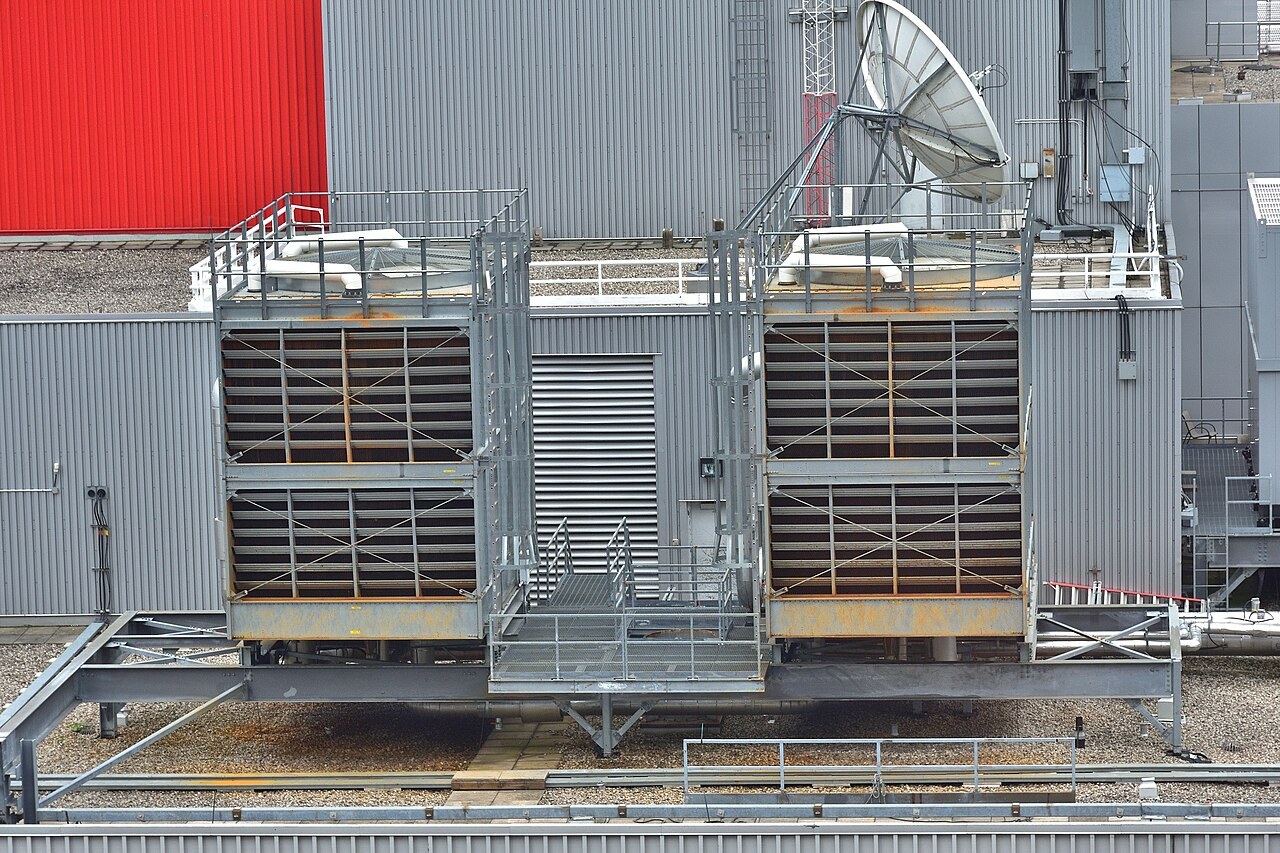
Mark the makeup entry, open tower basin, heat exchanger, side-stream takeoff and return, blowdown point, process-leak paths and any construction or cleaning work. A new solids complaint can follow windborne dirt, a makeup pretreatment upset, leaking process material, pipe corrosion, a shift in biological deposits or precipitation from dissolved ions. These mechanisms can coexist. The older deposit-identification guide is the place to investigate an unknown deposit. This guide asks the narrower purchasing question: does a proposed or existing side-stream route remove the particles that are now entering and recirculating?
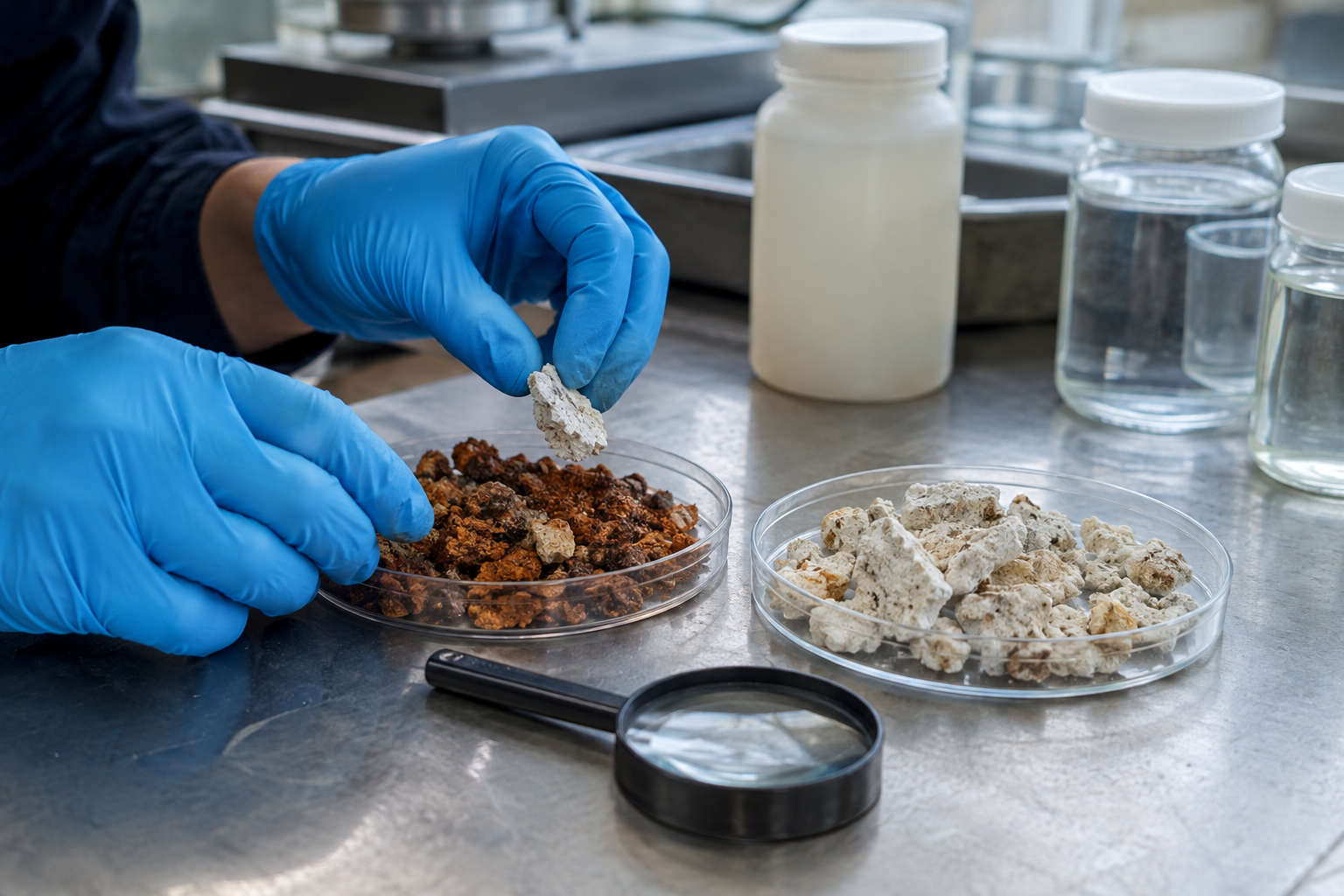
Collect a representative deposit without scraping unrelated metal into the sample. Document where it formed, whether it is soft or adherent, and whether the same material appears in the basin, strainers or filter discharge. Ask the laboratory to distinguish soluble and particulate iron with an explicit filtration and preservation method if iron is relevant. Total iron by itself combines forms and can also reflect sample handling or disturbed rust. A high turbidity value reports optical response; it cannot distinguish mineral, microbial or corrosion origin. Compare with solids mass and size information before blaming a filter.
Keep the flow path in view. A filter taking water from one branch may be well matched to that branch while a leak enters downstream. A filter may also capture coarse grit but pass fine colloids that deposit on a hot surface. Conversely, a fine filter can load rapidly on material that should have been intercepted at the source. These location and separation questions should be resolved before increasing treatment chemical.
Take paired samples that the filter can actually answer
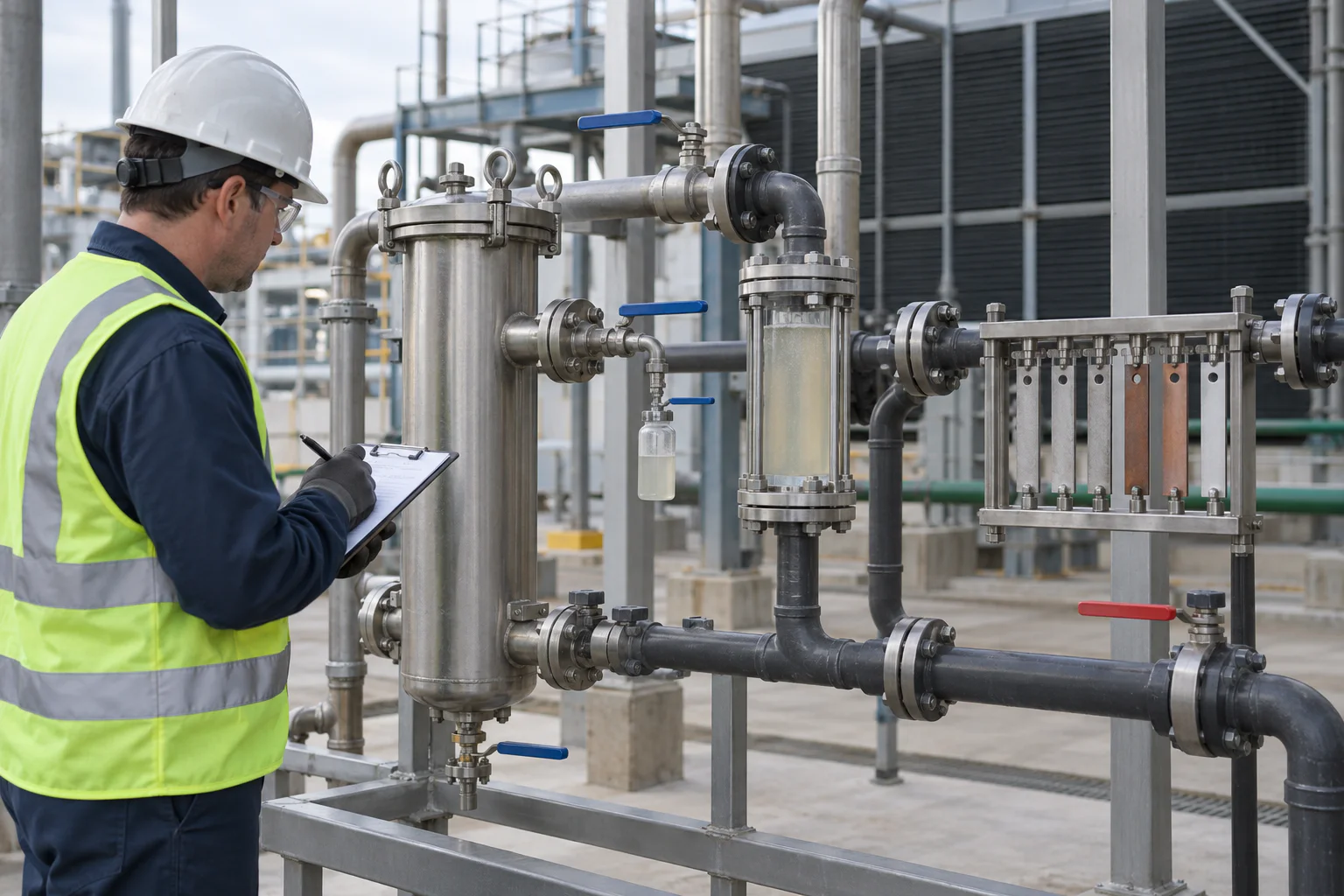
Write the sampling objective before scheduling the trial. If the question is whether the unit is capturing the new particulate load, sample immediately before and after the same filter during stable flow. Add circulating water and makeup samples to identify where the load starts and whether treated discharge remains representative of what reaches the exchanger. Record time, valve state, side-stream flow, tower circulation state, makeup and blowdown state, filter pressure on both sides, backwash or purge event and weather or production changes. Do not compare one cloudy basin grab with a clear discharge collected on another day.
Ask for a particle-size distribution or defined size bands when filter selection depends on particle scale. Use a consistent total-suspended-solids method and document how very low concentrations are handled. Turbidity can be a useful trend, but optical response changes with particle size and color. Where dissolved chemistry is suspected, compare filtered and unfiltered aliquots, conductivity and relevant calcium, alkalinity, phosphate, silica or iron chemistry using the site program. This establishes which observation can be addressed mechanically and which needs a separate chemical or process investigation.
Take a baseline before a maintenance change, then sample through a realistic filter cycle rather than only just after backwash. A brand-new or freshly cleaned medium may behave differently from a loaded bed. Include the pressure differential and cleaning frequency because a unit that captures particles but demands impractical service is a poor operating choice. If the side stream includes a separator followed by a filter, label each stage and its waste stream. Do not attribute the combined outlet to one device.
| Evidence | Useful decision | Limit to preserve |
|---|---|---|
| Matched filter inlet and outlet particle-size/TSS results | Whether the installed path captures the observed suspended fraction at the sampled state | Does not identify all particle chemistry or prove downstream deposition stopped |
| Pressure differential with flow and cleaning log | Whether loading, bypass, backwash or service conditions need investigation | A pressure rise alone is not a removal-efficiency measure |
| Deposit composition and location | Whether residual solids resemble inlet particles, corrosion products, scale or biofilm | A single sample may miss layered or time-varying deposits |
| Makeup, blowdown and dissolved-ion trend | Whether concentration and source chemistry need separate control | Filtration cannot remove dissolved salts |
| Coupon, heat-transfer and microbial trends | Whether whole-system control improved after the change | One short interval is not a product-performance guarantee |
Compare source repair, filtration and blowdown on separate endpoints
If the new load follows a raw-water or process leak, isolate and repair that path first under the facility's procedures. A filter cannot make an ongoing ingress harmless, especially if the leak also adds dissolved nutrients or corrosive chemistry. If construction dirt is a one-time event, removal and cleaning may be more relevant than a permanent new chemical. Recheck the system after the source action; otherwise the filter may appear to improve simply because the incoming load fell during the test.
If particles are still entering the circulating water, compare the existing side-stream arrangement with a supported operating change. Check whether it draws from a representative location, whether flow is stable, whether bypass valves or failed seals short-circuit treatment, and whether backwash or purge removes captured material from the system. A separator, screen, media bed and cartridge have different capture and maintenance behaviors. Request vendor test methods for the actual size distribution and solids burden rather than accepting a nominal rating as a prediction of tower cleanliness.
Blowdown manages concentration of dissolved and some suspended constituents through water replacement. It is not a substitute for source control or a proof that an undersized or mislocated filter is effective. Compare makeup/blowdown balances, water quality and site discharge obligations before altering it. A seasonal makeup change may require a broader cycles and chemistry review; the filter trial here should not quietly become that decision.
Run a trial with a defensible acceptance endpoint
Agree on an acceptance worksheet with the operator, equipment supplier and treatment provider. Define the baseline operating period, expected source events and sample frequency. Document the measured inlet load, outlet load, side-stream flow, cleaning waste and pressure response together. Choose at least one downstream indicator: fresh deposit collected at a defined location, exchanger approach or pressure trend, strainer burden, or another measure actually tied to the complaint. Keep corrosion coupons and microbial observations on their own timelines, because a filter change could alter one mechanism while leaving another unresolved.
For a proposed filter change, compare like operating states. If a plant trial is not yet possible, run a representative pilot on the actual water and identify the missing field conditions. A bench capture test may screen media or separation mechanism, but it will not reproduce tower hydraulics, seasonal loading and maintenance. Do not convert a laboratory capture result into a claimed whole-system removal percentage.
Set decision rules before viewing the outcome. A continuing upstream source calls for source correction. Similar inlet and outlet size profiles call for checking bypass, placement, media or operating cycle. Good measured capture with persistent deposits calls for deposit identification and evaluation of other pathways. Better clarity but worsening corrosion or biofilm is not success. Include waste handling, cleaning effort and any impact on the current biocide and corrosion-control program in the final comparison.
Only then ask whether a dispersant trial is warranted
A filter removes material physically; a dispersant is considered for a different, chemically supported deposition problem. If source correction and filter validation leave fine particulate or precipitation-related deposition, review the current scale, corrosion and biological program before a candidate trial. The actual deposit, water composition, metallurgy and chemical identities matter. A dispersant that changes visual suspension without reducing exchanger fouling or without a viable purge route has not answered the buying question.
VCYCLETECH lists AA/AMPS and WT-445 acrylic polymer as real catalog identities relevant to formulation discussions. Their presence supplies no tested basis for filter compatibility, dispersant dose or a tower result. Request current documents and test a defined formulation against a control if the remaining task genuinely fits. Keep any proposed chemical change separate from simultaneous filter or blowdown changes so that a comparison can be interpreted.
Send a source-to-filter evidence packet
Use the cooling-water application to frame the system and the technical inquiry to request a bounded candidate review. Include a simple flow sketch with makeup, blowdown, side-stream takeoff/return and suspected ingress. Add source and circulating analyses, matched filter samples and methods, particle or deposit findings, pressure and backwash logs, present chemical program, wetted materials and the downstream acceptance measure. For quotation, specify destination, quantity and purchasing timeline. The US DOE filtration overview offers an independent equipment-selection reference; its examples do not replace a site trial.
Frequently asked questions
Does a lower filter-outlet turbidity prove the tower is protected?
No. It shows an optical change at that sample point. Compare matched solids and particle-size results with the downstream deposit or equipment trend, and check corrosion, scale and biological evidence separately.
Can a side-stream filter remove dissolved calcium or silica?
No. Filtration addresses suspended material within the device's demonstrated capture range. Dissolved chemistry and concentration require a separate water-balance and treatment decision.
Does a rising filter pressure differential always mean good capture?
No. Interpret pressure with flow, inlet/outlet solids and cleaning state. Loading may reflect capture, fouling, bypass conditions or a maintenance fault; pressure alone cannot quantify removal.
When should a dispersant be reconsidered?
After identifying the continuing source and verifying the filter path, investigate the residual deposit and current treatment. Trial a documented candidate only for a defined remaining deposition task with a downstream endpoint.
What data should accompany a side-stream filtration inquiry?
Provide a flow sketch, source and matched filter samples with methods, particle or deposit findings, flow and pressure history, backwash events, current treatment, metallurgy and the equipment measure that must improve.