
Boiler · load, control and steam purity
Boiler Load Changes: Separate Carryover from Blowdown Drift
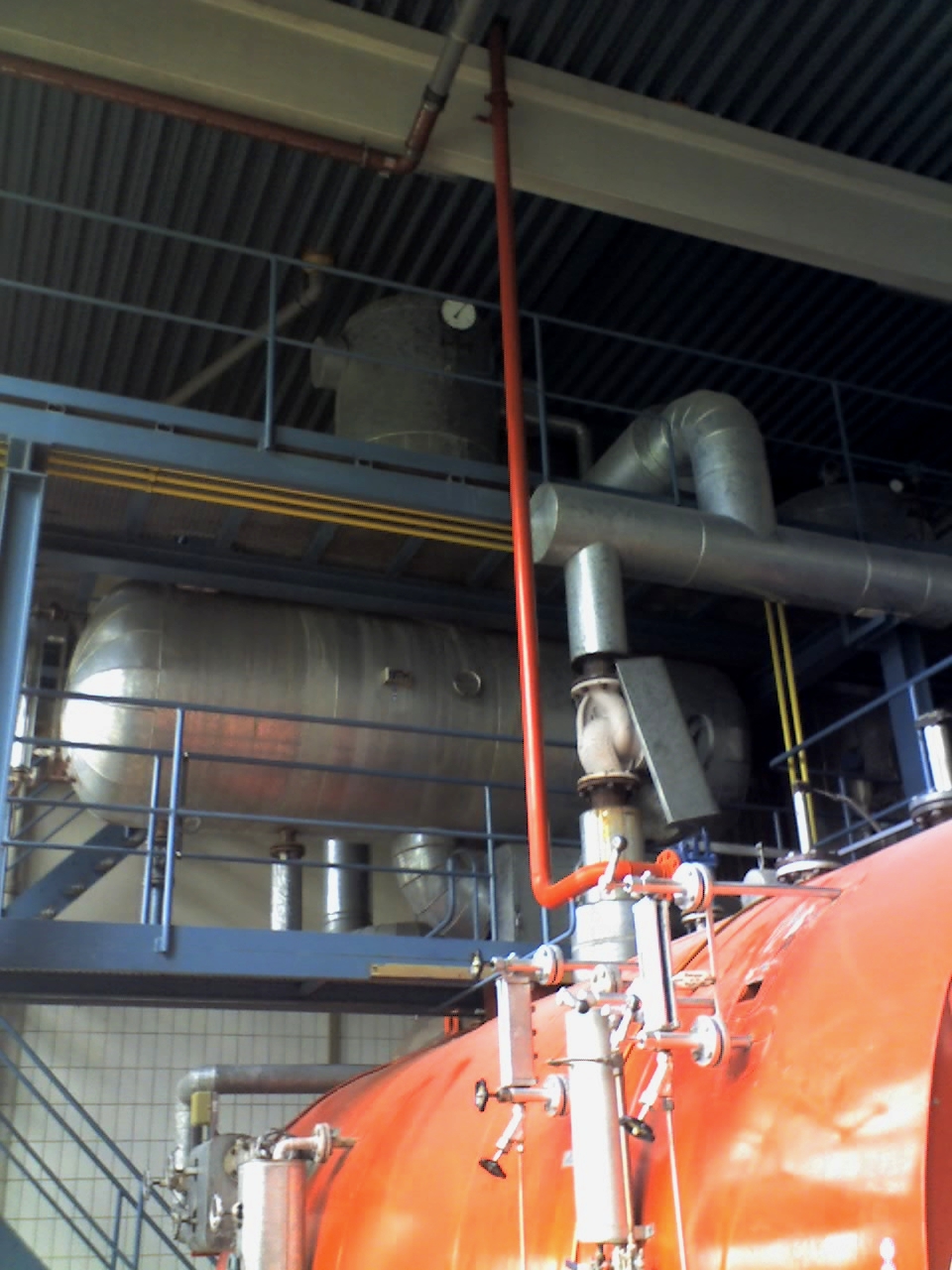
After a steam-demand change, align load, pressure, water level, feedwater, actual blowdown and chemical-feed events before deciding that the boiler needs different chemistry. A conductivity swing can reflect concentration, sampling or control response; wet or contaminated steam can also involve mechanical entrainment, foaming or a downstream source. Validate the measurement path, compare representative boiler-water and appropriate steam evidence, and find which change preceded the symptom. Review a supported operating or separation problem with the responsible boiler team before testing a chemical response. For utility engineers and technical buyers, the useful distinction is not simply “high solids or low solids.” It is whether the next action belongs at a control or water-path node, in the sampling system, or in a bounded treatment trial.
TL;DR
Put the demand event and water-system response on one clock. Separate a genuine concentration change from a probe or sampling difference, then distinguish steam moisture from chemical purity. Compare the timing of pressure, level, feed and blowdown with the first verified steam symptom; include source-water and treatment changes that could explain it. Confirm suspected carryover with appropriate steam evidence rather than condensate conductivity alone. Let the boiler team assess supported operating, separation or control corrections under the installed procedures. Only then compare chemistry against a defined remaining mechanism and representative duty. Neither extra blowdown nor a new antifoam is a universal response to a load-related upset.
Align the demand event with the boiler's response
Start with the actual trigger: a process line starting, a batch steam valve opening, a change in boiler staging or another recorded demand event. Retain steam demand, header and boiler pressure, indicated water level, feedwater flow, blowdown command and actual flow where measured, chemical-feed events and the steam-use symptom. Identify clocks, time zones, historian averaging and sample transport delay. A laboratory result time is not necessarily the time the water left the process.
Separate command from response. Compare actual flow with the valve command and investigate a discrepancy. Verify chemical delivery as well as the dosing pump's speed signal. Likewise, a trend sampled too slowly can miss a short pressure or level excursion. Mark unavailable measurements explicitly instead of drawing a smooth causal story through the gap. The most useful record shows what changed first, what responded, and what remained comparable.
Compare an affected event with an ordinary transition or a stable period using the same sample locations and methods. Include makeup quality and condensate-return changes, because production changes can alter both steam demand and feedwater composition. A concentration shift that began before the demand step requires a different explanation from contamination that appears only as pressure and level respond. The feedwater alkalinity and return-mix guide handles the separate incoming-load question.

Check whether the sample and controller are seeing the same water
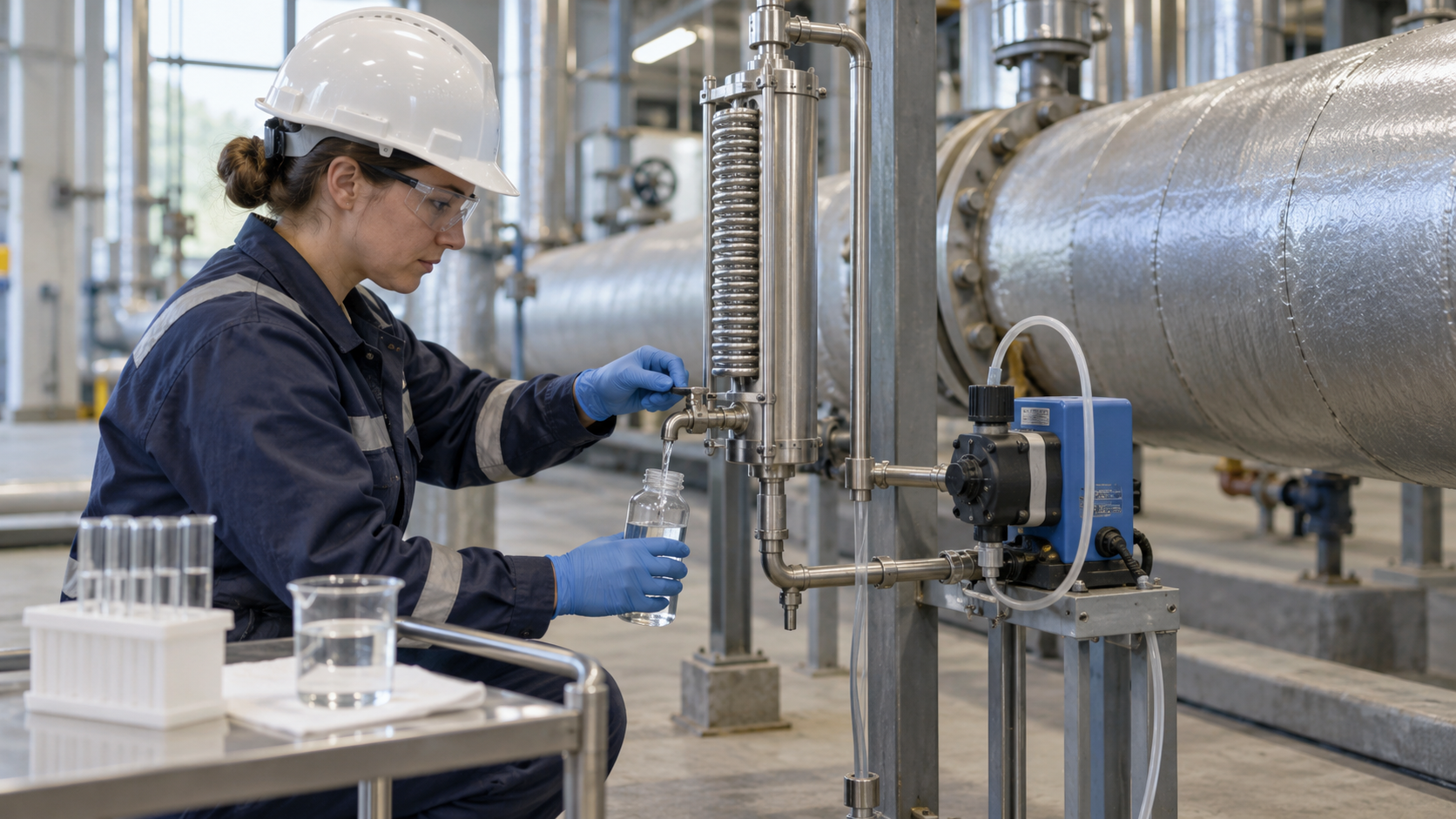
Review the installed sampling arrangement before interpreting a conductivity trend. Note where water is withdrawn, whether the sample is continuous or intermittent, the cooling and flow arrangement, time since the line was refreshed, and the instrument's temperature and conditioning convention. Compare like with like: a cooled laboratory sample, a conditioned sample and a hot in-line measurement are not automatically equivalent readings. Follow the approved sampling method rather than improvising with hot pressurized water.
Spirax Sarco identifies sample representativeness and cooling as essential to external boiler-water testing. Its conductivity discussion also explains why temperature and chemical condition affect interpretation. In practice, document probe maintenance/calibration and the appropriate independent check, then ask whether the apparent excursion is repeatable under comparable conditions. Do not correct the boiler concentration to compensate for an unrecognized sample-line or instrument problem.
A valid concentration change still needs attribution. Compare a suitable dissolved constituent, actual feed and blowdown behavior, and treatment additions. A low concentration is not proof of correct steam separation, and a high value is not proof that a valve has remained closed. Sampling, flow verification and steam evidence answer different parts of that question. Keep the unknowns visible until an observation can distinguish them.
Separate concentration drift, mechanical entrainment and foam
Evaporation and solute accumulation are related to operation, but a rapid load event is not necessarily a new steady-state cycles condition. Water inventory, feed response and mixing can all be changing. Use a stable interval for a steady-state water or constituent balance, and retain the transition separately. Do not derive a new blowdown rate from an instantaneous ratio while inventory is moving or while the chosen constituent has another source or loss.
Veolia's steam-purity handbook describes both mechanical and chemical causes of carryover. A demand increase and pressure drop can coincide with expansion of the steam-water mixture and a level response; separation condition and boiler design affect what leaves with steam. That association warrants an operating and equipment assessment before blaming the formulation. Equally, elevated concentration or a contaminant can contribute to foaming, so an operating association does not rule chemistry out.
| Working explanation | Useful supporting pattern | Check before accepting it | Next responsible route |
|---|---|---|---|
| Concentration-control drift | Comparable boiler sample/constituent trend moves with feed and actual blowdown | Source changes, inventory and treatment contributions | Water balance and installed control review |
| Mechanical entrainment during demand change | Steam symptom aligns with pressure/level/load response | Representative steam evidence, separators and alternative contamination sources | Boiler/OEM operating and separation assessment |
| Foam-related entrainment | Appropriate observations and water/contaminant evidence fit foam behavior | Mechanical cause, solids/organics and actual chemical delivery | Source correction, then a bounded chemistry question if needed |
| Sampling or probe artifact | Signal depends on sample flow, conditioning or instrument convention | Matched independent sample and calibration history | Restore valid measurement before process adjustment |
| Downstream condensate contamination | Abnormality appears after a particular process contact point | Cleaner upstream steam/condensate and branch comparison | Return-source investigation, not an assumed carryover cure |
Choose steam evidence that can answer the carryover question
Steam moisture and steam purity are not identical. Moisture concerns the liquid fraction; purity concerns contamination. A condensate conductivity result downstream of a process can be influenced by that process, deliberate volatile treatment or other contamination, so it cannot by itself assign the source to boiler-water entrainment. Identify the sample's position relative to the boiler, distribution system and process contact. Decide which suspected impurity would actually distinguish the competing sources.
IAPWS describes paired saturated-steam and boiler-water sodium measurements for evaluating carryover in drum units used in fossil and combined-cycle/HRSG power plants. Its method requires suitable representative sampling and consideration of total versus mechanical and vaporous contributions. This is a specialist investigation, not a direction to install an improvised steam sampling point. Its scope and test conditions must be assessed before applying the principle to a different industrial boiler or steam service.
Ask the boiler/OEM team what steam-purity assessment is appropriate for the installed unit and end use. Record steam and water sampling methods, collection times, analytical sensitivity, transport delay and concurrent operating conditions. If a process return is suspect, compare upstream and branch evidence through the condensate-return contamination route. If wet steam is observed, also check the distribution and drainage question; a downstream wetness symptom alone does not identify a boiler chemistry failure.
Review the supported operating node before changing chemistry
Where the evidence is event-linked, the qualified boiler team should review demand sequencing, boiler staging, pressure and level control, feed response and the steam-separation arrangement against the design and operating procedure. Possible engineering investigations are not operator instructions to lower a water level, change a pressure setting, bypass a trip or alter a ramp. Keep existing protective functions and site safety controls in force throughout the assessment.
Where comparable constituent results support genuine concentration drift, review the source load, blowdown equipment and control response. Distinguish surface concentration control from bottom-solids removal, and distinguish a valve command from delivered flow. A chemistry change cannot repair a failed actuator, blocked sample path or unsuitable control signal. Conversely, an ordinary control response should not be called defective simply because it coincided with the production event.
For suspected foam or contamination, identify the entering material and the water conditions before discussing an additive. Oil, process contamination, suspended solids and internal-treatment contributions do not create one interchangeable foam problem. Bosch's OEM discussion likewise distinguishes mechanical from chemical causes. A generic industrial defoamer category is not an automatic steam-boiler product recommendation, especially where steam contacts a sensitive process.
Make a chemical comparison answer a specific remaining question
If source, measurement and operating checks leave a credible chemical mechanism, define it before selecting a formulation. Describe what would change, where it would be introduced and how its response would be monitored. Keep the boiler type, current program, steam-end-use constraints and verified delivery arrangement explicit. A formulation change must be reviewed for the actual application, not inferred from a product's general scale-and-corrosion label.
Agree the baseline, representative duty, monitoring and escalation criteria with the responsible team. Compare the same relevant operating cases before and after the authorized intervention, including transitions where the symptom appeared. Follow suitable water chemistry, verified steam evidence and operating stability together. A calmer event after several simultaneous changes is useful operational information, but it does not isolate the contribution of the new chemical.
The Boiler Water Treatment application brings those diagnostic branches together. Discuss the listed WT-503B candidate only for an internal-treatment task supported by its current grade information; keep antifoam suitability and mechanical carryover as separate questions. If a deposit mechanism becomes the actual purchasing question, use the separate deposit-control selection guide rather than merging it into this load-event investigation.
For a focused boiler operating and treatment inquiry, share the demand event, unit/steam-use description, synchronized pressure/level/feed/blowdown records, sampling arrangement, water and steam results, current formulation and the mechanism you need the trial to resolve. Include the process or equipment corrections already reviewed. That gives the technical discussion an answerable question without pretending that a catalog product or one conductivity number proves the cause.
Frequently asked questions
Does a boiler conductivity spike prove carryover?
No. It may reflect a concentration change, treatment contribution, sampling condition or instrument response. Carryover concerns material leaving with steam and needs suitable steam evidence alongside the boiler-water and operating record. One probe signal cannot establish that pathway.
Why might a steam symptom appear only during a load change?
A demand change can coincide with pressure, level, feed and separation responses that differ from steady operation. Align those events with representative steam results and exclude source or sampling changes. Timing helps choose the investigation but does not prove a particular mechanical or chemical cause.
Should I increase blowdown as soon as steam becomes wet?
Do not use wetness alone to choose that response. Validate concentration and steam evidence, consider operating/separation and downstream drainage causes, and follow the installed boiler procedure with qualified personnel. Extra blowdown is not a universal correction for every moisture or purity problem.
Can condensate conductivity distinguish process contamination from boiler carryover?
Not by itself. The sample position, process contact, volatile treatment and other sources affect interpretation. Compare appropriate upstream and branch samples with boiler-water and operating evidence. A specialist steam-purity assessment may be needed to distinguish boiler entrainment from a downstream source.
When is a different treatment formulation worth testing?
When validated sampling and operating checks leave a defined chemical mechanism that a documented candidate can address. Agree representative duty, water and steam measurements, control conditions and escalation criteria first. A product name does not demonstrate boiler suitability, an antifoam function or a guaranteed result.