
TCCA vs SDIC vs Calcium Hypochlorite: Which Chlorine?
TL;DR TCCA, SDIC and calcium hypochlorite are the three most common solid chlorine disinfectants — TCCA has the highest available chlorine (~90%), dissolves slowly and is self-stabilized (releases cyanuric acid) but is acidic; SDIC (~56–60%) dissolves fast at near-neutral pH; calcium hypochlorite (~65–70%) dissolves fast, is strongly alkaline and unstabilized and adds calcium hardness. Pick TCCA for steady outdoor-pool maintenance, SDIC for fast dosing and drinking/emergency water, and calcium hypochlorite for shock dosing and indoor pools.
The three solid chlorine disinfectants
Solid chlorine donors are easier and safer to ship, store and dose than chlorine gas. The three workhorses are Trichloroisocyanuric Acid (TCCA), Sodium Dichloroisocyanurate (SDIC) and Calcium Hypochlorite. All release hypochlorous acid (HOCl) — the active biocide — but they differ in available chlorine, dissolving speed, effect on pH, whether they stabilize chlorine against sunlight, and by-products. Those differences decide which one fits your job.
TCCA — high strength, slow, self-stabilized
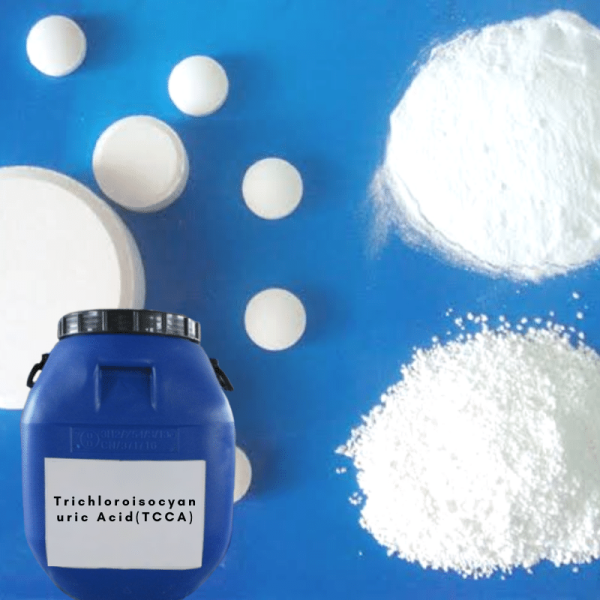
TCCA carries about 90% available chlorine, the highest of the three, and dissolves slowly — ideal as tablets for steady, hands-off dosing in floaters or feeders. It is acidic (pH ≈ 2.7–3.3), so heavy use pulls pool pH down, and each dose releases cyanuric acid (CYA), which stabilizes chlorine against UV loss — a major advantage for sunlit outdoor pools, but CYA accumulates and must be watched. Best for routine outdoor-pool and cooling-water sanitation.
SDIC — fast, near-neutral, stabilized
SDIC has about 56–60% available chlorine, dissolves quickly and is near-neutral (pH ≈ 5.5–7.0), so it barely disturbs water pH. It is also stabilized (releases some CYA). Its speed and mild pH make it the go-to for quick chlorine adjustment, drinking-water and emergency disinfection, and effervescent tablets. It is the most convenient all-rounder where fast action matters.
Calcium hypochlorite — fast, alkaline, unstabilized
Calcium hypochlorite (cal-hypo) offers about 65–70% available chlorine, dissolves fast and is strongly alkaline (pH ≈ 10.8–11.8), so it raises pH and usually needs acid correction. It contains no cyanuric acid (chlorine is unprotected from UV) and adds calcium hardness. That makes it excellent for shock dosing, indoor pools, and water where CYA build-up must be avoided, but less suited to sunlit pools on its own.
How to choose
- Outdoor pool, daily maintenance → TCCA tablets (stabilized, slow-release).
- Fast dosing / drinking / emergency water / effervescent tablets → SDIC (fast, near-neutral).
- Shock treatment / indoor pool / avoid CYA build-up → calcium hypochlorite.
- Watch: don't let CYA climb too high with TCCA/SDIC (it slows chlorine); correct pH when using cal-hypo (alkaline) or TCCA (acidic). Never pre-mix different chlorine products.
TCCA vs SDIC vs calcium hypochlorite
| Property | TCCA | SDIC | Calcium hypochlorite |
|---|---|---|---|
| Available chlorine | ~90% | ~56–60% | ~65–70% |
| Dissolving speed | Slow | Fast | Fast |
| pH of solution | Acidic (~2.7–3.3) | Near-neutral (~5.5–7) | Alkaline (~10.8–11.8) |
| Cyanuric-acid stabilizer | Yes (releases CYA) | Yes (releases CYA) | No |
| Adds calcium hardness | No | No | Yes |
| Best use | Outdoor-pool daily dosing | Fast / drinking / emergency | Shock, indoor pool |
Watch

Frequently asked questions
Which has more available chlorine, TCCA, SDIC or calcium hypochlorite?
TCCA has the highest available chlorine at about 90%, calcium hypochlorite about 65–70%, and SDIC about 56–60%. But available chlorine is only one factor — dissolving speed, effect on pH and cyanuric-acid stabilization also decide which product fits a given job.
What is the difference between TCCA and SDIC?
Both are chlorinated isocyanurates that stabilize chlorine with cyanuric acid. TCCA has ~90% available chlorine, dissolves slowly and is acidic, so it suits steady outdoor-pool dosing. SDIC has ~56–60% available chlorine, dissolves fast and is near-neutral, so it suits quick dosing, effervescent tablets and drinking/emergency water.
Why does calcium hypochlorite raise pool pH?
Calcium hypochlorite is strongly alkaline (pH about 10.8–11.8), so adding it raises pool pH and usually needs acid to bring pH back to 7.2–7.6. It also adds calcium hardness and contains no cyanuric acid, which is why it is favored for shock dosing and indoor pools rather than continuous outdoor use.
Is TCCA or SDIC better for drinking water?
SDIC is often preferred for drinking-water and emergency disinfection because it dissolves fast, is near-neutral in pH and is available as effervescent tablets with a controlled dose. TCCA is better suited to pool and cooling-water sanitation. Always follow local drinking-water regulations and dose to the required residual.
Is VCYCLETECH a TCCA, SDIC and calcium hypochlorite manufacturer?
Yes. VCYCLETECH supplies TCCA (granular/tablet), SDIC (powder/granular/effervescent) and calcium hypochlorite factory-direct from China, ISO 9001/14001/45001 certified, with current COA information on request, sample availability and OEM/ODM service. Email sales@vcycletech.com.
About the manufacturer
VCYCLETECH is a China-based manufacturer of water treatment chemicals — disinfectants, biocides, coagulants, flocculants, antiscalants, scale & corrosion inhibitors and paper chemicals — ISO 9001 / 14001 / 45001 certified, with current COA information on request and OEM/ODM service. See our quality & certifications.
References
- Trichloroisocyanuric acid — Wikipedia
- Sodium dichloroisocyanurate — Wikipedia
- Calcium hypochlorite — Wikipedia
Related: TCCA · SDIC · Calcium Hypochlorite · Swimming-pool chemicals · Drinking-water disinfection