
RO Antiscalant Trial Design: Feedwater, Recovery and Membrane Compatibility
TL;DR An RO antiscalant trial should start with feedwater ions, silica, alkalinity, temperature, recovery, membrane type and the proposed concentrate conditions. Compare candidates within the same operating envelope and agree the acceptance evidence before dosing. A laboratory result or supplier projection is not a universal site dose: the release decision needs current feed analysis, membrane-vendor compatibility review and monitored site validation.
How should an RO antiscalant trial be designed?
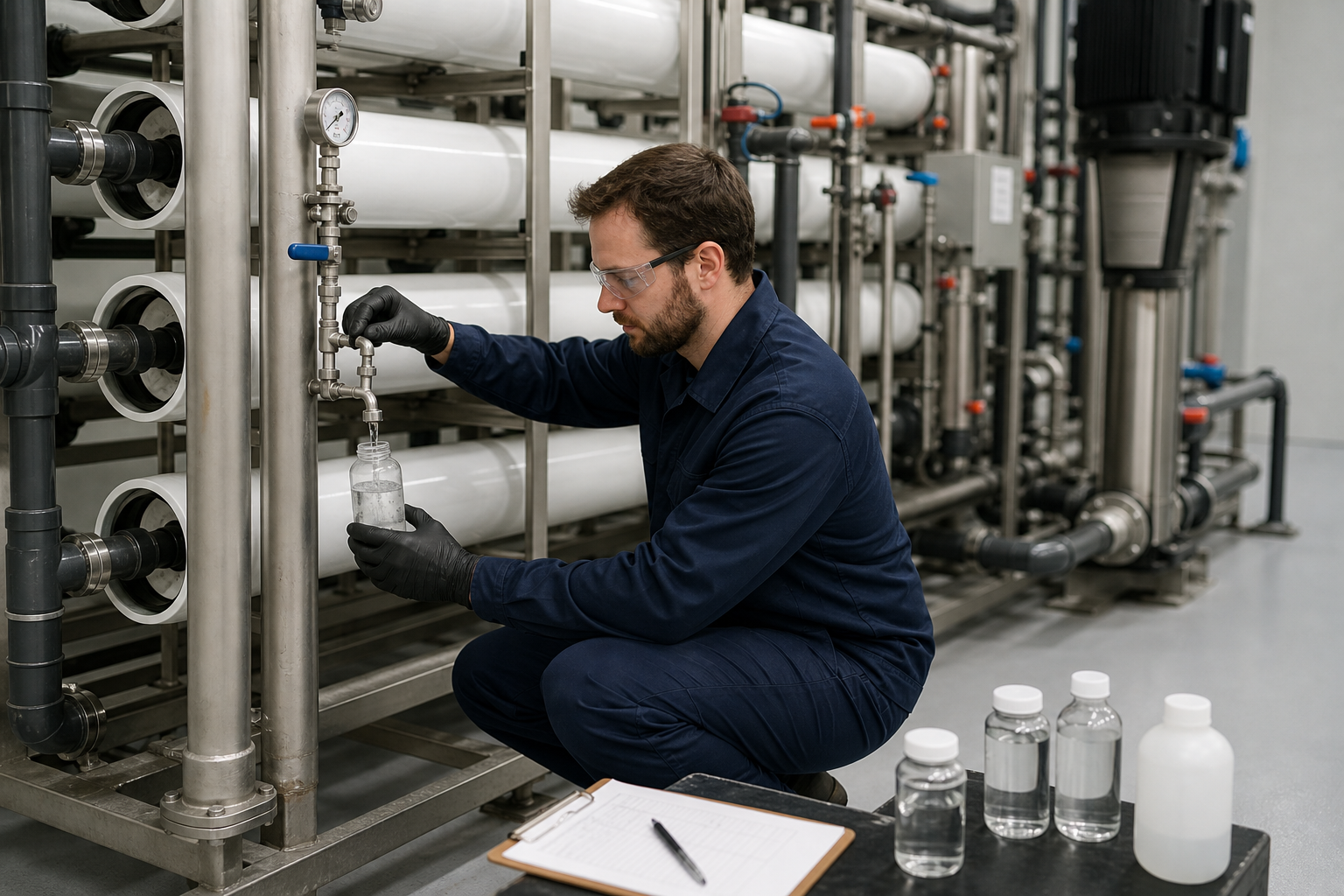
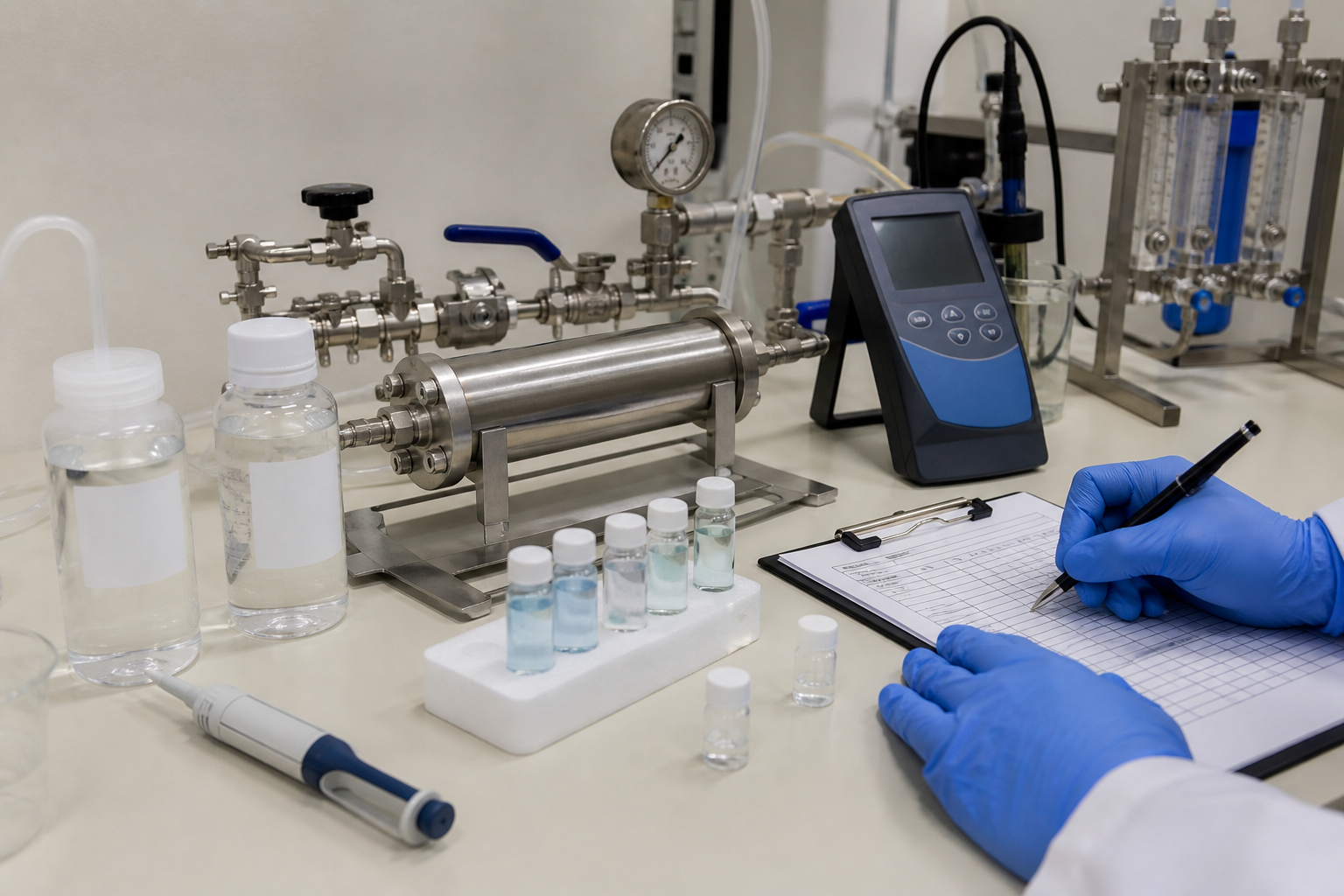
For an RO engineer or chemical buyer, a defensible trial begins by defining what must remain comparable. Capture the water source and sampling date, current pretreatment, membrane configuration, recovery, temperature, flux, pressure and cleaning history. Calculate the intended concentrate conditions from the actual operating case; do not compare one product at a changed recovery or with a different feedwater analysis. The trial then tests a candidate against a documented baseline with the same measurement methods and escalation rules.
| Trial input | Why it is needed | Record with it | Decision boundary |
|---|---|---|---|
| Feedwater ions and alkalinity | Calcium, magnesium, barium, strontium, iron, aluminium, sulfate, chloride, bicarbonate/alkalinity and pH determine which saturation risks need modelling. | Sampling point, date, method, units, filtered/unfiltered status and source change. | One analysis is not a permanent feed specification; seasonal or source changes require review. |
| Silica, organics and particles | Silica, turbidity/SDI, TOC and upstream carryover can alter fouling and scale-control assumptions. | Method, sample preservation, pretreatment state and any coagulant/polymer carryover context. | Do not treat a single silica or SDI value as a universal membrane or chemistry limit. |
| Recovery and concentrate condition | Recovery concentrates dissolved constituents and changes the scale-driving conditions seen by later elements. | Feed, permeate and concentrate flows; staging; flux; pressure; temperature; projection version. | Changing recovery, temperature or source water means the comparison is no longer the same trial. |
| Membrane and hardware | Element model, age, condition and supplier guidance frame chemical compatibility and interpretation of normalized performance. | Model, serial/lot where available, pressure-vessel layout, seals, cleaning history and OEM limits. | Category suitability does not replace membrane-manufacturer compatibility approval. |
What feedwater data is needed to compare antiscalants?
The useful package is a dated, complete analysis plus the operating conditions that create the concentrate. DuPont’s current FilmTec manual explains that recovery, pH and temperature affect precipitation risk and that operating variables may need adjustment when other scale-control methods are not sufficient. Genesys likewise frames feedwater analysis and projection as inputs to antiscalant selection. These are technical starting points, not VCYCLETECH product promises or universal treatment limits.
| Weak trial comparison | Controlled RO antiscalant trial protocol | Why procurement can defend it |
|---|---|---|
| Compare supplier recommendations from unrelated feedwaters. | Use one current feedwater data set, the same recovery/temperature envelope and a documented concentrate projection for every candidate. | Shows what was actually compared and which assumptions were held constant. |
| Approve from a nominal mg/L claim alone. | Document proposed dose as a trial variable, product TDS/COA/SDS and calculation basis; do not present it as a permanent site dose. | Separates a vendor proposal from a verified operating decision. |
| Judge only by short-term flow. | Trend normalized permeate flow, normalized salt passage, pressure drop, feed/concentrate chemistry, visible deposits and cleaning events under the same operating definition. | Prevents a changed temperature, flux or recovery from looking like chemical performance. |
| Assume all RO elements tolerate the same chemistry. | Confirm the exact membrane model’s operating and cleaning limits and the candidate’s compatibility evidence before introduction. | Creates an auditable release gate for QA and operations. |
How do I verify antiscalant membrane compatibility?
Start with the membrane manufacturer’s current model-specific documentation—not a generic category statement. DuPont’s February 2026 manual includes a chemical-compatibility testing section and describes operating variables as site-dependent. Ask the candidate supplier for current TDS, SDS, COA, intended application, dilution and feed-point information, then compare it with the membrane OEM’s written limits and any system-material restrictions. If the compatibility question remains unresolved, retain it as an open acceptance item rather than inferring approval.
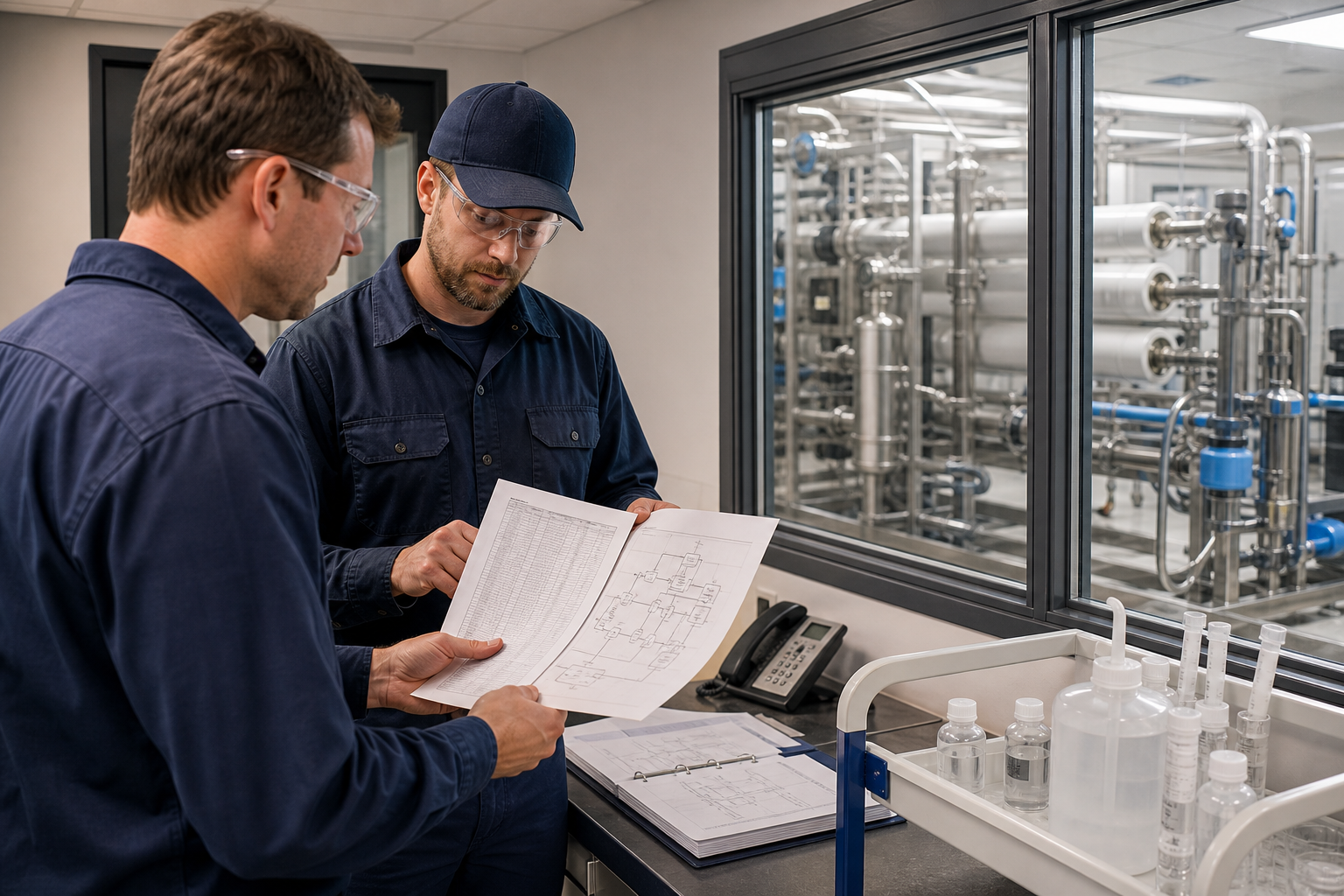
RO antiscalant trial workflow and release gate
- Set the decision question. State whether the trial is comparing candidates, validating a revised recovery, checking a changed feedwater or confirming an existing program after a source change.
- Freeze the baseline. Record water analysis, source, recovery, temperature, flux, membrane train and pretreatment before altering the chemical variable.
- Project the concentrate. Use the current analysis and operating envelope. Include ions, silica, alkalinity, pH and temperature assumptions in the trial file.
- Screen compatibility and documents. Keep membrane-OEM limits, TDS, SDS, COA, dilution/feed-point plan and relevant material restrictions together.
- Define acceptance evidence. Decide in advance which normalized data, water samples, inspection observations and time window will be reviewed—and what would stop or re-scope the trial.
- Close with a site record. State the validated operating envelope and review trigger. Do not let an approval silently extend to different water, recovery or membrane conditions.
Procurement and trial acceptance checklist
- Dated feed, concentrate and permeate analyses; sampling locations, methods and units.
- Calcium, magnesium, barium, strontium, iron, aluminium, silica, sulfate, chloride, alkalinity, pH, conductivity, TOC and pretreatment indicators where relevant.
- Membrane model/configuration, system layout, recovery, temperature, flux, staging, pressure and normalized baseline data.
- Candidate product identity, COA, TDS, SDS, storage/dilution information, proposed feed point and written membrane-compatibility evidence.
- Trial dates, candidate/control conditions, calculation/projection version, monitoring plan, cleaning history and any deposit/autopsy evidence.
- Written acceptance criteria, stop conditions, change-control owner and inquiry path for unresolved compatibility questions.
Start with the RO chemicals category and the polycarboxylic antiscalant and dispersant options. Keep the scope distinct from the broader RO antiscalant selection and dosing guide by using this trial protocol for evidence capture, and review RO silica scaling control when silica is a specific trial variable. If cleaning history or an existing deposit affects the baseline, use the related RO cleaning decision tree before assuming an antiscalant comparison explains the trend. Send the data pack through technical inquiry; a category link is not a site-specific dose or compatibility approval.
Frequently asked questions
How should an RO antiscalant trial be designed?
Freeze the feedwater, recovery, temperature, membrane configuration and monitoring methods before comparing candidates. Project the intended concentrate conditions, confirm model-specific membrane compatibility, define success and stop criteria, and trend normalized operation plus water and physical evidence. The final record applies only to the validated site envelope.
What feedwater data is needed to compare antiscalants?
Use a dated analysis with sampling context: pH, alkalinity, calcium, magnesium, barium, strontium, iron, aluminium, silica, sulfate, chloride, conductivity and relevant organics or particle indicators. Pair it with recovery, temperature, flux, staging and concentrate conditions; chemistry without the operating case is incomplete.
How do I verify antiscalant membrane compatibility?
Check the exact membrane model’s current OEM documentation and written limits, then compare them with the candidate product’s intended use, TDS, SDS, COA, dilution and feed-point plan. Resolve contradictions with the membrane manufacturer or qualified supplier before dosing; do not infer compatibility from a generic product family.
Can a supplier-recommended antiscalant dose be used as the final site dose?
No. Treat it as a proposed trial variable tied to stated water analysis, recovery, temperature and membrane conditions. Confirm it against a controlled site trial and documented monitoring plan. A feedwater or operating change can require the projection and decision to be revisited.
Which data should be used to approve an RO antiscalant trial?
Use the feedwater and operating records: controlled operating conditions, normalized trend data, feed/concentrate samples, membrane and material compatibility records, product documents, cleaning/deposit observations and pre-agreed acceptance criteria. Do not approve solely from a short-term flow change or an unqualified laboratory claim.
Who prepared this guide
VCYCLETECH Technical Team prepared this guide for RO engineers comparing antiscalant trials. Use the feedwater-ion profile, target recovery, membrane model and current operating trend together when selecting a trial path; the cited membrane and water-chemistry references explain why each input matters.
References
- DuPont FilmTec RO/NF technical manual (February 2026)
- Genesys: feedwater and pretreatment tests
- Peer-reviewed pilot and laboratory comparison of RO antiscalants
- Avista membrane autopsy example: feedwater, scale identification and boundaries
Related: RO chemicals · RO fouling diagnosis · RO antiscalant selection · Technical inquiry