

Reclaimed Water as Cooling Makeup: The Problem
Recycled water can be used as cooling-tower makeup, but its variable phosphate, ammonia, organics, chlorine/chloramine and metals can break a freshwater treatment program. Evaluate the source over time, not from one sample. Recalculate concentration cycles and scaling indices; protect copper/yellow metals from ammonia; and match pretreatment, dispersant and biocide control to the actual contaminant profile. A reported “40 ppm ammonia” value was one power-plant case, not a universal reclaimed-water number.
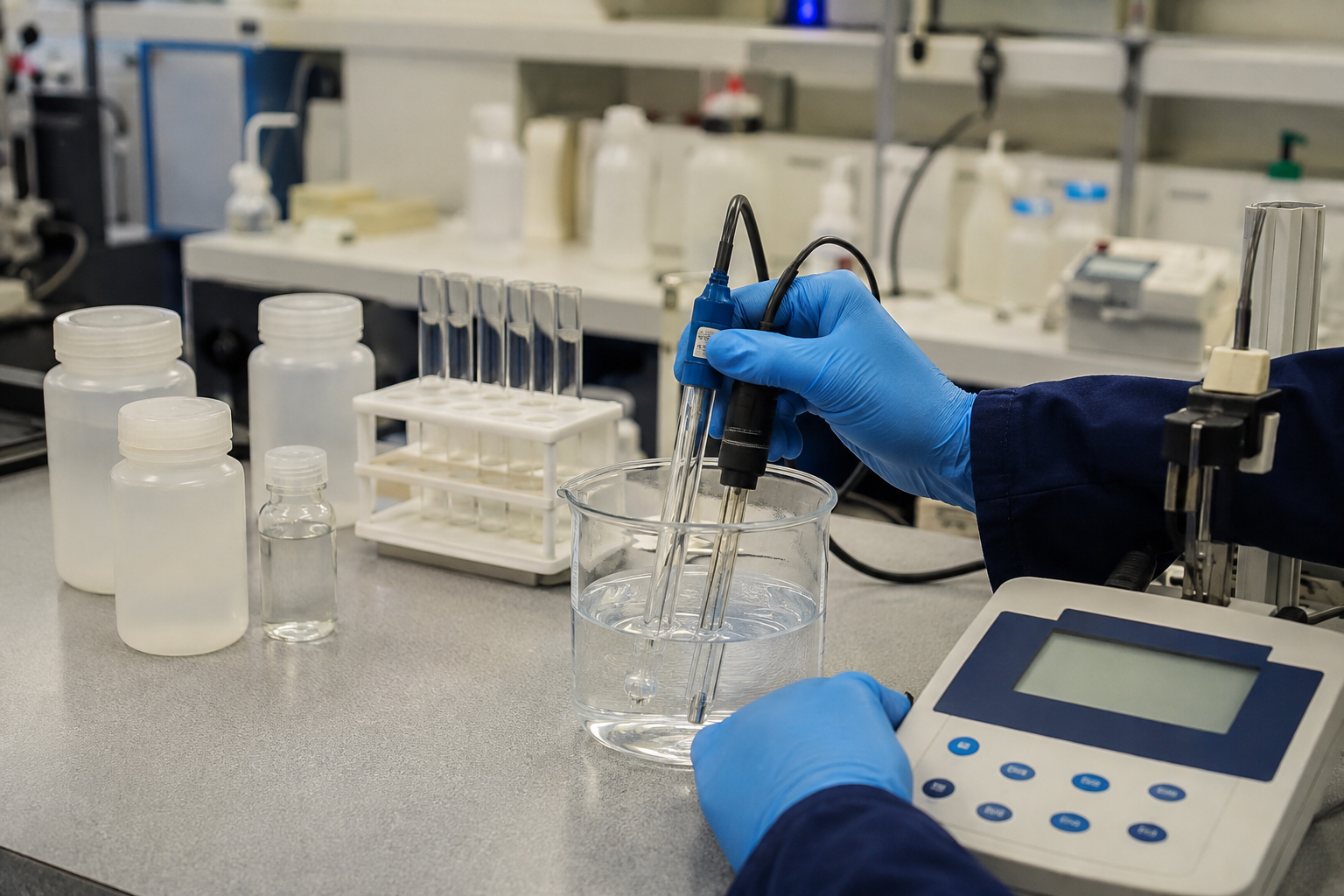
Can reclaimed or recycled water be used as cooling-tower makeup?
Yes, but not as a drop-in equivalent to potable makeup. EPA reuse guidance and power-sector experience show that recirculation concentrates dissolved and suspended constituents. The correct question is not “is recycled water allowed?” but “what does the worst expected makeup become at the proposed cycles, on this metallurgy, under this biocide programme?” The answer often changes after a treatment-plant upset, seasonal load change or disinfection change.
This page owns the makeup-water failure analysis. It complements the cooling-tower treatment guide rather than duplicating it, and it links to the non-phosphorus conversion guide when incoming phosphate or a permit makes that transition necessary.
Reclaimed-water contaminant → failure mode → treatment lever
| Constituent | Cooling-tower failure mode | First treatment lever | What to measure |
|---|---|---|---|
| Phosphate + calcium/hardness | Calcium-phosphate deposition, under-deposit corrosion and reduced heat transfer. | Source control/softening where justified; dispersant and cycles adjustment. | Orthophosphate/total P, Ca, Mg, pH, alkalinity, conductivity and deposit evidence. |
| Ammonia | Copper/yellow-metal attack and a nitrogen source for biological activity; pH affects free-ammonia fraction. | Nitrification/pretreatment where needed; copper inhibitor and controlled pH selected for the metallurgy. | NH3/NH4-N, pH, temperature, copper release and coupon data. |
| COD/TOC/organics | Oxidant demand, biofilm and under-deposit fouling; may change inhibitor/biocide performance. | Filtration/biological or carbon treatment as warranted; stronger monitored biocide programme. | COD, TOC, turbidity/TSS, ORP, ATP/dipslides and oxidant residual. |
| Chlorine/chloramine | Residual may be consumed before control point; chloramine can alter oxidant response. | Measure at feed and system points; set oxidant/nonoxidant strategy from demand and biofilm data. | Free/total chlorine, chloramine, ORP and microbial trend. |
| Metals, chloride and sulfate | Deposit formation, galvanic effects, pitting/stress-corrosion risk depending on alloy. | Set cycles and pretreatment to metallurgy/OEM boundary; use targeted inhibitor where appropriate. | Fe, Mn, Cu, Al, Cl−, SO4²−, conductivity and coupon/pitting observations. |
Mechanisms that change a conventional program
Phosphate → calcium-phosphate scale → under-deposit corrosion → dispersant
Phosphate is not simply “good” or “bad.” It can contribute to corrosion control in some programmes, yet calcium-phosphate precipitation becomes a scale concern when calcium, pH, concentration and heat-transfer conditions align. Under a deposit, oxygen and chemistry gradients can make corrosion control harder. Use source and tower-water phosphate with hardness/alkalinity and deposit monitoring to decide whether source reduction, softening, lower cycles or a stronger dispersant program is needed.
Ammonia → copper/yellow-metal corrosion → copper inhibitor and pH control
Ammonia can complex copper and is a particular concern for copper and brass/Admiralty components. In one recycled-water power-plant report, ammonia reached approximately 40 ppm and contributed to oxidant demand; that is a single-site value, not a design concentration. EPA reuse tables show wide regional source-water variation. Measure ammonia as NH3/NH4-N, pH and temperature, then establish copper/brass coupons and release trend before selecting a copper inhibitor such as tolyltriazole.
Organics → biofouling → monitored biocide
COD and TOC do not map to one universal biocide dose. They signal oxidant demand and biomass potential, especially when warm recirculating water and deposits are present. Trend free/total oxidant, ORP where appropriate and a microbiological method; then combine cleaning/dispersancy with a documented biocide strategy rather than responding only to planktonic counts.
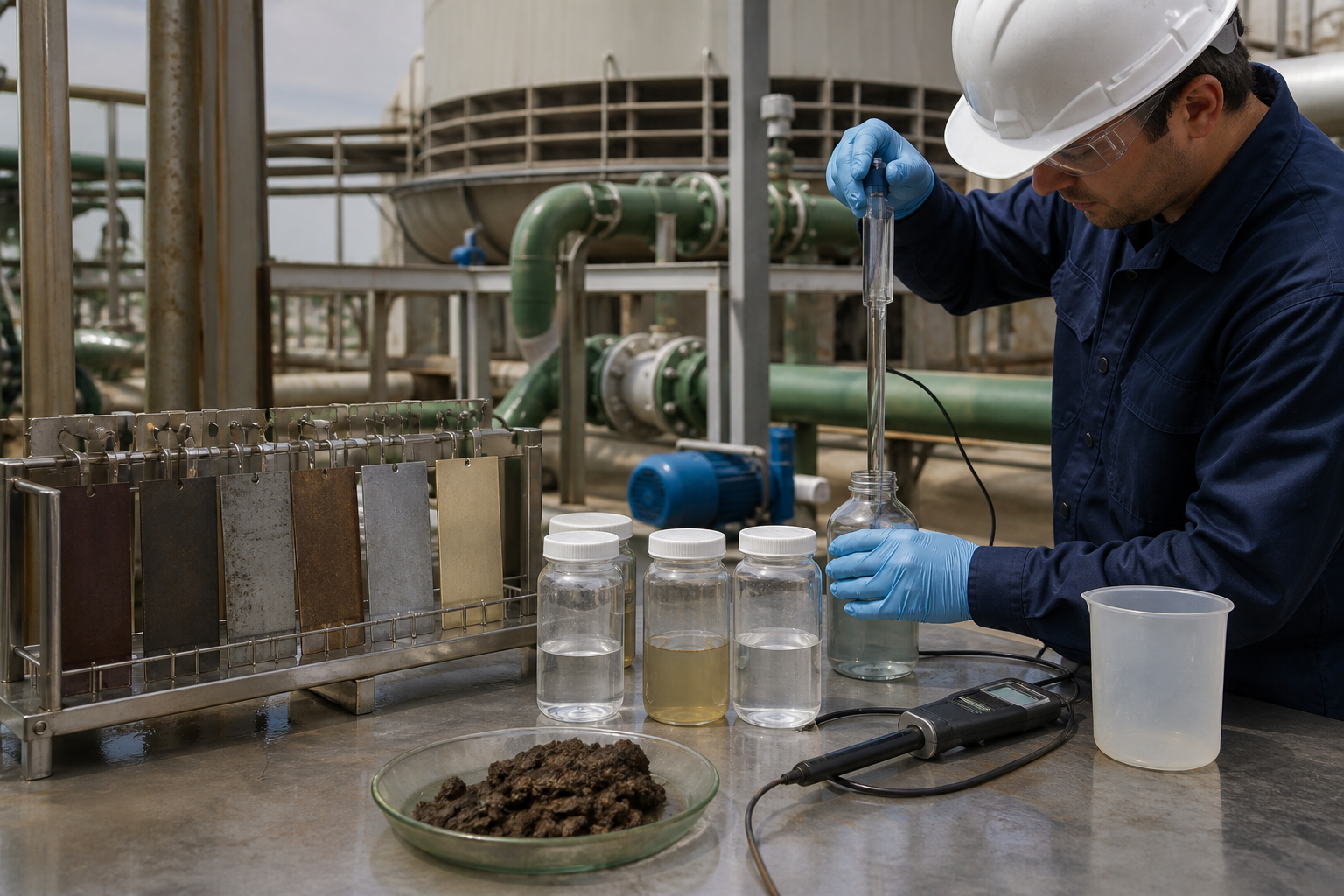
Reclaimed makeup evaluation and adjustment workflow
- Collect a trend, not one grab sample. Include normal, peak and upset-period data from the reclaimed-water supplier.
- Model concentration. Calculate expected recirculating values at proposed cycles for salts, hardness, alkalinity, silica, phosphate, ammonia and metals; check the result against metallurgy and equipment limits.
- Select pretreatment by the failure mode. Typical options include clarification/filtration, side-stream filtration, softening, nutrient reduction, nitrification, carbon treatment or blending. Select only after the water and economics support it.
- Reset the cooling-water programme. Re-evaluate dispersant, corrosion inhibitor, copper protection, oxidant demand, nonoxidizing-biocide rotation and blowdown setpoint.
- Validate and monitor. Use coupon exposure, deposit inspection, heat-transfer trend, chemical residuals, source-water alert limits and microbiological data.
Data package before changing the program
- Source and tower-water time series: conductivity, TDS, hardness, calcium, magnesium, alkalinity, pH, chloride, sulfate and silica.
- Nutrients and organics: total/orthophosphate, ammonia as NH3/NH4-N, COD, TOC, TSS/turbidity and microbial indicators.
- Disinfectant: free chlorine, total chlorine/chloramine, oxidant demand/ORP where used, and residual at the control point.
- Metals and materials: iron, manganese, copper, aluminum, corrosion coupons, pitting observations and all copper/brass/steel/stainless/galvanized components.
- Operations: cycles, blowdown, makeup flow, temperature, heat-exchanger history, filtration performance, cleaning history and treatment-plant change notices.
Use the cooling-water treatment application page for product-family context, biocide selection guidance for biological control boundaries, and the inquiry page to share the water trend, metallurgy and operational target before requesting a treatment recommendation.
Frequently asked questions
Can you use reclaimed water in a cooling tower?
Yes, if source variability, concentrated-water chemistry, metallurgy, pretreatment and biological control are evaluated together. Reclaimed water is not automatically interchangeable with freshwater makeup; phosphate, ammonia, organics, chlorine/chloramine and metals can become more restrictive after cycles of concentration.
Why is ammonia in recycled water a cooling-tower problem?
Ammonia can be corrosive to copper and yellow-metal alloys and can increase oxidant demand or biological activity. The relevant risk depends on ammonia form, pH, temperature, metallurgy and the recirculating concentration. A reported 40 ppm value is a single power-plant case, not a universal reclaimed-water level.
How does phosphate cause cooling-tower scale with reclaimed water?
When phosphate, calcium, pH, concentration factor and heat-transfer stress align, calcium-phosphate solids can precipitate and form deposits. Deposits reduce heat transfer and can create under-deposit corrosion conditions. Measure both source and tower water, then adjust pretreatment, dispersancy and cycles from the actual saturation risk.
Does recycled water reduce cooling-tower cycles of concentration?
It can. Higher or more variable salts, hardness, phosphate, silica, ammonia and suspended material may reach a scaling, corrosion or fouling boundary at fewer cycles than freshwater. Calculate the concentrated worst case and verify with operating data rather than choosing a universal cycles target.
What should be tested before using reclaimed water as cooling makeup?
At minimum test conductivity/TDS, hardness, alkalinity, pH, chloride, sulfate, silica, total and orthophosphate, ammonia, COD, TOC, TSS, chlorine/chloramine, iron, manganese, copper and microbiology. Add metallurgy, coupon, heat-transfer and treatment-plant variability data before finalizing pretreatment or chemical feed.
Who prepared this guide
VCYCLETECH Technical Team prepared this guide for towers using reclaimed makeup water. Track the incoming ammonia, phosphate, organics and metals alongside tower cycles and metallurgy, then match the chemical program to the seasonal range rather than a single sample.
References
- U.S. EPA: Guidelines for Water Reuse—cooling makeup context
- POWER: reclaimed water in power-plant cooling applications
- Cooling Technology Institute: recycled water and cooling towers
- Corrosion Science: treated municipal wastewater, ammonia and copper alloys
Related: Cooling-water treatment · Non-phosphorus conversion · Water-treatment biocides · Tolyltriazole for copper protection