

Converting a Cooling Tower to Non-Phosphorus
To narrow the available grades, share the industry, water or process conditions, treatment objective, current program, required quantity, packaging and destination. Representative sample results are helpful when performance depends on site water chemistry.
Why a phosphate-program comparison is not enough
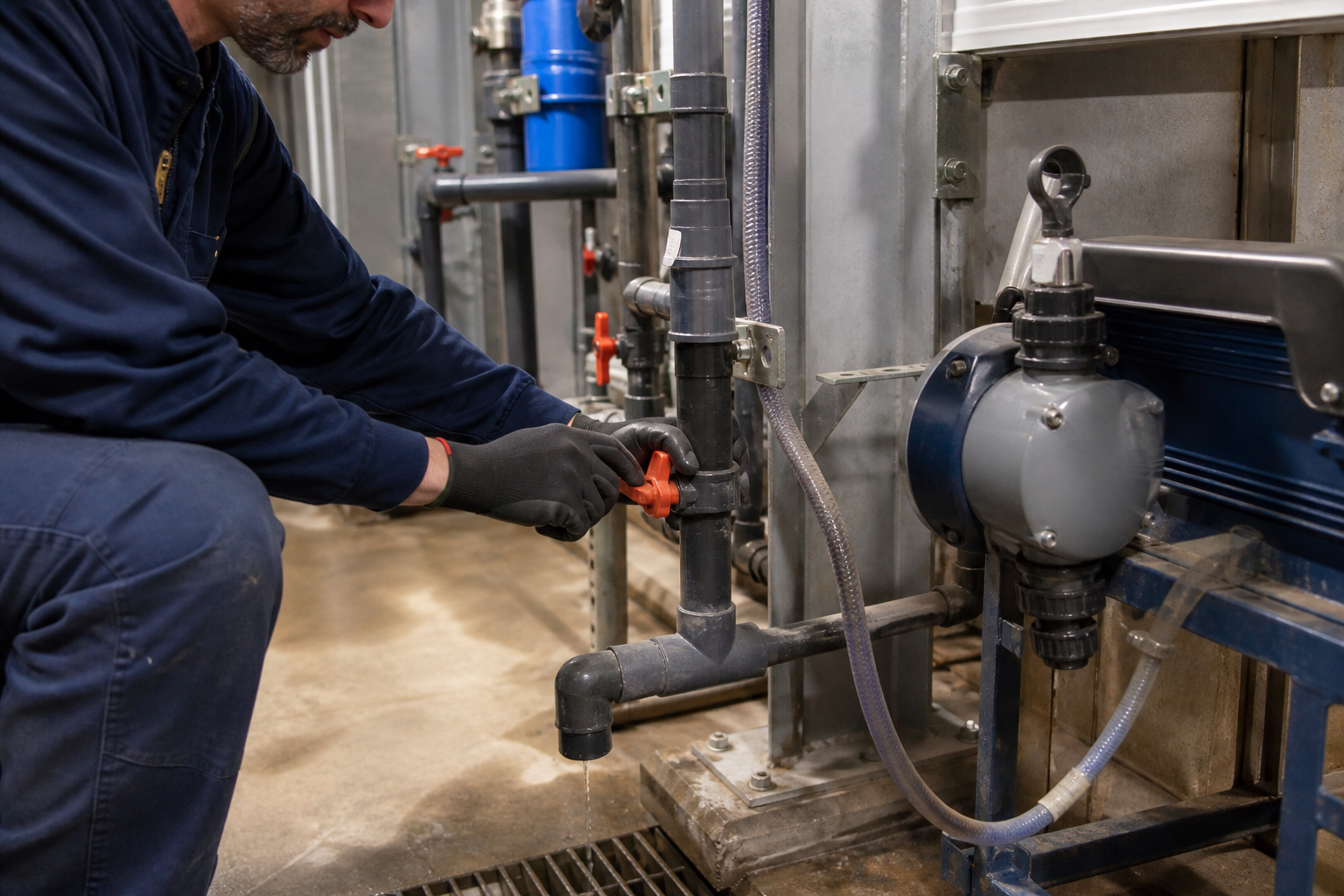
This is an implementation guide for a facility whose discharge condition changed, not another generic all-organic-versus-phosphate explainer. Wisconsin illustrates why wording matters: its water-quality criteria include 75 µg/L total phosphorus for streams and 100 µg/L for rivers, while lake/reservoir criteria can be lower. Those are receiving-water benchmarks, not a universal cooling-tower blowdown limit. Your WPDES/NPDES permit, local sewer acceptance limit, mixing-zone calculation and monitoring method control the decision.
Begin with the local discharge file. Identify whether the condition applies to total phosphorus, soluble reactive phosphorus, a mass load, an annual average, a seasonal value or a downstream-water target. Then calculate what the present treatment program contributes after cycles of concentration and blowdown. A chemistry change cannot substitute for permit interpretation.
Phosphate program vs all-polymer non-P program
| Decision factor | Phosphate-based program | All-polymer / non-P program | Conversion control |
|---|---|---|---|
| Primary protection logic | Phosphate-containing passivation plus scale-control chemistry. | Polymer sequestration, dispersion and crystal modification; clean surfaces and compatible corrosion-control package. | Confirm mechanism against metallurgy and water chemistry. |
| Calcium-phosphate scale | Can rise when calcium, pH, phosphate and heat-transfer stress align. | Eliminates treatment-added phosphate, but carbonate/silica/deposit risks remain. | Use saturation calculations, deposit inspection and heat-transfer trend. |
| Nutrient load | Adds phosphorus to the blowdown accounting. | Does not add treatment phosphorus. | Verify full formulation and incoming makeup phosphorus. |
| Discharge compliance | May be constrained by site permit or sewer acceptance conditions. | Can reduce treatment-added P; not an automatic permit compliance result. | Confirm actual effluent sample, reporting basis and permit. |
| Mild-steel corrosion rate | Must be measured, not assumed. | Must be measured, not assumed. | Use representative 45–90-day coupons. A U.S. DoD 2026 guide classifies <1 mpy mild-steel piping as excellent in its 90-day coupon table; it is an assessment benchmark, not a supplier warranty. |
What replaces phosphate: polymer mechanism and its boundary
Polyacrylate and hydrolyzed polymaleic anhydride (HPMA) are commonly selected as low-molecular-weight polycarboxylate tools. They can bind or disperse scale-forming species and modify crystal growth so deposits stay less adherent and easier to remove. They are not a literal one-for-one replacement for a phosphate passivating film. Their result depends on concentration factor, hardness, alkalinity, pH, heat flux, suspended solids, microbiology and the rest of the corrosion package.
For a supplier discussion, compare the available polycarboxylic antiscalants and dispersants, HPMA, acrylic/maleic copolymer, and the related phosphorus-free antiscalant guide. Request evidence at your operating pH and cycle target, rather than selecting only on active content.
Transition workflow: do not make a blind chemistry swap
- Freeze the boundary. Obtain the current permit/sewer limit, sample point, reporting period, analytical method and compliance basis.
- Build a water-and-materials baseline. Test hardness, calcium, magnesium, alkalinity, conductivity, chloride, sulfate, silica, phosphate, iron, manganese, pH, TOC and microbiology. Map carbon steel, copper/brass, galvanized steel, stainless alloys and elastomers.
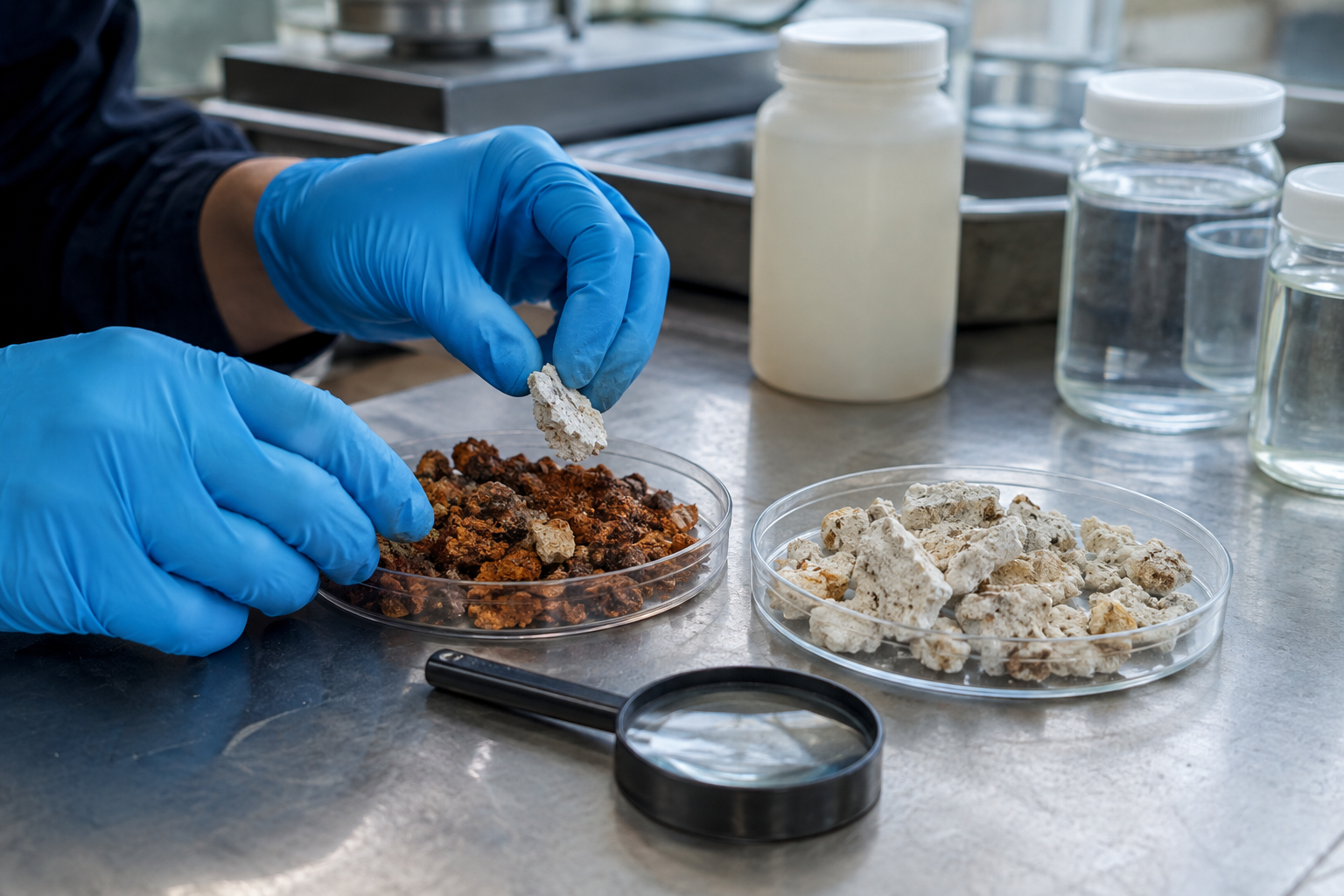
- Install representative coupons. Record exposure days, velocity, coupon alloy, location and pitting observations. A single online corrator reading is not a conversion acceptance test.
- Run a controlled trial. Confirm polymer performance, oxidizing/nonoxidizing biocide compatibility, dispersancy, deposit release and copper protection in the actual water.
- Approve only after data converge. Compare blowdown P, coupon rate/pitting, heat-transfer condition, microbiological trend, polymer residual and cycle stability against the agreed acceptance plan.
Evidence-bound corrosion data
To narrow the available grades, share the industry, water or process conditions, treatment objective, current program, required quantity, packaging and destination. Representative sample results are helpful when performance depends on site water chemistry.
Conversion and procurement checklist
- Current permit/sewer agreement, outfall and sampling location, target parameter and analytical method.
- Makeup and recirculating-water analyses; seasonal highs and cycles-of-concentration calculation.
- Metallurgy list, coupon plan, corrosion/pitting acceptance criteria and deposit-history photographs.
- Compatibility matrix for polymer, existing inhibitor, oxidant/nonoxidant biocide, dispersant and cleaning chemistry.
- Supplier COA, TDS and SDS; active content, pH, density, appearance, lot number, shelf life and test method.
- Trial protocol, residual/control method, contingency plan and change-control signoff.
For the general selection comparison, read all-organic versus stabilized phosphate. For system context, use the cooling-water treatment application guide and send the permit, analysis and coupon plan through our inquiry page for a document-led program discussion.
Frequently asked questions
Why convert a cooling tower to a non-phosphorus program?
The usual trigger is a site-specific phosphorus discharge, sewer or nutrient-reduction requirement, or a calcium-phosphate scale problem. First confirm whether the requirement applies to total phosphorus, a mass load, a seasonal average or receiving water. A state water-quality criterion is not automatically the tower's permit limit.
What replaces phosphate for cooling-water corrosion control?
A non-phosphorus program generally combines clean-surface operation, pH/alkalinity control, polymer dispersancy and crystal modification with corrosion protection chosen for the site's metallurgy. Polyacrylate and HPMA help manage deposits; they are not a universal one-for-one substitute for a phosphate passivating film.
Can a non-phosphorus program achieve less than 1 mpy on mild steel?
It may in a validated system, but it must not be promised from a generic program description. Use representative 45–90-day coupons with recorded water chemistry, velocity, alloy and pitting observations. The DoD's 2026 table calls less than 1 mpy excellent for mild-steel piping in that test context.
Does removing phosphate eliminate all scale risk?
No. It removes treatment-added phosphate and the calcium-phosphate route, but calcium carbonate, silica, iron deposits, suspended solids and biological deposits can still limit cycles and heat transfer. Recalculate saturation and monitor deposits during the transition.
What documents should I request for an all-polymer cooling program?
Request a current TDS, SDS and batch COA, plus active content, pH, density, test method, lot traceability, compatibility evidence and a water-specific trial protocol. Pair these with your permit, complete water analysis, metallurgy and corrosion-coupon plan.
Who prepared this guide
VCYCLETECH Technical Team prepared this guide for cooling-water teams considering a move away from phosphorus-containing treatment. Put discharge constraints beside makeup-water chemistry, wetted metals and current scale/corrosion trends before screening replacement chemistry.
References
- Wisconsin DNR: phosphorus criteria by waterbody type
- Water Technology: all-polymer options under phosphate constraints
- POWER: reported phosphorus-free trial and coupon context
- U.S. DoD 2026: 90-day cooling-water coupon assessment table
Related: Polycarboxylic antiscalants & dispersants · All-organic vs stabilized phosphate · Phosphorus-free antiscalants · Cooling-water treatment