
CAS No.9003-01-4
Structural Formula:

Properties:
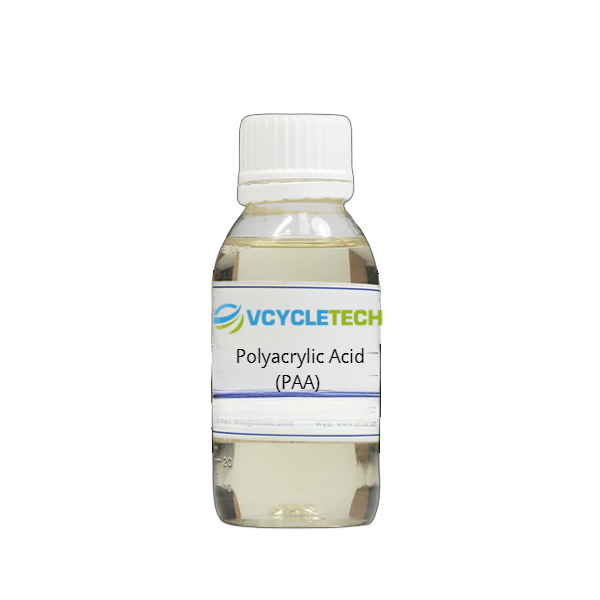
PAA is a safe, water-soluble additive in alkaline and highly concentrated solutions without leaving sediment deposits. It has been designed to disperse microcrystals or microsand of calcium carbonate, phosphate, and sulfate. As a scale inhibitor and dispersant for cooling systems, paper manufacturing processes, textiles, ceramics, painting, or dyeing purposes, PAA provides effective results with minimal maintenance required.
Specification
| Items | Index | |
|---|---|---|
| Appearance | Colorless to light yellow transparent liquid | Colorless to light yellow transparent liquid |
| Solid content % | 30.0 min | 50.0 min |
| Free monomer (as AA) % | 0.50 max | 0.50 max |
| Density (20℃) g/cm3 | 1.10 min | 1.20 min |
| pH(1% water solution) | 2.5-4.5 | 2.5-4.5 |
Application Scenarios of Polyacrylic Acid (PAA)
Polyacrylic acid (PAA) is a water-soluble polymer with various industrial and commercial applications. PAA is commonly known as Carbomer and can be used as a thickening agent, dispersant, emulsifier, adhesive, and many more. It is becoming increasingly popular in many industries due to its versatility and relatively low cost compared to other polymers. Companies looking to wholesale PAA in bulk should become aware of the various applications PAA can have so that they can better determine its suitability for different end products.
One of the most common uses for PAA is as a thickening agent or stabilizer. This makes it ideal for gels, creams, lotions, shampoos, and conditioners. By utilizing PAA’s unique properties, such as its ability to resist changes in pH or temperature over time, these products can maintain their desired consistency and viscosity throughout their shelf life. Additionally, PAA acts as an effective suspending agent, which helps keep solid ingredients suspended in liquid mixtures. This property makes it well suited for use in pharmaceutical formulations where it may help reduce sedimentation rates of active ingredients throughout storage periods.
In addition to its use as a thickener or stabilizer, PAA has proven useful as an emulsifier and dispersant. As an emulsifier, it helps stabilize oil-in-water mixtures by preventing particles from clumping together while also providing improved texture and feel when used in cosmetics or food products. As a dispersant, it helps disperse insoluble particles evenly throughout liquids, making it valuable for paints and coatings where consistent color distribution must be maintained over long storage periods. Lastly, PAA also serves as an adhesive thanks to its ability to form strong, flexible bonds with organic and inorganic substrates, making it suitable for adhesives like glue or rubber cement.
How to Package and Store PAA Poly Acrylic Acid
PAA Poly Acrylic Acid is a common polymer in many industries, such as printing, packaging, and textiles. It is available in three concentrations – 30%, 50%, and 63%. When dealing with this material, it’s important to store and package it properly to keep it in good condition. Here are some tips for doing just that:
- Store PAA Poly Acrylic Acid in a cool, dry place, away from direct sunlight or moisture.
- Keep the container sealed when not using the material.
- Ensure any containers containing PAA Poly Acrylic Acid are labeled with the concentration of the material. This will make identification much easier.
- Make sure you regularly check for any signs of degradation or contamination before use. If there is any damage or discoloration to the product, discard it immediately.
- Use appropriate protective clothing to avoid skin contact and potential allergies when handling this material.
- Clean up any spills as soon as possible with an absorbent material like sawdust or paper towels.


Related products
-
Polycarboxylic Antiscalant and Dispersant
Acrylic Acid-2-Hydroxypropyl Acrylate Copolymer (T-225)
Read more -
Polycarboxylic Antiscalant and Dispersant
Acrylamido 2 Methylpropanesulfonic Acid(AA AMPS)
Read more


