
PAM Replacement Changeover: Protect the Dewatering Baseline
Switch a sludge-dewatering polymer after the candidate has passed a representative trial and the plant has a way to identify when it reaches the machine. Keep a usable incumbent supply, record the incumbent baseline and map the concentrate, prepared-solution tanks and feed line. Agree how to isolate or transition the remaining solution under site procedures. Compare the candidate and incumbent on a documented active basis only when both product assays support it. Start under comparable sludge conditions, then check throughput, cake, solids capture or return liquor, and machine stability together. Define who can stop the change and how to restore the original preparation and feed settings if an acceptance limit is crossed.

TL;DR
Prepare three things before switching: a matched incumbent baseline, a traceable transition through the feed path and a tested route back. Confirm each product's form, grade and assay before converting consumption or price to active polymer. Measure the time the new preparation takes to reach the dosing point and the sludge to reach the separator outlet. Treat the mixed or uncertain interval as transition data. Judge sustained operation against the plant's cake, capture, throughput and equipment limits. Restore the approved incumbent if the candidate crosses an agreed limit or if the trial cannot be interpreted safely.
Save a baseline the next shift can reproduce
Use this procedure after screening has identified a viable candidate. If there is no stable incumbent or no qualified substitute, begin with the PAM candidate-screening guide. For a planned changeover, document the incumbent grade and lot, machine configuration, sludge source and measured solids, average feed rate and operating range, preparation water source and usable solution age. Record the actual product mass or calibrated concentrate flow delivered during the same window. Retain samples only under the plant's storage and handling rules so a later comparison still represents the reference.
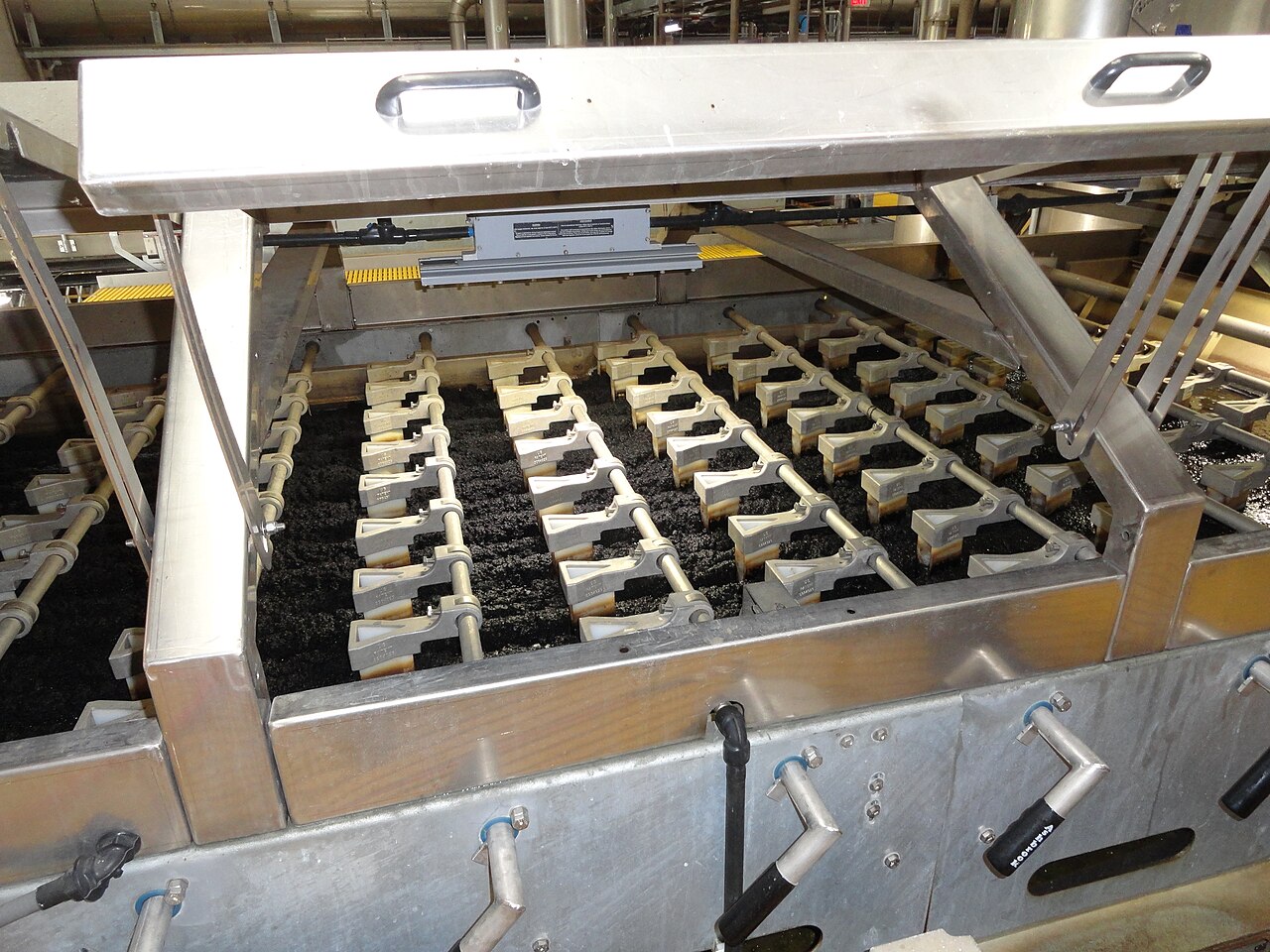
Use observations from representative operating conditions, including recurring shifts that matter to the dewatering line. For a centrifuge, record the operating parameters that affect cake, capture and stability. For a belt or screw press, record the relevant feed, filtrate and screen or belt conditions. Log a source change, interruption or upstream chemical adjustment before assigning a result to the polymer. If the candidate is trialed only on an unusually easy sludge day, repeat under the conditions that govern routine approval or qualify it for a clearly limited operating window.
Decide which metrics are hard limits and which ones are commercial preferences. A receiver may care most about consistent cake solids and haulage, while the water process team may need to protect the return stream. Compare those alongside throughput and machine stability. Agree the method and sampling frequency with the site team. The District of Sooke's equipment tender illustrates defining several endpoints together for a particular centrifuge procurement. Its limits apply to that procurement. They cannot set limits for a different machine or sludge.
Put both trial records on a defensible basis
For each candidate, obtain the documented concentration definition and test basis. Total solids, polymer active fraction and a pump's solution concentration setting answer different questions. If the supplier confirms a comparable as-supplied active mass fraction, multiplying product mass by that fraction gives active polymer mass. Dividing by measured dry sludge fed over the same period gives active polymer per unit of dry feed. A liquid volume must first be converted with its documented density or validated by a site calibration. If a comparable active value is missing, report supplied product mass on a consistent dry-feed basis and flag the unresolved difference.
Use the commercial comparison after establishing acceptable operation. An equal active amount can help describe what entered the machine, but molecular architecture, charge, preparation and the receiving solids affect response. Different carriers or feed arrangements may change what actually reaches the sludge. Compare the actual delivered and used product quantities with documented quotes, then add costs that matter at the site, such as water, handling or changes in cake disposal. Keep any missing inputs visible. An estimate based on one unmatched shift should not determine whether the substitute is ready for routine stock.
The VCYCLETECH PAM catalog lists anionic, cationic and nonionic granular powder routes and gives solids as a catalog reference. Request the current offered-grade basis and preparation requirements before using a number for comparison. An emulsion from another supplier is a distinct supply and preparation route. SNF's emulsion handbook describes its own formulations and handling. Apply current instructions for the actual offered products and the plant's equipment.
| State | What to record | How to use the data |
|---|---|---|
| Stable incumbent | Identified lot, delivered feed, sample times, sludge condition and machine settings | Reference for candidate comparison and restart |
| Transfer and mixed interval | Change time, remaining solution, feed-line state and estimated arrival | Watch operating limits while treating attribution as uncertain |
| Stable candidate | Confirmed preparation and delivery, matched feed, throughput, cake and liquor | Compare only within the demonstrated window |
| Restored incumbent | Return settings, source and follow-up outlet response after transition | Confirm recovery and determine what needs investigation |
Mark when the candidate actually reaches the sludge
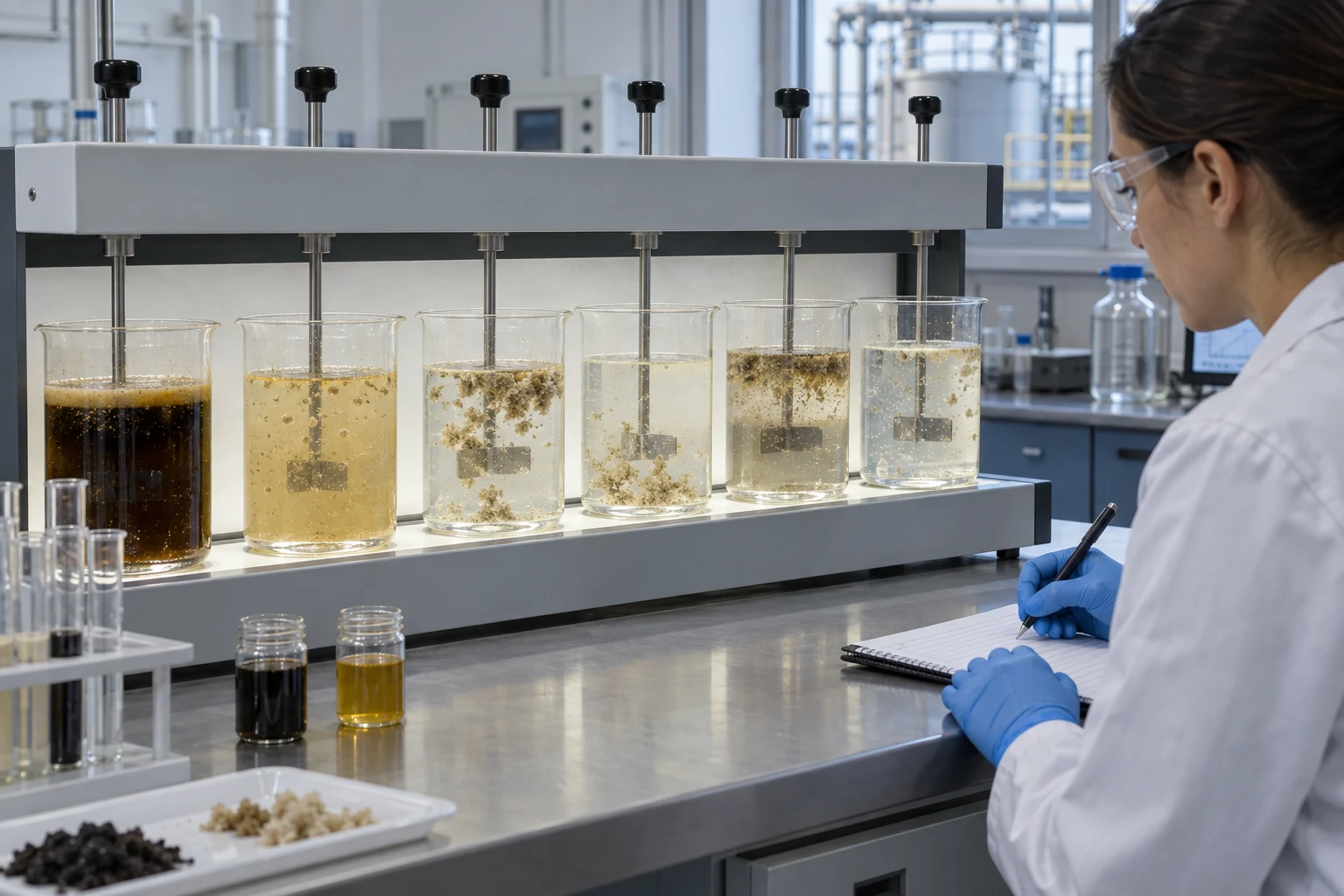
Draw the route from the package or storage vessel to the equipment. Identify the product feeder or concentrate pump, make-down and aging vessels, secondary dilution if present, the line to injection and the sludge residence to the outlet being sampled. Check which parts contain incumbent solution when the feeder is changed, and whether tanks are operated in batches or continuously. If two solutions are allowed to mix under written instructions, mark the expected transition interval. Otherwise follow the approved segregation, line change or cleaning procedure. Confirm that the preparation system supports the nominated form and quantity before reserving a production trial.
Verify feed measurement with the plant's documented procedure, including the relevant feeder or pump calibration. ProMinent's equipment descriptions distinguish systems configured for powder, liquid or both. Use the installed machine's instructions to confirm the actual arrangement. For related preparation context, see the VCYCLETECH PAM preparation video. Record the time of change at the feeder, the verified delivery state and the time at which outcome samples can reasonably represent the new material. Plant staff should define that interval using their tank, line and process knowledge.
Take samples at consistent, safe points once the team can attribute the feed to the candidate. Use comparable windows for solids fed and solids captured. Where a direct mass balance is practical, record the measurements used. Otherwise use an agreed surrogate and state its limitation. Cake dryness can improve while solids are lost into the return stream or throughput falls. The measurements need to explain what happened to the same feed during the same interval. Keep uncertain intervals and failed starts in the record without treating them as steady-state results.
Authorize the change only with a route back
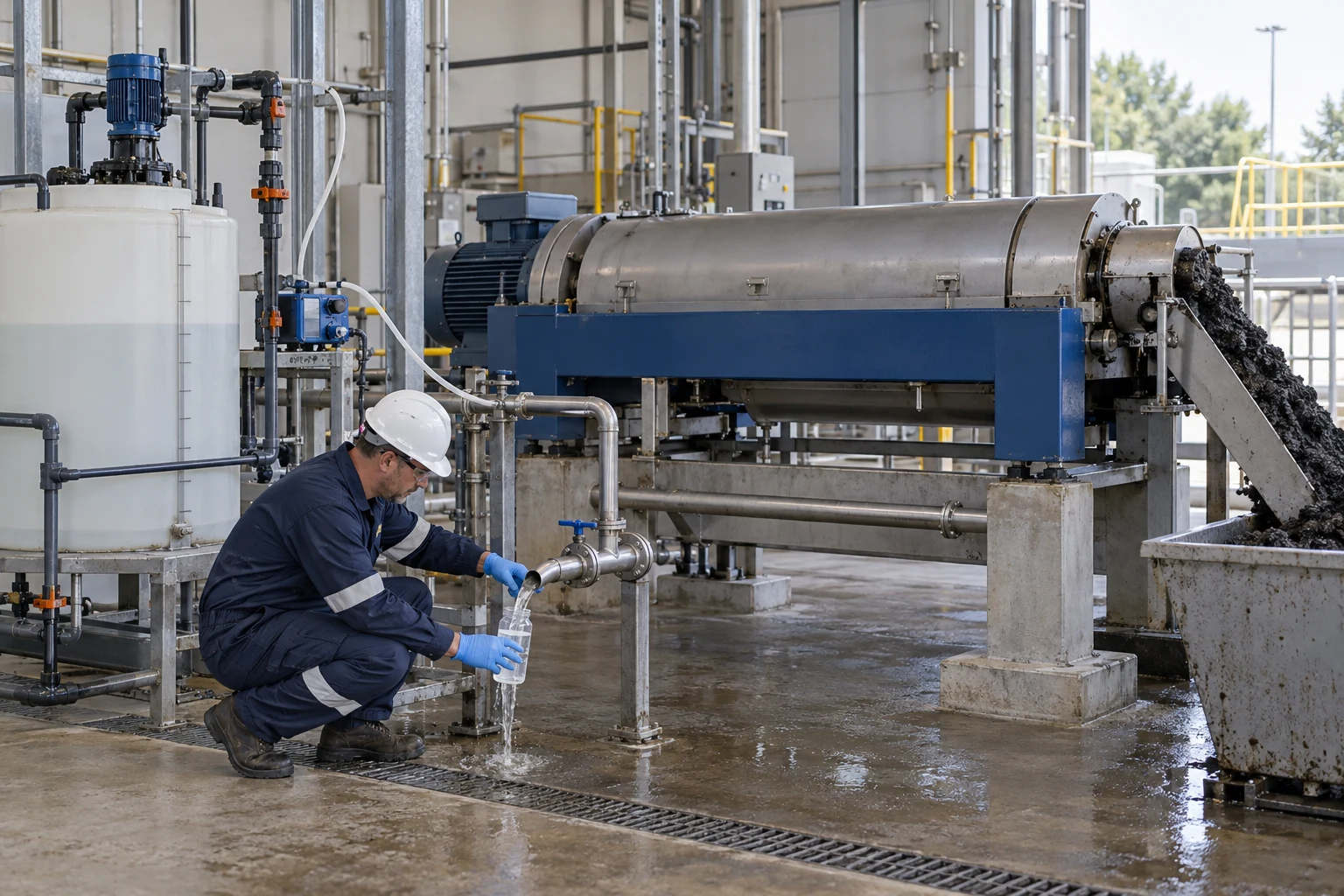
Before the trial, identify the approved incumbent stock, the compatible preparation path and the person who can restore operation. Save the feeder setup and machine baseline. Agree a stop response for deterioration in liquor, capture or throughput and for a reported feed or equipment fault. Use the site procedure for safe isolation and return, including how to handle residual candidate solution. After returning to the incumbent, allow its verified preparation and feed to reach the process before measuring recovery. If baseline performance does not return, investigate changes in sludge, water, preparation and machine condition before attributing the failure solely to the product.
Write the approval in operational terms: the exact candidate grade and form, tested equipment, allowed feed conditions, preparation arrangement, measurable limits and the person responsible for review. Limit routine use to the demonstrated scope and agree what change would reopen the decision. To discuss the buying options, start with the coagulants and flocculants range. Provide both grade documents, sludge solids and source, make-down arrangement, required throughput, current cake and liquor criteria, package requirements and destination. Discuss a PAM substitution trial and cutover with VCYCLETECH.
- Qualify the candidate. Identify the exact grade, form and tested duty.
- Save the reference. Record documented incumbent settings and feed conditions.
- Track the transfer. Verify the new solution at the feed and mark uncertain intervals.
- Compare matched endpoints. Check machine, cake, return and throughput together.
- Decide and record. Approve within scope or restore the incumbent and verify recovery.
Frequently asked questions
Do equal active amounts make two PAM grades interchangeable?
Equal active mass is one way to document the comparison if both assays use compatible definitions. Approval still depends on the actual feed arrangement, sludge, preparation and dewatering results.
When does a candidate count as being on trial?
Mark the transfer time and confirm the candidate has reached the injection point. Allow for the sludge and equipment response interval before using outlet readings as candidate evidence.
Can I use solids content to calculate active polymer?
Ask for the actual definition and method. Report supplied product mass separately if the available solids result does not establish a comparable polymer active fraction.
Which measurements determine whether to reverse the switch?
Use the plant's agreed limits for stable dosing, equipment response, throughput, cake and solids capture or return liquor. A single improvement does not override a breached operating criterion.
What should a substitution enquiry include?
Provide the current and candidate grade and form, assay basis, sludge and machine conditions, available preparation equipment, trial endpoints, required documentation and destination.