
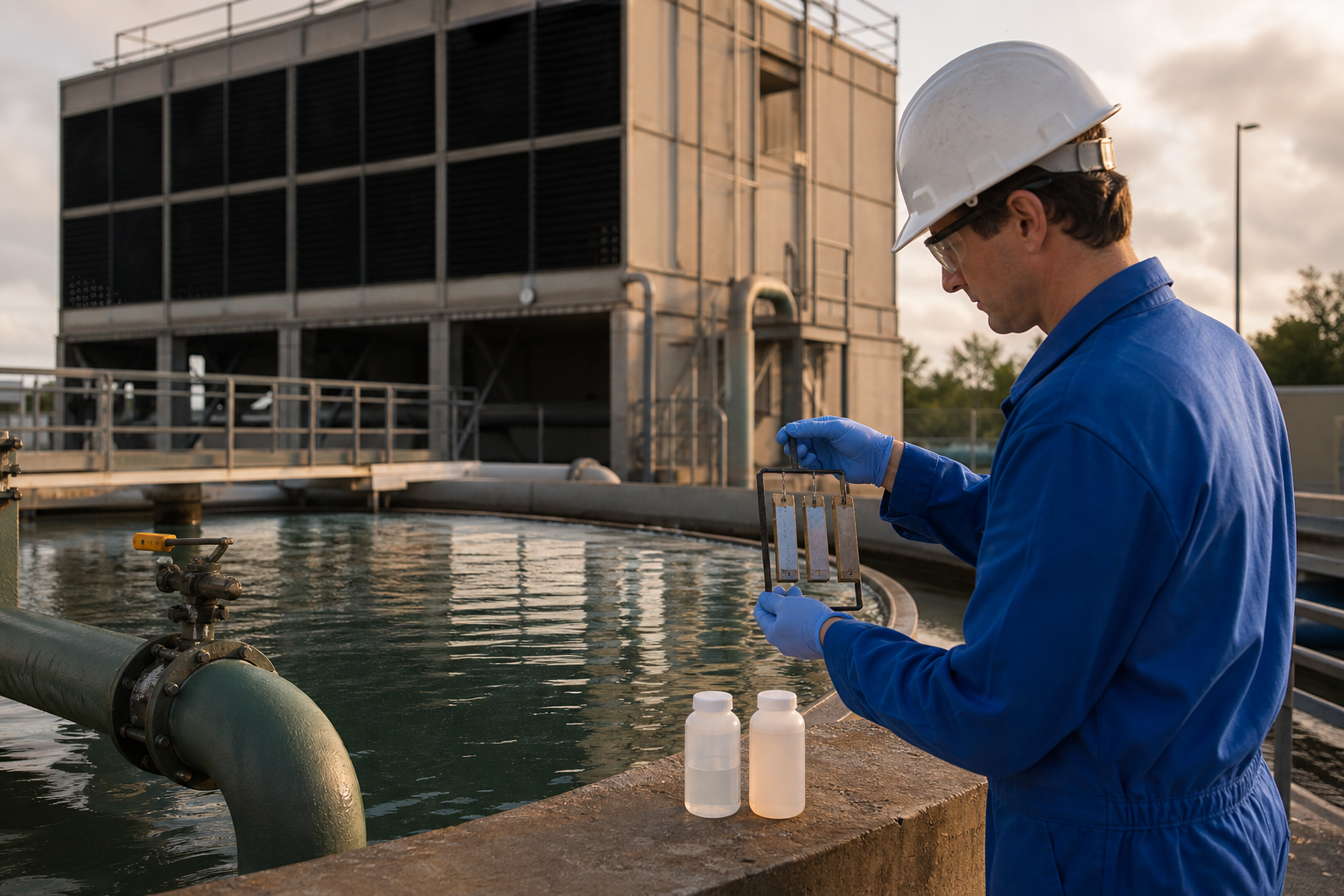
Open vs Closed Cooling Water: Corrosion Inhibitor Selection by Metallurgy
TL;DR Open and closed cooling loops need different corrosion-inhibitor decisions because oxygen ingress, concentration, metallurgy, temperature and blowdown are different. Select an inhibitor family from the system boundary and current water data, then verify steel, copper, brass and aluminium protection with representative coupons or other site-appropriate methods. Do not transfer an open-tower dosage or program directly into a closed loop.
What is the difference between open and closed-loop corrosion inhibitors?
Open-loop corrosion inhibitors work within an evaporative system where dissolved solids can concentrate and airborne material can enter the basin. Closed-loop corrosion inhibitors address a recirculating circuit where make-up, leakage, oxygen ingress, temperature, glycol and materials may determine the risk. The chemistry family, monitoring plan and feed logic must match that boundary; neither label is a universal product specification.

| Decision input | Open recirculating tower | Closed recirculating loop | What to verify before selection |
|---|---|---|---|
| Water boundary | Evaporation concentrates dissolved solids; blowdown and makeup are active controls. | Water is retained longer; unexpected makeup can indicate leakage, intrusion or depletion. | Water balance, makeup history, conductivity, pH, alkalinity, hardness, chloride and sulfate trends. |
| Oxygen and contaminants | Air contact and contaminants at the tower can be continuous. | Oxygen should be limited after commissioning, but entry points and maintenance matter. | Vent/expansion-tank design, leaks, air ingress, debris and filtration condition. |
| Steel / cast iron | Assess scaling, conductivity, pH, oxidizing conditions and deposit risk together. | Assess oxygen, inhibitor reserve, water loss and corrosion products. | Representative coupon or approved corrosion-monitoring method, plus deposit observation. |
| Copper / brass | Yellow-metal exposure can require azole protection within a compatible overall program. | Mixed metallurgy can still require azole protection; confirm compatibility with all materials. | Tube alloy, brass components, temperature, oxidant exposure, pH and water analysis. |
| Aluminium / stainless steel | Check pH, chloride, galvanic connections and local water chemistry before changing program. | Check aluminium, solder, gaskets, glycol and local oxygen conditions in the actual circuit. | Materials list, vendor limits, current water data and controlled compatibility review. |
To narrow the available grades, share the industry, water or process conditions, treatment objective, current program, required quantity, packaging and destination. Representative sample results are helpful when performance depends on site water chemistry.
Which inhibitor families fit which metallurgy questions?
The practical question is not “which inhibitor is best?” but which chemistry can be evaluated against the water boundary, metal mix and discharge constraints. Azoles are commonly considered for copper and brass protection, but their suitability depends on the complete program and operating conditions. Molybdate-, phosphate/phosphonate- or all-organic/polymer-based approaches have different operating and discharge considerations. This page does not prescribe a universal chemistry or dose.
| Family / treatment role | Buyer task it can support | Boundary to document | Verification evidence |
|---|---|---|---|
| Azole yellow-metal protection | Assess copper and brass within a mixed-metallurgy system. | Alloy list, oxidant exposure, pH, temperature, water quality and full inhibitor program. | Compatibility review, representative inspection and monitored corrosion evidence. |
| Molybdate-containing closed-loop program | Assess a monitored film-forming/inhibitor-reserve approach for a closed circuit. | Water loss, oxygen entry, metal mix, glycol and local discharge/handling requirements. | Reserve trend, makeup log, water analysis and representative coupon plan. |
| Phosphate/phosphonate or polymer-supported open program | Balance corrosion and deposit control in concentrating tower water. | Makeup chemistry, cycles, blowdown, scaling tendency, discharge limits and materials. | Controller review, water balance, deposit inspection and corrosion monitoring. |
| All-organic / all-polymer approach | Evaluate a phosphorus-management pathway where site constraints require it. | Water chemistry, metal mix, scaling/dispersancy needs and permit-specific limits. | Site trial plan, coupons, deposit examination and documented permit review. |
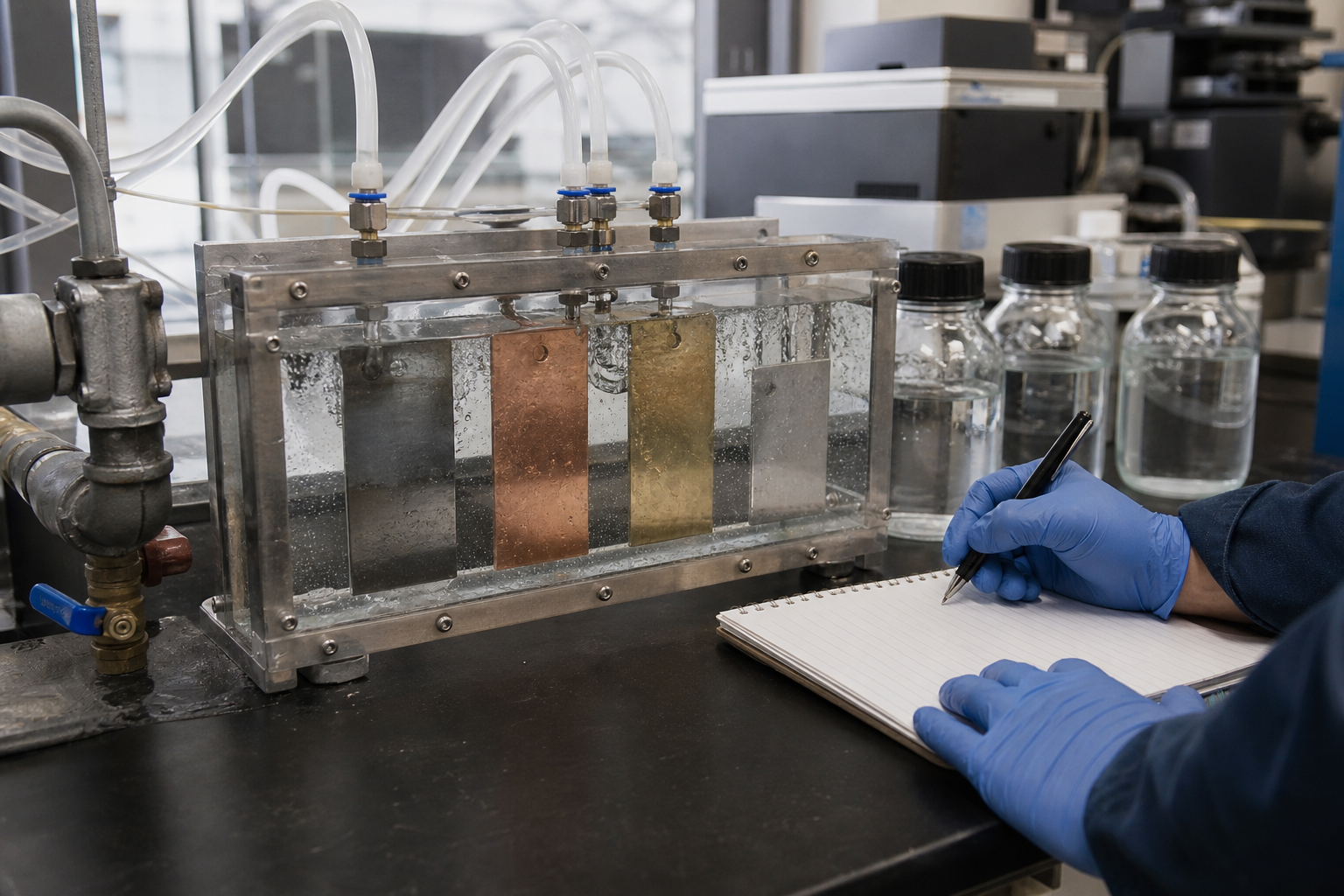
Open vs closed loop: a selection workflow by metallurgy
- Draw the real system boundary. Identify evaporation, blowdown, sidestream filtration, heat exchangers, glycol circuits, vents, expansion tanks and all makeup points.
- Build a metallurgy register. Include base metal, alloy, solder, coatings, gaskets and component locations. “Mixed metallurgy” is not enough detail for a compatible selection.
- Collect representative evidence. Use dated water analysis, makeup and blowdown records, coupon method/position, deposit photos and current treatment records.
- Screen the treatment role. Decide whether the need is yellow-metal protection, steel protection, deposit control, microbiological coordination or a combination. Confirm the chemistry against the actual system.
- Verify the change. Define monitoring frequency, coupon exposure, test methods, feed-pump checks and escalation criteria before changing chemistry.
Data and document package for a defensible inquiry
- System diagram, open/closed boundary, volume, heat load, makeup, blowdown and operating schedule.
- Metallurgy register: carbon steel, cast iron, copper/brass, aluminium, stainless steel, solder, elastomers and coatings.
- Dated makeup and recirculating-water analyses with sampling point, method and units.
- Current chemical program, feed points, product TDS/SDS, any residual test method and controller settings.
- Coupon or other corrosion-monitoring history, deposit photographs, cleaning records and heat-exchanger inspection findings.
- Site-specific discharge, safety and procurement requirements; request current COA, TDS and SDS for any proposed product.
Start with the cooling-water treatment application page, then compare the scope of corrosion inhibitors, tolyltriazole (TTA), and polycarboxylic antiscalant and dispersant options. For deeper decision context, read tolyltriazole and benzotriazole: REACH and alternatives and molybdate vs phosphonate vs all-organic inhibitors. Send the completed data package through the technical inquiry page; a product/category link is not a substitute for site compatibility review.
Frequently asked questions
What is the difference between open and closed-loop corrosion inhibitors?
Open-loop programs address evaporation, concentration, blowdown and ongoing air exposure. Closed-loop programs focus on retained-water condition, oxygen entry, makeup/leak history, metallurgy and inhibitor reserve. The correct chemistry and monitoring plan depend on the actual system, not the name alone.
Which inhibitor protects copper and steel together?
A mixed-metallurgy program may need a steel-protection approach plus an azole-compatible yellow-metal protection component. Selection depends on the water, oxidant exposure, pH, temperature, alloy list and full treatment program; a single generic product or dose is not a universal answer.
What cooling-water data is needed for inhibitor selection?
Provide the system boundary, volume, makeup and blowdown, complete metallurgy, current water analysis, temperature, pH, conductivity, deposits, corrosion-monitoring history, current program, feed points and any discharge or documentation requirements.
Can I use an open-tower inhibitor in a closed loop?
Do not transfer a program just because the product names look similar. Open towers and closed circuits differ in oxygen, concentration, blowdown and contamination. Review the chemistry, material compatibility and monitoring plan against the real loop before a controlled change.
How should corrosion inhibitor performance be verified?
Use an agreed, representative monitoring plan: current water data, correctly installed coupons or another approved method, deposit and equipment inspection, makeup/blowdown records, and feed-equipment checks. Interpret the trend with its exposure conditions and recognize that localized attack may need additional inspection.
Who prepared this guide
VCYCLETECH Technical Team organized this comparison around loop design and wetted metals, because the same inhibitor label can mean a different job in an open tower and a closed circuit. Use the metallurgy list, makeup-water analysis and current corrosion observations to narrow the program.
References
- ASHRAE Handbook: water treatment, deposition, corrosion and biological control
- NIH: closed-loop corrosion evaluation and prevention (2025)
- Veolia technical handbook: closed recirculating cooling systems
- Processing Magazine: current market framing for closed-system corrosion control
Related: Cooling-water treatment · Corrosion inhibitors · Technical inquiry