
Surfactants · Technical purchasing guide
CTAC Arrived Hazy or Thickened: A Receiving Decision Before Changing Supplier
If CTAC arrives hazy, thickened or partly solid after a cold journey, do not judge the delivery from an unconditioned top sample. Segregate the affected containers and confirm the exact chemical identity, supplied concentration, physical form and carrier against the purchase documents. Ask the supplier for written conditioning and representative-sampling instructions for that grade, including the equipment and safety constraints. Compare the conditioned sample with the agreed specification and a suitable reference, rather than assuming that a clearer appearance proves conformity. Release, further investigation or replacement should follow the documented results and the site's receiving procedure. The practical purchase question is whether this lot can be evaluated and used as specified, not whether all products called CTAC behave alike.


TL;DR
Cold exposure can change the appearance and handling of some CTAC formulations, but it does not explain every haze or thickened delivery. Aqueous products and solvent-containing concentrates have different handling requirements. Reconcile identity, carrier and concentration basis first; record transit and receiving temperatures, container condition and sampling history. Obtain instructions for the exact offered grade before conditioning or mixing material. Then sample representatively and compare the agreed analytical results, physical condition and intended-use trial. A single clear aliquot does not release every container, and a chemical assay does not establish formulation performance. Send the grade documents, shipment history and observations with a CTAC inquiry so the supplier can address disposition and the next order.
Match the CTAC identity and supplied form before testing
CTAC is cetyltrimethylammonium chloride, also described as hexadecyltrimethylammonium chloride, associated with CAS 112-02-7. That identity distinguishes it from shorter- or longer-chain quaternary ammonium compounds and from cetyltrimethylammonium bromide. Commercial deliveries can differ in carrier, concentration, impurity profile and physical form. Start the receiving investigation with the purchase order, label, lot number and the current documents for the actual offer.
The VCYCLETECH CTAC product listing distinguishes liquid and cream or solid catalog forms. Its concentration references are not permission to apply another manufacturer's handling instructions. Confirm which form was ordered, the basis of its analytical specification and the carrier information needed for handling. Do not compare a concentrated offer with a dilute aqueous formulation solely by price per drum or by appearance at room temperature.
Producer documents demonstrate why that distinction matters. Kao's historical Quartamin 60W25 bulletin concerns a dilute aqueous product and describes temperature-related changes. Nouryon's Arquad 16-50 PDS describes a concentrated product in an isopropanol/water carrier. These are useful examples of different commercial preparations, not additional VCYCLETECH grades. A warming method or storage statement for one cannot be transferred to the other without the exact supplier's instructions.
Separate the transport event from possible contamination
Build a short timeline from dispatch through unloading and receipt. Record available transport temperature information, time in exposed storage, container position, seal and closure condition, any leak or damage, and the receiving temperature. Distinguish a recorded measurement from an estimate based on local weather. A photograph of a frosty vehicle does not establish the temperature reached inside every container or the duration of exposure.
Describe the observation precisely: uniformly hazy, layered, stringy, cream-like, sedimented or partly solid. Note whether different containers show the same condition. Use the site's approved inspection and sampling procedure; do not open, sniff or stir an unknown or damaged container simply to obtain a better photograph. Keep contaminated tools, previously used transfer lines and inappropriate sample bottles out of the investigation.
Consider alternative explanations alongside cold exposure. A wrong product, foreign matter, incompatible residue, water ingress or a nonrepresentative sample can produce a different receiving problem. Compare lot identity, seals and handling records before attributing everything to temperature. Preserve the original observations and sample history so a later clear sample does not erase the evidence that triggered the hold. Where the cause is unresolved, ask for an appropriate analytical investigation rather than assigning a chemical mechanism from a photograph.

Agree conditioning and representative sampling with the supplier
Request written instructions covering the exact product form and package: whether conditioning is allowed, the permitted equipment, the conditions to monitor, mixing or homogenization requirements and the point at which a sample becomes representative. Include the site's responsible chemical-handling personnel. Do not improvise direct heating, steam contact, solvent addition or dilution to make an inconvenient delivery easier to sample.
The important sampling question is what portion of the lot the sample represents. An aliquot taken only from a clear upper layer may miss a concentrated or thickened fraction below. Conversely, material drawn from a partly solid region may not represent the agreed supplied composition. Have the laboratory and supplier agree how containers and positions are selected, how material is conditioned where authorized, and which observations accompany each sample.
| Receiving stage | Evidence to retain | What it can decide |
|---|---|---|
| Unopened receipt | Lot, seals, damage and available temperature history | Whether to segregate and investigate |
| Supplier-approved conditioning | Exact instructions, package, monitored conditions and mixing record | Whether a representative sample can be obtained |
| Representative sample | Container coverage, sample method and agreed analytical results | Conformity with the supplied-grade specification |
| Intended formulation | Reference material and matched preparation conditions | Suitability for the defined application trial |
| Lot release | Results, exceptions and authorized disposition | Acceptance, further investigation or replacement |
Keep the original receipt sample, conditioned sample and any reference material clearly distinguished. Record sampling time, container identity, condition and preparation. If the analytical method requires its own dilution, identify that as laboratory sample preparation, not as a correction to the supplied lot. Repeating a measurement on the same poorly representative aliquot improves neither lot coverage nor the validity of the acceptance decision.
Use more than appearance to decide lot disposition
Compare results with the specification and methods agreed for the supplied grade. Depending on that agreement, relevant evidence may include chemical identity, active content, specified pH method, physical condition and other documented quality attributes. Keep catalog reference values separate from the current specification and batch COA. An assay obtained under a different basis or method should be reconciled before a pass or fail is assigned.
A reversible appearance change under the supplier's documented conditions can support an explanation of the transport event. Whole-lot conformity still requires representative analytical results; the intended formulation needs its own suitability comparison. Persistent separation, unexplained particles, damaged packaging or inconsistent samples deserve further investigation. Define with the supplier which findings allow release, require additional sampling or lead to replacement; do not invent a universal CTAC clarity limit.
Assess the intended formulation separately where needed. Compare material accepted under the receiving method with a documented reference in the buyer's actual formulation and preparation route. Hold product basis, addition sequence and relevant process conditions consistent. If performance differs, retain the analytical and preparation records needed to distinguish a material difference from an uncontrolled trial. Keep the material-release decision and the formulation-trial result separately identifiable.
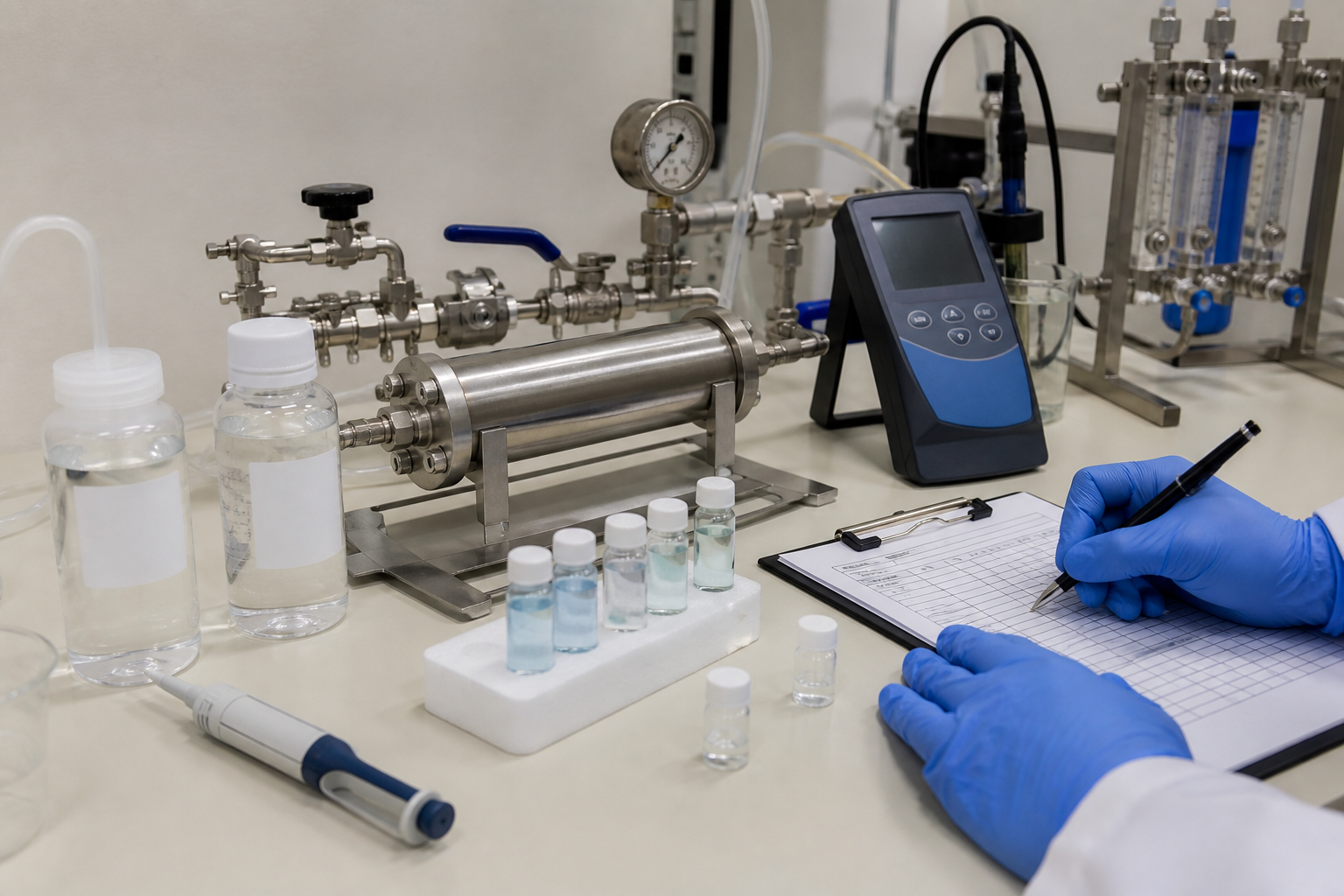
Put handling, destination and future orders on the same basis
Ask for the current grade-specific TDS, SDS and available batch documentation rather than treating a historic producer bulletin as a current instruction. The carrier can affect hazard assessment, equipment and storage arrangements. Confirm the destination and intended use so the documents supplied address the actual offer and receiving market. Check the proposed use against the applicable product documentation and market requirements.
Current classification and labeling requirements also need the correct jurisdiction and version. The Swedish Chemicals Agency's November 2026 CLP guidance notes that some provisions in a consolidated text were inadvertently included despite deferred application dates. This is a reason to check the actual applicable text and product documentation, not to copy a general compliance statement into a purchase order. Have the responsible importer or qualified local adviser resolve the requirements for the transaction.
For future shipments, agree which grade and package are being purchased, the supported transport and storage arrangements, the evidence to collect if a temperature event occurs, and how a receiving concern is reported. Ask whether an alternative supplied form is genuinely available and appropriate; do not assume a change in concentration is a drop-in solution. The cationic surfactant category provides the family context, while the CTAC, DTAC, OTAC and DDAC comparison addresses the separate decision of chemical-family selection.
Send a receiving inquiry that leads to a clear next step
Provide the ordered identity, concentration and physical form; supplier and lot references; package condition; quantity affected; and available dispatch, transport and storage history. Attach dated observations and identify how every sample was obtained. Include current documents, analytical methods and results, and any supplier-authorized conditioning already performed. State whether the immediate request is technical disposition, replacement discussion or a new sample for qualification.
For a new quotation, add the application, required specification and analytical basis, expected quantity, package needs, destination and the receiving facility's handling constraints. Ask the supplier to confirm the actual grade and documents before comparing commercial offers. Discuss any unresolved conditioning or sampling issue before an order is released. This gives both sides a useful basis for deciding whether the proposed product fits the buyer's receiving and formulation process.
Keep the decision record concise: observation, verified identity, approved sampling method, findings, disposition and the person responsible for release. If more data are required, state what will resolve the uncertainty. If replacement is appropriate, preserve the evidence rather than trying repeated undocumented adjustments. Discuss CTAC grade documents, a receiving concern or a quotation →
Frequently asked questions
Does haze mean a CTAC shipment is contaminated?
Not necessarily. Some documented formulations change appearance with temperature, but contamination, an incorrect product or poor sampling can also require investigation. Establish the cause and grade conformity before release.
Can I warm any CTAC product using another supplier’s temperature guidance?
No. Aqueous and solvent-containing products can have different requirements. Obtain written instructions for the exact offered grade, package and equipment before conditioning material.
Is a clear sample enough to accept the entire delivery?
No. The sample must represent the affected material and meet the agreed specification and receiving procedure. Use representative results to judge lot uniformity and a controlled trial to assess intended-use suitability.
Should I dilute thickened CTAC to make sampling easier?
Do not alter the supplied material without an agreed procedure. Dilution changes the product basis and can obscure the receiving problem; laboratory sample preparation must be separately documented.
What should accompany a CTAC receiving or quotation inquiry?
Send the exact form and concentration basis, lot and quantity, package and temperature history, observations, sampling and analytical records, destination and intended application. Request current documents for the proposed grade.
Related technical path
- Product: CTAC Supplier | Liquid & Cream/Solid Forms
- Product range: Cationic Surfactants Supplier
- Guide: Request a Chemical Quote or Technical Support