
Can Coagulation Remove PFAS? Realistic Limits
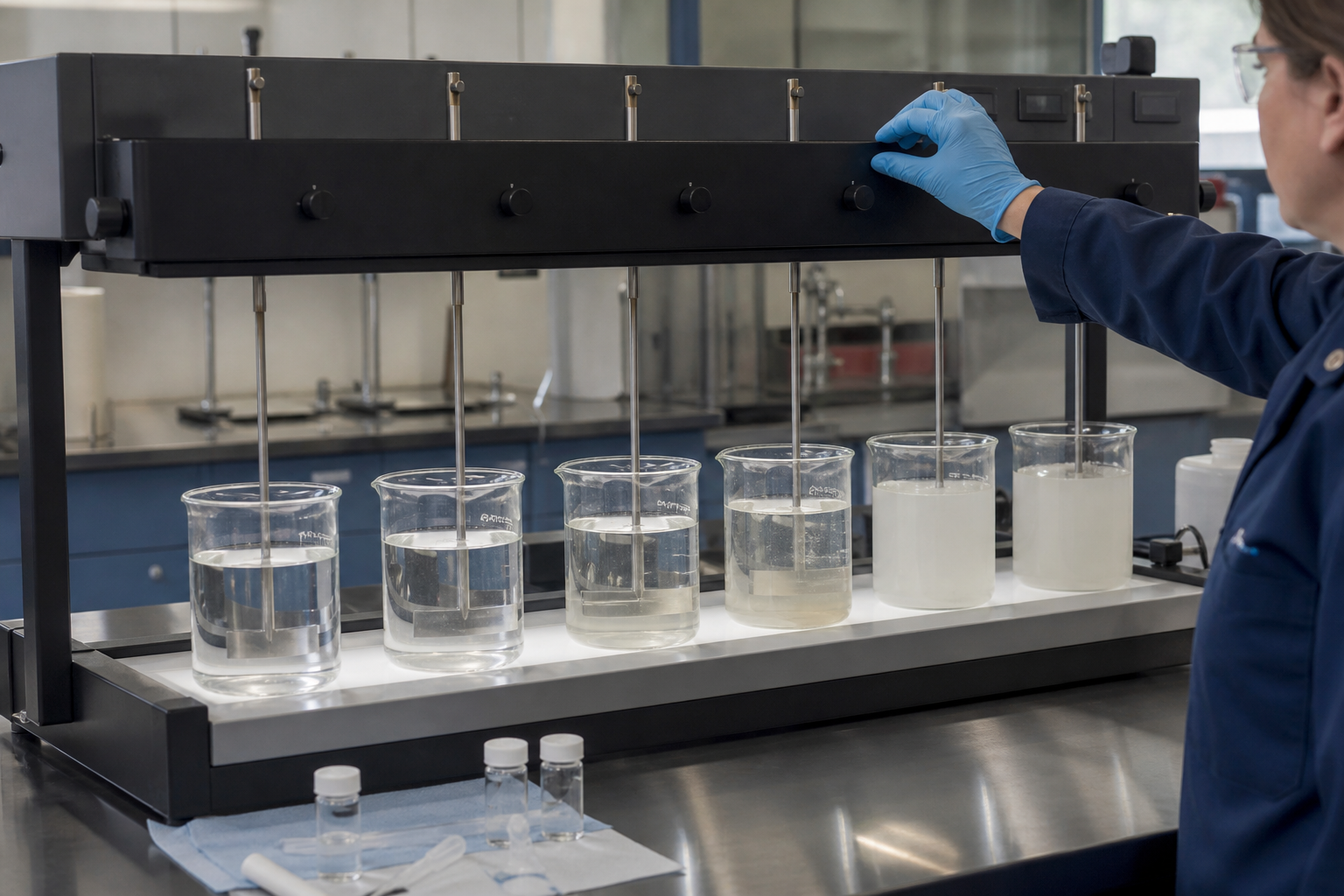
Conventional coagulation is not a reliable terminal barrier for PFAS. It can remove suspended solids, colloids and natural organic matter (NOM), and that pretreatment can protect a downstream PFAS unit. But alum, ferric and PAC do not consistently deliver drinking-water compliance by themselves. In one surface-water study, conventional alum removed about 10% of PFOA and 25% of PFOS at 50 mg/L, while ferric at 5–15 mg/L showed no PFOA/PFOS removal; these are study conditions, not universal design values.
What coagulation can—and cannot—do for PFAS
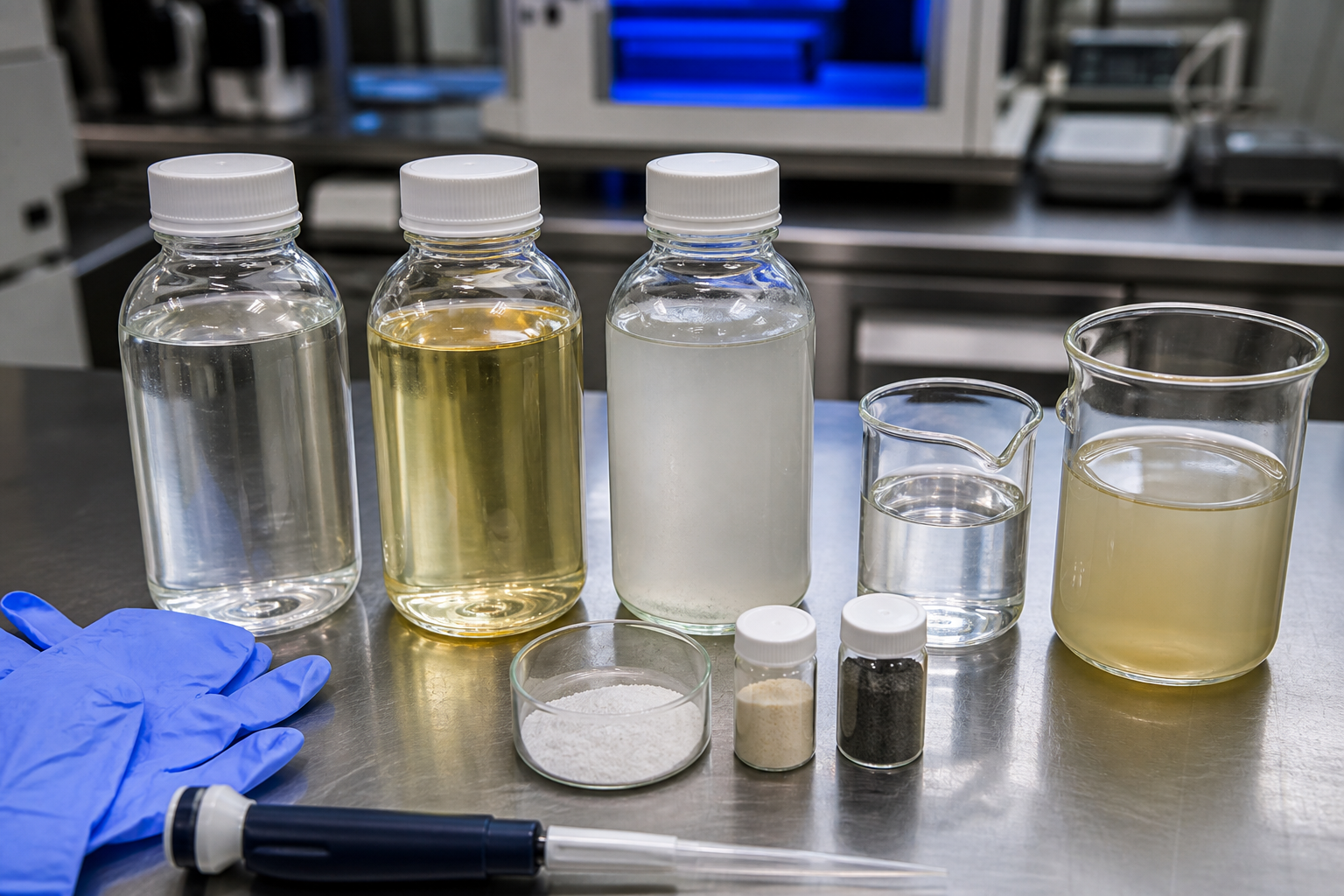
Coagulation is designed to destabilize particles and colloids so that they form settleable flocs. PFAS are dissolved anions, so they are only captured when they associate with solids, hydrophobic phases, NOM or an added adsorbent that is subsequently removed. That is why a conventional train can improve turbidity, NOM and particulate loading without providing a dependable PFAS endpoint.
The practical position for a utility or industrial buyer is therefore: use coagulation to remove the material that would foul or consume a downstream barrier, then validate the actual PFAS unit against the target compounds and regulatory sampling point. Do not label a coagulant-only jar result as PFAS compliance.
Current EPA PFAS rule status: what the numbers mean
EPA's PFAS page, last updated May 18, 2026, still lists the 2024 final NPDWR values: PFOA and PFOS each have an enforceable MCL of 4.0 ppt (ng/L); PFHxS, PFNA and HFPO-DA each have 10 ppt; and a mixture of two or more of PFHxS, PFNA, HFPO-DA and PFBS uses a unitless Hazard Index of 1. The same page says compliance is calculated from annual averages at the sampling point.
That page also records two May 2026 proposals: one would keep the PFOA/PFOS MCLs while allowing a system to request two additional years, to 2031, and another would rescind the PFHxS, PFNA, HFPO-DA and mixture requirements. Those proposals are not the same as a final rule. Confirm the applicable federal, state and permit position before selecting a treatment train.
| Regulatory or treatment statement | Bounded interpretation | Buyer action |
|---|---|---|
| PFOA/PFOS 4.0 ppt MCL | EPA's current page lists this final NPDWR value; proposed timing changes do not make coagulation a compliance barrier. | Define the sampling point, annual-average calculation and laboratory method with the primacy agency. |
| 2031 option | EPA describes a proposed two-year extension option, not a universal automatic deadline. | Track rulemaking and ask the regulator whether the system can request the option. |
| Coagulation percentages | Study results vary with PFAS chain length, NOM, solids, pH, dose and coagulant chemistry. | Use a site-specific jar test and PFAS mass balance; never extrapolate one paper to all water. |
PAC vs alum vs ferric: the realistic comparison
| Coagulant route | What it can help remove | PFAS evidence boundary | Operational caution |
|---|---|---|---|
| PAC / polyaluminum chloride | Particles, colloids and NOM; can also support adsorption when powdered activated carbon is actually present. | Older full-scale surveys found conventional metal-salt treatment mostly ineffective; PFAS capture improves only when adsorption or favorable solids association is demonstrated. | Do not confuse PAC coagulant with powdered activated carbon. They are different materials and mechanisms. |
| Alum | Strong conventional NOM and turbidity pretreatment when alkalinity, pH and dose are controlled. | In one surface-water study, 50 mg/L alum removed about 10% PFOA and 25% PFOS; 60–75 mg/L improved long-chain PFOA/PFOS removal to about 44%/56% in that matrix. | Higher dose can change floc charge and sludge production; short-chain PFBA/PFBS remained ineffective in the cited study. |
| Ferric chloride | Particle/NOM removal and dense floc formation in suitable water chemistry. | In the same study, 5–15 mg/L gave no PFOA/PFOS removal and 100 mg/L gave about 28% PFOA and 36% PFOS removal; source-water specific. | Track pH, alkalinity, iron residuals, sludge and corrosion/material compatibility. |
Why long-chain and short-chain PFAS behave differently
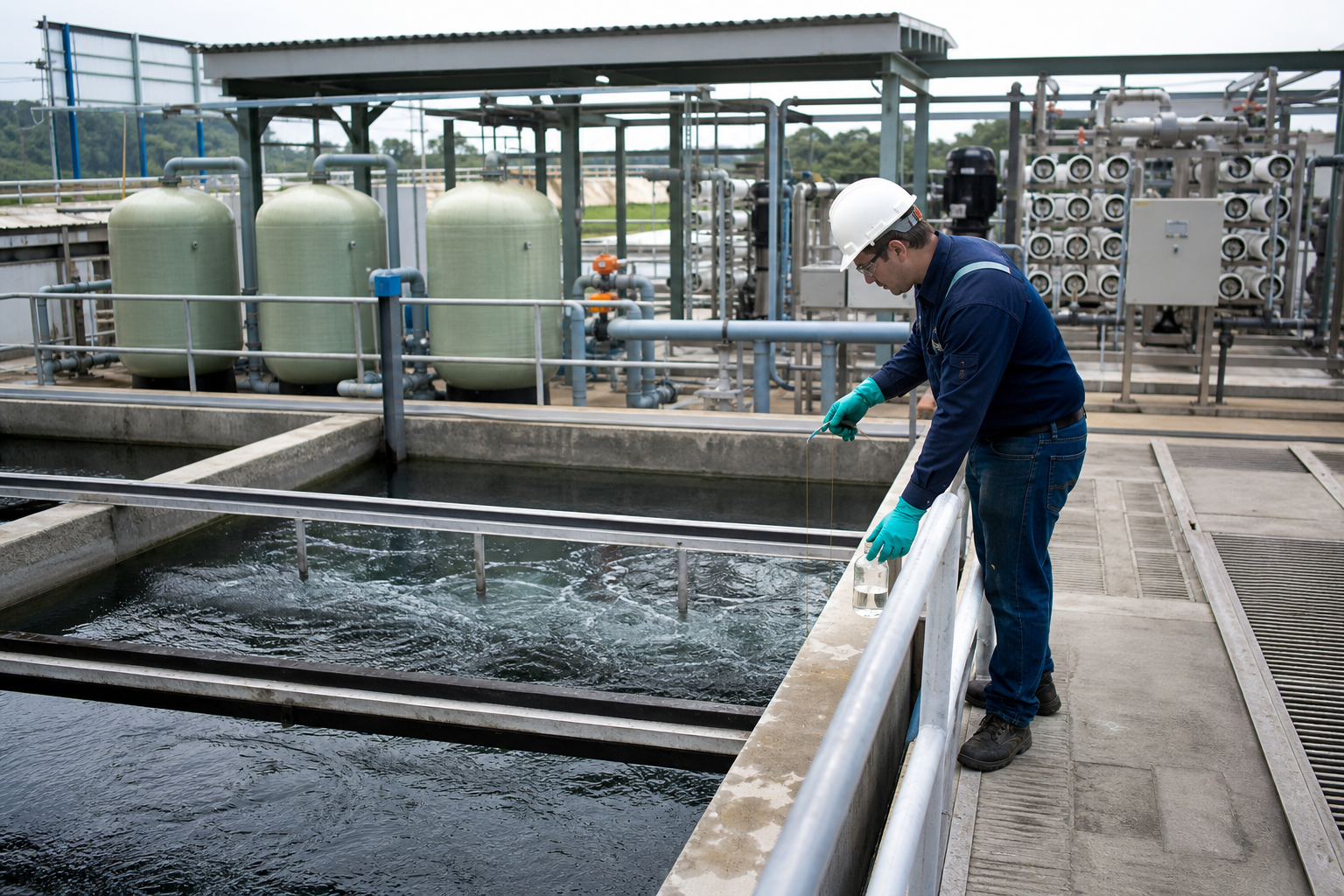
Longer-chain PFAS, especially sulfonates such as PFOS, are generally more hydrophobic and more likely to associate with solids or adsorbent surfaces than short-chain compounds. The cited enhanced-coagulation study found better long-chain PFOA/PFOS response but no effective removal of PFBA and PFBS under the tested doses. This is a direction of behavior, not a substitute for compound-by-compound treatability testing.
GAC also favors many longer-chain PFAS, while short-chain PFAS can break through earlier. Anion exchange and high-pressure membranes are commonly evaluated when the target list includes shorter-chain compounds or when a very low endpoint is required. Media life, NOM competition, concentrate or spent-media management and PFAS-specific monitoring still control the real result.
Conventional, enhanced and hybrid treatment boundaries
| Train | Best role | Do not claim | Validation |
|---|---|---|---|
| Conventional coagulation → clarification/filtration | Remove NOM, turbidity and solids that otherwise load downstream media. | Reliable PFOA/PFOS or short-chain PFAS compliance. | PFAS before/after plus NOM, turbidity, DOC and solids. |
| Enhanced coagulation or surfactant-aided coagulation | Explore partial long-chain PFAS capture where the study matrix supports the chemistry. | A universal 25–30% or 98% PFAS guarantee. | Jar and pilot testing with surfactant residual, sludge and PFAS speciation. |
| Coagulation + PAC/GAC | Coagulation protects an adsorption step; PAC can be removed with the floc and GAC is a fixed-bed barrier. | PAC coagulant alone equals activated carbon adsorption. | Empty-bed contact time, breakthrough, NOM competition and residuals handling. |
| Coagulation + IX or RO/NF | Use anion exchange or high-pressure membrane treatment where broad PFAS removal is required. | There is no waste or operating trade-off. | Resin/media capacity, concentrate management, recovery, cleaning and compound-specific rejection. |
PFAS pretreatment workflow
- Define the endpoint. List PFOA, PFOS, PFHxS, PFNA, HFPO-DA, PFBS and other site-relevant compounds, then document the legal sampling point.
- Measure the matrix. Include DOC/NOM, turbidity, alkalinity, pH, hardness, iron, manganese, suspended solids and co-contaminants that compete for adsorption.
- Screen conventional chemistry. Use the actual source water and compare PAC coagulant, alum and ferric. Record dose basis, pH, rapid/slow mix, settling and filtered PFAS.
- Protect the barrier. Select clarification, filtration or side-stream solids removal to avoid loading GAC, IX or membranes with particles and NOM.
- Prove the treatment train. Pilot the selected GAC, IX or RO/NF with compound-specific breakthrough or rejection data and a residuals plan.
What a buyer should request before ordering coagulant
- Coagulant identity and active basis: Al or Fe content, basicity, density, pH and storage conditions.
- Jar-test method: source-water date, PFAS list, NOM/DOC, turbidity, alkalinity, pH, dose, mixing, settling and filtration.
- Downstream design basis: GAC empty-bed contact time, IX resin type/capacity or RO/NF recovery and concentrate destination.
- Residuals plan for PFAS-bearing sludge, spent PAC/GAC, resin or membrane concentrate.
- TDS, SDS, batch COA, contaminant limits and lot traceability; do not accept a generic “PFAS removal” performance promise.
Use the coagulants and flocculants category for product-family context, read the coagulation guide for conventional treatment and send the water matrix through the inquiry page before requesting a quote.
Frequently asked questions
Can coagulation remove PFAS from water?
It can provide partial, matrix-dependent removal, but conventional coagulation is not a reliable terminal PFAS barrier. It is more defensible as NOM, turbidity and solids pretreatment that protects GAC, ion exchange or RO/NF. Confirm PFAS before and after treatment with the actual source water.
Does PAC remove PFOS and PFOA?
PAC can mean two different materials. PAC as polyaluminum chloride is a coagulant; powdered activated carbon is an adsorbent. The latter can contribute to PFAS adsorption when it is dosed and then separated, while the former should not be sold as an activated-carbon PFAS barrier.
Is alum or ferric better for PFAS?
Neither is universally better. In one surface-water study, alum at 50 mg/L removed about 10% PFOA and 25% PFOS, while ferric at 5–15 mg/L showed no removal; enhanced doses changed the long-chain result. The values are study-specific and should trigger a jar test, not a universal selection.
Why does coagulation struggle with short-chain PFAS?
Short-chain PFAS are generally less hydrophobic and less strongly retained by flocs and GAC than many long-chain compounds. In the cited enhanced-coagulation study, PFBA and PFBS remained ineffective under the tested conditions. Use compound-specific GAC, IX or RO/NF testing.
Do you still need GAC, ion exchange or RO after coagulation?
Usually, if the target is a very low PFAS endpoint or an enforceable MCL. EPA identifies GAC, anion exchange and high-pressure membranes as effective PFAS treatment technologies, while coagulation is typically used to reduce competing solids and NOM before the PFAS barrier.
Who prepared this guide
VCYCLETECH Technical Team prepared this guide to help wastewater engineers decide where coagulation fits in a PFAS treatment train. Compare the compounds measured, influent matrix, downstream separation and analytical method before judging a treatment route against the applicable target.
References
- U.S. EPA: PFAS NPDWR status and current MCL table
- U.S. EPA: GAC, ion exchange and high-pressure membrane treatment boundaries
- Surfactant-enhanced coagulation study: dose, chain-length and matrix limits
- Full-scale PFAS treatment study: conventional coagulation versus GAC, IX and RO
Related: Coagulants and flocculants · Coagulation guide · PAC product · PFS product