
Water Treatment Knowledge and Industry Insights — VCYCLETECH Blog

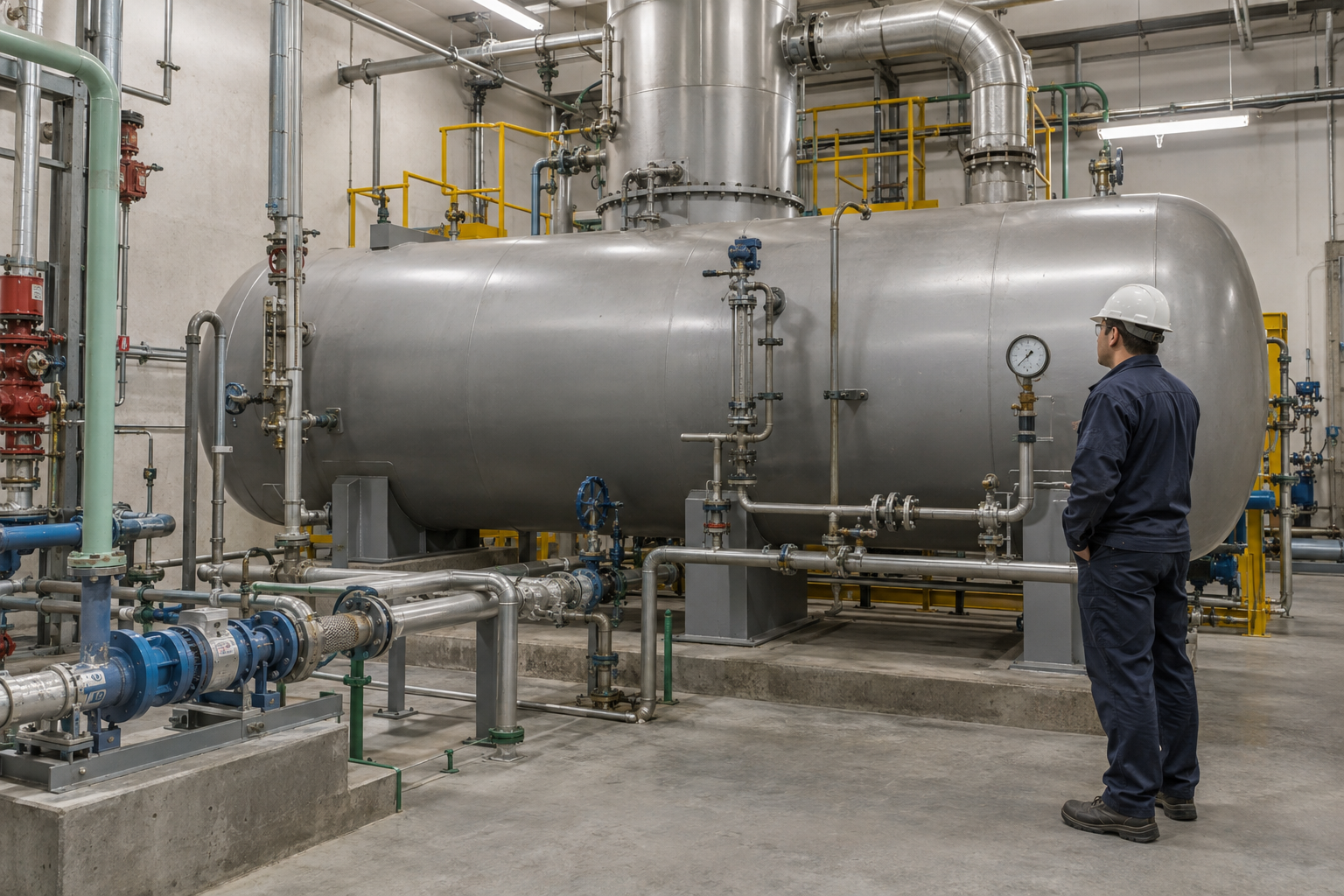
Boiler Deaerator Performance Investigation: Dissolved Oxygen, Venting and Scavenger Boundaries — realistic editorial scene
AI-generated realistic editorial image, visually inspected on 2026-09-08. Generic editorial context only; it is not a VCYCLETECH or customer facility, chemical label, test result, certification or performance record.

Boiler Deaerator Performance Investigation: Dissolved Oxygen, Venting and Scavenger Boundaries

TL;DR When feedwater dissolved oxygen or scavenger demand rises, do not treat the chemical pump as the first root cause. First verify a safe, representative sample with scavenger interference controlled, then compare dissolved oxygen with deaerator pressure, temperature approach, vent behavior, load, incoming-water mix and mechanical condition. A scavenger removes residual oxygen; it does not prove that an underperforming deaerator, blocked vent, air ingress or changed load has been corrected. Confirm every action against the actual boiler design, materials, operating procedure and qualified review.

Request a technical evidence review →

What is this investigation—and what is it not?

This page is for a boiler team that sees rising dissolved oxygen, increased scavenger use, pitting concern or variable feedwater quality and needs a repeatable investigation path. It is deliberately different from the site’s oxygen-scavenger comparison: that page compares chemistry families, while this one tests whether the deaerator and its operating boundary are doing their mechanical job. It is also different from boiler program design by pressure, which is a pre-selection guide rather than an upset investigation.
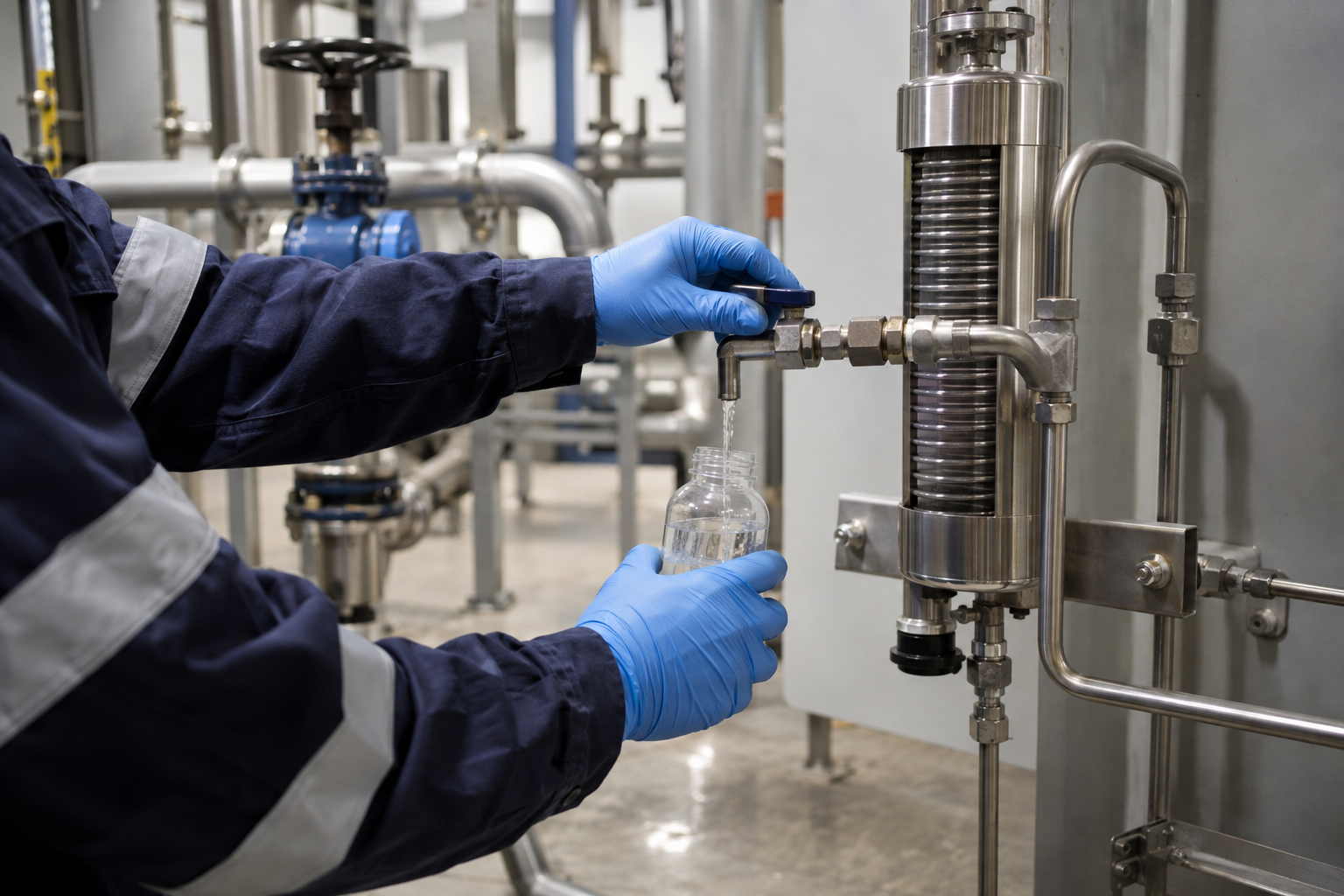
Generic technician collecting a boiler-feedwater sample at a sample cooler
AI-generated realistic editorial image, visually inspected on 2026-09-08. It illustrates sampling context, not an oxygen result, method validation or facility. It is generic illustrative context, not a VCYCLETECH or customer facility, product label, test result, certificate, approval or performance record.
Observed signalHypotheses to checkEvidence that separates themDo not conclude yet
Elevated dissolved oxygen at deaerator outletSampling interference, changed incoming-gas load, pressure/temperature departure, inadequate venting, distribution or internal mechanical condition.Method record, sample point, scavenger state, paired temperature/pressure, load and vent observations.That a particular scavenger is unsuitable or the vessel has failed.
Rising scavenger consumption or residual instabilityActual oxygen load, feed-pump/calibration issue, feed-point residence time, product/formulation change or deaerator performance issue.Feed verification, lot/document identity, trend with load and a controlled oxygen check.That more chemical is a permanent correction.
Visible vent plume or changed vent behaviorNormal stripping, excess steam loss, restriction, altered pressure or condensate/vent-condenser issue.Design/procedure review and qualified inspection; correlate with measured performance.That plume appearance alone gives a correct vent setting.

Why a scavenger cannot replace a deaerator investigation

Thermal deaeration strips dissolved gases by heating feedwater and contacting it with steam; non-condensable gases must leave through controlled venting. The U.S. Department of Energy’s steam handbook describes the vent as necessary for removal of scrubbed gases and notes that a chemical scavenger should be stopped for a deaerator performance check when the approved test method calls for it. ASME PTC 12.3 is a performance-test code for residual dissolved oxygen and terminal temperature difference, including test methods up to 75 µg/L. These sources describe a measurement framework, not one global pass/fail setting for every boiler.

LayerPurposeTypical evidenceBoundary
Mechanical deaerationRemove most dissolved oxygen and carbon dioxide before feedwater reaches the boiler.Pressure/temperature relationship, representative outlet oxygen test, vent and internal-condition review.Design, load, incoming water, steam supply and method affect interpretation.
Chemical scavengerReact with residual oxygen within its approved feed/residence-time boundary.Current TDS/SDS/COA, pump/feed verification, agreed residual or other site procedure.It cannot diagnose a vent, spray, tray or steam-supply problem by itself.
Corrosion monitoringFind whether the wider feedwater/condensate system is being affected.Iron/copper trends, inspection/coupon evidence and system history.One dissolved-oxygen point does not quantify all corrosion mechanisms.

Safe evidence sequence for high dissolved oxygen

  1. Start with safety and the test method. Hot pressurized sample lines, steam and treatment chemicals require the site’s lockout, PPE and sampling procedures. Record the analytical method, detection range, preservation/time-to-test and exact sample point; a number without a method cannot support a root-cause claim.
  2. Prevent masking where applicable. A scavenger can react after sampling or interfere with a performance test. Follow the equipment supplier, chemical program and laboratory method—not this article—for whether and how it is isolated for a controlled test.
  3. Pair the sample with operating evidence. Log deaerator pressure, outlet temperature, makeup/condensate split, boiler demand, steam availability, vent condition, level control and recent shutdown/startup or water-source changes.
  4. Check the mechanical boundary before increasing feed. A qualified inspection may review vent path, pressure control, spray/tray distribution, steam inlet, level, inlet temperature and leaks. Do not open equipment or change a vent under pressure without approved procedures.
  5. Only then verify feed equipment. Confirm product identity against current documents, storage, pump calibration, injection location and residence time. A field dose is site-specific and must not be derived from a blog or a laboratory comparison.
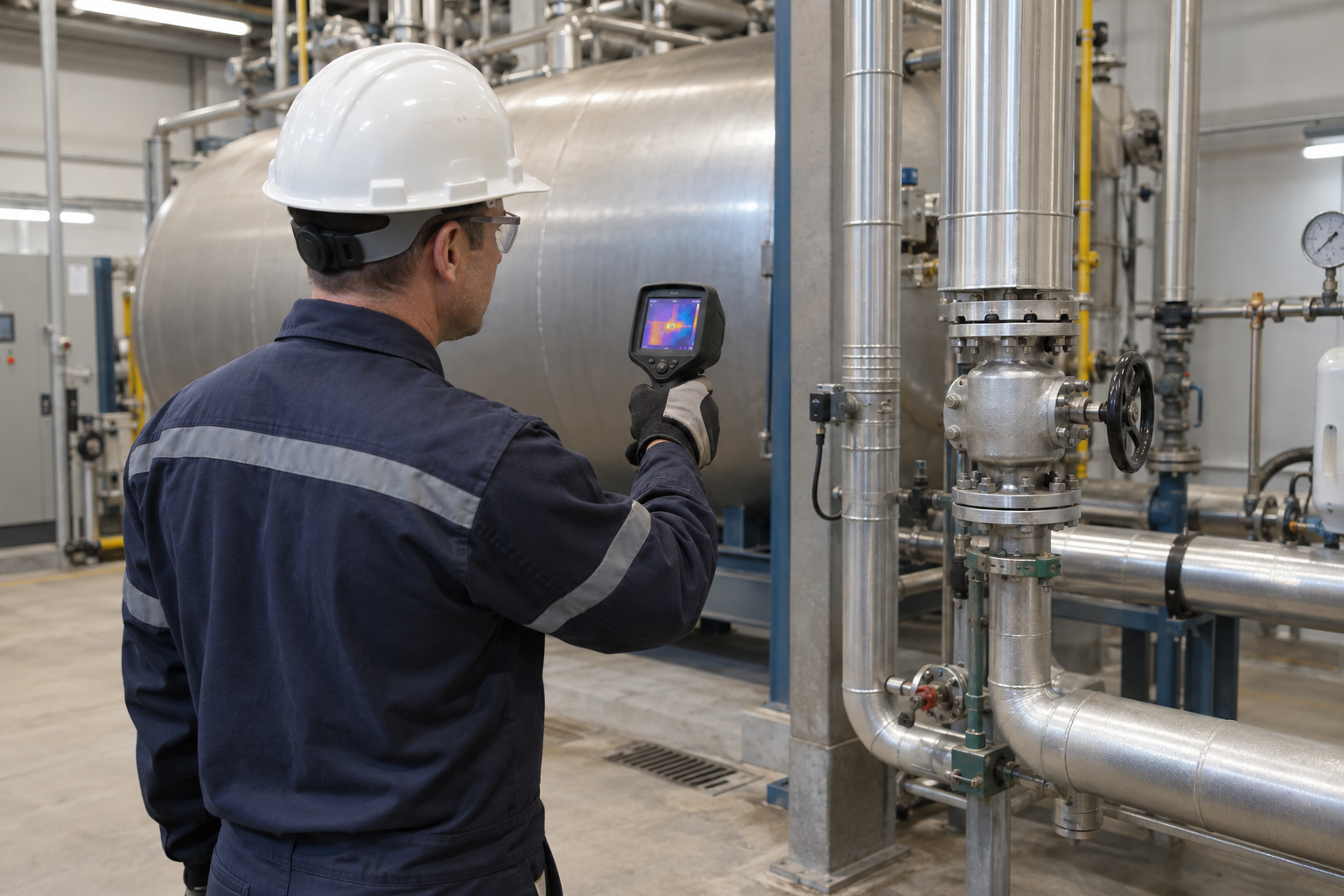
Generic technician observing boiler deaerator vent piping with a thermal instrument
AI-generated realistic editorial image, visually inspected on 2026-09-08. It illustrates a generic inspection method, not a validated temperature reading, vent setting or performance result. It is generic illustrative context, not a VCYCLETECH or customer facility, product label, test result, certificate, approval or performance record.

Data package for an engineering or supplier review

RetainWhy it is usefulNot a substitute for
Sample method, point, time and chain of custodyShows whether oxygen findings can be compared across dates and conditions.A verbal report that “oxygen was high.”
Pressure, temperature, load and water-balance trendPlaces stripping performance in the actual operating envelope.A single steady-state nameplate assumption.
Vent, steam-supply and mechanical-inspection recordConnects gas removal to equipment condition and operation.Changing a chemical feed blindly.
Current scavenger TDS, SDS, COA and feed checksSupports identity, safe handling and metering review.A claim that product chemistry guarantees performance.

Use the boiler-water treatment application for program context, the scavenger comparison only after the mechanical boundary is clear, and the carbohydrazide product identity page as a document request route—not as a universal recommendation. See the video library for general process context, then send the dated evidence package for technical review.

Frequently asked questions

What causes high dissolved oxygen after a deaerator?

Possible causes include sampling/method issues, changed incoming gas load, pressure or temperature departure, inadequate venting, steam or level-control problems, internal distribution condition, air ingress and chemical-feed issues. A controlled investigation is needed to distinguish them.

Should an oxygen scavenger be increased when deaerator oxygen rises?

Only under the approved site procedure and after immediate safety review. Extra scavenger may manage residual oxygen temporarily, but it is not proof that mechanical stripping, venting, sampling or feed equipment has been corrected.

How is deaerator performance tested?

Use the applicable equipment, site and qualified laboratory procedure. ASME PTC 12.3 addresses residual dissolved oxygen and temperature-difference performance testing; sample method, operating state and scavenger-interference controls matter.

Is a visible deaerator vent plume a performance test?

No. A plume is an operating observation. It does not establish the correct vent rate, oxygen removal, steam loss or a root cause without pressure, temperature, sample-method and equipment context.

What information should be sent for a deaerator troubleshooting review?

Provide sampling method and points, oxygen trend, pressure/temperature/load history, makeup and condensate-return changes, vent and maintenance observations, chemical TDS/SDS/COA, pump/feed checks and any corrosion evidence.

Author, review and evidence boundary

VCYCLETECH Technical Team prepared this bounded technical information from public guidance and industry sources. It does not certify a facility, prescribe a test, dose or mechanical change, provide legal advice, verify a product or guarantee corrosion control. Use current product documents, qualified site procedures and representative system data.

Sources

Guides & Articles

Cooling Tower Deposit Investigation: Iron, Calcium Phosphate and Under-Deposit Corrosion — realistic editorial sceneCooling Tower Deposit Investigation: Iron, Calcium Phosphate and Under-Deposit CorrosionRead → Cooling Water Chemical RFQ Checklist: COA, TDS, SDS and Trial Acceptance Criteria — realistic editorial sceneCooling Water Chemical RFQ Checklist: COA, TDS, SDS and Trial Acceptance CriteriaRead →HEDP vs PBTC for Cooling Water Treatment: Selection by Hardness, pH and Chlorine Exposure — realistic editorial sceneHEDP vs PBTC for Cooling Water Treatment: Selection by Hardness, pH and Chlorine ExposureRead → How to Select a Cooling Tower Water Treatment Program from Water Analysis Data — realistic editorial sceneHow to Select a Cooling Tower Water Treatment Program from Water Analysis DataRead →Coagulant Jar-Test to Purchase Order: Data and Acceptance Criteria — realistic editorial sceneCoagulant Jar-Test to Purchase Order: Data and Acceptance CriteriaRead → Dewatering PAM: Belt Press vs Centrifuge vs Screw Press — realistic editorial sceneDewatering PAM: Belt Press vs Centrifuge vs Screw PressRead →RO Antiscalant Trial Design: Feedwater, Recovery and Membrane Compatibility — realistic RO editorial sceneRO Antiscalant Trial Design: Feedwater, Recovery and Membrane CompatibilityRead → RO Cleaning Chemical Selection: Acid, Alkaline and Biocide Decision Tree — realistic RO editorial sceneRO Cleaning Chemical Selection: Acid, Alkaline and Biocide Decision TreeRead →Open vs Closed Cooling Water: Corrosion Inhibitor Selection by Metallurgy — realistic cooling-water sceneOpen vs Closed Cooling Water: Corrosion Inhibitor Selection by MetallurgyRead → Cooling Tower Chemical Program KPI Dashboard: Cycles, Blowdown & Deposit Signals — realistic cooling-water sceneCooling Tower Chemical Program KPI Dashboard: Cycles, Blowdown & Deposit SignalsRead →Quote-Ready Water Treatment Chemical Supplier: System Data Checklist — realistic water-treatment sceneQuote-Ready Water Treatment Chemical Supplier: System Data ChecklistRead → Private-Label Water Treatment Chemicals: OEM Sample, COA & Packaging Workflow — realistic water-treatment scenePrivate-Label Water Treatment Chemicals: OEM Sample, COA & Packaging WorkflowRead →Can Coagulation Remove PFAS? Realistic Limits — realistic water-treatment sceneCan Coagulation Remove PFAS? Realistic LimitsRead → Removing Microplastics with Coagulation — realistic water-treatment sceneRemoving Microplastics with CoagulationRead →Controlling Anionic Trash (DCS) & Charge Demand - real paper-mill sceneControlling Anionic Trash (DCS) & Charge DemandRead → Microparticle Retention & Drainage Systems - real paper-mill sceneMicroparticle Retention & Drainage SystemsRead →Converting a Cooling Tower to Non-Phosphorus — real industrial cooling-water sceneConverting a Cooling Tower to Non-PhosphorusRead → Reclaimed Water as Cooling Makeup: The Problem — real industrial cooling-water sceneReclaimed Water as Cooling Makeup: The ProblemRead →Tolyltriazole & Benzotriazole: REACH & Alternatives - photorealistic industrial treatment photographTolyltriazole & Benzotriazole: REACH & AlternativesRead → Molybdate vs Phosphonate vs All-Organic Inhibitors - photorealistic industrial treatment photographMolybdate vs Phosphonate vs All-Organic InhibitorsRead →EU BPR Compliance Checklist for Cooling BiocidesEU BPR Compliance Checklist for Cooling BiocidesRead →Isothiazolinone Restrictions & Allergen LimitsIsothiazolinone Restrictions & Allergen LimitsRead → High-Recovery RO Antiscalant: CCRO at 95–98%High-Recovery RO Antiscalant: CCRO at 95–98%Read → Minimal Liquid Discharge (MLD) vs ZLDMinimal Liquid Discharge (MLD) vs ZLDRead →Direct-to-Chip Cooling Corrosion Control: Tolyltriazole & Yellow-Metal ProtectionDirect-to-Chip Cooling Corrosion Control: Tolyltriazole & Yellow-Metal ProtectionRead → Cooling-Tower Biocide Selection: Legionella Control & 2026 Compliance CheckCooling-Tower Biocide Selection: Legionella Control & 2026 Compliance CheckRead → Cooling Tower Water Treatment for AI Data CentersCooling Tower Water Treatment for AI Data CentersRead → Data Center Cooling Water: WUE, Cycles & ReuseData Center Cooling Water: WUE, Cycles & ReuseRead → Buying Coagulants in 2026: PAC, Alum & Ferric SpecsBuying Coagulants in 2026: PAC, Alum & Ferric SpecsRead → Residual Acrylamide in PAM: NSF-60 & EU LimitsResidual Acrylamide in PAM: NSF-60 & EU LimitsRead → Pitch & Stickies: Paper Machine Deposit ControlPitch & Stickies: Paper Machine Deposit ControlRead → Paper Mill Chemical Procurement: Specs & COA ChecklistPaper Mill Chemical Procurement: Specs & COA ChecklistRead → Internal Sizing Agents: AKD vs ASA vs RosinInternal Sizing Agents: AKD vs ASA vs RosinRead → Paper Wet End: Additive Order & CompatibilityPaper Wet End: Additive Order & CompatibilityRead → Surface Sizing Agents: The Size Press GuideSurface Sizing Agents: The Size Press GuideRead → Dry Strength Agents: Selection, Dosage & TroubleshootingDry Strength Agents: Selection, Dosage & TroubleshootingRead → Cationic Surfactant Selection: CTAC vs DTAC vs OTAC vs DDACCationic Surfactant Selection: CTAC vs DTAC vs OTAC vs DDACRead → THPC Biocide: Uses, Dosage & How to BuyTHPC Biocide: Uses, Dosage & How to BuyRead → Inorganic Coagulants: Alum vs PAC vs PFS ComparedInorganic Coagulants: Alum vs PAC vs PFS ComparedRead → Dry Strength vs Wet Strength Agents: Which for Paper?Dry Strength vs Wet Strength Agents: Which for Paper?Read → How to Choose a Phosphonate Scale Inhibitor SupplierHow to Choose a Phosphonate Scale Inhibitor SupplierRead → MGDA vs GLDA: Which Biodegradable Chelant?MGDA vs GLDA: Which Biodegradable Chelant?Read → PESA vs PASP: Which Green Antiscalant?PESA vs PASP: Which Green Antiscalant?Read → Phosphonate Acid vs Sodium Salt: Which to Buy?Phosphonate Acid vs Sodium Salt: Which to Buy?Read → Cooling Water: All-Organic vs Stabilized PhosphateCooling Water: All-Organic vs Stabilized PhosphateRead → LSI & RSI: Scaling Indices Explained & CalculatedLSI & RSI: Scaling Indices Explained & CalculatedRead → Cooling Water Corrosion: Mechanisms & ProtectionCooling Water Corrosion: Mechanisms & ProtectionRead → Cooling Tower Legionella & Microbial ControlCooling Tower Legionella & Microbial ControlRead → RO Silica Scaling: Control, Solubility & AntiscalantsRO Silica Scaling: Control, Solubility & AntiscalantsRead → RO Membrane Fouling: Types, Diagnosis & PreventionRO Membrane Fouling: Types, Diagnosis & PreventionRead → RO Scale Control: Antiscalant vs Acid vs SofteningRO Scale Control: Antiscalant vs Acid vs SofteningRead → Zero Liquid Discharge (ZLD): Process & ChemicalsZero Liquid Discharge (ZLD): Process & ChemicalsRead → Boiler Oxygen Scavengers: DEHA vs Sulfite vs HydrazineBoiler Oxygen Scavengers: DEHA vs Sulfite vs HydrazineRead → Condensate Corrosion: Neutralizing vs Filming AminesCondensate Corrosion: Neutralizing vs Filming AminesRead → Boiler Water Treatment Program Design by PressureBoiler Water Treatment Program Design by PressureRead → Boiler Blowdown & Cycles of Concentration (COC)Boiler Blowdown & Cycles of Concentration (COC)Read → TCCA vs SDIC vs Calcium Hypochlorite: Which Chlorine?TCCA vs SDIC vs Calcium Hypochlorite: Which Chlorine?Read → BKC vs Glutaraldehyde vs Isothiazolinone BiocidesBKC vs Glutaraldehyde vs Isothiazolinone BiocidesRead → Pool Water Chemistry: pH, Free Chlorine & Cyanuric AcidPool Water Chemistry: pH, Free Chlorine & Cyanuric AcidRead → Drinking Water Disinfection: Methods, Dosage & SafetyDrinking Water Disinfection: Methods, Dosage & SafetyRead → PAC Coagulant Selection: Basicity, Dosage & Water MatchPAC Coagulant Selection: Basicity, Dosage & Water MatchRead → PolyDADMAC vs Polyamine: Which Organic Coagulant?PolyDADMAC vs Polyamine: Which Organic Coagulant?Read → Anionic vs Cationic vs Nonionic PAM: Differences & UsesAnionic vs Cationic vs Nonionic PAM: Differences & UsesRead → Jar Test: Step-by-Step Coagulation & Dose OptimizationJar Test: Step-by-Step Coagulation & Dose OptimizationRead → DTPMP Scale Inhibitor: Uses, Dosage & ComparisonDTPMP Scale Inhibitor: Uses, Dosage & ComparisonRead → HPAA Corrosion Inhibitor for Carbon Steel & CopperHPAA Corrosion Inhibitor for Carbon Steel & CopperRead → EDTMPA: Chelating Agent for Plating & BleachingEDTMPA: Chelating Agent for Plating & BleachingRead → BHMTPMPA: Scale Inhibitor for High-Hardness WaterBHMTPMPA: Scale Inhibitor for High-Hardness WaterRead → How Does Water Treatment Work? Steps, Chemicals & MethodsHow Does Water Treatment Work? Steps, Chemicals & MethodsRead → Water Treatment Process Steps Explained (with Chemicals)Water Treatment Process Steps Explained (with Chemicals)Read → Types of Water Treatment Chemicals (Complete List)Types of Water Treatment Chemicals (Complete List)Read → Industrial Water Treatment Chemicals — Applications & SelectionIndustrial Water Treatment Chemicals — Applications & SelectionRead → What Is an Antiscalant? How Scale Inhibitors WorkWhat Is an Antiscalant? How Scale Inhibitors WorkRead → ATMP vs HEDP: Which Scale Inhibitor Should You Choose?ATMP vs HEDP: Which Scale Inhibitor Should You Choose?Read → What Is HEDP? Uses, Dosage & PropertiesWhat Is HEDP? Uses, Dosage & PropertiesRead → PBTC Antiscalant for Cooling Towers — Why It Tolerates ChlorinePBTC Antiscalant for Cooling Towers — Why It Tolerates ChlorineRead → Cooling Tower Water Treatment — A Practical GuideCooling Tower Water Treatment — A Practical GuideRead → Cooling Tower Scale & Corrosion ControlCooling Tower Scale & Corrosion ControlRead → Boiler Water Treatment Chemicals ExplainedBoiler Water Treatment Chemicals ExplainedRead → Coagulation vs Flocculation: Difference, Chemicals & OrderCoagulation vs Flocculation: Difference, Chemicals & OrderRead → RO Antiscalant: Selection & Dosing GuideRO Antiscalant: Selection & Dosing GuideRead → RO Membrane Cleaning: Acid & Alkaline CleanersRO Membrane Cleaning: Acid & Alkaline CleanersRead → Phosphorus-Free & Green Antiscalants (PASP, PESA)Phosphorus-Free & Green Antiscalants (PASP, PESA)Read → Biodegradable Chelating Agents — EDTA Alternative (GLDA, MGDA)Biodegradable Chelating Agents — EDTA Alternative (GLDA, MGDA)Read → What Is Polyaspartic Acid (PASP)? Green Scale InhibitorWhat Is Polyaspartic Acid (PASP)? Green Scale InhibitorRead → Defoamers in Water Treatment: Types & How They WorkDefoamers in Water Treatment: Types & How They WorkRead → Paper Wet Strength, Dry Strength & Sizing AgentsPaper Wet Strength, Dry Strength & Sizing AgentsRead → Water Treatment Biocides: Oxidizing vs Non-OxidizingWater Treatment Biocides: Oxidizing vs Non-OxidizingRead →

No articles match your search.

Scroll to Top