
Reverse Osmosis · buyer decision guide
RO Dechlorination Point and Storage Path: Verify the Membrane-Inlet Residual
When an RO pretreatment system is changed, first draw the actual chlorine, dechlorination and storage path before choosing a chemical. Identify where disinfected water enters, where free or combined chlorine is measured, where a reducing agent is injected and mixed, and every tank, filter and dead leg between that point and the membrane. The membrane-inlet sample must represent the operating condition that reaches the elements, including start-up, low-flow and tank drawdown. A safe-looking ORP reading alone does not prove the absence of oxidant, while an upstream chlorine result cannot prove a downstream membrane is protected. Equally, placing dechlorination too early may leave unprotected storage and a different biological-control problem. Compare the installed membrane OEM's oxidant and pretreatment requirements, actual residual methods and the process layout; then test a bounded point or mixing correction. Do not infer a universal dose or membrane compatibility.
TL;DR
Protect an oxidant-sensitive RO membrane with a verified process boundary, not an assumed chemical dose. Map disinfection, storage, dechlorination, cartridge filtration and the membrane inlet. Pair free and total chlorine measurements, where applicable, with appropriate ORP and reducing-agent observations at defined points and times; each method has limits. Compare normal and transient flows, mixing and tank residence. Keep chlorinated storage upstream when the OEM and plant design call for it, and avoid an unnecessarily long dechlorinated hold. Investigate a residual at the membrane before operation, and investigate recurring upstream growth where disinfectant protection ends. Request grade-specific documentation and a controlled site trial only after the responsible location and mechanism are demonstrated.
Draw the entire treated-water route before moving an injection point
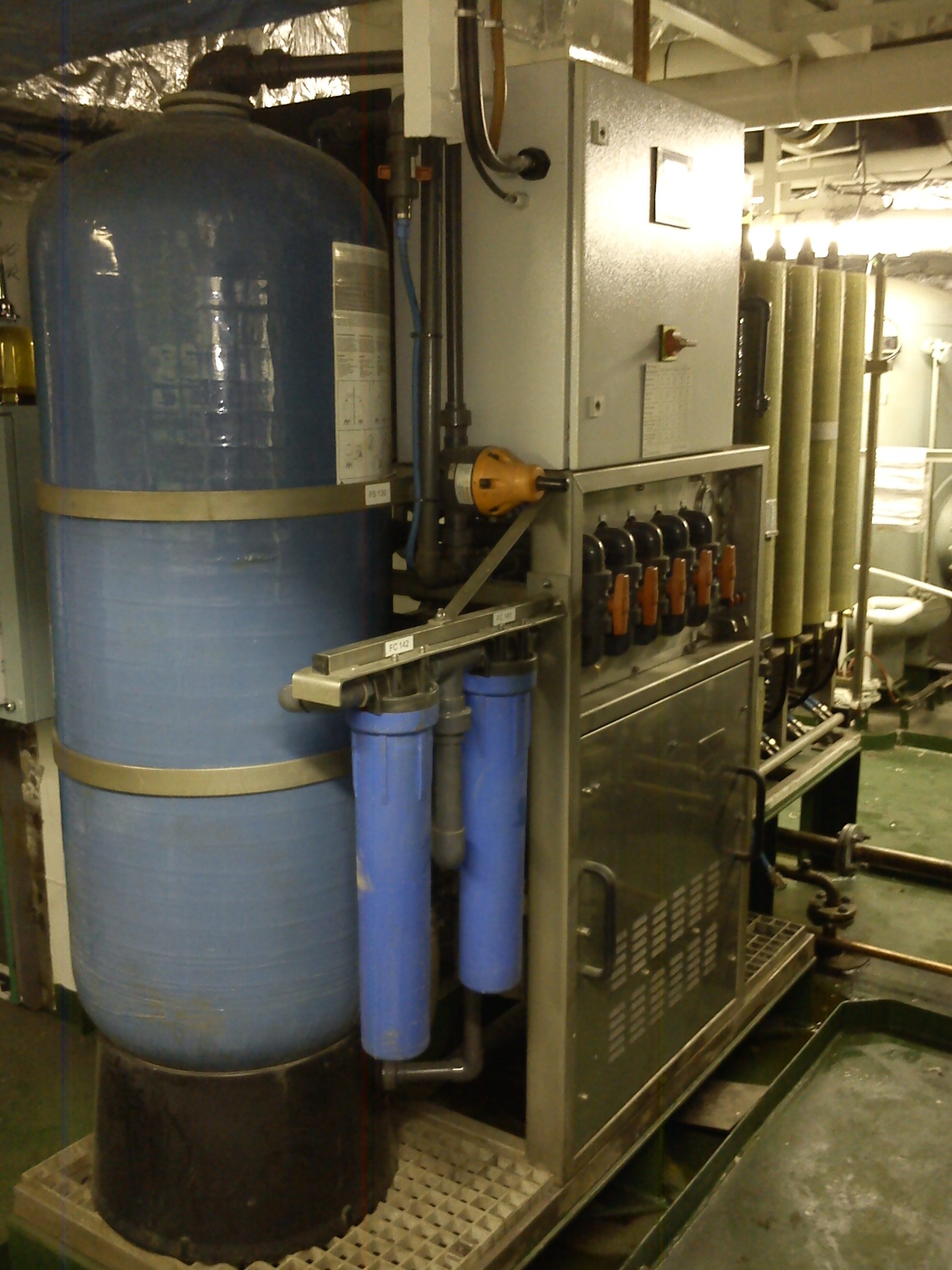
List the incoming disinfectant and how the plant uses it: municipal residual, on-site chlorination or another oxidant. Mark the raw-water tank, multimedia or carbon filter, chemical injection quill, static mixer, cartridge filter, surge tank, pressure vessels, bypass, recirculation line, cleaning connection and sampling ports. Note which vessels are open to air, which are intermittently drained and how long water can remain at low demand. The location of a sample port matters: a port before a mixer or after a long dead leg may not represent the membrane feed.
The first buyer decision is frequently a piping or control decision. If a residual reaches the membrane inlet under a specific operating state, correct the source, injection reliability, mixing or interlock based on that state. If no oxidant reaches the membrane but biofilm accumulates between the reducing point and the cartridges, a long unprotected hold or stagnant segment may matter. The two conditions can coexist; solving one by shifting a dose without checking the other can create a new problem. Treat the membrane material, element model, downstream seals and OEM approval as design inputs rather than assuming every membrane has the same oxidant tolerance.
The RO application page describes the broad pretreatment route. This guide owns the point-of-injection, storage and membrane-inlet verification decision. The biofouling recurrence guide addresses a confirmed continuing biological source after cleaning; it should not substitute for verifying dechlorination hydraulics and residuals.

Measure the specific residual, at the specific place and time
Free chlorine, total chlorine and other oxidants
Free and total chlorine answer related but different questions. Specify the disinfectant source and the analytical method, detection range, sample handling, temperature and sampling delay. A total-chlorine method may respond to combined residual that a free-chlorine method does not, while other oxidants and interfering water constituents may require different methods. Check the membrane OEM's requirements for the installed model and the site's applicable procedure. Do not translate a free-chlorine reading into a universal total-oxidant clearance. If the method cannot resolve the OEM's required condition, change the method or obtain specialist analysis rather than call the water safe.
ORP and reducing-agent residual
ORP is a process trend shaped by multiple redox couples, pH, temperature and probe condition. It can be useful beside a specific residual test, but cannot independently certify that a polyamide membrane is free of oxidant. Likewise, a reducing-agent feed-pump stroke is not proof that a reagent reached and mixed with the whole membrane-feed flow. If a residual reducer is measured, state how and where. Check tank levels, injection quill, pump calibration, mixing length, chemical age and the low-flow operating mode. A low upstream oxidant reading and high reducer setting do not resolve a poorly mixed stream at a parallel vessel.
Representative sampling
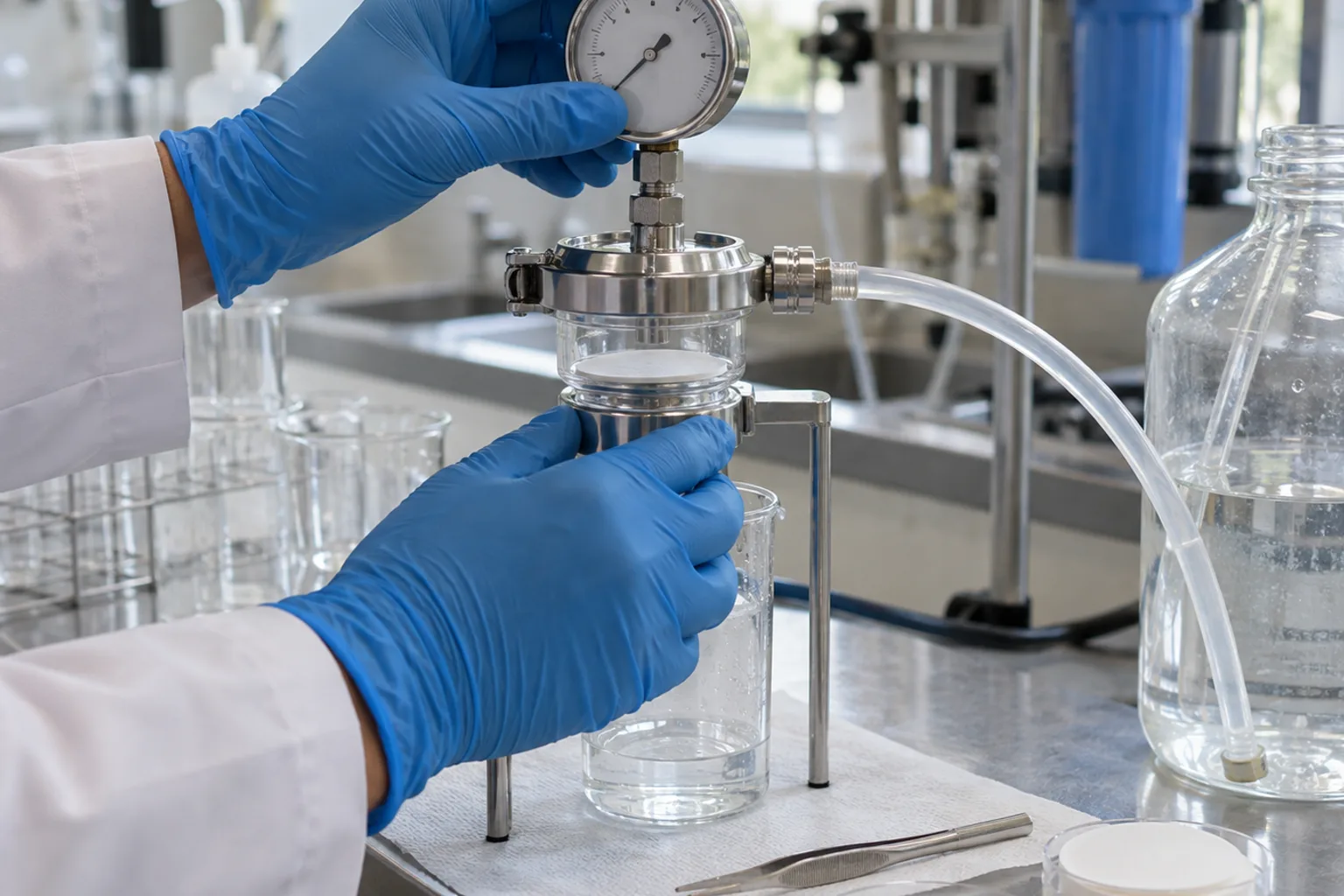
Take paired readings before chemical addition, after effective mixing, after the last storage or filter step, and immediately before the membrane as the hydraulic layout allows. Collect during normal flow, startup, shutdown, tank changeover and the condition associated with the complaint. Label flow, pressure, time, method, quench or preservation, operator and sample-port flush. A delayed bottle can continue to react and give a false picture of the membrane's exposure. Review sensor calibration and compare with a suitable grab method. An unexpectedly positive inlet reading deserves prompt action under site and OEM safety procedures, not an editorial target from this page.
DuPont's FilmTec manual discusses dechlorination placement, mixing and membrane protection for its products. The equipment-specific details must be verified against the installed model. The manual also warns against storing dechlorinated water where that creates a biological opportunity; this is a layout constraint, not a universal requirement to dose any particular chemical.
| Observed pattern | First route to examine | Evidence limit |
|---|---|---|
| Specific oxidant residual upstream; positive again at membrane inlet | Injection availability, mixing, control interlock and last unprotected branch. | ORP alone cannot clear the membrane; follow the OEM and site response. |
| Upstream residual controlled; intermittent membrane-inlet positive during low flow | Transient mixing, pump turndown, tank changeover, bypass or dead leg. | A steady-state grab sample may miss the event. |
| No verified membrane-inlet oxidant; rising cartridge differential pressure after long dechlorinated storage | Tank residence, hygiene, biofilm and upstream nutrient load. | Pressure drop does not identify biology without deposit and sampling evidence. |
| High reducer feed setting; no method-defined residual at a distant branch | Probe, pump, mixing distribution and branch-specific sampling. | Pump setting is not a delivered concentration. |
| Free-chlorine result is low; total-chlorine result remains material | Disinfectant identity, method interference and combined-residual control. | Do not declare membrane compatibility from one species measurement. |
Storage changes the trade-off after dechlorination
Dechlorinated water can lose an upstream disinfectant barrier while still carrying assimilable organic matter, nutrients or inoculum. The result depends on tank residence, temperature, cleaning, recirculation, roof and vent design, and the downstream filter and pipe network. A later rise in cartridge-filter differential pressure may be consistent with fouling, but does not by itself prove biological growth. Inspect filter deposits and tank condition, sample at matched operating states and use a defined biological method. Compare planktonic and attached evidence when a biofilm is suspected. The responsible node may be a tank that was added for capacity, not the membrane-cleaning product.
The alternative error is allowing oxidant to pass to a susceptible membrane because dechlorination is too late, poorly mixed or absent during a transient. Do not advise moving an injection point solely to shorten storage without checking the required mixing distance, last filtration point, membrane protection and automation. The OEM and plant engineering team must approve the actual layout. A carbon unit, reducing-agent system and alternate membrane material each has different monitoring and maintenance needs. Avoid assuming a product category page establishes those design choices.
A published review of sulfite chemistry in water treatment shows that reducing chemistry can interact with biological and oxidation processes; it does not quantify risk for this plant. If the operator considers a biocide or a change in disinfectant route, first define where exposure would occur and verify element, seal, pipe and downstream-process compatibility. DBNPA is a real product identity in our catalog, but neither this guide nor that identity proves suitability for a particular installed membrane. Some reducing agents can inactivate biocides; the actual product/OEM documentation controls a trial.
Make the verification trial represent the operating path
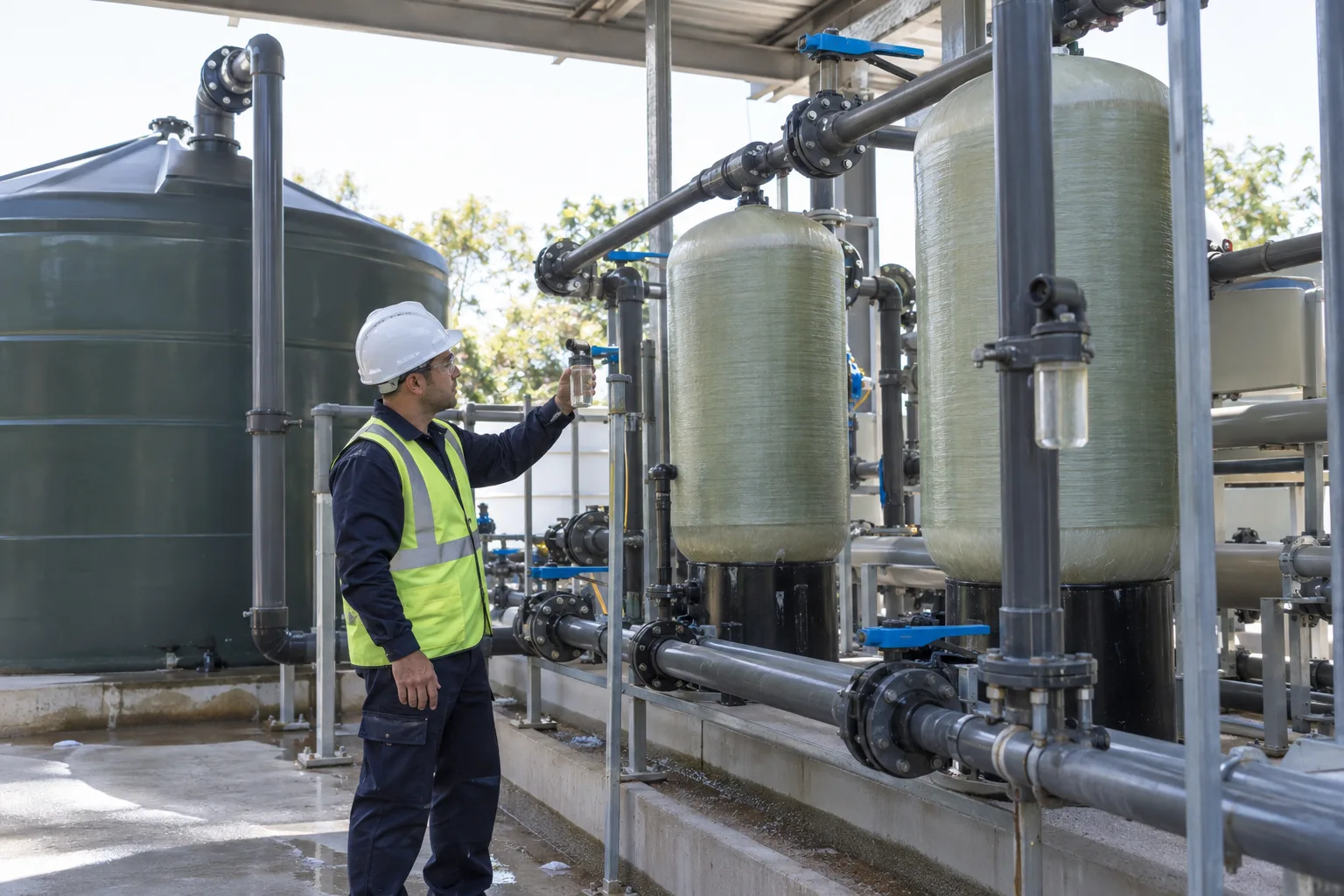
Define the event to reproduce: continuous maximum flow, minimum pump turndown, startup after a long stop, tank refill, tank drawdown or a branch switch. For each state, log actual flow and oxidant source, chemical feed status, pump and mixer operation, tank level and time, sample-port location and method-defined residuals. Keep a paired baseline before changing the injection point or chemical. The comparison should answer whether membrane-inlet residual stays within the installed OEM requirement and whether an upstream unprotected interval still creates an observed fouling burden. One favorable steady-state bottle does not establish either condition over a full cycle. If a prior CIP recovery is also disputed, separately compare the post-cleaning normalized flow, salt passage and pressure-drop decision; that performance test does not replace oxidant-residual verification.
For a storage change, check tank cleaning history, sediment, filter differential-pressure trend, particle or deposit evidence and microbiological methods that fit the process. Do not use an isolated culture count to promise biofilm control. For a dechlorination chemical, check grade and purity documents, dosing equipment suitability, mixing, residual method, process-material compatibility, safety and waste requirements. Do not infer a universal fixed concentration, contact time or ORP target. If a biocide is evaluated upstream, use the membrane OEM's rules for removal before element exposure and document interactions with reducing chemistry.
The RO chemical category can organize a technical discussion, but the correct answer may be a sample-port move, tank cleaning, flow-control change, mixer repair or different pretreatment boundary. Hydranautics' membrane-storage and biocide guidance illustrates why product and reducing-agent interactions must be checked for the installed membranes, not generalized across brands.
Send a path-specific RO inquiry
For a technical inquiry, send a marked P&ID with disinfectant source, every tank, reducing-agent injection point, mixer, filter, bypass and membrane-inlet sample port. Add membrane and vessel model, OEM oxidant requirement, feed-water analysis, free/total residual methods and results at each boundary, ORP trend with pH, chemical grade identities, pump calibration, flow and tank residence under normal and transient states, cartridge-filter trend, deposit evidence, materials, location and procurement timing. State whether the decision is membrane protection, recurrent upstream growth or both. The supplier can then discuss a documented product or process trial without assuming that a single catalog item fixes the route.
Frequently asked questions
Can ORP alone prove that the RO membrane is dechlorinated?
No. ORP is influenced by several conditions. Use the specific residual method and sample location required by the membrane OEM, with ORP as supporting process context.
Should reducing agent always be injected before a storage tank?
No universal placement is safe. Check mixing, downstream residence, microbial risk, filtration and the installed membrane OEM's protection requirements before changing the point.
Why measure both free and total chlorine?
They can describe different residual forms. Match the method to the disinfectant and OEM requirement, and account for water-matrix interference and sampling delay.
Does rising cartridge pressure after dechlorination prove biofouling?
No. Pressure drop shows loading under a given flow and filter state. Examine deposits, particles, tank history and representative microbial evidence before naming the mechanism.
What information is needed for a dechlorination review?
Provide the P&ID, membrane model and OEM rules, source oxidant, chemical grades, tank residence, flow states, paired residual methods and results, filter trends, materials and purchasing location.