
RO Antiscalant Feed Delivery: Verify What Reaches the Train
When an RO train appears to consume less antiscalant than expected, reconcile the product that left its supply tank with the water actually treated during the same interval. Use the active pump and injection path, account for transfers and returns, and state whether the result is on an as-supplied or active basis. A controller display is useful for locating a change, but it can repeat the command even when air, backpressure or a blocked injection valve reduces delivery. If a representative measurement confirms a shortfall, repair or verify the delivery path before comparing chemicals. If delivery matches the documented target and conditions have changed, reopen the scale-control decision with the actual feed, recovery and membrane data.
TL;DR
Pick a stable interval and record the feed water total and measured solution drawdown over the same timestamps. Subtract any flow that returned to supply or went elsewhere, then convert using the documented working-solution density and, when known, active fraction. Check the individual train and the operating discharge pressure. A mismatch between the command and what reached the line points to a metering, dilution or routing problem. If measured delivery is correct but water analysis, recovery or concentrate trends changed, review the antiscalant selection. Use the current product documents and the plant’s approved operating limits when deciding whether to hold, remeasure or continue.

Pick a boundary both teams can measure
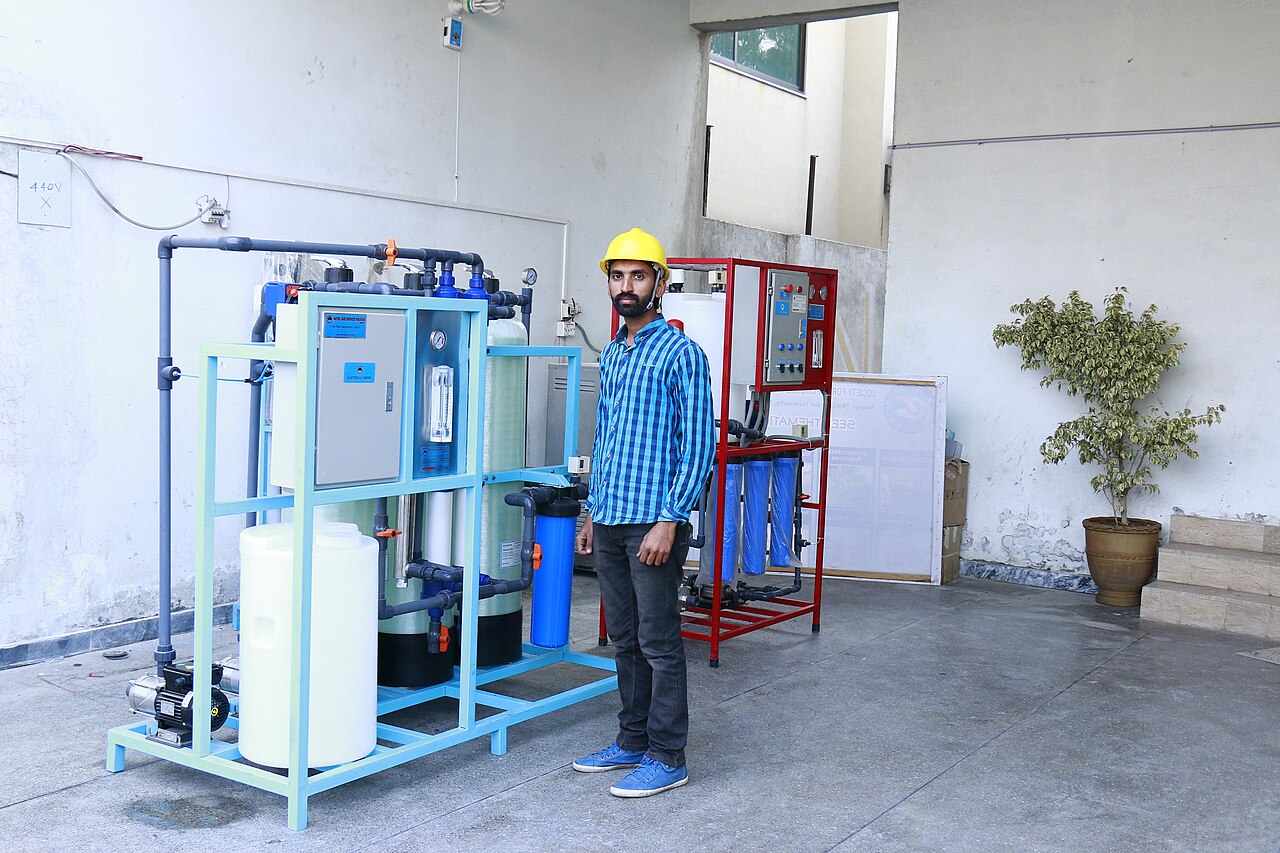
The stock room sees drums leaving inventory. The controls system sees a pump command and a water flow. The membrane sees what enters its feed pipe. These three observations can legitimately disagree. A drum may fill two tanks, a pump may share a discharge manifold, and a train may operate only part of a shift. Before changing a setpoint, identify which tank, pump, branch and train belong to a measurement. Write down the intended injection point relative to the feed meter and the train split. Follow the installed drawing with the operator who owns that circuit.
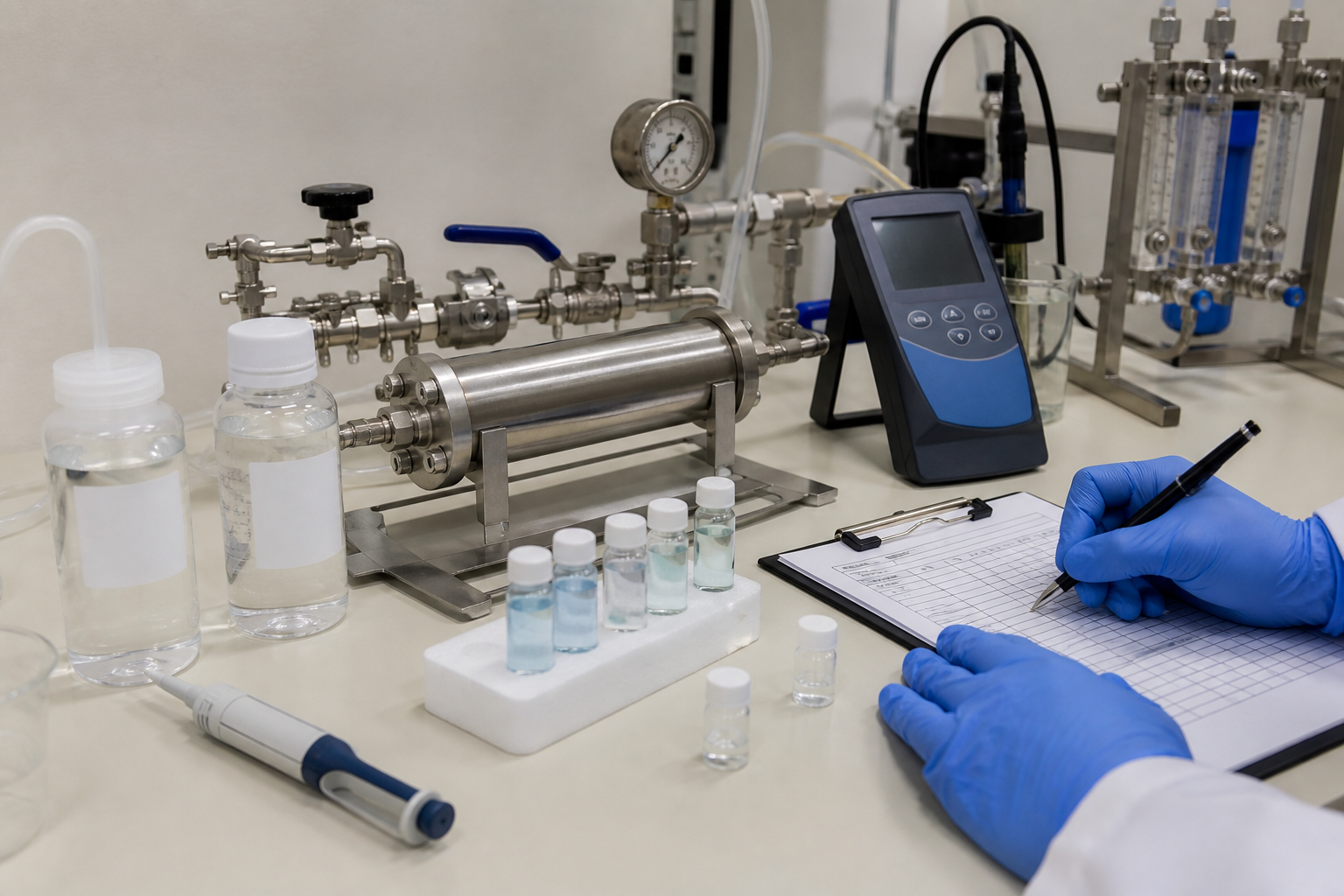
Start with a representative interval in which feed flow, recovery, dilution and the actual supply arrangement are stable enough to compare. Record the opening and closing water meter totals with their units. Use a verified tank scale or a suitably graduated calibration arrangement consistent with the pump manual. Record the start and end times plus any refill, drain, priming, sample or transfer. If the instrument cannot resolve the change against its uncertainty, extend the window or use a more suitable approved measurement arrangement. Keep the feed and chemical windows aligned.
Keep stock, working solution and active basis explicit
A dispensing pump may handle the product as supplied or a working solution made on site. For a diluted batch use the measured working-solution density or a supported batch mass balance. Do not use the density printed for the neat product as the density of the diluted liquid. A specification pH measured at a stated laboratory dilution does not tell you the concentration in a plant feed tank. If a procurement comparison depends on active content, ask the supplier for the method and the exact grade basis. Preserve a valid result in mass of supplied product per volume of feed when that is the documented convention.
For example, suppose a closed accounting window records 0.45 kg of supplied product reaching a single train during treatment of 150 m³ of feed. The ratio is 3 mg/L as supplied. These example readings illustrate unit conversion only. Establish the actual target for the system in service. The same numerical ratio could be the wrong answer if part of the chemical went to a shared header, the water volume was permeate rather than feed, or the product was made down with unrecorded water. Avoid assigning an active value from the product name or from an unverified fraction.
| Measure | Best use | Common error |
|---|---|---|
| Controller command and pump status | Find when the demanded output changed and check which pump was enabled. | Assuming commanded output reached the train. |
| Supply drawdown or measured mass | Compare movement over a defined duty window, allowing for refills and returns. | Counting returns, priming losses or a second train as delivery. |
| Feed totalizer | Provide the denominator for the treated water path. | Using permeate flow or including hours when the chemical was routed elsewhere. |
| Operating pressure and branch confirmation | Identify conditions that make a calibration or a batch balance transferable. | Assuming a test at free discharge represents production duty. |
| Water and membrane trends | Reconsider treatment if actual delivery is correct and system conditions changed. | Using a single conductivity, pressure or recovery value to identify a deposit. |
Trace a discrepancy from command to injection
Work from the least ambiguous observation. A command that changed while measured delivery stayed flat suggests a control setting, mode or pump limitation. A pump that reports running with little drawdown suggests a suction or metering issue. Steady drawdown with a weak branch signal points toward a return, branch allocation or point-of-injection problem. A second interval with a separately recorded train state helps distinguish a reproducible pattern from a transient instrument reading. The Grundfos installation instructions describe calibrating the specific pump covered by that document under operating counterpressure. Follow the instructions for the pump actually installed.
Keep the ability to observe separate from the authority to work on the system. Let qualified site staff check suspected air entry, restrictions, valve state, blocked tubing or pressure fluctuations with the proper isolation and protective measures. Never open a live chemical line to make a quick visual check. Compare the test pressure and operating regime with the train's normal range, including its start and stop pattern. A bench check can qualify a measuring instrument without establishing that it works at the injection point.
Decide whether to remeasure, hold or review treatment
- Identify the intended circuit. Record the grade, preparation, active train and injection point.
- Measure one matched interval. Reconcile solution movement and treated feed with the same timestamps.
- Resolve any missing volume. Trace returns, transfers and branch allocation. Repeat at representative duty when necessary.
- Apply the site's operating decision. Log the finding and follow the approved hold or restart criteria. Escalate a chemistry review only when delivery has been established and conditions justify it.
Log the time the discrepancy was first possible, not just when it was noticed. If delivery cannot be determined for part of a shift, use the plant's approved procedure to decide whether that train should remain on hold. A retrospective average cannot prove uninterrupted dosing through a loss of prime or a water-flow transition. Treat unexplained periods as unknown. Check the trend again after restoring the path, ideally over the operating regimes that caused the discrepancy. Record which staff member reviewed the result so a later shift can repeat the same comparison.
Once delivery is credible, review feed composition, pretreatment carryover, actual recovery and normalized membrane operation if the symptom continues. The FilmTec RO/NF technical manual covers pretreatment and scaling for its own systems. ALPHX's antiscalant dosing note discusses practical points such as pump operation and injection. Together they support a distinction between what is delivered and what the system needs. Use the actual membrane's guidance and a representative analysis before selecting another formulation.

Send the details that change a purchasing decision
When pressure, prime or routing caused the discrepancy, put the delivery correction and repeat check into the commissioning handover. If a new chemical is still under consideration, ask for the offered grade, dose reporting basis and current technical and safety documents. Report feed flow and recovery ranges, water analysis and sampling date, membrane model, pump and dilution arrangement, and the corrected measured delivery. If material is prepared on site, describe the batch method and any available density measurement at a stated temperature.
WT-0100 RO antiscalant and dispersant is a documented liquid catalog option. Its neat density reference and diluted pH are different tests. Product selection depends on the offered grade, concentration chemistry, membrane and actual operating program. Compare options in the reverse osmosis chemicals category. For candidate performance after delivery is known, use the feedwater and recovery trial guide. Send your RO duty and delivery findings for a grade and quotation discussion.
Frequently asked questions
Can I use a pump display as antiscalant delivery evidence?
Use the display to identify the command and which pump was running. Confirm physical delivery with a suitable measurement under representative duty and account for the route actually taken by the chemical.
Should the denominator be feed or permeate volume?
Use the water volume that corresponds to the specified injection basis. For a feed dose, use the relevant feed volume over the same interval as the product measurement.
How do I compare a diluted batch with an as-supplied specification?
Record the actual preparation and convert the delivered working solution to its documented supplied-product equivalent. Keep the basis attached to the number and report unknown active content as unknown.
Does normal tank usage prove every train received antiscalant?
No. A shared tank can show the expected total while branch routing or duty differs. Confirm which train received product in the measurement interval.
When should I request a different antiscalant?
Review a change after representative delivery is known and the water analysis, recovery, scaling projection or membrane requirements indicate a reason to compare alternatives.