
Sludge dewatering · polymer make-down and feed
PAM Solution Preparation and Aging for Sludge Dewatering
If a sludge-dewatering polymer once worked and now produces weak floc, poor filtrate or unstable cake, inspect the make-down system before replacing the polymer grade. Powder and emulsion PAM need to be dispersed into suitable make-up water, hydrated or inverted according to the product’s verified instructions, held long enough for the solution to become uniform, and delivered without damaging the floc after it reaches the sludge. Check the make-up water, feed order, stock concentration, aging tank, mixer, storage time and injection point as one chain. Then test a controlled adjustment against the same sludge and machine condition. This reveals whether the issue is incomplete activation, excessive shear, stale solution, poor mixing with sludge or a genuine need to re-screen polymer chemistry.
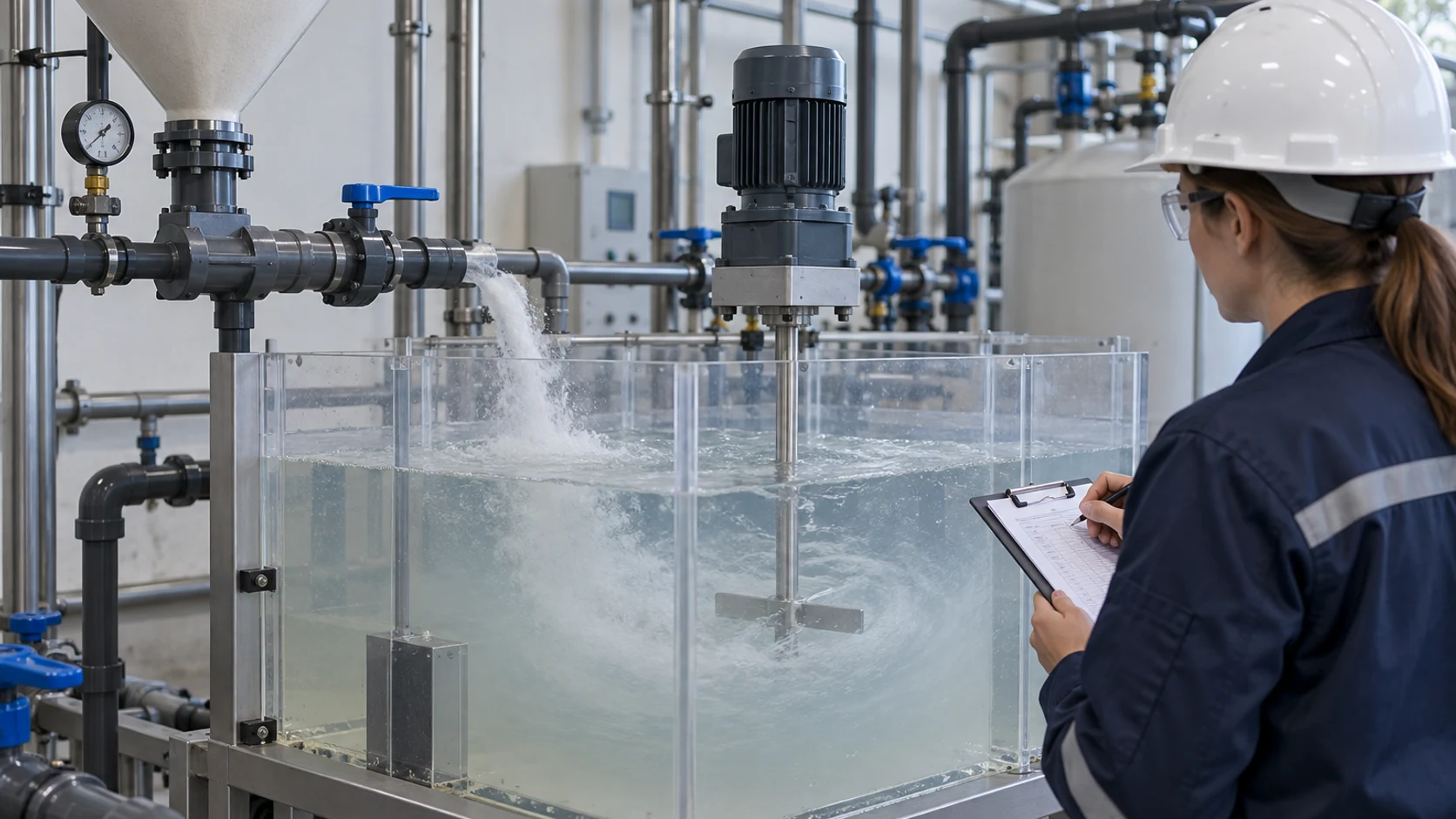
Start with the polymer form, not a borrowed recipe
Powder and emulsion PAM are not prepared in the same way. Powder needs to wet and hydrate without creating persistent “fish-eyes”; an emulsion product needs the correct inversion and dilution path. The site procedure should come from the specific product’s verified handling information. The related PAM solution-preparation video shows a visual sequence for a 0.1% demonstration and is useful for operator training; it does not replace the instruction for every product or declare a plant dosage.
Before changing anything, name the product form, batch, make-down skid, make-up water source and current settings. Also note the sludge type, feed solids, pH, temperature, machine and recent process changes. Polyacrylamide conditioning depends on the sludge matrix and polymer characteristics; published laboratory work shows that the same sludge can respond differently across cationic charge density and molecular-weight selections.1 That is why a preparation problem and a chemistry-selection problem must be tested separately.
| Check | Powder PAM | Emulsion PAM | What it changes at dewatering |
|---|---|---|---|
| First contact with water | Controlled wetting and dispersion prevent dry agglomerates. | Correct inversion and dilution make the active polymer available. | Incomplete activation can give weak, uneven floc. |
| Mixing | Enough mixing for uniform hydration without unnecessary damage. | Follow the product-specific inversion and dilution route. | Overly harsh handling can shorten the useful structure. |
| Aging/hold time | Allow the solution to become uniform before use. | Allow inversion/activation according to the supplied instruction. | Using too early can mimic under-dosing. |
| Storage | Use within the verified hold period and maintain clean tank turnover. | Use within the verified hold period and protect the prepared solution. | Stale or contaminated solution can make results drift. |
Follow the solution from water line to sludge feed point
Think of preparation as a chain. Start with make-up water that is compatible with the product instruction and free of conditions that interfere with dissolution or inversion. Confirm that the water flow is stable. Then verify that polymer is introduced at the intended point, that the tank is turning over rather than short-circuiting, and that the mixer produces a uniform solution without violent recirculation. A transparent sample from the tank and from the feed line is often more revealing than a setting displayed on a panel.
In a published sludge-conditioning study, polymer stock solutions were prepared and then aged before use; it illustrates why solution history must be controlled when comparing trials.1 The timing in that paper is a study condition, not a universal plant instruction. The correct hold window is the one verified for the actual product, solution strength and operating environment.
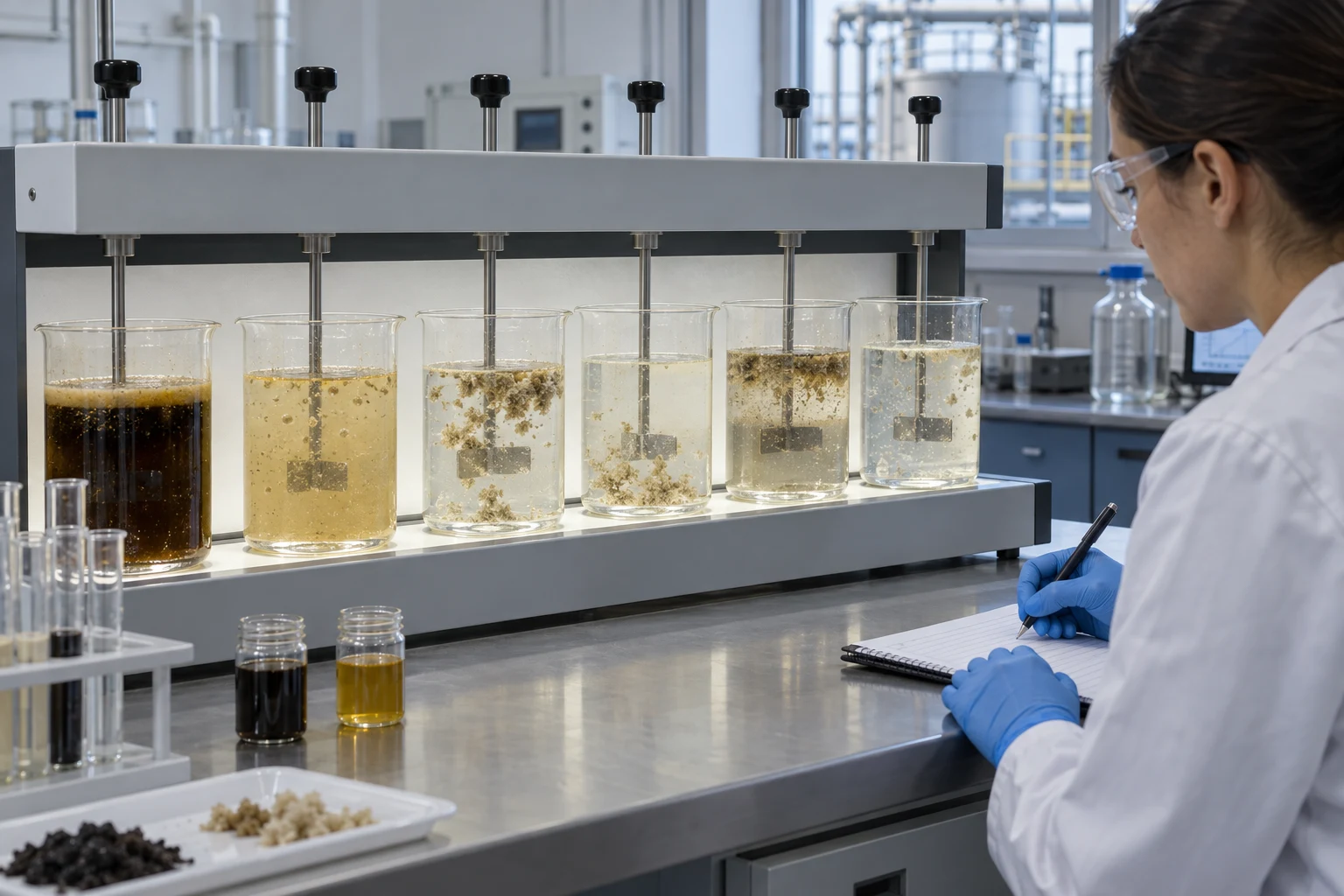
Use the symptom to choose the next check
Do not assume every weak floc means “increase feed.” Use the pattern to decide where to look. A sudden change after a make-up water switch, operator shift or tank cleanout points to preparation. A gradual decline near the end of a storage period points to solution age or turnover. A good floc at the conditioning point that collapses before the belt press, centrifuge or screw press points toward transfer shear or the injection/mixing location. A controlled fresh-solution comparison is the fastest way to separate these branches.
| What operators see | First preparation check | Then compare |
|---|---|---|
| Lumps, streaks or inconsistent tank sample | Wetting/inversion point, make-up water flow and mixer circulation. | Fresh correctly prepared solution against current stock. |
| Good early shift, weak later shift | Aging-tank turnover, storage time and solution exposure. | New batch versus end-of-hold batch under the same sludge. |
| Good bench floc, poor machine result | Transfer pump/shear, injection location and machine feed mixing. | Floc immediately after injection and immediately before dewatering. |
| Floc improves but filtrate/cake does not | Sludge change, machine condition and total polymer route. | One controlled polymer screen with representative sludge. |
Recent research also reports that excessive PAM conditioning can restabilize or otherwise alter sludge-floc behavior; the practical lesson is to compare a deliberate range around the current program rather than continually moving in one direction.2 Any site-specific dose remains a trial result, not a number borrowed from another sludge.
Verify the preparation window at the machine
Plan one clean comparison: use a representative sludge sample, hold the machine condition as steady as practical, and compare current solution with a freshly prepared control that follows the verified product procedure. Observe floc immediately after polymer addition, the time it takes to reach the dewatering equipment, filtrate or centrate appearance, cake behavior and machine-specific performance. Record solution age, dilution and the product form in the same log as feed solids and pH.
If the freshly prepared control restores the result, correct the make-down path and train the operating sequence before changing grades. If both solutions behave the same, then the next decision is whether feed sludge or machine operation changed, or whether another PAM charge/form family should be screened. The polyacrylamide (PAM) product page is the appropriate product route for a technical discussion; the belt press, centrifuge and screw press guide explains why dewatering hardware creates different conditions.
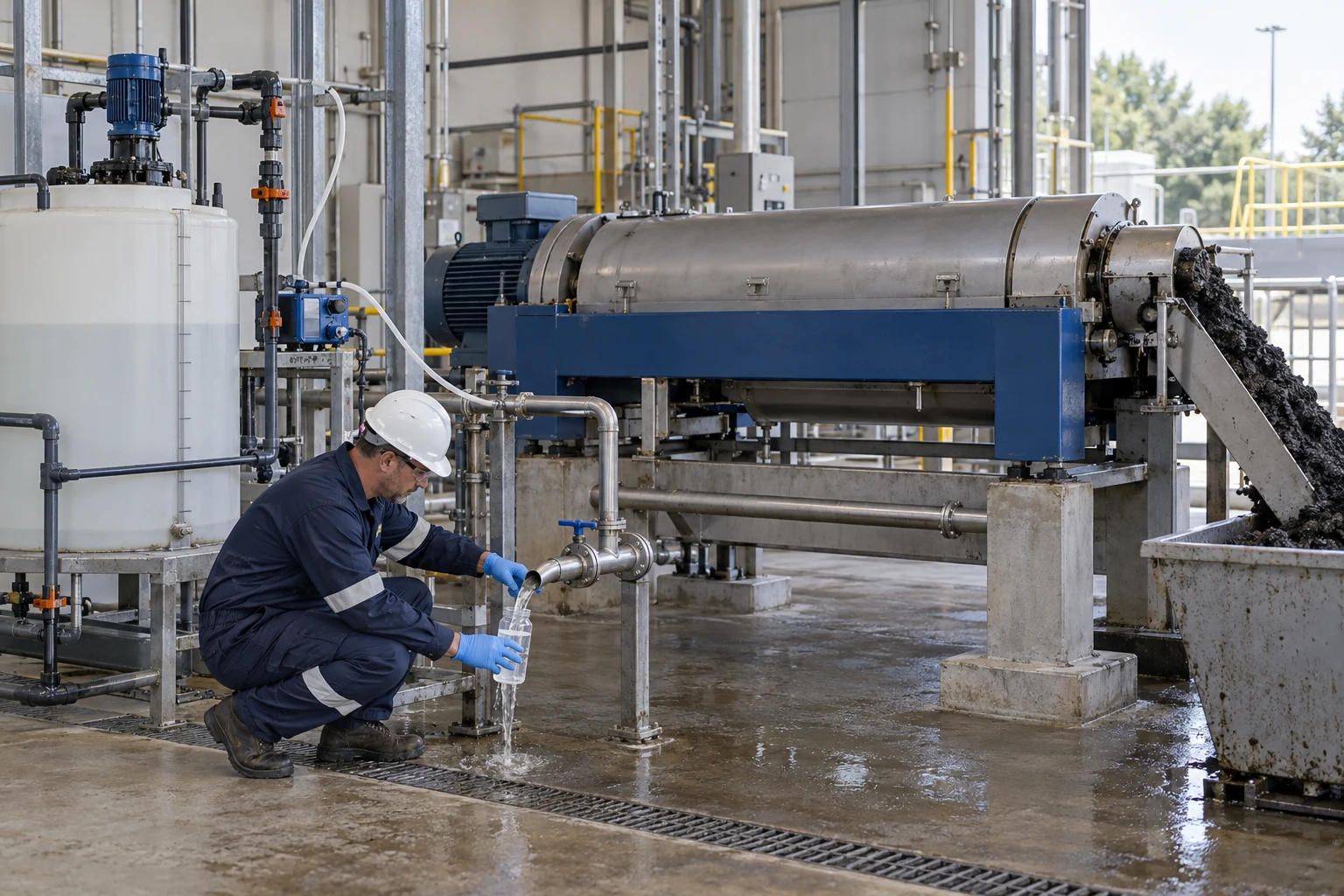
Make aging and storage visible to the team
Mark the preparation time, batch identifier and intended use window on every make-down batch. Make the tank level, turnover and transfer path visible in the shift routine. Clean equipment according to site and product guidance so dried polymer or incompatible residue does not enter the next batch. This is not paperwork for its own sake: it lets operators connect a dewatering result with the solution actually fed to the machine.
When a supplier or technical team reviews a problem, include a photo of the make-down skid, current preparation settings, solution age, water source, sludge analysis, machine type and target outcome. That is enough to design a useful product and preparation trial without pretending that one formula fits every polymer and sludge.
Discuss a PAM make-down or dewatering trial
Share whether the product is powder or emulsion, make-up water source, stock and use dilution, preparation sequence, aging/storage pattern, sludge type and solids, dewatering equipment, current symptoms and target. VCYCLETECH can then help route the discussion to the relevant PAM family and operating question.
Frequently asked questions
Why can the same PAM give different dewatering results from one shift to the next?
Make-up water, wetting or inversion, solution age, tank turnover, transfer shear, sludge condition and machine operation can all change the result. Compare a fresh correctly prepared solution with the current stock before changing the grade.
How long should PAM solution age before use?
Use the verified instruction for the actual product and preparation system. Powder and emulsion products differ, and a published laboratory aging time is not a universal plant setting.
Can too much mixing damage PAM performance?
Mixing must make the solution uniform, but unnecessary harsh transfer or post-addition shear can reduce floc integrity. Check the full path from make-down tank to dewatering feed point.
Should the polymer be changed when the filtrate becomes cloudy?
Not immediately. First compare a fresh properly prepared solution, confirm the injection and mixing path, and check whether the sludge or machine condition changed. Re-screen chemistry only when those checks do not explain the change.
Does the same preparation method suit powder and emulsion PAM?
No. The form changes the wetting or inversion path. Follow the actual product’s verified handling instructions and maintain a separate procedure for each form.
Sources
- National Library of Medicine / PMC, cationic PAM characteristics and sludge dewatering study — solution preparation as a controlled trial input and variable polymer response.
- PubMed, molecular-scale study of PAM over-flocculation in sewage sludge dewatering — why excess conditioning deserves a controlled comparison.
- U.S. EPA, Design Manual: Dewatering Municipal Wastewater Sludges — dewatering context and polymer conditioning principles.
Source check: 22 September 2026. These sources provide process context; product-specific preparation and performance must follow verified product information and representative trials.