
Reverse osmosis · metals and pretreatment
Iron and Manganese Before RO: Choose the Treatment Sequence
Iron and manganese removal before RO starts with the form of the metals and where that form changes. Compare source water with water after storage, oxidation and filtration; protect the samples from unrecorded changes during collection. Dissolved metals need a different treatment question from particles already formed upstream. Where oxidation is selected, pair it with effective capture of the resulting solids and separate protection against oxidant reaching the membrane. Evaluate the actual water, contact conditions, filter cycle and installed membrane requirements together. A clear bottle or a favorable SDI result cannot establish the whole answer. For an RO engineer choosing the next pretreatment trial, the useful endpoint is stable, documented quality at the membrane inlet across the operating conditions that previously caused the problem.
TL;DR
Map the metal before selecting the treatment. Establish total and appropriately filtered iron and manganese alongside pH, dissolved oxygen, temperature, source changes and sampling history. Locate the first point where dissolved material becomes a colloid or particle, then compare oxidation/contact, clarification where needed, and a suitable filter barrier. Follow both the metal and the oxidant through the train: successful oxidation is not removal, and successful particle capture is not proof that oxidant is absent. Test normal filter runs, return from backwash and relevant source variation. Set acceptance with the installed membrane OEM and equipment team rather than borrowing a drinking-water limit or a generic SDI target.
On this page
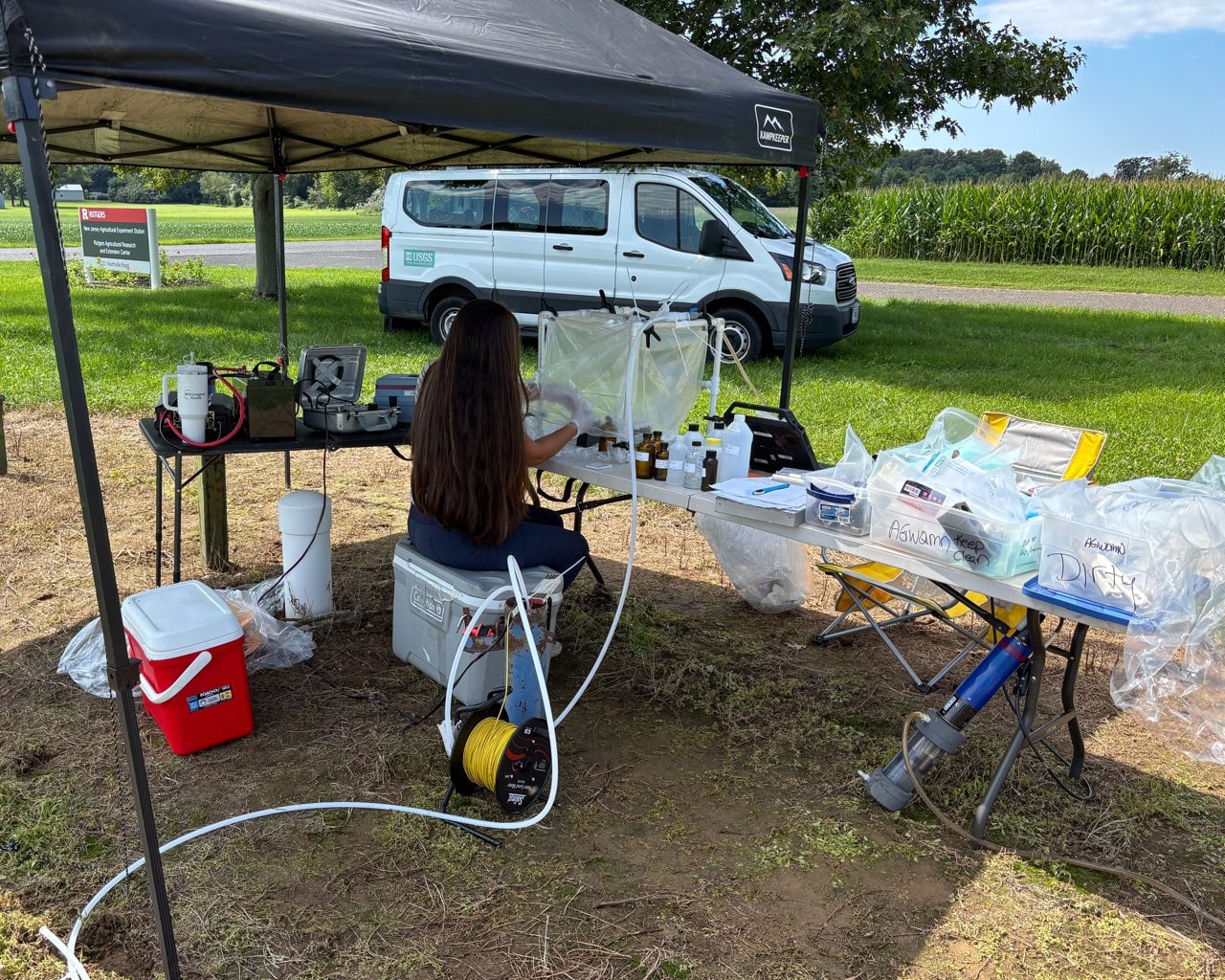
Find the metal form and transformation point
A total-metal result tells you how much iron or manganese is reported by that analytical preparation. To separate dissolved, colloidal and particle contributions, add the appropriate fraction measurements. A groundwater source may arrive in a reduced state and change after aeration, a tank, an oxidant feed, or a blend with another water. Material can therefore enter a filter in a different form from the sample first taken at the well. Begin by locating that change rather than buying a stronger chemical from the total number alone.
“Filtered” is an operational description. Ask the laboratory which filter, preparation, preservation and reporting method define that fraction. Fine colloids may remain in a filtrate; a filtered result is not automatically proof of a particular oxidation state. Compare like with like and record collection conditions. The USGS sampling methods distinguish the filtration operation from the chemistry subsequently measured, a useful discipline when comparing source and process samples.
Iron and manganese also deserve separate trend lines. A condition that changes iron visibly may leave a different manganese response. Manganese treatment can depend on adsorption and surface reactions as well as bulk oxidation. Water chemistry and the condition of a catalytic medium matter. If iron falls across a filter while manganese does not, investigate the manganese form and operating conditions before assuming that the filter merely needs more of the same oxidant.
Build a comparable sampling map
Draw the actual path from source to RO. Mark air exposure, tanks and vents, blend entries, pH adjustment, oxidation, clarification, media or membrane filtration, dechlorination and cartridge filters. Include the section between the final filter and the high-pressure pump. A corrosion product introduced there will not be explained by a clean filter-outlet result. Add sampling taps and the approximate transit between them so results can describe the same incoming water rather than unrelated moments.
At the source, record pH, temperature and relevant redox information such as dissolved oxygen, using the agreed field methods. Establish total and filtered metal results, alkalinity, hardness, silica, organic matter and other constituents relevant to the selected route. Sulfide, ammonia and source blending may change the investigation. These are characterization inputs, not a demand to measure every possible analyte on every visit. Let the source history and the treatment mechanism determine the analytical plan.
Collect paired samples at the points that answer the question: before conversion, after the planned contact stage, after solids separation and at the final RO inlet. Agree handling with the laboratory before collecting sensitive samples. Note bottle type, filtration timing, any air exposure, preservation and elapsed time. A sample that changes color after sitting may reveal that chemistry is continuing. Use analytical measurements to identify the in-pipe form and quantify treatment.
Choose the treatment sequence around the observed form
For water carrying already-formed particles, first assess the physical removal barrier and the source of those particles. For dissolved metals, establish whether a supported oxidation/adsorption route can convert and retain them under the actual water conditions. Add clarification or coagulation when the formed solids and loading require it, with an effective downstream separator. The route should explain what happens to the metal and where the resulting solids leave the system.
| Observed pattern | Candidate treatment question | What the trial must demonstrate |
|---|---|---|
| Mostly dissolved at source; particles appear after storage or aeration | Can conversion be moved to a controlled stage before an effective solids barrier? | Metal fractions through contact and separation, plus final oxidant control |
| Particles already present at the pretreatment inlet | Is the installed separator/filter suited to their size, loading and variability? | Capture through a representative run without unacceptable breakthrough or hydraulic loading |
| Fine or colloidal material persists after oxidation | Does conditioning improve capture in the actual clarification/filtration train? | Filtered and total metals, filterability, residual chemical and solids handling |
| Iron improves but manganese persists | Are manganese form, contact conditions or media condition different from the iron problem? | Separate metal trends and an equipment-supported explanation for the selected route |
| Filter outlet is acceptable; RO inlet deteriorates | Is material entering or forming after the filter? | Paired downstream samples and inspection of piping, tanks and additions |
Health Canada's manganese technical guidance describes why a combination of conversion, adsorption and particle separation may be needed, depending on form and water chemistry. Its drinking-water guidance is useful for understanding mechanisms; it is not an RO design specification. A filter that depends on a maintained catalytic surface must be evaluated with the media supplier's operating and regeneration requirements. A beaker with a new medium does not reproduce an established filter bed or its history.
There is also an engineered alternative in which reduced water is kept from oxidizing through the relevant process. DuPont discusses anoxic operation under specified conditions. That is a whole-system design choice requiring control of air entry, blends and chemical contact, not permission to send untreated iron-bearing water into any RO. When the installed plant cannot maintain those conditions, investigate a properly designed removal route with the OEM and pretreatment team.
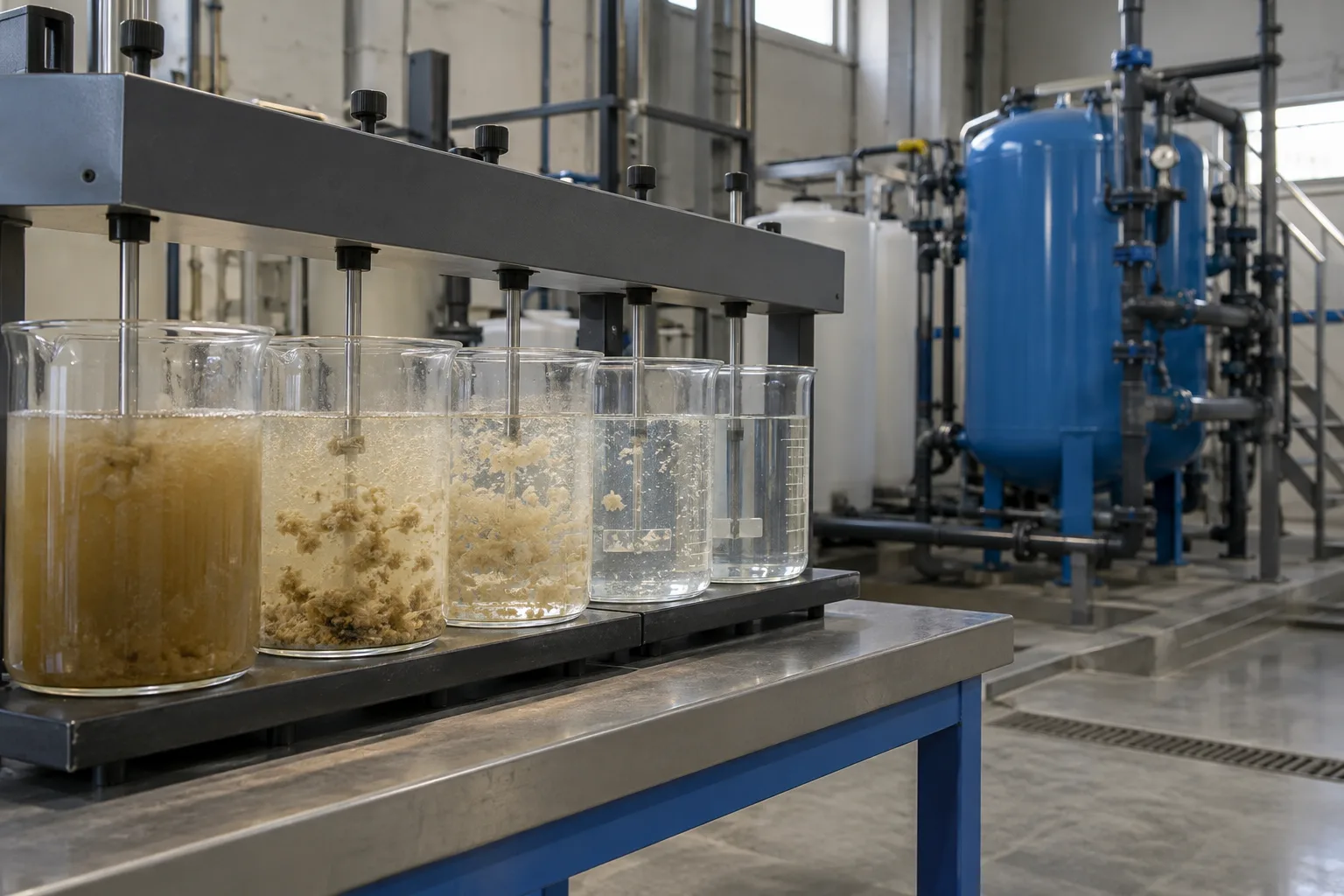
Match the trial to the filter cycle
A useful bench comparison retains the source-water conditions that affect conversion and separation. Keep a source-water control and document the candidate sequence, pH, temperature, mixing and contact history. Compare water after the intended separation, not just the appearance of an oxidized beaker. If a trial uses settling while the plant relies on a pressure filter, the trial has answered a different separation question and needs an equipment-relevant next stage.
Follow dissolved and total metal results together where the analytical plan supports it. A decrease in the filtered fraction with little change in total metal can indicate conversion without adequate solids removal. A total-metal rise downstream can prompt checks for carryover, contaminated sampling or corrosion. Interpret those patterns with method uncertainty and hydraulic timing; they guide the next investigation rather than proving a single cause.
For the filter or pilot, record inlet loading, flow, pressure loss, filtrate quality and the timing of backwash or regeneration. Inspect the return-to-service condition and later portions of a run, not just a clean-bed sample. Filter-to-waste, bypasses and valve sequences may matter as much as the chosen medium. Test the relevant source or blend variation and temperature range instead of assuming one batch represents the whole season.
Oxidation chemicals and their removal/control stages must remain compatible with the installed membrane. Verify the relevant oxidant at the final inlet using a suitable method and operating procedure. Redox potential can provide context but is not an interchangeable measurement of every oxidant species. A treatment choice should specify how loss of control will be detected and how membrane exposure will be prevented, rather than relying on a downstream cartridge to solve chemical residual.
Verify the actual membrane inlet with several signals
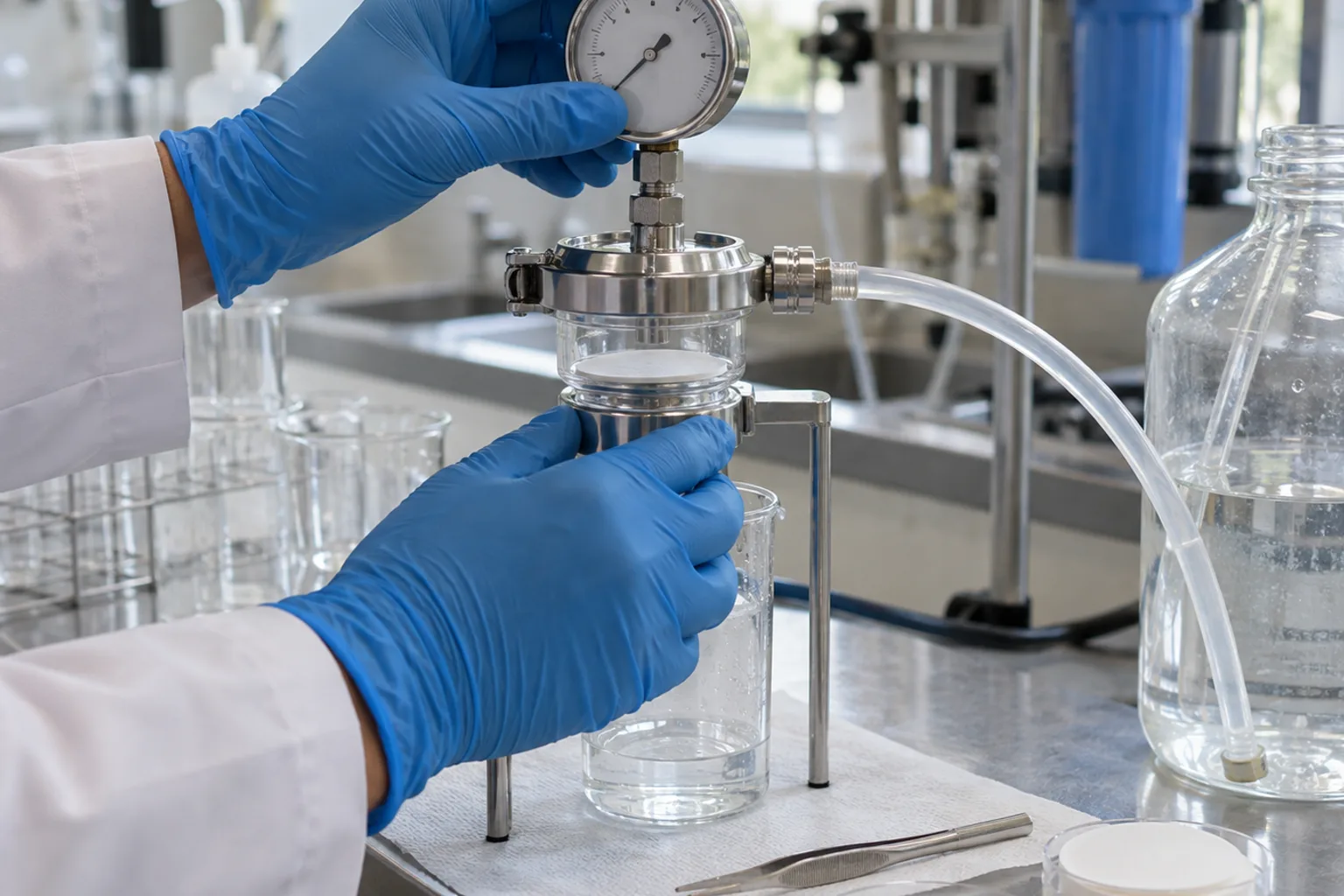
Use SDI as one part of the inlet assessment. ASTM D4189 describes an empirical filter-plugging indicator and notes the influence of temperature on comparison. Identify the retained substance and measure dissolved metal or residual oxidant separately. When a filter pad is retained for examination, handle and analyze it for the stated question; interpreting its color requires the supporting deposit analysis.
Agree acceptance before the trial with the installed membrane OEM and plant team. Include the metal measurements and their methods, particle/filterability indicators, oxidant measurement, acceptable operating stability and the conditions that require a pause or further investigation. Limits need to correspond to the membrane model and water chemistry. Drinking-water aesthetic values, another plant's design values and a general supplier table cannot be substituted for that agreement.
When authorized operation resumes, use a documented baseline and normalized membrane trends alongside pretreatment results. Track flow, salt passage or rejection, and stage pressure drop with operating conditions recorded. A short stable period is useful commissioning information; it is not a promise of long-term compatibility. If performance deteriorates, retain the sampling and filter-cycle records so the investigation can separate renewed loading, missed oxidant control and other foulants.
Choose a product discussion that fits the remaining problem
The RO application guide connects pretreatment, scale control and cleaning decisions. Browse the RO chemical range for the corresponding commercial route. The WT-0100 product page is an identity and inquiry path for a separate antiscalant/dispersant discussion; it does not demonstrate iron removal or replace a solids barrier. Where conditioning is needed upstream, examine the coagulant and flocculant family with the actual separator and residual-control plan.
For a general barrier problem, use the existing high-SDI pretreatment guide. If chemical carryover is suspected, continue with the polymer carryover and membrane verification guide. Share paired analyses, sample methods, membrane model, flow path, filter history and the decision you need to make through a technical inquiry. Those inputs help narrow a useful trial without implying a fixed dose or guaranteed treatment outcome.
Iron and manganese before RO FAQs
Should iron and manganese always be oxidized before RO?
No single sequence fits every water and membrane system. Evaluate metal form, water chemistry, air entry and equipment. A supported oxidation route needs effective solids removal and oxidant control. An engineered anoxic route requires whole-system control and membrane-specific assessment; it is not a general bypass instruction.
Does low SDI prove that iron and manganese are controlled?
No. SDI describes filter-plugging behavior under the test conditions. It does not identify a metal, measure all dissolved species or quantify residual oxidant. Pair it with appropriate total/filtered metal analyses and the actual membrane-inlet operating checks.
Why can manganese pass a filter that removes iron?
The metals may have different forms and reaction behavior under the same water conditions. Check manganese speciation, contact conditions, media condition and the filter cycle rather than inferring manganese control from the iron result. Use a representative trial with separate metal measurements.
Where should samples be taken during an oxidation-filtration trial?
Choose points before conversion, after the intended contact stage, after solids removal and at the final RO inlet. Match samples to hydraulic transit and operating events. Agree filtration, preservation and analytical methods with the laboratory so results can be compared.
Can an antiscalant replace iron and manganese pretreatment?
Do not assume that a listed antiscalant removes metals or their oxidation products. Establish the source and form of the metal, verify the physical or chemical pretreatment route, and discuss any remaining scale/dispersant need against the exact membrane and formulation.
Related technical path
- Product range: Reverse Osmosis Chemicals
- Application: Reverse Osmosis Chemicals by RO Problem
- Guide: Cationic Polymer Carryover Before RO
- Guide: Contact